Card Shufflers vs Manual Card Games for Family Play
Comparing automatic card shufflers with traditional hand-shuffled card games for families with children aged 6–8, including accessibility, durability, noise and setup trade-offs.
Compare prices and availability
Check current prices and availability for this guide on eBay.
As an eBay Partner, we may be compensated if you make a purchase.
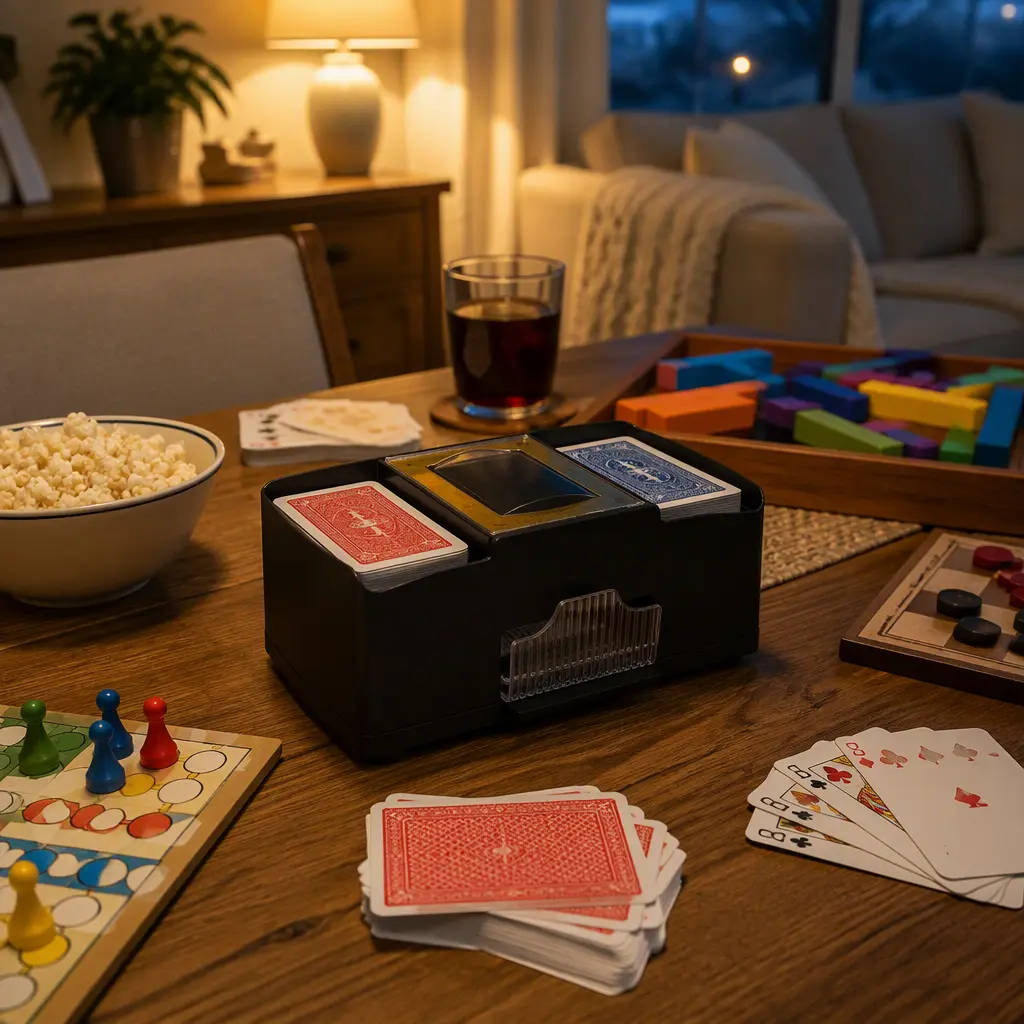
Automatic card shufflers promise faster setup and fewer arguments over uneven shuffling, but they are not always the best fit for every family game night. For children aged 6–8, the decision often comes down to accessibility, patience, noise levels and how often your household actually plays card games. Some families value the hands-on routine of shuffling and dealing as part of learning game skills, while others want to remove frustration and keep games moving. Understanding the trade-offs between manual card play and battery-powered shufflers can help you decide whether the extra device earns a permanent place in your game cupboard.
What to look for
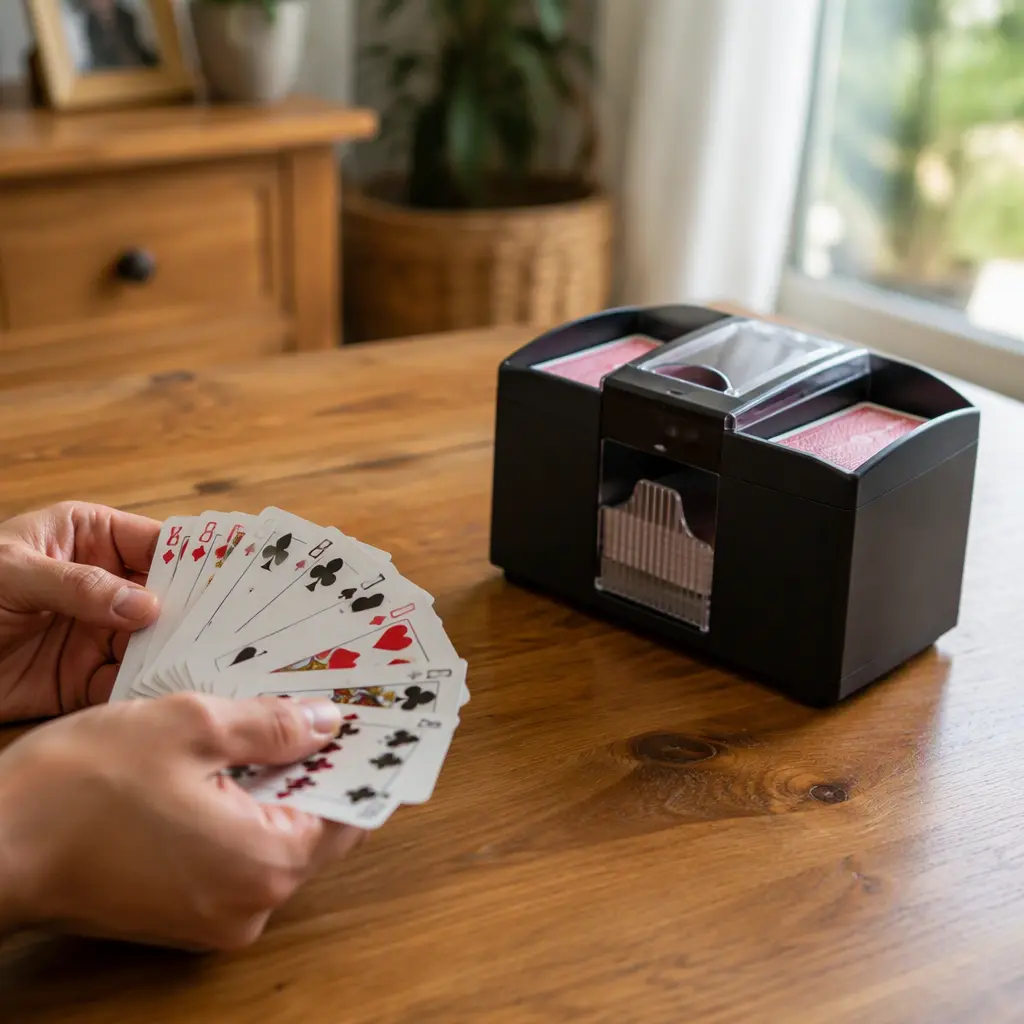
The right setup depends less on the cards themselves and more on the needs of the players. Families with younger children or players who struggle with fine motor skills may benefit from an automatic shuffler, while occasional players may prefer to keep things simple and avoid extra equipment. Storage space, table size and game complexity also matter. A basic deck for traditional card games takes almost no room, but a shuffler adds bulk, batteries and another item to maintain.
- Accessibility: Automatic shufflers can help children or adults who find hand shuffling difficult because of small hands, reduced grip strength or coordination challenges.
- Noise: Many battery-powered shufflers create a noticeable mechanical sound that may distract sensitive children or make late-evening games less practical.
- Durability: Manual card play mainly wears out the cards themselves, while shufflers introduce moving parts that can jam or break over time.
- Setup and cleanup: A shuffler can speed up repeated games but also adds batteries, storage needs and occasional troubleshooting.
- Card compatibility: Some shufflers work better with standard playing cards than thicker specialty cards or oversized family-game decks.
- Learning value: Hand shuffling and dealing can help younger children practise patience, sequencing and careful handling of game materials.
- Budget: A deck of cards is inexpensive and versatile, while a shuffler is an added purchase that may only suit frequent card-playing households.
Age suitability
Children aged 6–8 are often just beginning to handle cards independently. At this stage, many still bend cards accidentally, drop piles while shuffling or become impatient during setup. Simple manual shuffling methods, such as overhand shuffling or splitting decks into piles, are usually manageable with some practice. Automatic shufflers can remove frustration for children who struggle with coordination or become upset when cards scatter. However, younger players may also treat the machine as a toy itself, repeatedly feeding cards into it or pressing buttons during gameplay. Families who mainly play quick games lasting 10–20 minutes may not notice much time saved, while households that play multiple rounds of card-heavy games in one sitting may appreciate the smoother pace.
Options compared
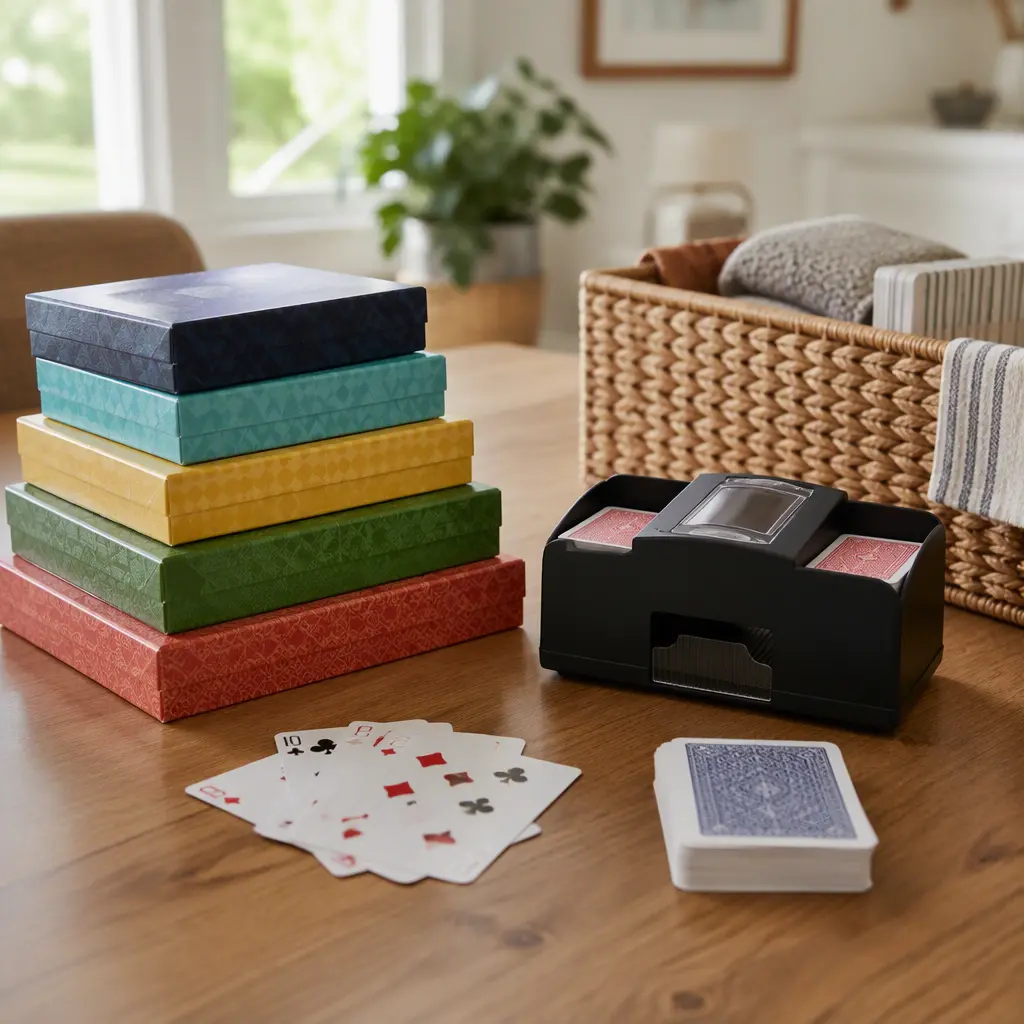
Traditional manual card games remain the simplest option for most families. A standard deck supports dozens of games, travels easily and creates very little noise or clutter. Manual shuffling also encourages children to participate in setup rather than waiting for a device to handle every step. For families trying to limit battery-operated toys or reduce storage overflow, this approach stays practical and low maintenance. It also works better for households that play infrequently, since there is no concern about batteries leaking or motors wearing out between uses.
Automatic card shufflers are most useful when physical accessibility or repeated reshuffling becomes a barrier to enjoyment. Games that require frequent deck mixing can slow down considerably with young children, especially if players argue about fairness or accidentally reveal cards while shuffling. In these cases, a shuffler can reduce friction and keep attention focused on gameplay. The trade-off is that inexpensive shufflers may struggle with thicker cards or heavy use, and the mechanical sound can interrupt quieter family evenings. Some children also enjoy the tactile experience of handling cards, so removing manual shuffling may make the activity feel less interactive.
- Manual card games suit families who value portability, low cost, quiet play and simple storage.
- Automatic shufflers suit frequent card-playing households, mixed-age groups or players with limited hand strength or coordination.
- Manual play is usually easier for travel, holidays and small spaces.
- Automatic shufflers can help reduce disputes about uneven shuffling during competitive games.
- Families with sensitive pets or noise-sensitive children may prefer manual shuffling.
- Children who enjoy hands-on routines may benefit from learning simple shuffling techniques rather than relying entirely on a machine.
Frequently asked questions
Do automatic card shufflers damage cards?
They can increase wear over time, especially with thinner cards or if cards are bent before entering the machine. Manual handling also wears cards out eventually, but mechanical rollers may crease softer decks more quickly with heavy use.
Are card shufflers useful for children?
They can be helpful for children who struggle with fine motor skills or become frustrated during setup. For many children aged 6–8, though, learning basic shuffling is still manageable and may become part of the fun.
Do families really save time with a shuffler?
The biggest time savings appear during games with constant reshuffling or larger groups. For quick games using one deck, manual shuffling is often fast enough once children gain confidence.
Are manual card games better for screen-free play?
Both options support offline family play, but manual card games keep the activity entirely hands-on and equipment-free. Some parents prefer this simpler style because it reduces battery use, noise and device clutter.
What type of family should skip an automatic shuffler?
Families with limited storage, very occasional card nights or children who already shuffle comfortably may not gain much from adding another device. A shuffler is also less practical if your games use unusually shaped or oversized cards.
For most families with children aged 6–8, traditional card games remain the more flexible and affordable choice. Automatic card shufflers are best viewed as accessibility tools or convenience accessories rather than essentials. If setup delays regularly interrupt game night or players struggle physically with shuffling, a shuffler may improve the experience. Otherwise, a sturdy deck of cards and a few easy-to-learn games often deliver the simplest path to relaxed, screen-free family play.