Are Electronic Building Sets Safe for Ages 6–8?
A parent-focused safety guide to electronic building sets for ages 6–8, covering parts size, power levels, supervision needs, and how non-app kits reduce risks while supporting learning.
Compare prices and availability
Check current prices and availability for this guide on eBay.
As an eBay Partner, we may be compensated if you make a purchase.
Electronic building sets introduce kids to basic circuits, switches, lights, and motion—often without screens or apps. For parents of 6–8 year olds, the big question is safety. These kits are designed for beginners, but they still mix small parts and electricity. The good news: when a set is age-appropriate and used with basic supervision, risks are generally low. This guide explains what to check before buying and how to keep playtime safe and productive.
What to look for
Not all electronic building sets are created equal. Sets meant for ages 6–8 should focus on low-voltage power and sturdy, easy-to-handle parts. Before buying, review the box details and online description with safety in mind.
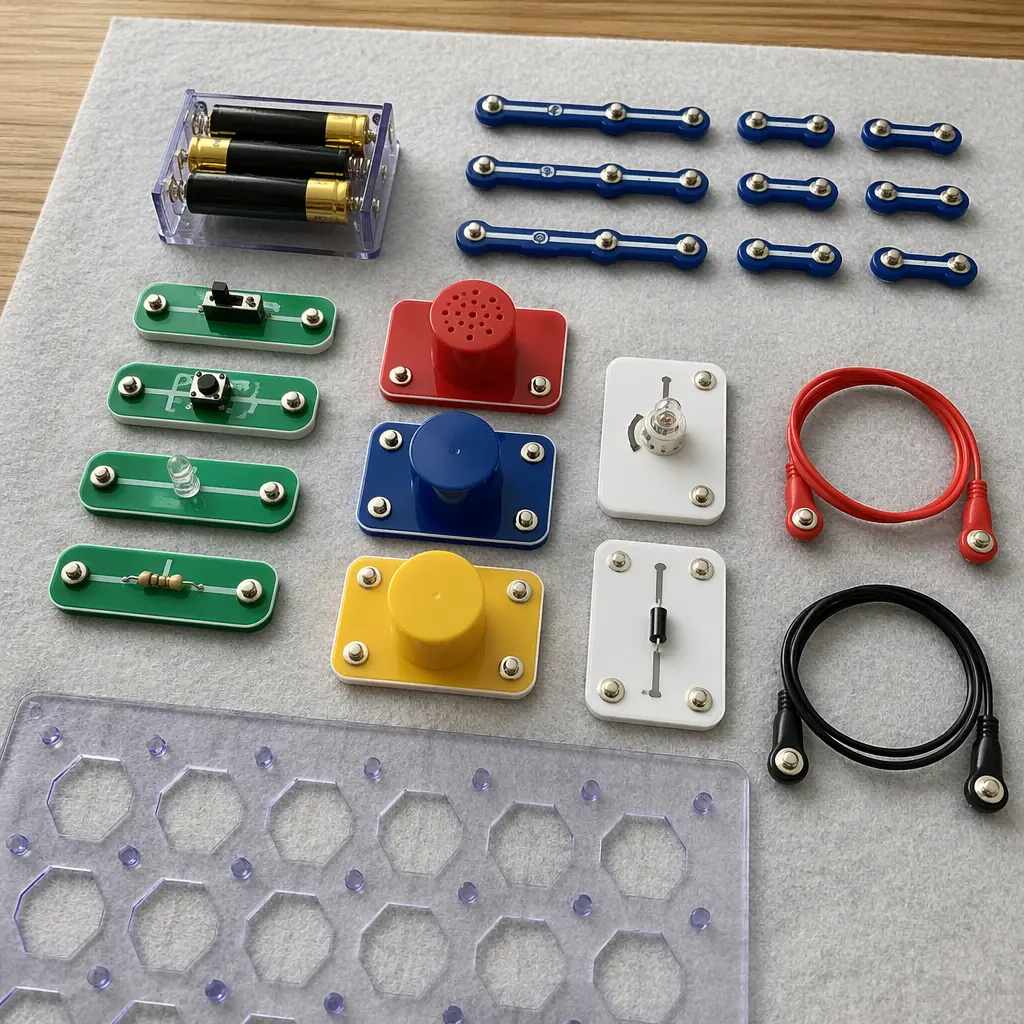
- Low-voltage power only: Look for battery-powered kits (often AA or AAA). Avoid anything that plugs into a wall outlet.
- Large, enclosed components: Pieces should be big enough to reduce choking risk and hard to pry open.
- No soldering or exposed metal: Beginner sets rely on snap connectors or pre-wired blocks, not tools or bare wires.
- Clear instructions: Step-by-step diagrams help kids build safely without improvising risky connections.
- Durable materials: Thick plastic housings and reinforced snaps are less likely to break and expose internals.
Age suitability
The 6–8 age band sits between early curiosity and growing independence. Most kids in this range can follow directions and understand basic cause-and-effect, like how a switch turns on a light. However, fine motor skills and impulse control still vary widely. Sets labeled for this age typically assume an adult will be nearby, especially during early builds. If a child still mouths objects or struggles with multi-step instructions, consider waiting or choosing a kit at the lower end of the age range.
Standout categories or types
Electronic building sets for this age tend to fall into a few broad categories, each with different safety profiles. Screen-free kits are often preferred by parents who want hands-on learning without app permissions, accounts, or device distractions.
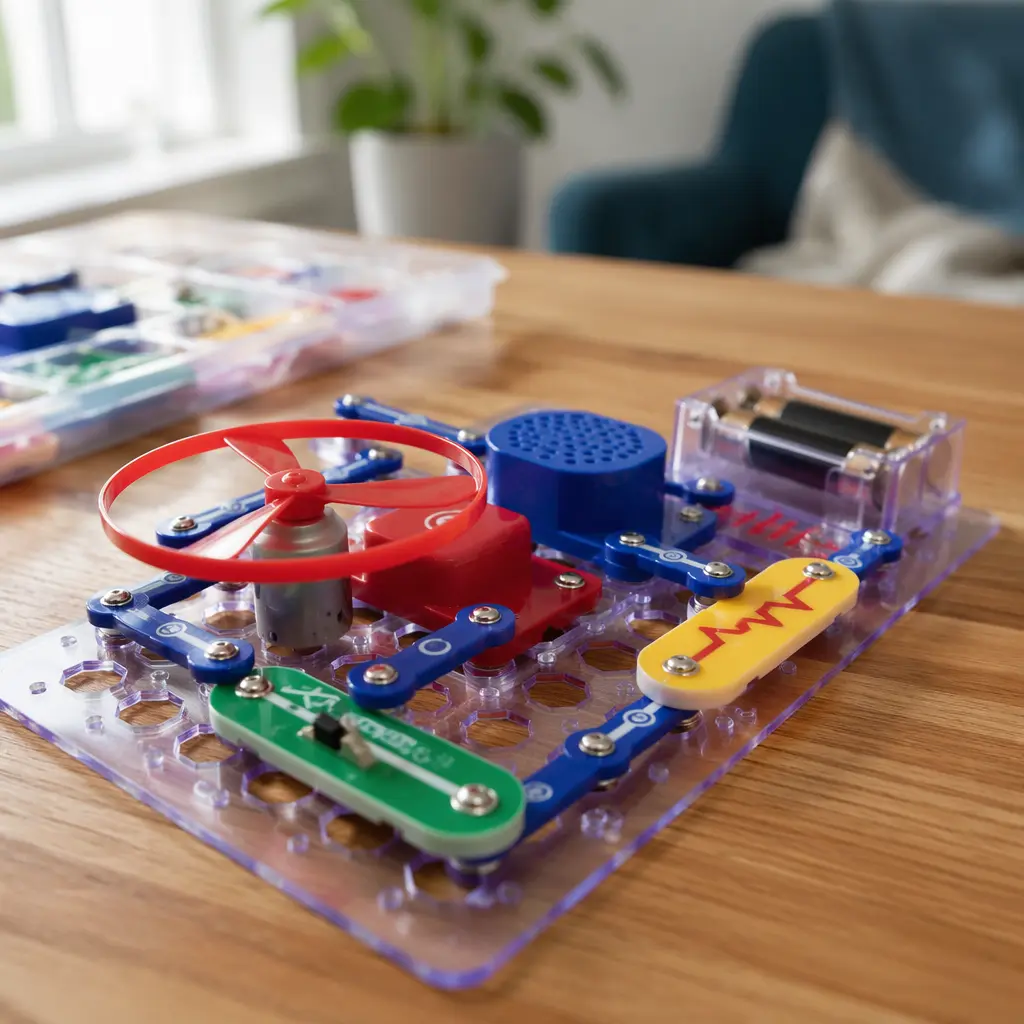
- Snap-circuit style kits: Components click together on a base, limiting incorrect connections and exposed contacts.
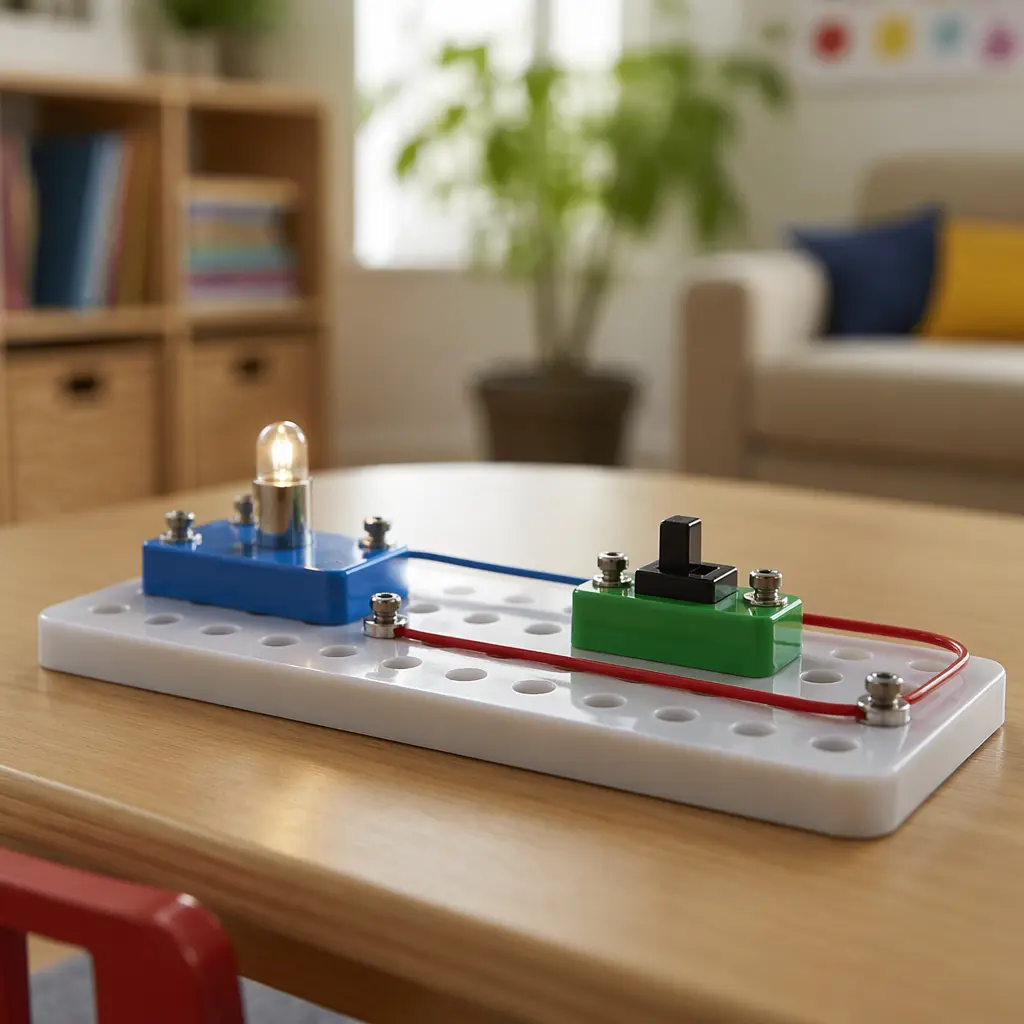
- Block-based electronics: Circuits are hidden inside chunky blocks, making them easier to handle and harder to misuse.
- Motion and light kits: Focused on LEDs, buzzers, and small motors, these usually keep power levels very low.
- Expansion-friendly sets: Designed to grow with a child, but check that add-ons remain age-appropriate.
Frequently asked questions
Can a child get shocked by these sets?
In properly designed kits for ages 6–8, the risk of electric shock is extremely low. They use low-voltage batteries and insulated parts. As long as the set is used as intended and not modified, shock hazards are minimal.
Are small parts a choking hazard?
Some kits include small connectors or batteries that could be a choking risk. Always check the age label and keep loose parts away from younger siblings. Battery compartments should require a tool or firm pressure to open.
Is supervision always required?
Most manufacturers expect some level of adult supervision for this age group. Once a child understands the rules—no forcing pieces, no mixing with household electronics—short periods of independent play are usually fine.
Do non-app kits limit learning?
Not necessarily. Many non-app kits focus on foundational concepts like current flow and switches. These basics can be just as educational as screen-based systems, especially for younger learners.
Electronic building sets can be a safe, engaging way for kids ages 6–8 to explore how things work—without relying on apps or screens. By choosing a low-voltage, age-appropriate kit and staying involved early on, parents can reduce risks while encouraging curiosity and confidence.