Best Clip-Together Race Tracks for Easy Cleanup
A parent-focused guide to clip-together race tracks for ages 6–8, with practical advice on storage, rebuild speed, durability, noise and which track styles suit different play habits.
Compare prices and availability
Check current prices and availability for this guide on eBay.
As an eBay Partner, we may be compensated if you make a purchase.
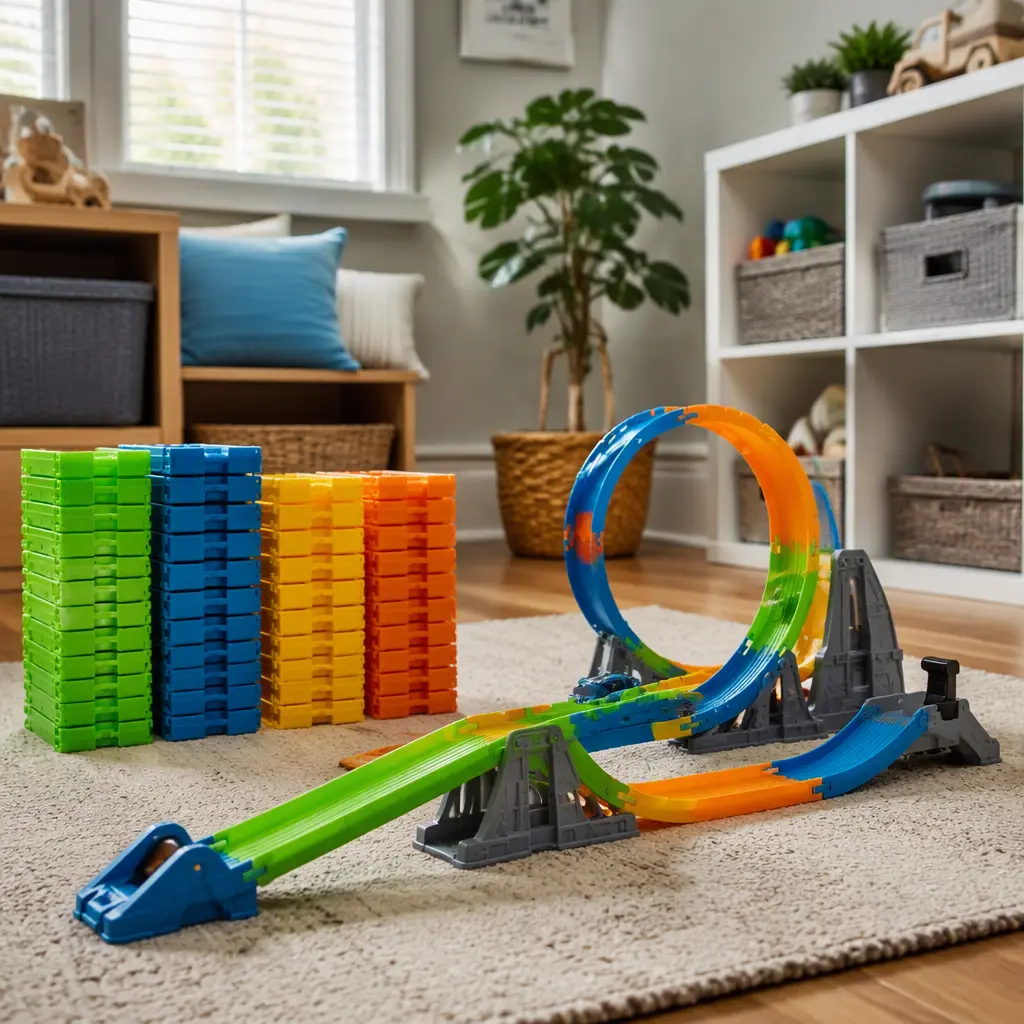
Clip-together race tracks can be a good fit for families who want fast setup, repeat play and easier cleanup than large train tables or permanent slot-car layouts. For children aged 6–8, the main differences are usually not speed or appearance but how quickly the track rebuilds after collapsing, how much floor space it occupies and whether the pieces survive frequent snapping together and apart. Some sets focus on freestyle building with flexible track sections, while others use rigid pieces that create cleaner turns and more predictable racing. The right choice depends on how much storage space is available, how patient the child is during setup and whether the track will be used for solo play, sibling play or quick after-school sessions.
What to look for
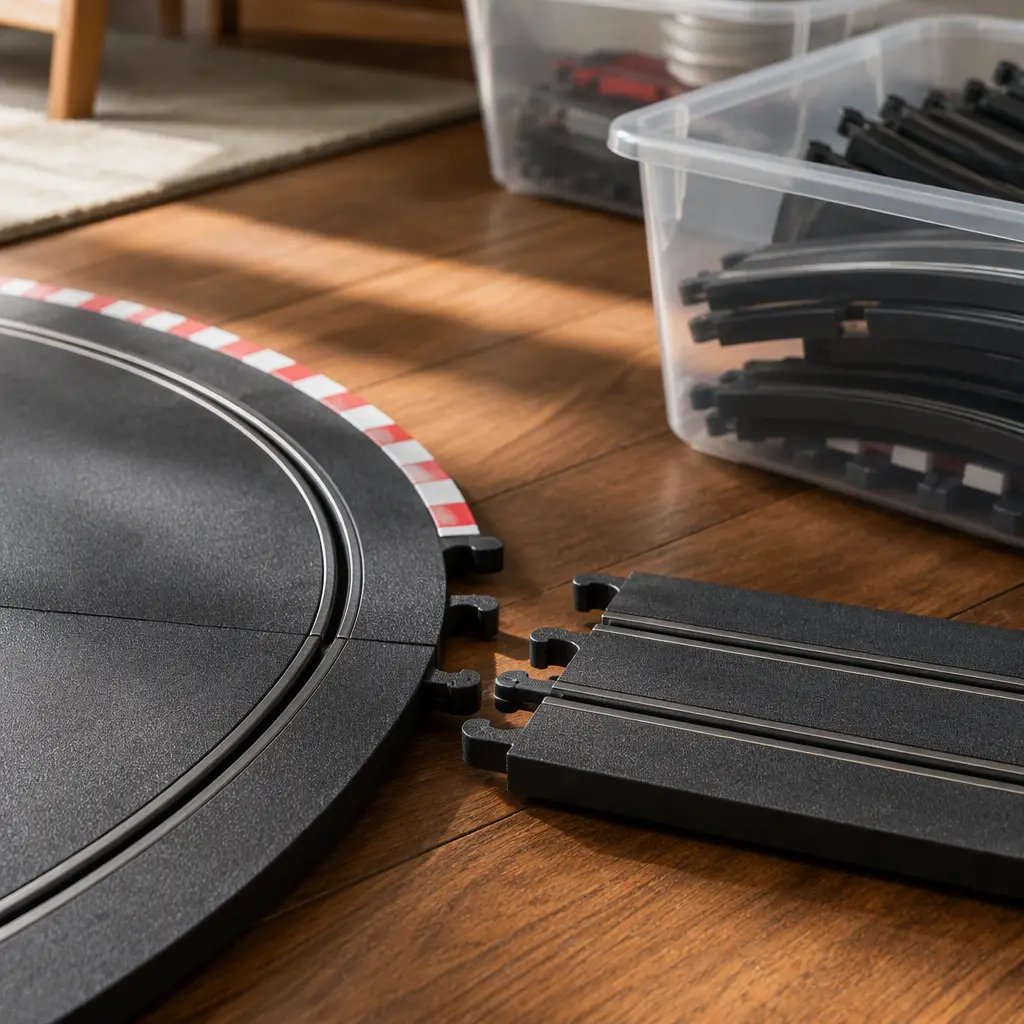
For busy households, cleanup and rebuild speed matter as much as the racing itself. A track that takes twenty minutes to assemble may be ignored during school weeks, while a simpler system with sturdy connectors is more likely to see regular use. Durability is especially important at this age because children often redesign layouts repeatedly rather than leaving one track assembled. Storage also deserves attention. Flexible tracks compress into bins more easily, while rigid modular tracks usually need flatter storage space but can feel sturdier during play.
- Choose track pieces with connectors that are easy for small hands to snap together without excessive force.
- Look for layouts that can be rebuilt in multiple ways to extend replay value without requiring extra accessories.
- Consider noise levels if the track will be used on hard flooring. Plastic cars and elevated sections can become loud in smaller homes.
- Check whether the set packs into a single storage tub or drawer without needing careful sorting.
- Flexible tracks suit quick cleanup and freestyle building, while rigid tracks usually provide smoother racing performance.
- Battery-powered launchers and motorized sections add excitement but may increase noise and supervision needs.
- Sets with fewer tiny accessories are easier to maintain and less frustrating during cleanup.
Age suitability
Most clip-together race tracks marketed for ages 6–8 balance independent building with imaginative play. Children at the younger end of the range often enjoy simple loop-and-ramp designs that assemble quickly and do not collapse easily. Older children may prefer modular systems that allow jumps, branching routes or obstacle features. At this age, frustration tolerance varies widely. Some children enjoy rebuilding complex layouts repeatedly, while others lose interest if connectors are difficult or pieces separate during play. Families with younger siblings should also think about mixed-age use. Tracks with oversized connectors and fewer small decorative parts are usually easier to share safely across age groups.
Options compared
Flexible snap-track systems are usually the easiest to store. The pieces bend slightly, compress into bins and often tolerate rough handling better than rigid systems. These tracks suit children who enjoy experimenting with shapes and rebuilding frequently. They also work well in smaller homes because layouts can adapt to irregular floor space. The trade-off is that flexible tracks may produce bumpier racing and less predictable car movement, especially on uneven carpet.
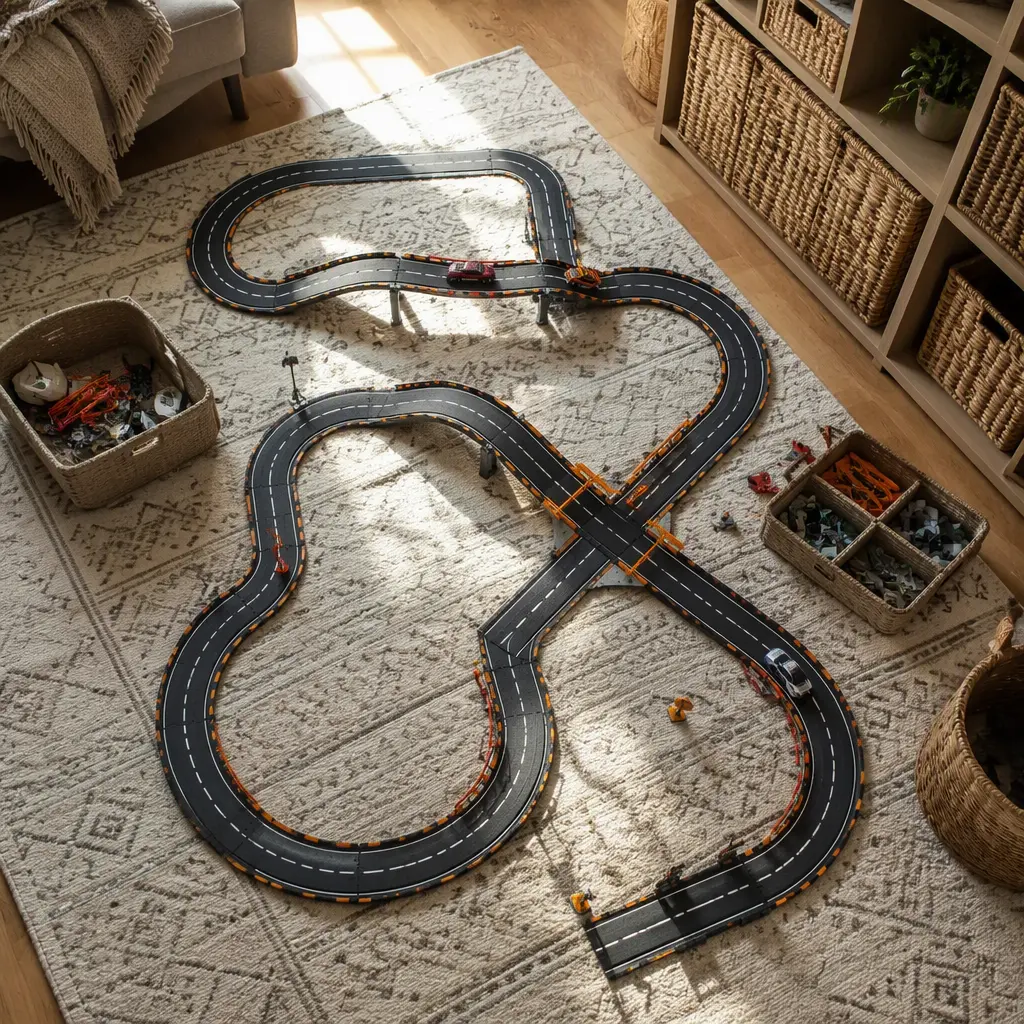
Rigid modular tracks generally create smoother racing and more stable loops or bridges. They are often better for competitive play between siblings because cars behave more consistently around corners. However, they take longer to assemble and usually require more floor space. Some families find that rigid pieces become frustrating if connectors crack or loosen over time. Foldable or portable race-track sets sit somewhere in the middle. These prioritize fast cleanup and travel convenience over large dramatic layouts. They suit children who want quick racing sessions after school rather than long building projects.
- Flexible track systems: best for fast cleanup, compact storage and creative layouts; less precise racing.
- Rigid modular systems: best for smoother performance and stable structures; require more setup time and storage space.
- Portable folding tracks: best for shared homes, travel or limited space; usually smaller and less customizable.
- Motorized race-track sets: best for children who enjoy action features; noisier and more dependent on batteries.
- Gravity-powered tracks: quieter, simpler and often easier to maintain for regular everyday play.
Frequently asked questions
Are clip-together race tracks difficult to store?
Most are easier to store than wooden train sets or large tabletop tracks, but storage style varies. Flexible track pieces usually compress into bins or drawers, while rigid sections often need flatter stacking space to avoid bending or broken connectors.
Do these tracks work better on carpet or hard floors?
Hard floors usually provide smoother racing and more stable elevated sections. Thick carpet can make supports wobble or reduce speed. Some flexible tracks adapt better to carpet because they can contour around uneven surfaces.
Are battery-powered features worth it?
Motorized boosters and launchers can add excitement, especially for children who enjoy dramatic stunts. However, they also increase noise, require battery management and sometimes reduce open-ended building play because layouts become centered around one powered feature.
How durable are clip-together connectors?
Durability depends largely on how much force is needed during assembly. Connectors that snap together smoothly tend to last longer in everyday family use. Repeated twisting or forcing pieces apart can weaken plastic tabs over time.
What type is best for quick after-school play?
Compact flexible tracks or portable foldable systems are usually the fastest to set up and pack away. Children can rebuild simple layouts in minutes without needing a large dedicated play area.
The best clip-together race track for easy cleanup is usually the one that matches a family’s available space and tolerance for setup time. Flexible systems favor convenience and creative rebuilding, while rigid modular tracks reward children who want smoother racing and more structured layouts. For most busy households with children aged 6–8, durable connectors, manageable storage and quick rebuilds matter more than oversized stunt features that are difficult to maintain day after day.