Best Compatible Building Toys for Kids Who Mix Sets
A parent-focused guide to building toys that stay compatible across brands, support rough hybrid builds, and suit children aged 6–8 without creating storage or frustration problems.
Compare prices and availability
Check current prices and availability for this guide on eBay.
As an eBay Partner, we may be compensated if you make a purchase.
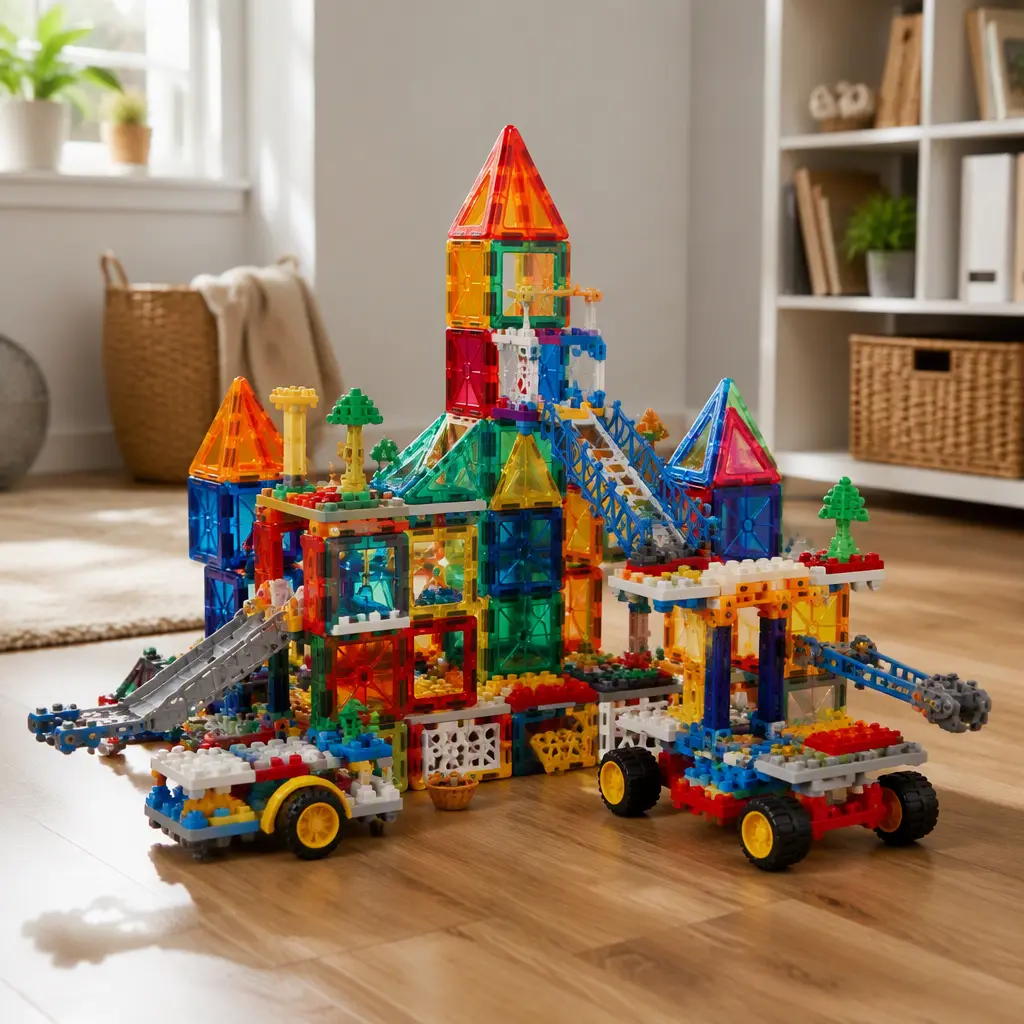
Some children happily follow instruction booklets once and then immediately dump every construction toy into one shared bin. For ages 6–8, that kind of free-form building is often a sign that they care more about experimenting than collecting matching sets. The challenge for parents is finding systems that stay physically compatible, survive repeated rebuilding, and do not become frustrating when pieces from different kits get mixed together. A good choice should support open-ended creativity while also fitting practical family needs such as storage space, durability, cleanup time, and noise levels.
What to look for
Compatibility matters more than flashy themes when children combine everything into one build. Standard-sized interlocking bricks are usually the easiest option because many third-party sets follow similar sizing systems. Larger connector toys and magnetic systems can also work well, but some are harder to combine across brands. Durability is equally important. Rough builders often pull creations apart sideways, step on pieces, or transport builds around the house. Weak connectors and brittle plastic quickly become frustrating.
- Choose systems with widely available replacement pieces so lost parts are less of a problem.
- Look for open-ended building pieces instead of highly specialized decorative parts that only fit one model.
- Consider storage early. Mixed systems spread quickly across bedrooms and living rooms.
- Check piece size carefully. Some detailed brick systems suit older children better than younger siblings.
- Think about noise levels. Hard plastic bricks dumped into bins can become surprisingly loud.
- Wheel bases, hinges, gears, and simple motors can extend play value without requiring screens.
- If siblings share toys, larger-format building systems are usually easier for mixed ages to enjoy together.
Age suitability
Most children aged 6–8 can handle standard interlocking brick systems confidently, including small connectors and more detailed builds. At this age, many enjoy combining vehicles, fantasy structures, ramps, moving parts, and custom characters into larger worlds. However, attention span and frustration tolerance still vary widely. Children who enjoy careful step-by-step building may prefer organized themed kits, while highly experimental builders often do better with mixed creative boxes and bulk piece collections. Magnetic tiles and larger snap-together systems can still appeal at this age, especially for children who prefer quick construction over detailed assembly. Families with younger siblings should also consider whether small pieces will need separate storage or supervised play areas.
Options compared
Standard interlocking brick systems remain the most flexible choice for children who constantly remix sets. The biggest advantage is cross-compatibility between many generic and major-brand brick formats. Children can combine castles, vehicles, robots, and everyday structures without needing matching themes. These systems also tend to support long-term play because older children can continue using the same pieces in more complex ways. The trade-off is cleanup. Small bricks spread easily under furniture, and heavily detailed sets can become difficult to rebuild once fully mixed.
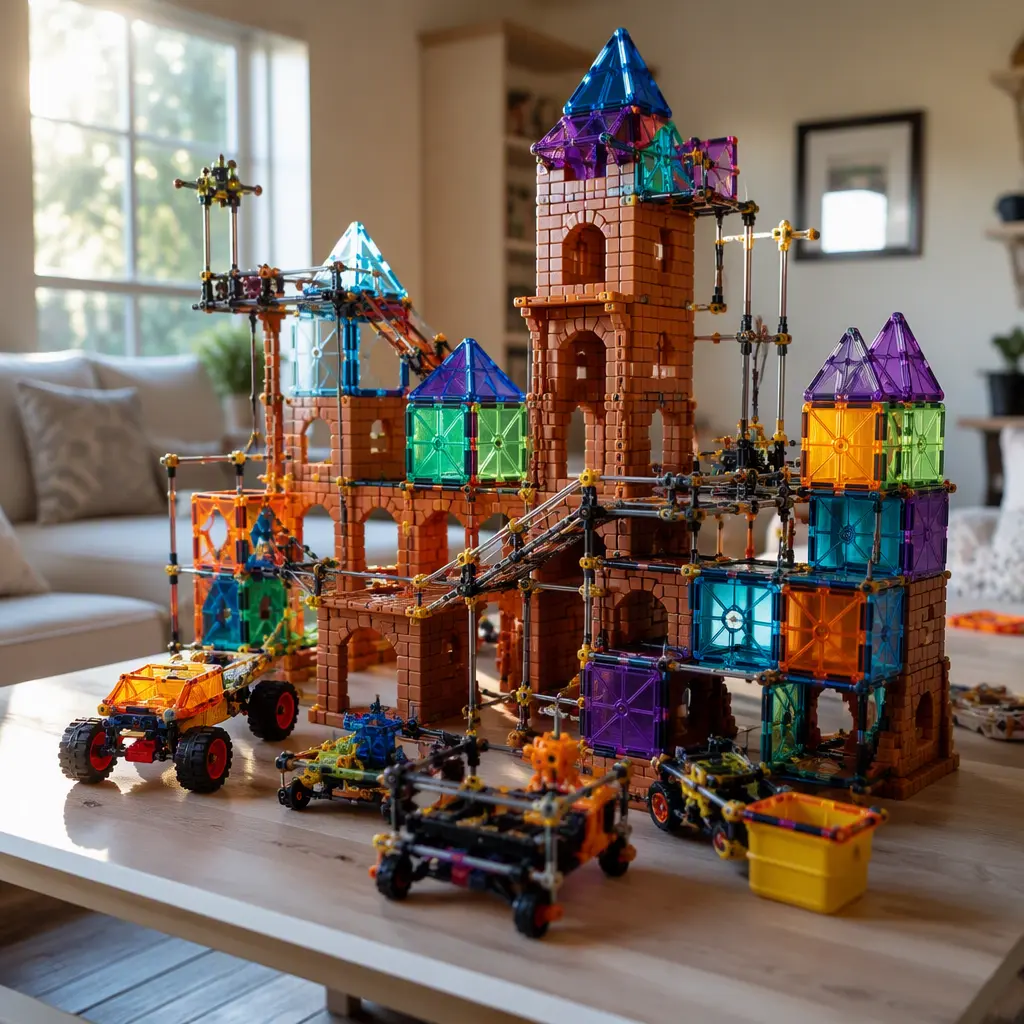
Magnetic tile systems suit children who want faster results and larger structures. They are especially useful for collaborative building because walls and towers go together quickly. Some families prefer them because they create less instruction-based frustration and are easier to sort by shape. However, they are less ideal for detailed vehicles or compact mechanical builds. Connector-and-rod systems occupy a middle ground. They encourage engineering-style experimentation, moving parts, and unusual shapes, but can feel repetitive for children who mainly enjoy storytelling or character-based play. Larger chunky building systems are often the most durable option for rough builders and shared sibling play, though many children around age 8 begin wanting more detail and precision than oversized pieces allow.
- Interlocking bricks: best for detailed creativity, vehicles, long-term compatibility, and large mixed collections.
- Magnetic tiles: best for quick builds, collaborative play, and children who dislike fiddly connectors.
- Connector-and-rod systems: best for engineering-focused kids who enjoy experimenting with structure and movement.
- Chunky construction systems: best for durability, younger siblings, and easier cleanup.
- Gear and motion add-on kits: useful for children interested in moving creations without relying on screens or apps.
Frequently asked questions
Are generic building bricks worth considering?
Generic compatible bricks can make sense for families prioritizing bulk creative play over collecting themed sets. Quality varies, so connector strength and durability are worth checking carefully. Mixed bins often matter more to children than matching packaging or licensed themes.
How much building toy storage is realistically needed?
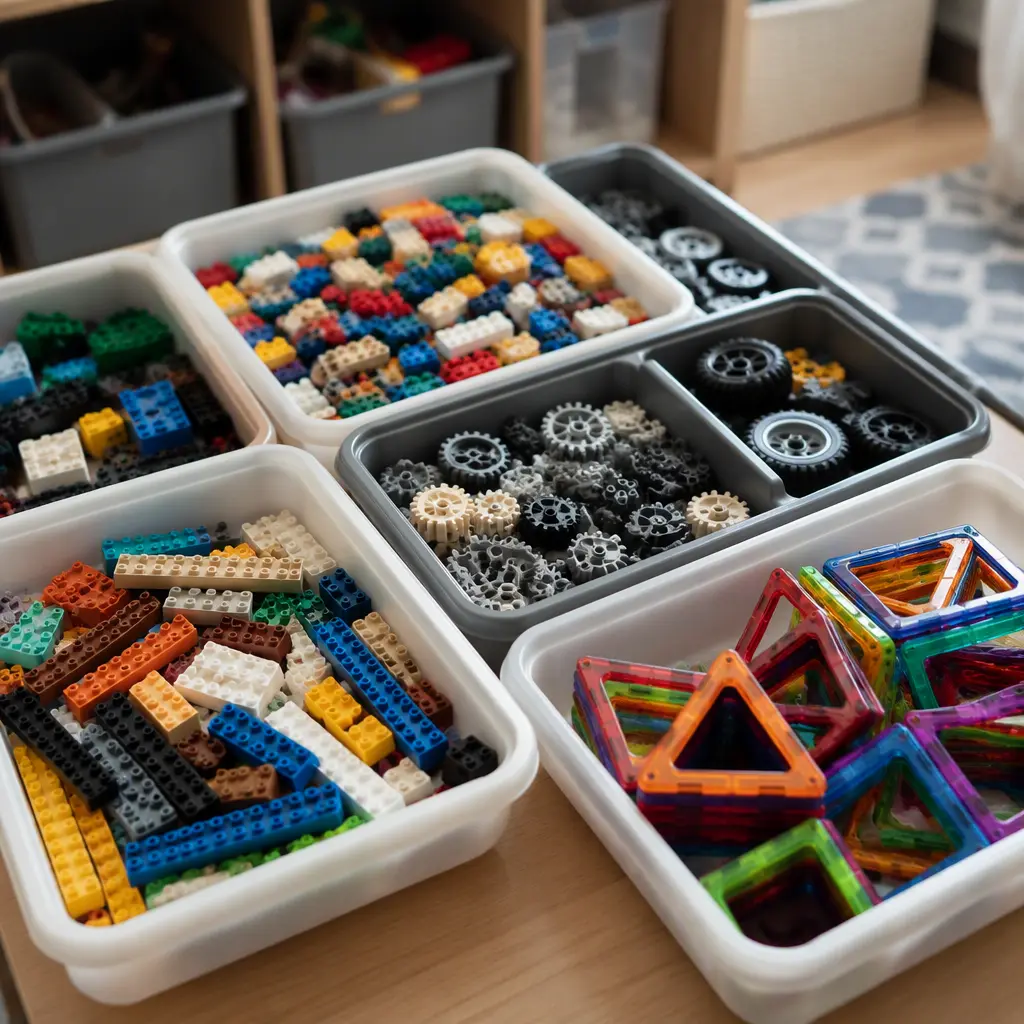
Even moderate collections expand quickly once children start combining systems. Shallow bins, divided drawers, and rolling under-bed storage can help keep pieces accessible without turning cleanup into a daily argument. Transparent containers also make independent tidying easier for this age group.
Do magnetic building toys work well with brick systems?
They usually complement rather than directly connect with brick systems. Many children use magnetic tiles as walls, windows, or scenery around brick-built vehicles and figures. This can broaden creative play even when the pieces are not physically compatible.
Which building toys hold up best to rough play?
Simpler systems with sturdy connectors generally survive repeated rebuilding better than delicate display-oriented kits. Chunkier bricks, strong magnetic tiles, and basic engineering connectors often tolerate transport and rebuilding more successfully than highly decorative pieces with many tiny attachments.
Are instruction-based sets still useful for kids who mix everything together?
Yes. Many children enjoy building the intended model once before repurposing the parts for original creations. Instruction-based sets can introduce useful building techniques while still contributing pieces to a larger shared collection afterward.
For children who constantly merge every construction toy into one evolving world, compatibility and durability usually matter more than themes or collectability. Systems that encourage open-ended building tend to stay interesting longer, especially during the 6–8 age range when creativity and engineering curiosity start overlapping. Choosing toys that can survive rough hybrid builds, store reasonably well, and adapt to changing interests can help construction play remain engaging long after the original set instructions disappear.