Bunchems: The Sticky Building Toy Kids Couldn't Forget
Bunchems arrived in the mid-2010s as a soft, burr-like construction toy that encouraged open-ended creativity while also gaining notoriety for getting tangled in hair.
Compare prices and availability
Check current prices and availability for this guide on eBay.
As an eBay Partner, we may be compensated if you make a purchase.
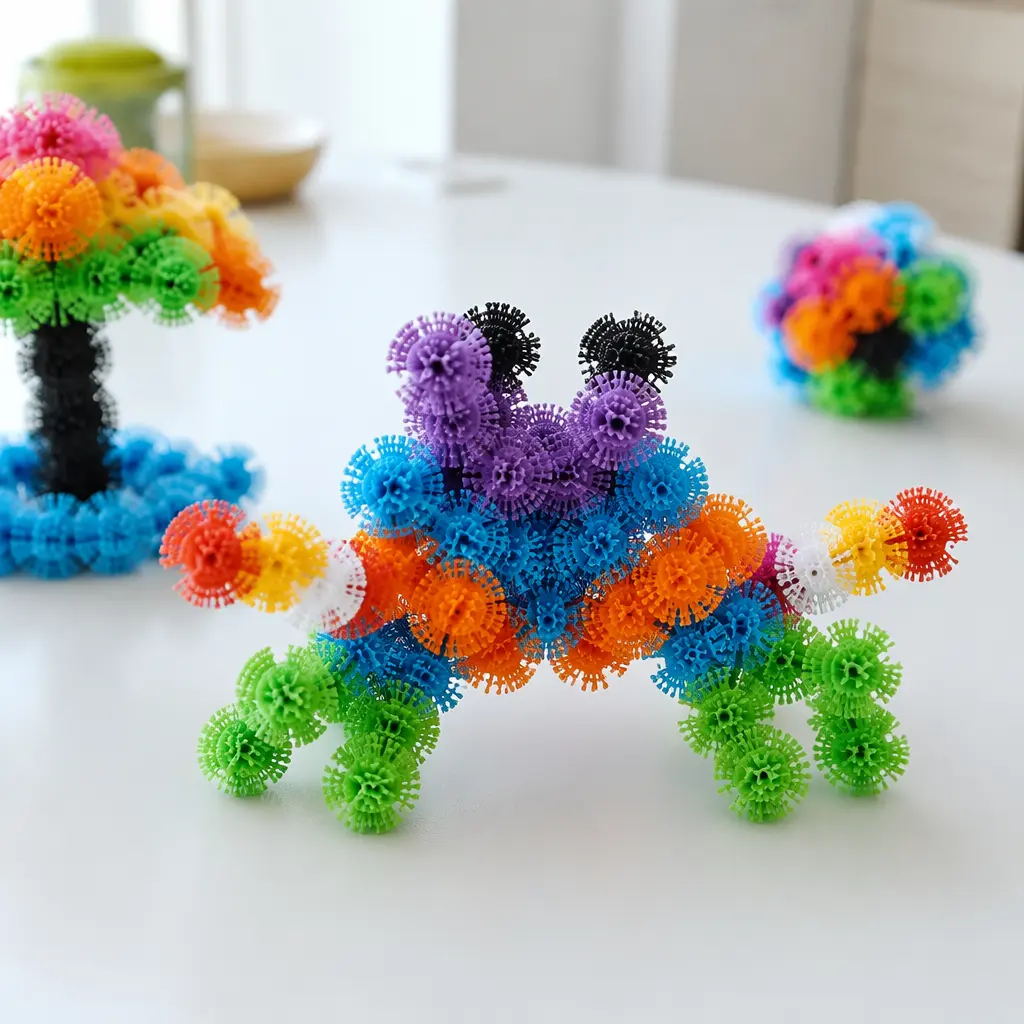
Few toys from the 2010s managed to become both a creative hit and a cautionary tale as quickly as Bunchems. Released during a period when tactile, open-ended building toys were booming, the small burr-covered plastic balls stood out because they stuck together without magnets, clips, or glue. Kids could press them into animals, vehicles, jewelry, or abstract sculptures in seconds. Parents, meanwhile, often remember something else: the toy's tendency to cling stubbornly to hair. That mix of inventive play and practical headaches turned Bunchems into one of the more memorable construction toys of its era.
Where it came from
Bunchems launched in 2015 from Spin Master, a company already known for fast-moving toy trends and activity-based play. The concept was simple but visually unusual: each small plastic sphere was covered in flexible hooks inspired by burrs found in nature. Instead of snapping together with rigid connectors, the pieces clung to one another through friction and texture. The result felt halfway between a classic construction set and an arts-and-crafts material.
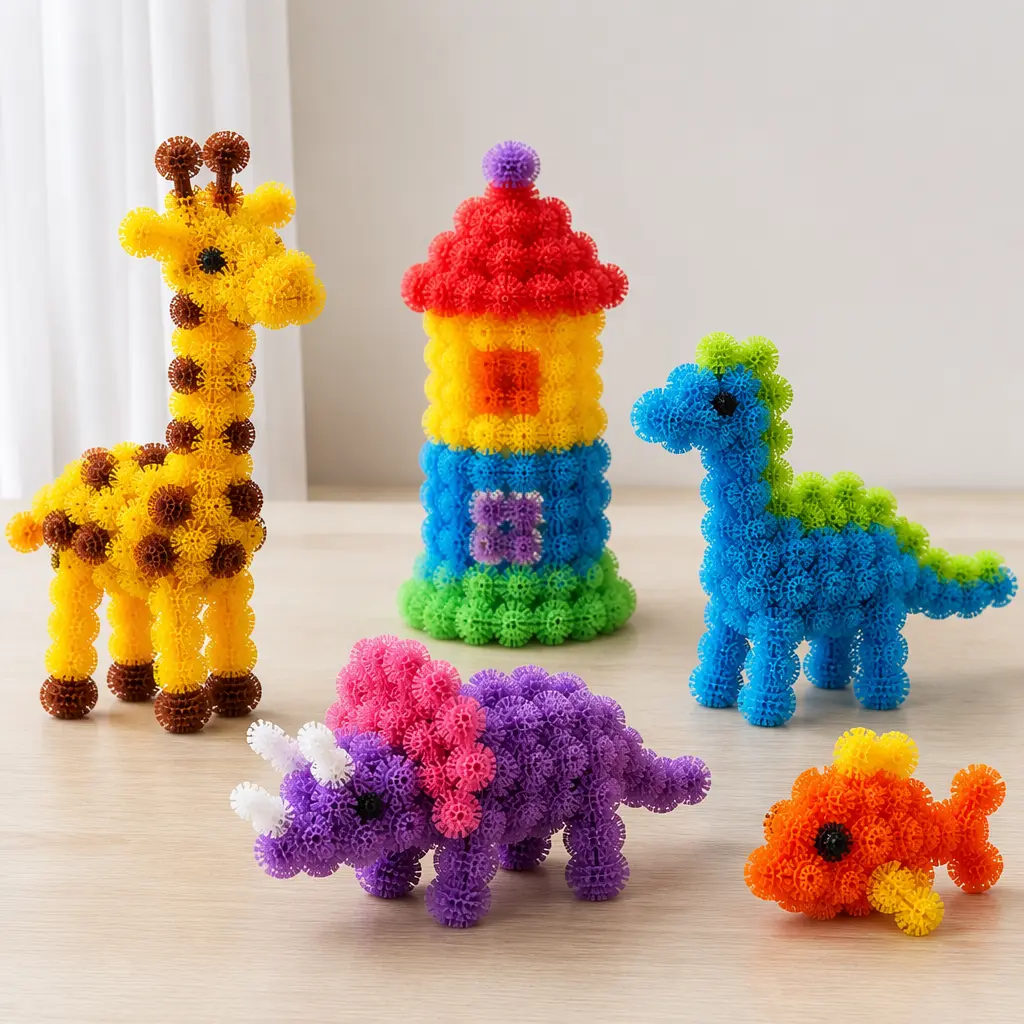
The toy arrived at a time when many parents were looking for screen-free activities that encouraged imagination without requiring detailed instructions. Bunchems fit that niche well. Unlike brick systems built around precise alignment, these pieces allowed children to improvise freely. A pile of loose Bunchems could quickly become a creature, a wearable bracelet, or a colorful landscape. The tactile sensation was a major part of the appeal. Kids often enjoyed simply squeezing, rolling, and pulling apart the pieces as much as building with them.
Why it works
What made Bunchems distinct was the balance between structure and chaos. Traditional building toys often reward planning and precision. Bunchems rewarded experimentation. Pieces attached from nearly any angle, making it easy for younger children to create recognizable forms without frustration. The soft texture also made the toy feel less rigid and mechanical than many plastic construction systems.
The design encouraged short creative cycles. Children could build quickly, take creations apart quickly, and start again without sorting dozens of specialized parts. That instant feedback loop helped keep attention spans engaged. The toy also crossed into sensory play territory because of the unusual texture and satisfying pulling sensation when separating connected clusters.
- Flexible burr-like pieces that connect without magnets or clips
- Open-ended building style with few rules or instructions
- Soft tactile texture that encourages sensory exploration
- Easy for younger children to assemble from multiple angles
- Bright colors that make finished creations visually playful
Who it's for
Bunchems were primarily marketed toward school-age children who enjoyed creative building and craft-style activities. The forgiving design made them approachable for younger builders who might struggle with more technical construction toys. At the same time, older kids often enjoyed creating elaborate creatures or decorative designs. Adults tended to appreciate the toy for its low barrier to entry and imaginative flexibility, though many families eventually established strict ground rules about where the pieces could be used. Long hair, rugs, blankets, and pet fur quickly became known danger zones.
Variants and what to look for today
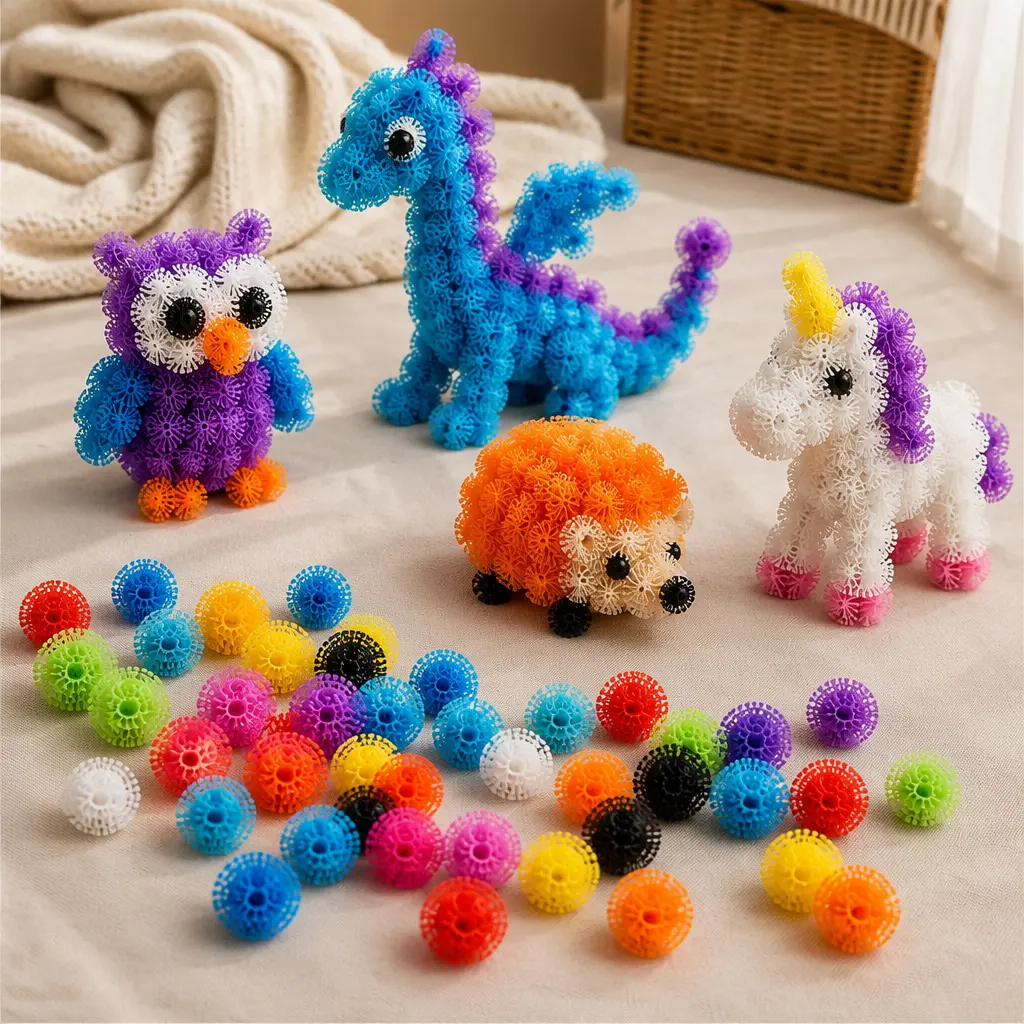
Several Bunchems-themed sets appeared during the toy's peak popularity, including kits focused on animals, vehicles, and character-inspired builds. Accessory packs with eyes, wings, hats, and other decorative pieces helped push the toy closer to craft activity territory. Some sets emphasized guided construction, while others leaned fully into freeform play.
Today, Bunchems can still be found through online marketplaces, toy resellers, and leftover retail stock, though availability varies. Buyers looking for secondhand sets should pay attention to cleanliness and storage conditions because loose pieces easily collect lint and hair over time. Generic burr-ball construction toys also became common after Bunchems gained popularity. Some alternatives use softer materials or larger piece sizes, while others have rougher textures that can be harder to separate.
- Look for sets with storage containers to reduce loose-piece mess
- Check whether accessory parts are included in used bundles
- Avoid heavily worn pieces that may trap dust or fibers
- For younger children, larger-piece alternatives may be easier to handle
- Keep play surfaces clear of blankets, carpets, and long hair
Frequently asked questions
Why did Bunchems get such a strong reputation for tangling in hair?
The same hook-like texture that allowed the pieces to stick together also made them cling tightly to strands of hair. When pressed or rolled into hair accidentally, the pieces could become difficult to remove without patience and conditioner or oil-based products.
Are Bunchems still sold in stores?
They appear less commonly than during their peak years, but some retailers and online marketplaces still carry remaining stock or secondhand sets. Similar burr-style construction toys are also widely available.
Do Bunchems work more like blocks or craft supplies?
They sit somewhere in between. Children can build three-dimensional structures, but the freeform and tactile nature of the pieces often feels closer to a craft activity than a traditional engineering set.
What ages are they best suited for?
They generally work best for children old enough to avoid putting small pieces in their mouths and patient enough to separate connected clusters carefully. Adult supervision is helpful for younger users, especially around hair and fabrics.
Bunchems remain one of the more distinctly remembered toys of the 2010s because they combined genuine creative freedom with a design quirk that families could not ignore. For many kids, the toy delivered exactly what modern construction play aims for: quick experimentation, tactile engagement, and imaginative building without strict rules. For many parents, it also delivered an unforgettable lesson about keeping sticky toys far away from hairbrushes.