Best Compact Marble Runs for Kids in Small Spaces
A parent-focused guide to compact marble runs for ages 6–8, with tips on contained builds, cleanup, storage, noise, durability, and safer play in apartments or shared bedrooms.
Compare prices and availability
Check current prices and availability for this guide on eBay.
As an eBay Partner, we may be compensated if you make a purchase.
Compact marble runs can work well in apartments, shared bedrooms, and homes where floor space is limited, but the right setup matters. Large open-ended marble systems often spread across the room, create constant cleanup, and send marbles rolling under furniture. For children aged 6 to 8, a smaller footprint usually leads to more successful play because the build stays manageable and the child can focus on experimenting with speed, height, and track design without becoming overwhelmed. Parents looking for a quieter, easier-to-store construction toy should pay attention to base size, piece count, and how well the set keeps marbles contained during play.
What to look for
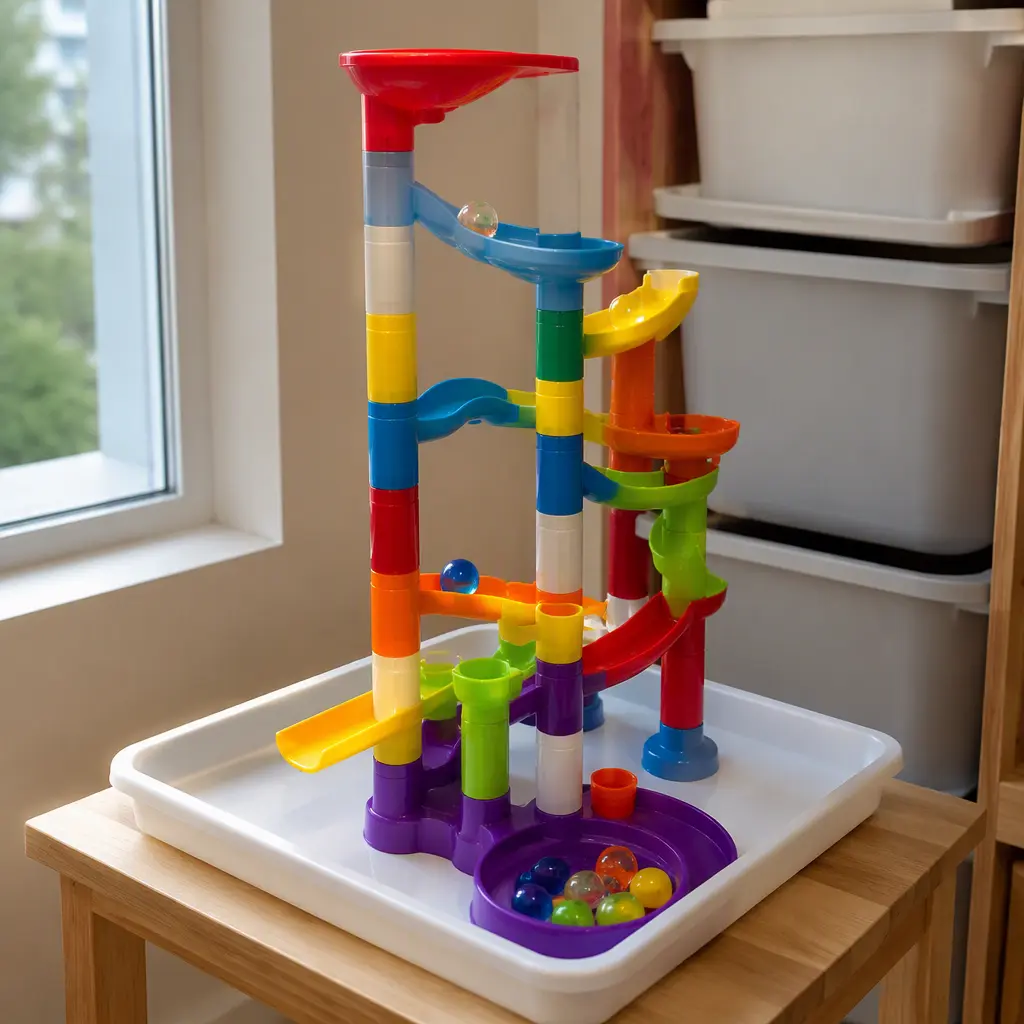
The most apartment-friendly marble runs tend to use vertical building rather than wide layouts across the floor. A contained footprint reduces stray pieces and makes cleanup faster before bedtime or shared-room quiet hours. Durability also matters because compact sets are often rebuilt repeatedly instead of left assembled permanently. Children in the 6–8 range usually benefit from systems that balance creative freedom with enough structure to prevent frustration.
- Look for trays, baseplates, or interlocking foundations that help keep builds stable on small surfaces.
- Choose medium-sized pieces that are easier to grip and less likely to disappear under furniture.
- Lower piece counts are often more manageable in shared bedrooms and still allow creative builds.
- Consider noise levels. Wooden or foam-supported systems are usually quieter than hard plastic tracks on hardwood floors.
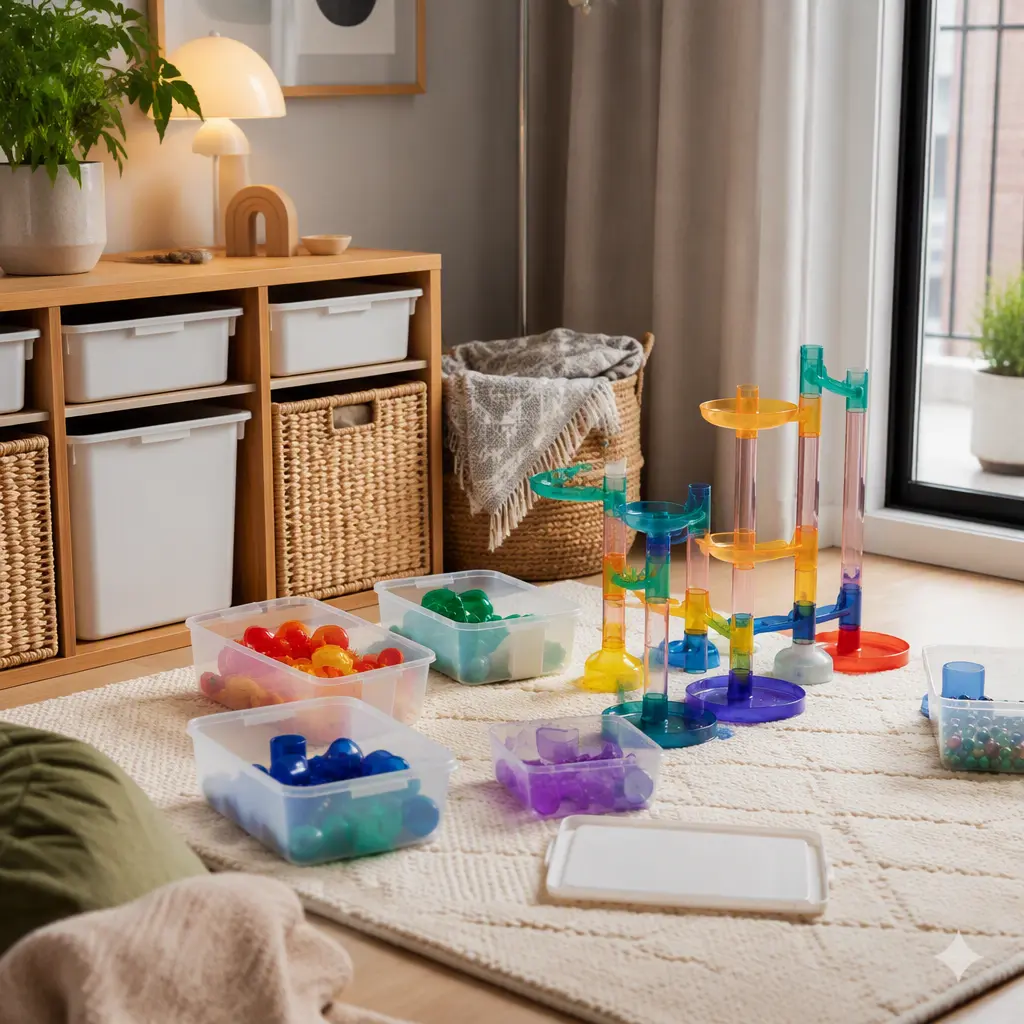
- Check storage needs before buying. Stackable bins or sets that fit back into one box are easier to manage in apartments.
- Some marble runs emphasize free-form engineering while others include guided builds. Guided systems may suit children who get frustrated easily.
- Magnetic or snap-fit pieces can reduce accidental collapses but may cost more than simpler gravity-based sets.
Age suitability
Most marble runs labeled for ages 6 to 8 are designed for children who can follow multi-step builds and experiment independently for short periods. Younger children in this range may prefer simpler systems with larger components and fewer balancing challenges, while older children often enjoy creating taller or more complex runs within a compact space. Families with younger siblings should pay attention to marble size and storage habits because loose marbles can become a hazard outside supervised play. Compact sets also suit children who enjoy puzzle-solving and repeated experimentation more than fast-paced action play.
Options compared
Compact marble runs generally fall into a few broad categories, each with different trade-offs for small homes. Traditional plastic gravity-track systems are usually the easiest to find and often offer the widest variety of pieces. They support experimentation and taller builds, but some are noisy when marbles travel quickly over hard plastic. Lightweight towers may also wobble if built on carpet or uneven flooring.
Wood-based marble runs tend to look calmer in shared living spaces and are often quieter during play. Many use grooves, ramps, or modular blocks rather than large elevated towers. These systems may suit families who want screen-free building toys that can stay visible in a bedroom or living room without dominating the space. The trade-off is that wooden systems sometimes allow fewer dramatic stunts or enclosed pathways than plastic sets.
- Vertical tower marble runs: Best for maximizing play in small footprints. Good for children who enjoy rebuilding often. Can become noisy on hard floors.
- Baseplate marble runs: More stable and easier to contain. Helpful for children frustrated by collapsing builds.
- Wooden modular runs: Usually quieter and visually simpler. Often easier to store but may have fewer moving features.
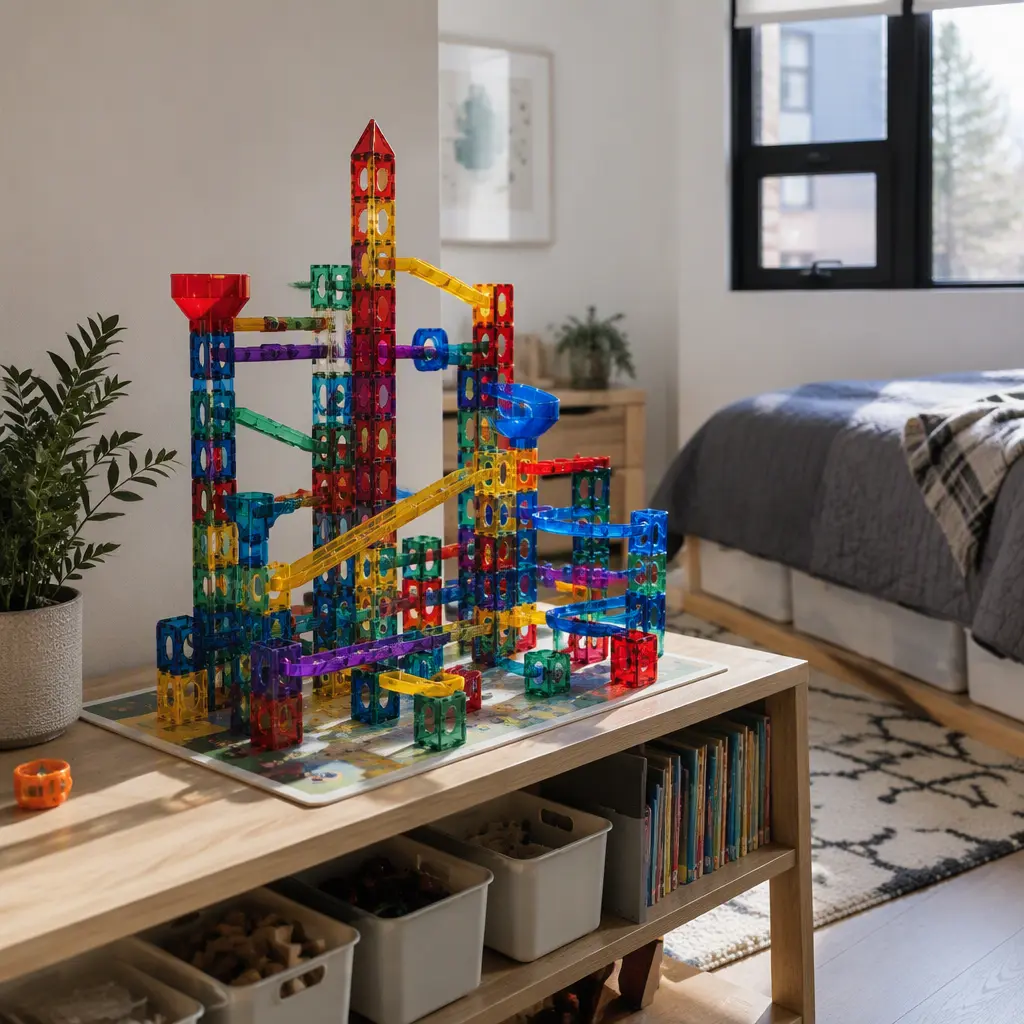
- Magnetic construction marble runs: Flexible for creative building and wall-like structures, but pieces may scatter if builds collapse.
- Marble maze hybrids: Combine puzzle-solving with marble movement. Suitable for children who enjoy planning more than fast motion.
- Compact starter sets: Easier cleanup and lower storage demands. Good for shared bedrooms or families unsure about long-term interest.
Frequently asked questions
Are compact marble runs still engaging for older kids?
Many children ages 6 to 8 stay engaged with smaller marble runs when the system allows experimentation. Height limits and fewer pieces can actually encourage more thoughtful problem-solving because children work within constraints instead of building oversized layouts that collapse easily.
How can parents reduce cleanup problems?
A shallow tray, play mat with raised edges, or dedicated tabletop area can help keep pieces contained. Some families store marbles separately in a small container so counting and cleanup are faster before bedtime. Choosing sets with fewer tiny connectors also helps.
Do marble runs work well in shared bedrooms?
They can, especially compact sets designed for tabletop play. Smaller systems are easier to pause and move if another child needs the room. Quieter materials and shorter runs may also reduce conflict during evening playtime.
What type is easiest for beginners?
Starter sets with illustrated build guides and stable base components are often the easiest entry point. Children who are new to marble runs usually benefit from successful builds early on before moving to more open-ended systems.
Are marble runs mainly educational toys?
They are primarily play-focused construction toys, but they naturally encourage experimentation with gravity, speed, balance, sequencing, and problem-solving. For many children, the appeal comes from testing ideas repeatedly rather than following formal learning activities.
For families managing limited space, compact marble runs can offer a good balance between creative building and practical cleanup. Smaller, more contained systems are often easier for children to use independently and easier for adults to store, supervise, and maintain. Choosing a set that matches both the child’s patience level and the realities of the home environment usually leads to longer-lasting play value than simply choosing the largest option available.