Magnetic Tiles vs Bristle Blocks for Sensory-Seeking Toddlers
Compare magnetic tiles and bristle blocks for sensory-seeking toddlers ages 1–2. Learn how grip, cleanup, noise, frustration levels and supervision needs affect everyday play.
Compare prices and availability
Check current prices and availability for this guide on eBay.
As an eBay Partner, we may be compensated if you make a purchase.
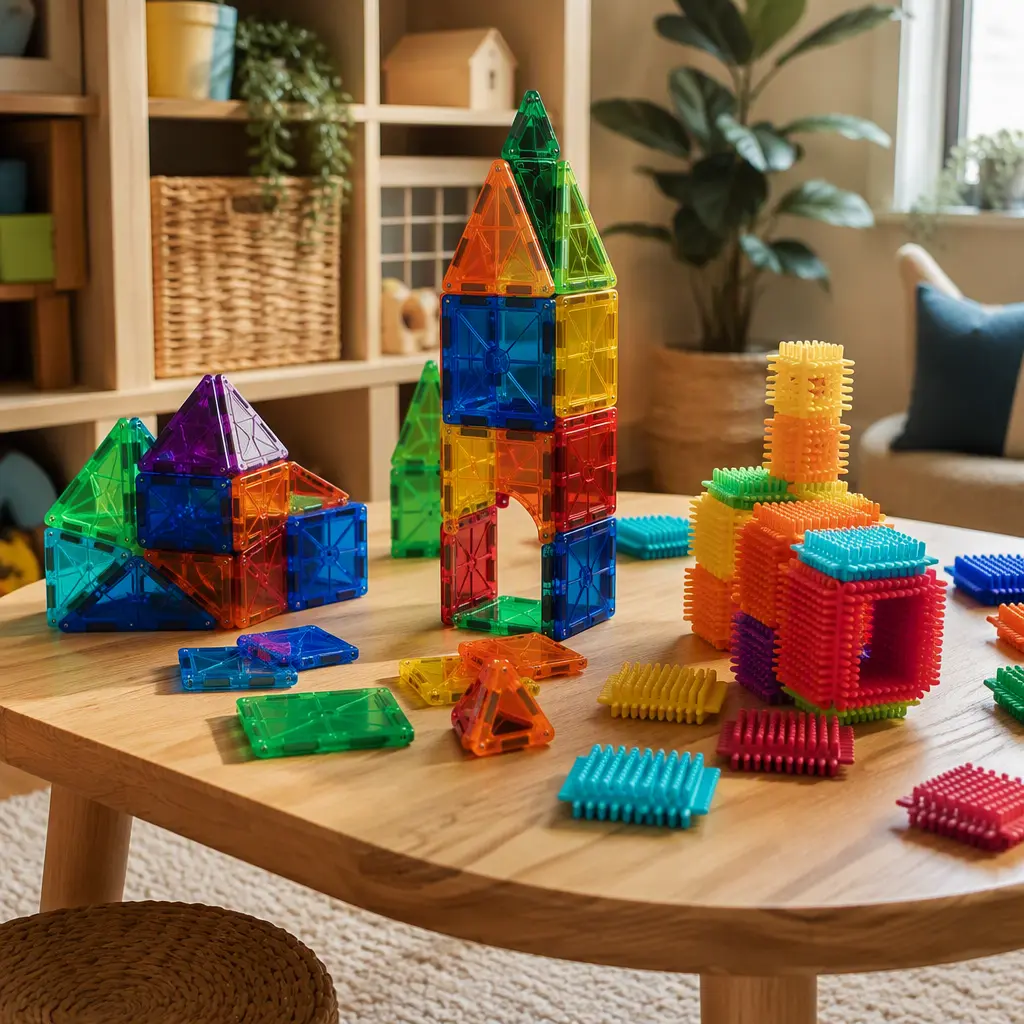
For toddlers who constantly fidget, tap, squeeze or take toys apart, building toys can work as both play and sensory input. Magnetic tiles and bristle blocks are two common choices for children around ages 1–2, but they feel very different in everyday use. One offers smooth clicking connections and open-ended stacking, while the other focuses more on tactile feedback and easier gripping for smaller hands. Parents deciding between them often care less about complicated builds and more about frustration levels, noise, cleanup and whether a toy keeps a child engaged without becoming overwhelming. The right choice depends on how your child responds to textures, resistance, sound and repetition during play.
What to look for
Sensory-seeking toddlers often use construction toys differently from older children. Instead of building detailed structures, they may repeatedly connect and pull apart pieces, rub textures between their fingers or enjoy the sounds the toys make when dropped or stacked. That means comfort, durability and ease of handling matter more than advanced building possibilities at this age.
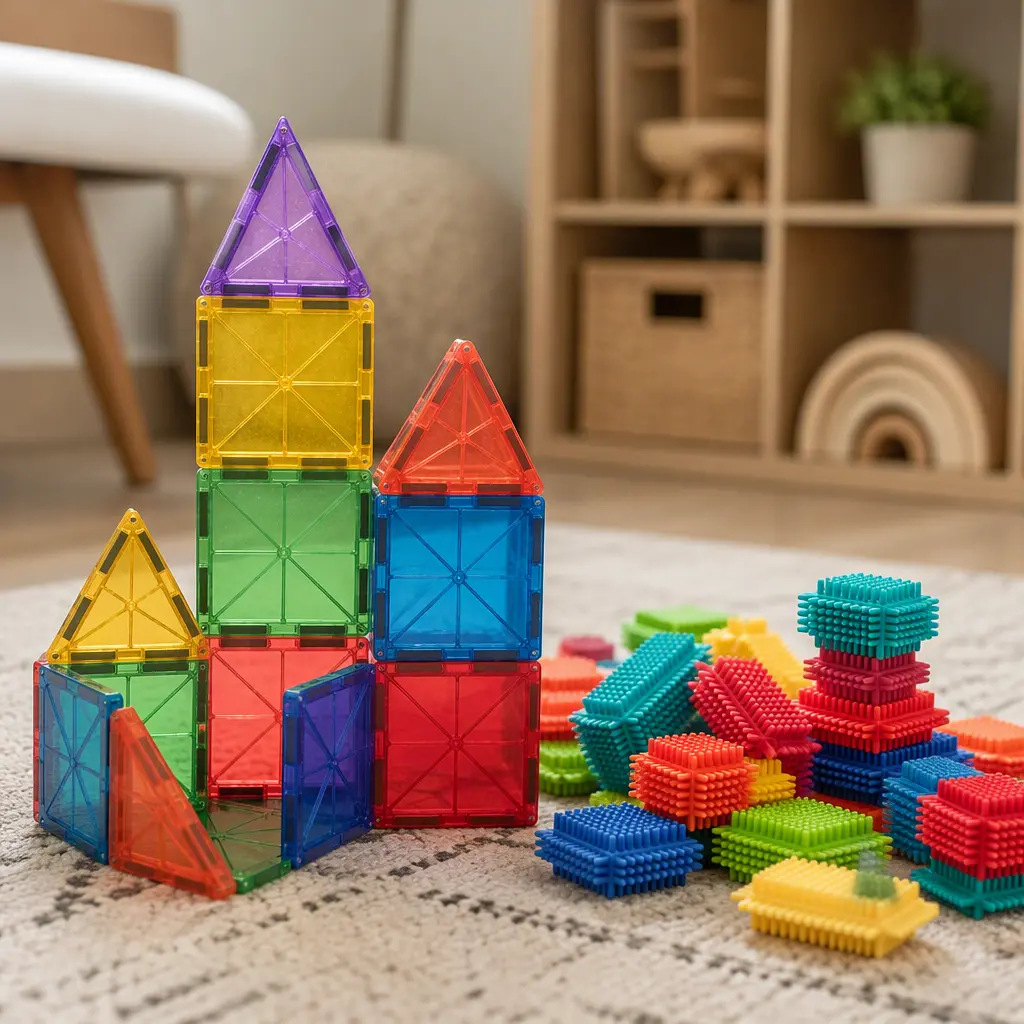
- Grip and hand strength: Bristle blocks are usually easier for younger toddlers to grab because the soft bristles create friction. Magnetic tiles are smoother and may slide apart more easily in small hands.
- Connection resistance: Some children enjoy the push-and-pull effort of bristle blocks because it provides stronger sensory feedback. Others become frustrated by pieces that require too much force to separate.
- Noise level: Magnetic tiles can create sharp clicking and clattering sounds on hard floors. Bristle blocks are generally quieter, especially during dumping and cleanup.
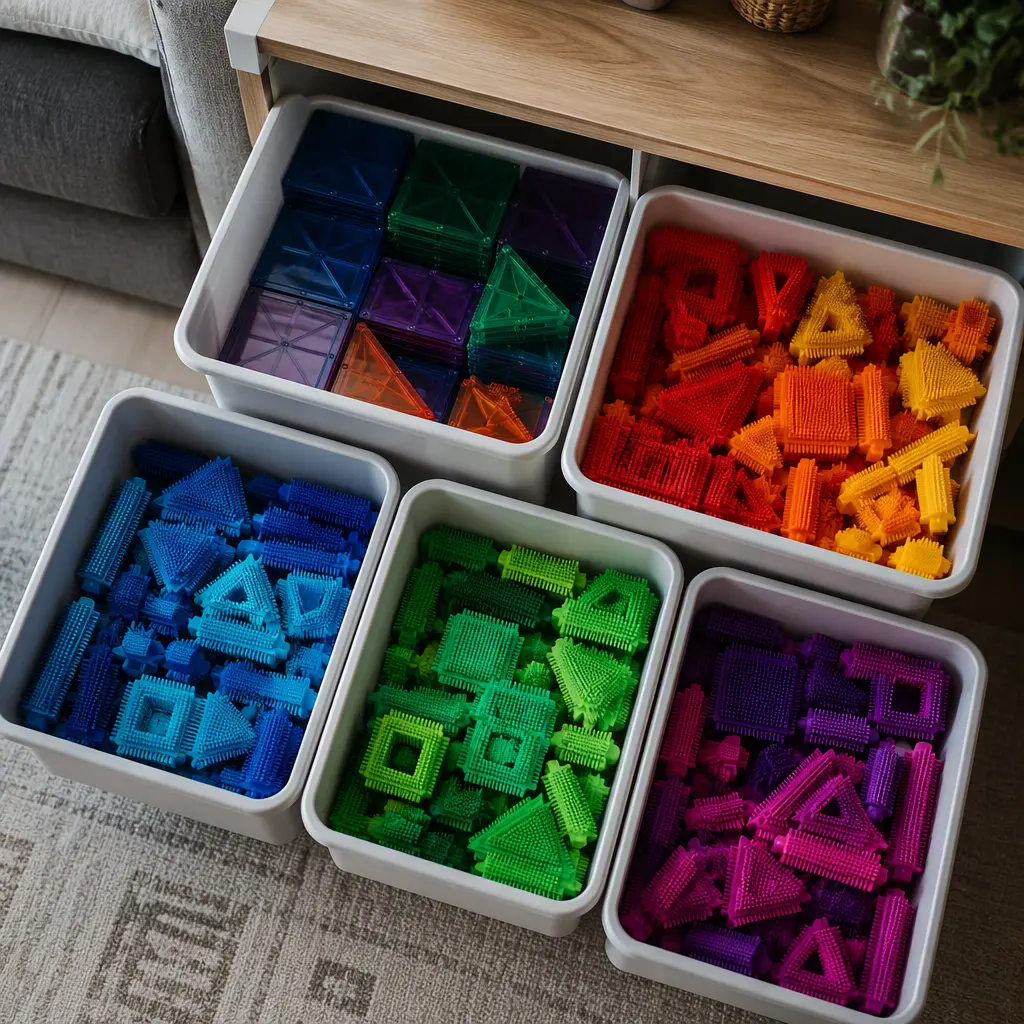
- Cleanup and storage: Magnetic tiles stack flat and compactly, which helps in smaller homes. Bristle blocks take up more volume because the textured pieces do not nest as neatly.
- Mess and maintenance: Bristle textures can trap dust, crumbs or pet hair more easily than smooth magnetic surfaces.
- Durability for rough play: Both toy types are designed for repeated handling, but magnetic tiles should be checked regularly for cracks or damage because of the enclosed magnets.
- Open-ended play potential: Magnetic tiles often stay useful longer into preschool and early school years, while bristle blocks tend to appeal most strongly during the toddler stage.
Age suitability
For children between 1 and 2 years old, larger bristle blocks are often easier to start with because they support simple connecting and pulling motions without requiring precise alignment. Many toddlers can independently snap pieces together after a short demonstration. Magnetic tiles can still work well near the upper end of this age range, especially for children who already enjoy stacking toys or shape sorters, but younger toddlers may need more help lining up edges and balancing builds. Parents should also remember that some magnetic construction toys are marketed for older preschoolers due to smaller pieces or more advanced designs, so checking age guidance carefully matters more than choosing by appearance alone.
Options compared
Magnetic tiles usually suit toddlers who enjoy repetitive clicking, visual patterns and stacking games. The magnetic pull provides immediate feedback with less physical effort, which can reduce frustration for children who lose patience quickly. They also work well for children who like knocking towers down and rebuilding them repeatedly. However, magnetic structures can collapse easily when handled roughly, which may frustrate toddlers seeking stronger resistance or firmer connections.
Bristle blocks tend to suit children who seek tactile input through their hands. The soft, textured surface gives constant sensory feedback even when the child is not actively building. Many toddlers enjoy squeezing handfuls of pieces or slowly pulling connected blocks apart. Because the connections require more pressure, bristle blocks can keep busy hands occupied longer, but they may also tire younger toddlers faster. Parents sensitive to toy noise often prefer them because they are quieter on wood or tile floors.
- Choose magnetic tiles if your child enjoys visual building, repetitive clicking sounds, stacking and easier cleanup.
- Choose bristle blocks if your child seeks tactile textures, likes pushing and pulling resistance, or becomes overstimulated by loud toy noise.
- Avoid magnetic tiles for children who throw toys frequently onto hard surfaces unless supervised closely.
- Avoid bristle blocks if storage space is limited or if textured toys are difficult to keep clean in your home environment.
- For shared-age playrooms, magnetic tiles may stay useful longer as children grow into more advanced building play.
- For quick independent play sessions, bristle blocks are often simpler for younger toddlers to manipulate without adult help.
Frequently asked questions
Are magnetic tiles too advanced for a 1-year-old?
Some 1-year-olds enjoy basic stacking and connecting with larger magnetic pieces, but many still need hands-on help. Simpler builds and supervised exploration are usually more realistic than complex construction at this age.
Do bristle blocks help fine motor skills?
They can support hand strength and coordination because children push pieces together and pull them apart repeatedly. The textured grip may also help toddlers who struggle with slippery toys.
Which option is quieter in small apartments?
Bristle blocks are generally quieter. Magnetic tiles can make louder clicking and crashing sounds, especially on hardwood or tile floors. A foam play mat can reduce noise for either option.
Which toy creates less frustration for sensory-seeking kids?
That depends on the type of sensory input the child prefers. Children who enjoy strong tactile resistance may stay calmer with bristle blocks, while children who prefer quick success and repetitive clicking may respond better to magnetic tiles.
Is it reasonable to own both?
For families with storage space, the two toys can complement each other well. Magnetic tiles support visual building and open-ended structures, while bristle blocks provide more hands-on sensory texture and resistance-based play.
For most sensory-seeking toddlers ages 1–2, the better choice comes down to how they regulate through play. Bristle blocks usually provide stronger tactile feedback and quieter, lower-frustration play for younger toddlers. Magnetic tiles often offer longer-term versatility and neater storage for growing families. Watching how your child responds to textures, resistance, sound and repetition can make the decision clearer than focusing on complex building features alone.