Magnetic Tiles vs Suction Builders for Travel Play
Compare magnetic tiles and suction builders for travel with preschoolers. Learn which works better for tray tables, cleanup, quiet play, storage, and reducing lost-piece stress.
Compare prices and availability
Check current prices and availability for this guide on eBay.
As an eBay Partner, we may be compensated if you make a purchase.
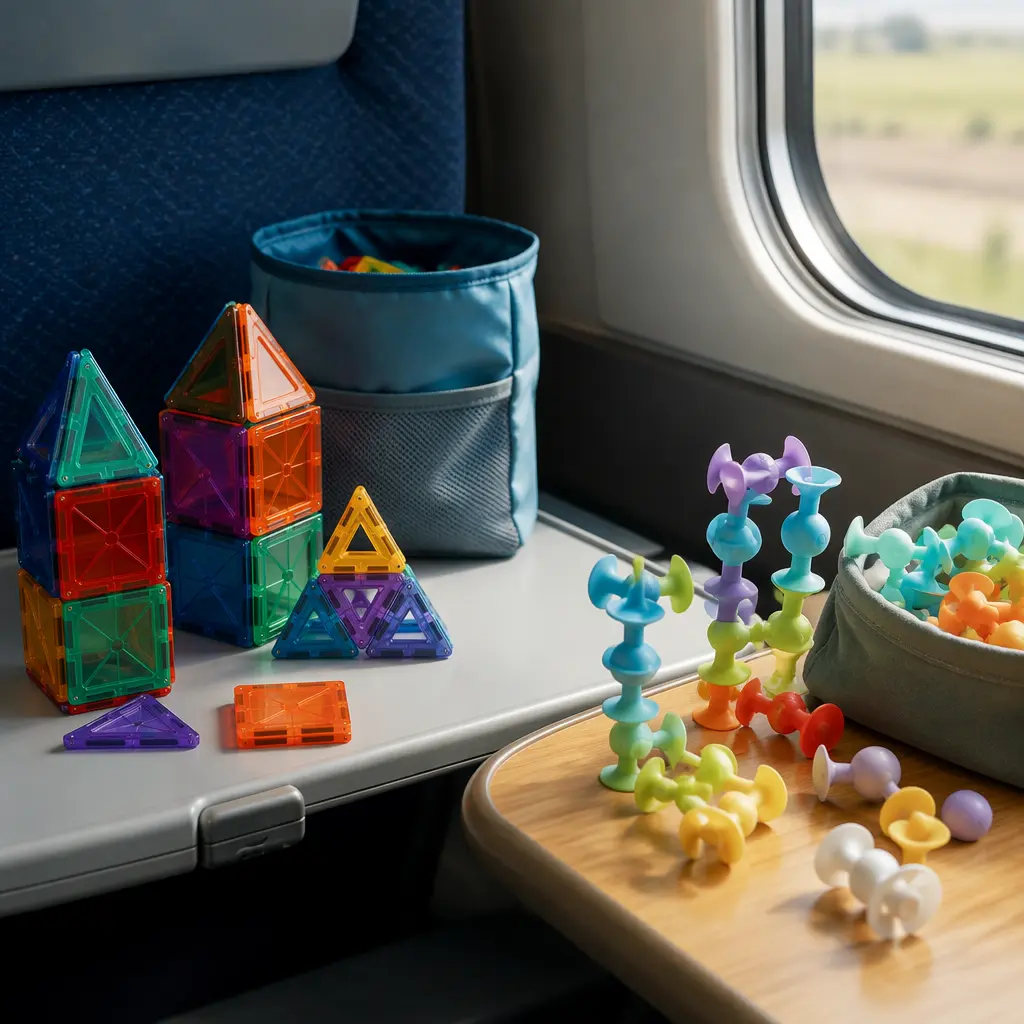
Portable building toys can make flights, train rides, restaurant waits, and hotel downtime much easier with preschoolers. Two common choices for ages 3 to 5 are magnetic tiles and suction builders. Both encourage open-ended, screen-free play, but they behave very differently in tight spaces. The better option often depends less on creativity and more on practical details such as how easily pieces stay contained, whether they slide off tray tables, how noisy they are, and how stressful cleanup feels when boarding is called or the car stops for a break.
What to look for
Travel building toys need different strengths than toys used at home. A large construction set that works well on a playroom floor may become frustrating in a car seat or airplane seat. Parents often get the best results by focusing on portability and containment first, then considering creativity and expansion potential second.
- Piece count matters more than size during travel. Smaller sets are usually easier to manage in airports, waiting rooms, and restaurants.
- Look for toys that stay stable on tray tables or vertical surfaces instead of sliding easily onto the floor.
- Consider noise level. Hard plastic magnetic tiles can click loudly during quiet travel situations.
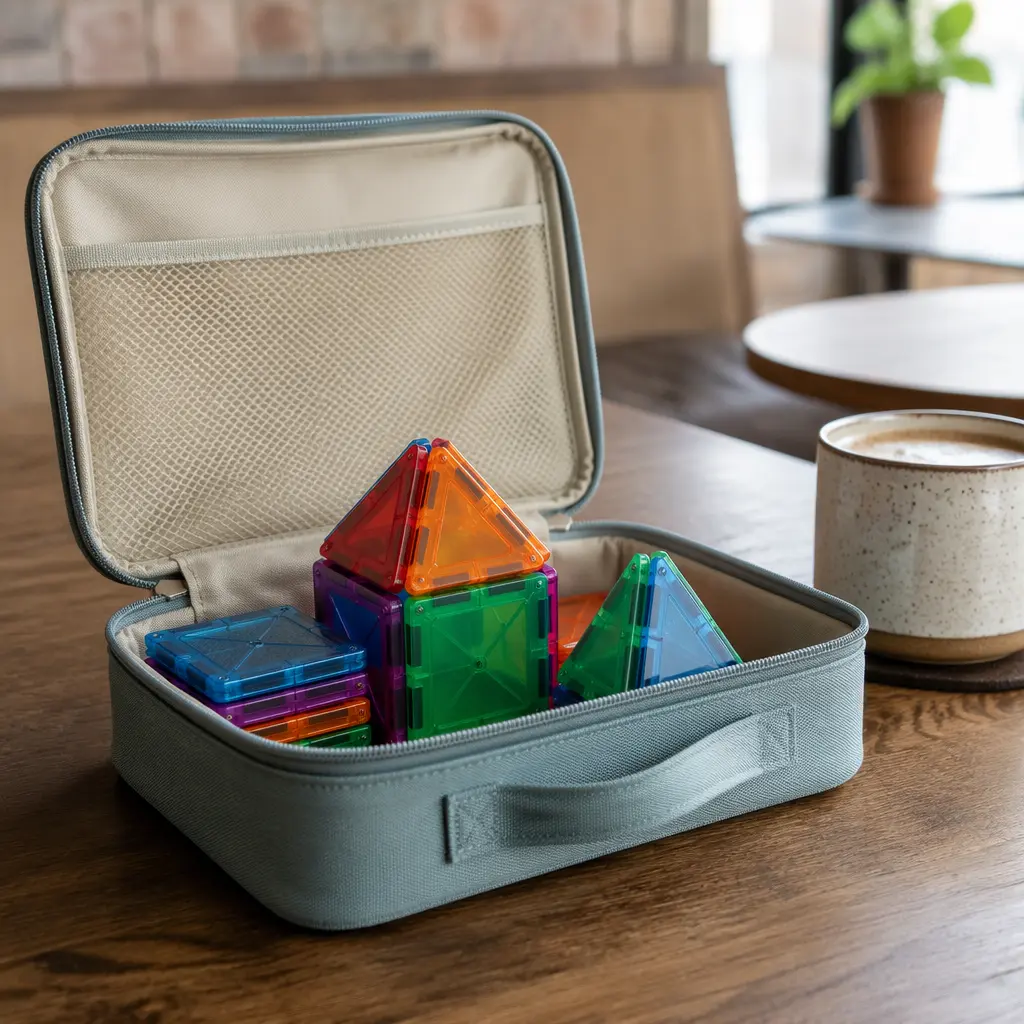
- Check storage needs. Flexible silicone suction pieces often compress into smaller bags than rigid tiles.
- Think about cleanup speed. Toys that connect to each other are usually easier to gather quickly.
- Watch for lost-piece risk. Small connector pieces can disappear under seats or in hotel rooms.
- Choose age-appropriate difficulty. Preschoolers generally enjoy simple stacking and connecting more than instruction-based builds.
Age suitability
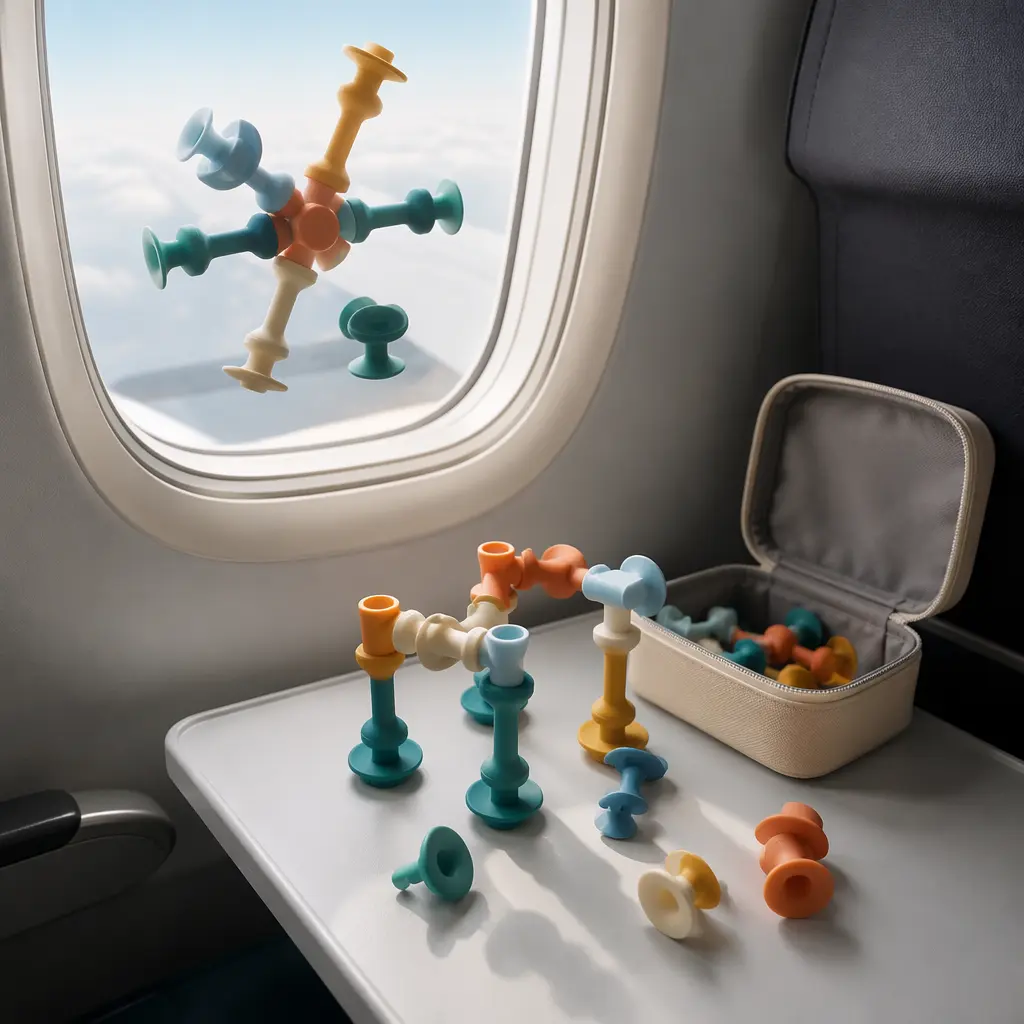
For ages 3 to 5, both toy types can work well, but they support slightly different play styles. Magnetic tiles are usually easier for younger preschoolers to understand immediately because the pieces connect with minimal effort. They suit children who enjoy building houses, towers, roads, and flat patterns. Suction builders often appeal more to children who like sensory play and experimentation, since the pieces stretch, pop, twist, and attach to smooth surfaces. Some younger 3-year-olds may need extra help separating tightly attached suction pieces at first. Older preschoolers often enjoy combining suction builders into wearable creations, rolling chains, or unusual structures attached to windows and trays.
Options compared
Magnetic tiles are often the better choice for children who enjoy structured building and recognizable creations. Their flat shapes make them relatively easy to stack in a backpack, and many preschoolers can build independently without adult help. During travel, however, they have some drawbacks. Hard tiles can slide off smooth tray tables during turbulence or sharp turns in the car. They also tend to spread outward as children build larger structures, which increases cleanup time in cramped spaces. If a set includes very small accessories, parents may spend more time checking under seats before leaving.
Suction builders usually work better for active travel environments where stability matters more than large construction projects. Because they stick to windows, trays, and each other, they are less likely to scatter onto the floor. Many parents also appreciate that silicone-style pieces tend to be quieter than rigid plastic toys. The trade-off is that suction toys can attract lint and crumbs inside travel bags, and some children become more interested in popping and stretching than actual building. They also depend on smooth surfaces to work well, so performance varies between cars, airplanes, restaurants, and hotel furniture.
- Choose magnetic tiles if your child prefers classic building play, enjoys making recognizable structures, and usually plays calmly at a table.
- Choose suction builders if tray-table stability, fast cleanup, and reduced floor drops are higher priorities.
- For frequent flights, smaller suction sets are often easier to manage in tight seating areas.
- For road trips and hotel stays, magnetic tiles may offer longer independent play sessions.
- Families with limited luggage space may prefer flexible suction pieces because they compress more easily.
- Children sensitive to sensory textures may prefer smooth magnetic tiles over tacky-feeling suction materials.
Frequently asked questions
Are magnetic tiles safe for airplane tray tables?
They can work well on tray tables, but movement during travel may cause structures to slide or collapse. Smaller builds are usually more manageable than large towers. A compact set with fewer pieces is often easier for flights than a full-sized home collection.
Do suction builders leave marks on surfaces?
Most suction-style preschool builders are designed for temporary play and generally remove cleanly from smooth surfaces. It is still worth checking surfaces occasionally and avoiding delicate finishes in hotels or restaurants.
Which option is quieter for restaurants and waiting rooms?
Suction builders are usually quieter overall because they are softer and less likely to clatter onto hard floors. Magnetic tiles can become noisy when stacked, dropped, or snapped together repeatedly.
How many pieces are practical for travel?
For ages 3 to 5, a smaller travel-focused set is often enough. Around 15 to 30 pieces generally supports creative play without making cleanup stressful. Large collections are usually better kept for home use.
Which toy type has a lower lost-piece risk?
Suction builders usually stay contained more effectively because they attach to surfaces and to each other. Magnetic tiles are easier to spot visually, but individual pieces can slide under seats or furniture more easily during travel.
For most travel situations with preschoolers, the decision comes down to whether your child values traditional building or active sensory play. Magnetic tiles often provide more satisfying construction possibilities, while suction builders tend to reduce cleanup stress and tray-table frustration. A compact set, limited piece count, and easy storage bag usually matter more than buying the largest or most elaborate option.