Magnetic Tiles vs Wooden Blocks for Small Apartments
Comparing magnetic tiles and wooden blocks for ages 3–5 in small homes, with practical advice on storage, noise, durability, replay value and supervision needs.
Compare prices and availability
Check current prices and availability for this guide on eBay.
As an eBay Partner, we may be compensated if you make a purchase.
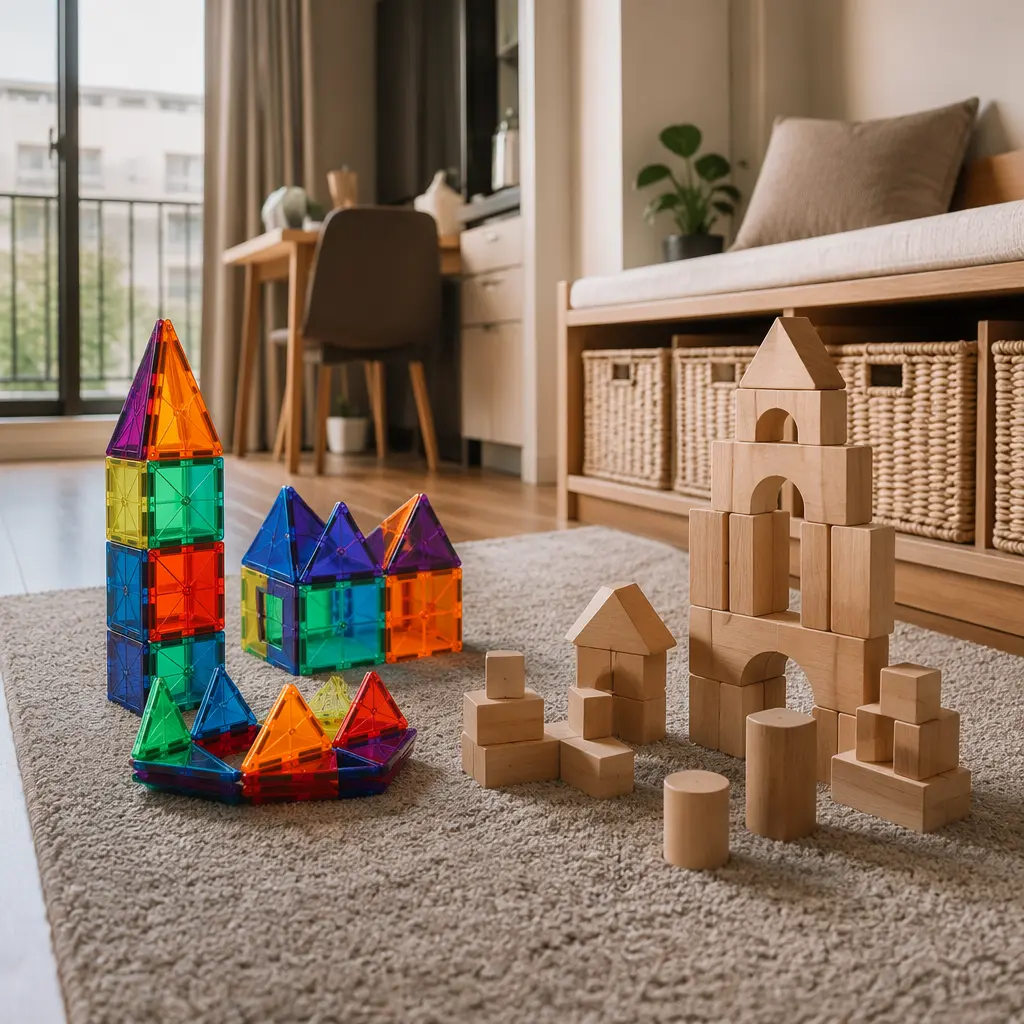
Magnetic tiles and wooden blocks are both strong choices for preschool building play, but they work differently in small apartments where storage, floor noise and cleanup matter every day. For children aged 3–5, both options support open-ended play, fine motor skills and early problem-solving without needing screens or batteries. The better fit often depends less on the child’s interest in construction and more on the realities of your home: thin floors, limited toy storage, shared living areas and how much setup and supervision parents can manage. Magnetic tiles usually take up less space and create taller structures quickly, while wooden blocks tend to last longer through rough handling and encourage more physically grounded building play.
What to look for
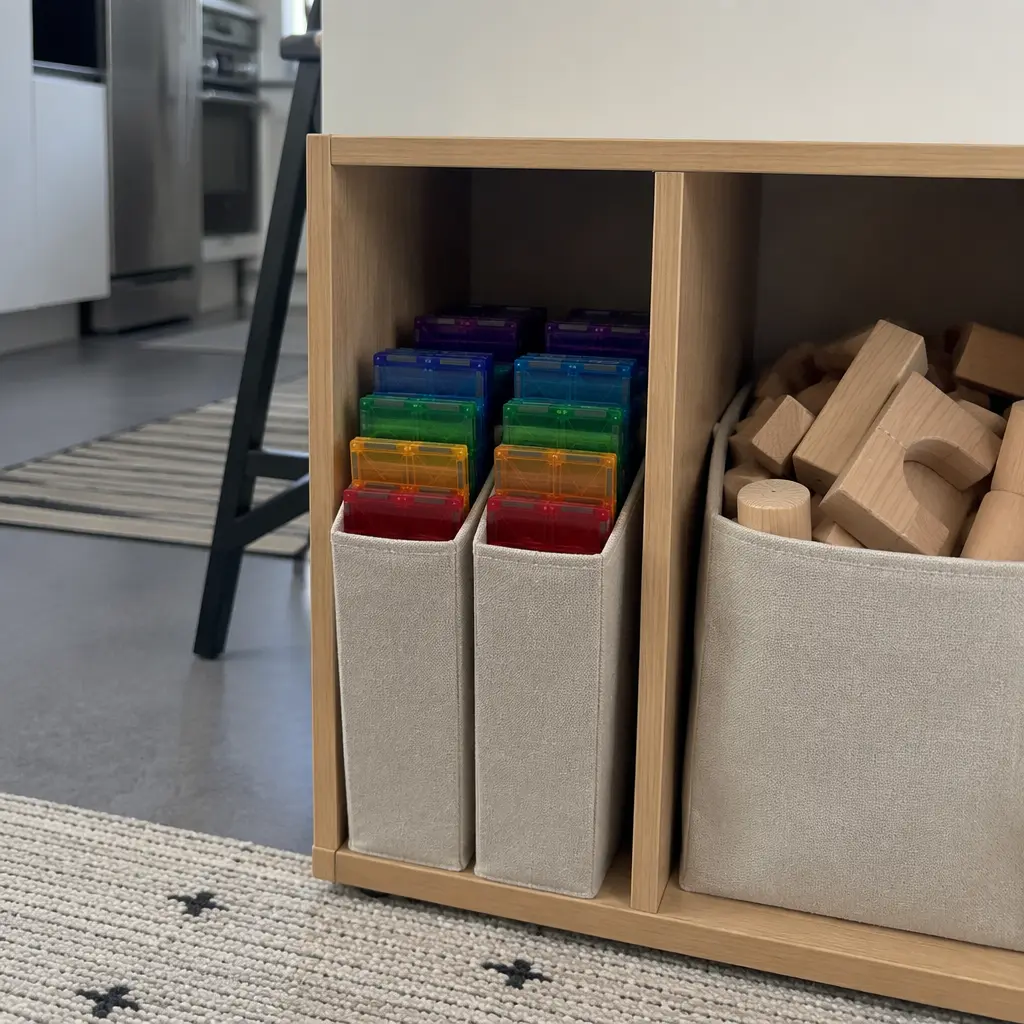
In a smaller home, the practical details often matter as much as the toy itself. A large block collection can quickly spread across the floor, while some magnetic tile sets stack flat and fit into a single basket. Noise is another major difference. Wooden blocks hitting hardwood floors can be loud enough to disturb neighbors or sleeping siblings, especially in apartments with limited sound insulation. Magnetic tiles are usually quieter during play, although large collapses still create noise. Durability also matters for toys that may be packed away frequently or shared among siblings.
- Check storage shape as well as total size. Flat magnetic tiles usually fit more easily into shallow bins or under-bed storage.
- Consider floor surfaces. Wooden blocks are louder on tile or hardwood floors and may cause dents if dropped repeatedly.
- Look at cleanup time. Magnetic tiles tend to connect into stacks, while wooden blocks often require sorting by size.
- Think about replay value over several years. Wooden blocks support simple stacking through more advanced pretend structures, while magnetic tiles often encourage faster, more visually dramatic builds.
- Review supervision needs carefully. Very young children should only use age-appropriate magnetic toys with securely enclosed magnets.
- Consider shared spaces. Magnetic builds are easier to move intact from room to room, while wooden structures usually need rebuilding after transport.
- Factor in sensory preferences. Some children enjoy the weight and texture of wood, while others prefer the bright colors and snapping action of magnets.
Age suitability
For ages 3–5, both toy types can work well when the pieces are appropriately sized and designed for preschool use. Younger preschoolers often find magnetic tiles easier for early success because the pieces connect without requiring precise balancing skills. This can reduce frustration and encourage independent play. Wooden blocks usually demand more patience and coordination, but they also help children learn balance, gravity and spatial awareness in a very direct way. By age 4 or 5, many children are ready for more complex building systems and may enjoy combining blocks with toy animals, vehicles or pretend-play setups. Families with younger siblings should pay extra attention to manufacturer age guidance, especially around magnetic components.
Options compared
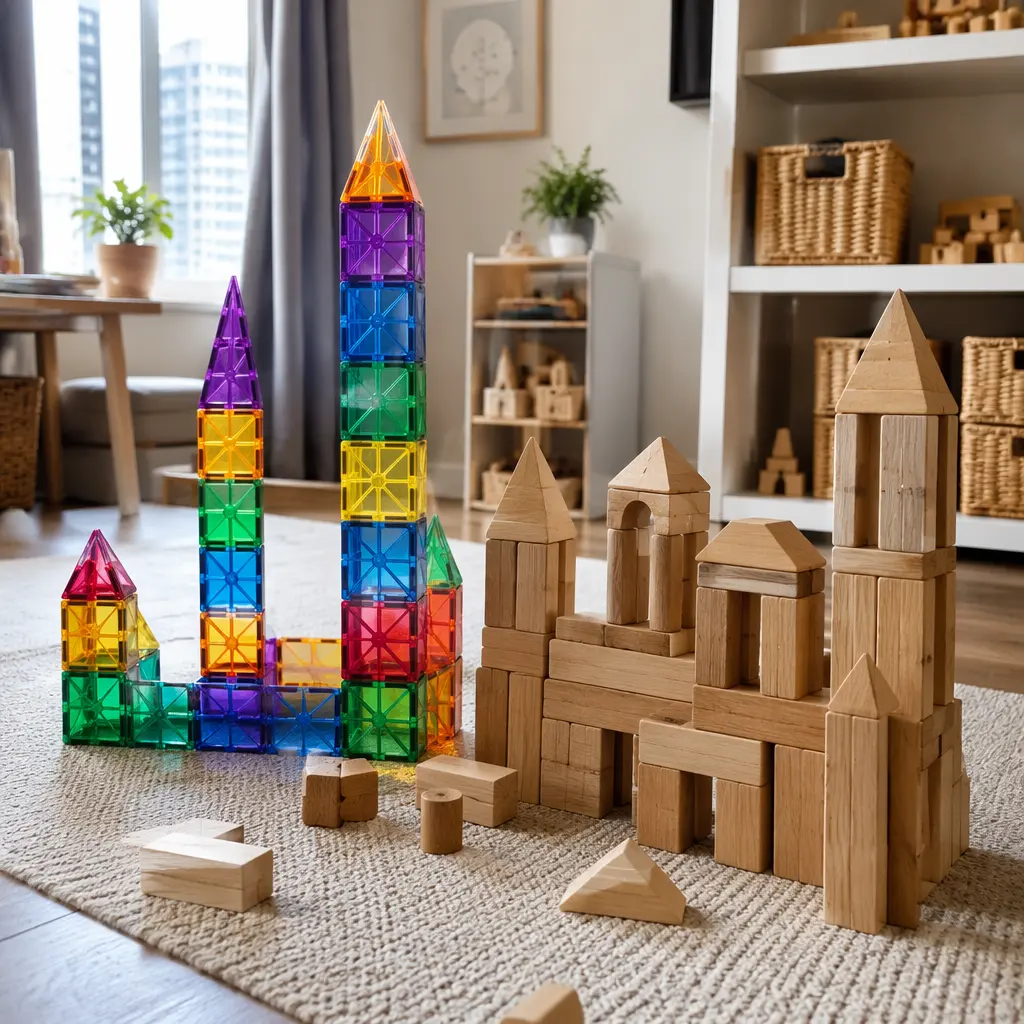
Magnetic tiles are often the easier choice for families short on storage space. The pieces stack flat, many structures can be built vertically instead of sprawling across the floor, and children can create large-looking builds with fewer pieces. They also tend to work well for independent quiet-time play because the magnetic connections reduce frustration. In apartments where toys must be packed away daily, that convenience can make a noticeable difference. However, magnetic tiles are usually lighter than wooden blocks, so elaborate builds may collapse more easily during active play. Some children also move through the early novelty quickly if the set is too small.
Wooden blocks are typically better for families prioritizing durability and long-term flexibility. A simple set can remain useful for many years because the play style evolves naturally from stacking to roads, cities and pretend environments. Blocks also combine easily with other toys already in the home. The trade-off is physical bulk. Even modest sets can become heavy, noisy and difficult to store in small apartments. Cleanup may take longer, and repeated dropping can create noise complaints in shared buildings. For children who enjoy energetic construction and knocking towers down repeatedly, wooden blocks may require designated play times or rugs to soften sound.
- Choose magnetic tiles if you want compact storage, quieter play and faster independent building success.
- Choose wooden blocks if you value long-term durability, tactile play and compatibility with broader pretend-play setups.
- Avoid very large sets in small apartments unless you already have dedicated storage space.
- Consider using a foam mat or thick rug with either option to reduce floor noise and protect surfaces.
- Some families use a mixed approach: magnetic tiles for everyday indoor play and a smaller wooden block set for more sensory, hands-on building.
Frequently asked questions
Do magnetic tiles replace wooden blocks?
Not completely. Magnetic tiles and wooden blocks encourage different building styles. Magnetic sets support quick assembly and geometric structures, while wooden blocks teach balance and stability in a more physical way. Many families eventually use both for different kinds of play.
Which option is quieter for apartment living?
Magnetic tiles are usually quieter overall because the pieces are lighter and less likely to create loud crashing sounds on hard floors. Wooden blocks can become noisy during tower building, dumping and cleanup, especially in upstairs apartments.
Are wooden blocks better for long-term use?
They often stay relevant for a wider age range because they integrate easily into pretend play, roads, animal habitats and other open-ended activities. A basic wooden block set may continue being used after children lose interest in more structured building systems.
How much storage space do these toys need?
Magnetic tiles generally store more compactly because the pieces stack together in flat piles. Wooden blocks need deeper bins or shelving and become noticeably heavier as collections grow. In very small homes, storage weight and portability can matter as much as total volume.
What if siblings play at different ages?
Mixed-age households should be especially careful with any magnetic toy that includes smaller components. Larger wooden blocks are often simpler to manage safely around younger siblings, although all toys should still match the manufacturer’s age guidance and be checked regularly for wear.
For most families in small apartments, the decision comes down to daily practicality rather than educational value alone. Magnetic tiles usually fit modern compact living more easily because they store neatly, play quietly and support fast cleanup. Wooden blocks remain a strong choice for families with enough floor space to tolerate bigger builds and more noise, especially if long-term durability and classic open-ended play are priorities. Either option can provide years of screen-free construction play when matched carefully to your home setup and your child’s play style.