Quiet Construction Toys for Apartment-Friendly Play
Compare quieter building toys for ages 6–8 with a focus on drop noise, cleanup speed, storage, and shared-wall living. Find options that support creative play without constant clatter.
Compare prices and availability
Check current prices and availability for this guide on eBay.
As an eBay Partner, we may be compensated if you make a purchase.
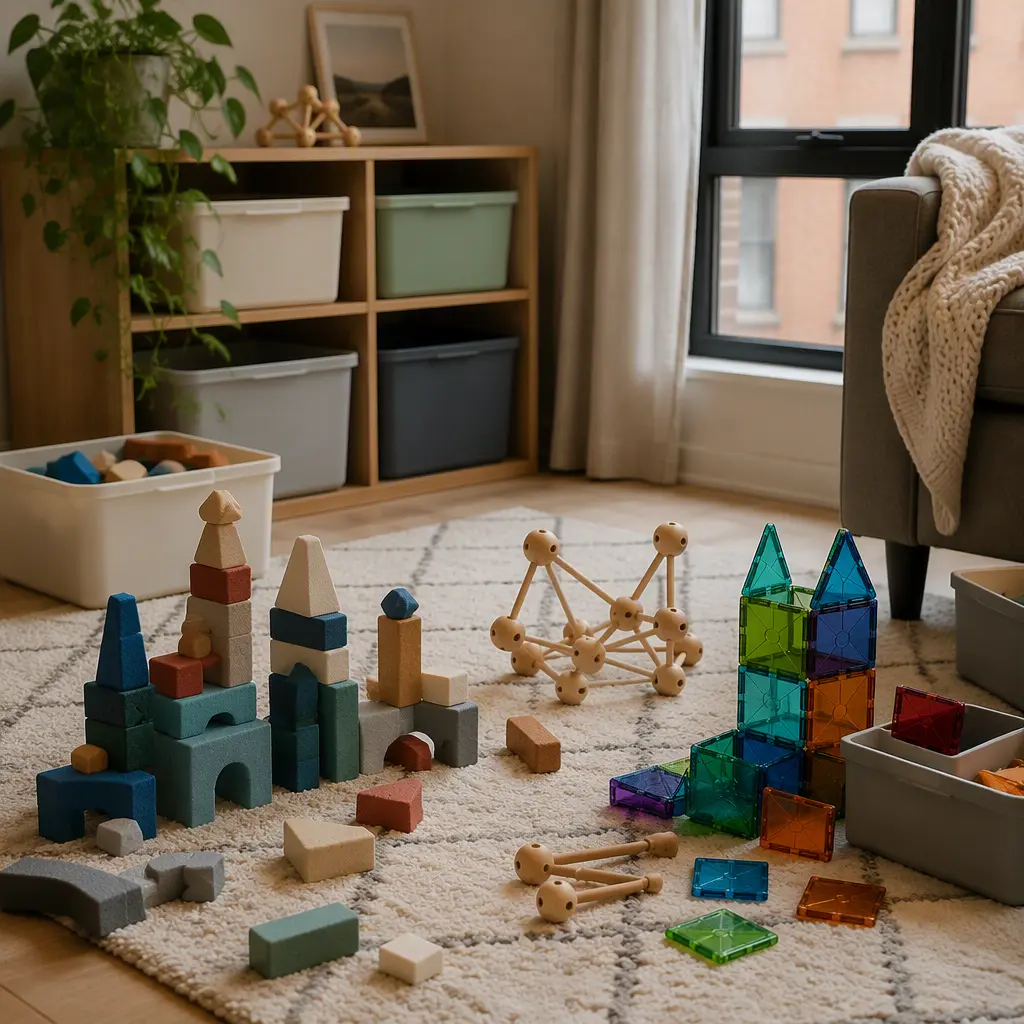
Construction toys can be challenging in apartments or shared homes because hard plastic pieces, falling towers, and large tubs of bricks often create more noise than parents expect. For children aged 6–8, the goal is usually to keep the creativity and problem-solving benefits of building play while reducing clatter, cleanup stress, and floor vibration. Quieter construction toys tend to use softer materials, lighter pieces, or connection systems that do not require forceful snapping apart. Storage also matters. A toy that stays organized and packs away quickly is often easier to live with in smaller spaces than a giant mixed bin of loose parts.
What to look for
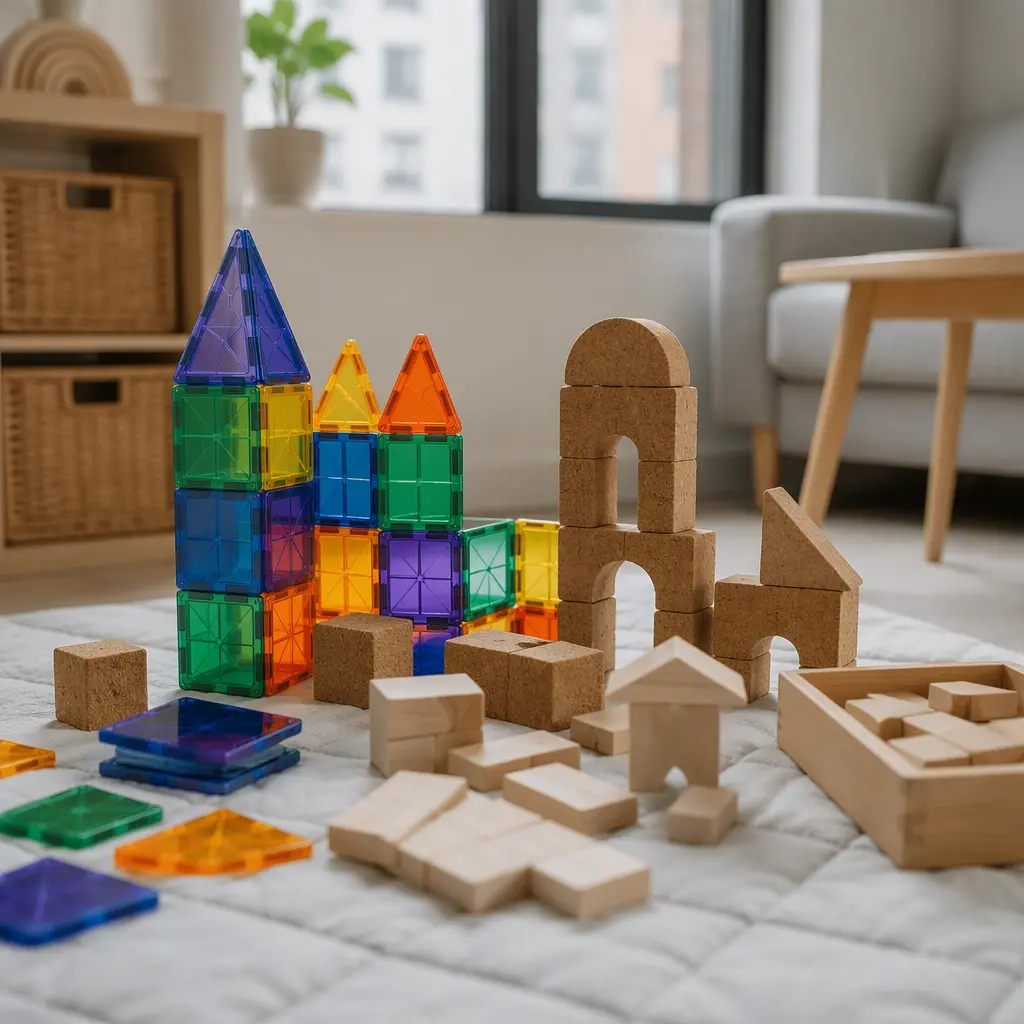
Apartment-friendly construction toys are usually defined less by the theme and more by how they behave during real play. The loudest toys often combine heavy materials with hard floors and fast cleanup dumping. Softer pieces, lower tower heights, and contained storage systems make a noticeable difference. Children in the 6–8 age range also vary widely in patience and fine-motor skill, so the best fit depends on whether they prefer careful engineering or fast imaginative building.
- Choose lightweight pieces that make less impact noise when dropped.
- Look for toys that connect easily without forceful snapping or pulling apart.
- Soft play mats or rugs reduce vibration and floor noise significantly.
- Sets with trays, compartments, or zippered storage speed up cleanup.
- Magnetic or slot-based systems are often quieter than interlocking brick systems.
- Avoid very tiny loose parts if the toy will be used in shared living spaces where pieces travel easily.
- Consider vertical storage if floor space is limited.
- Large open-ended sets usually stay useful longer than highly themed kits.
Age suitability
Most children aged 6–8 can handle more advanced building systems than preschoolers, but frustration levels still matter. Magnetic tiles and lightweight connector systems are usually easier for younger or less patient builders because structures come together quickly and rebuild easily after collapsing. Traditional interlocking bricks support more detailed construction and longer projects but can create more snapping noise and painful stepped-on pieces during cleanup. Wooden construction systems often suit calmer builders who enjoy planning and careful assembly. Marble runs can work well for this age group too, although hard plastic tracks and rolling balls may not suit homes with thin floors or downstairs neighbors.
Options compared
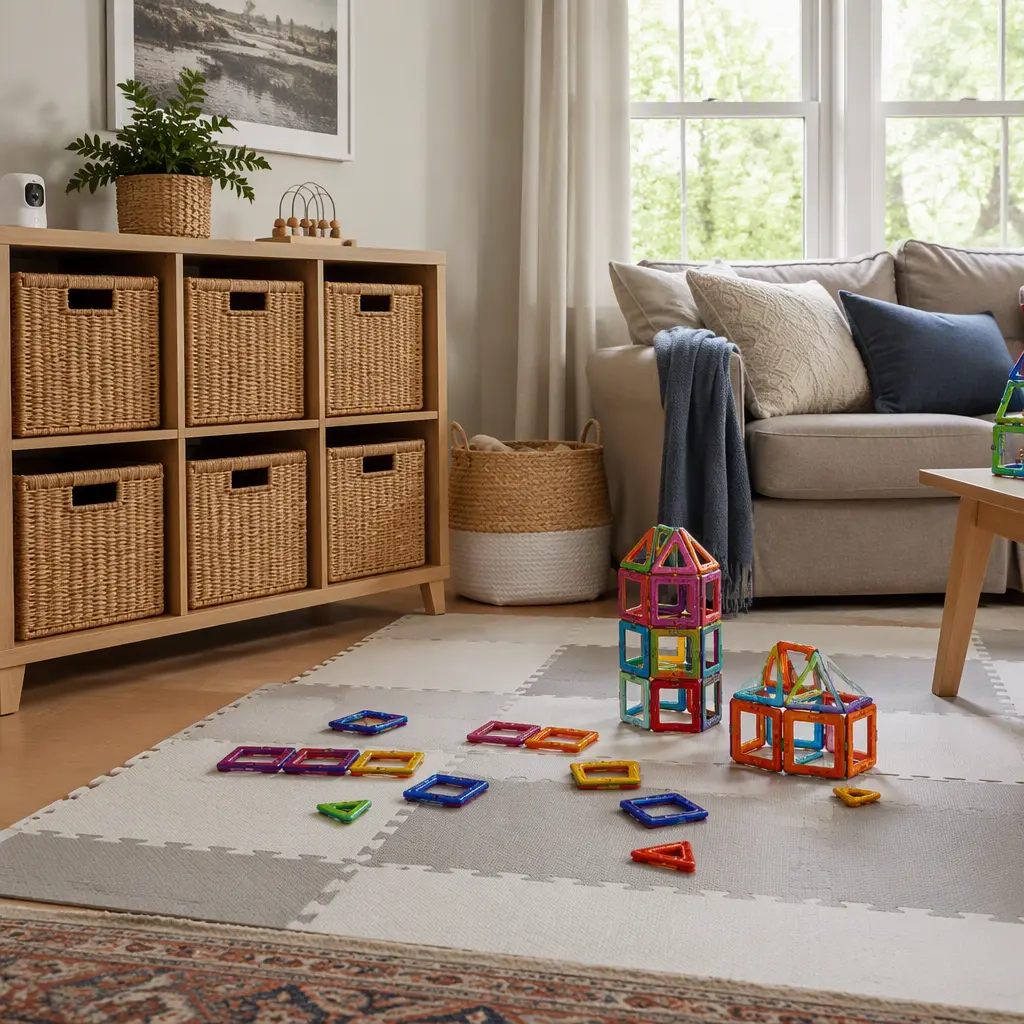
Magnetic tile sets are among the easiest construction toys to live with in shared-wall homes. The pieces are lightweight, towers usually fall with less force than dense brick systems, and cleanup is relatively fast because pieces stack flat. They work especially well for children who enjoy open-ended building but lose patience with complicated instructions. The trade-off is that some children outgrow simpler builds unless the set is expanded with ramps, wheels, or more advanced geometric pieces.
Wooden connector systems and cork building blocks are another quieter option. They tend to create softer impact sounds than hard plastic bricks and often encourage slower, more deliberate play. These sets suit children who enjoy engineering challenges or balancing structures rather than fast action play. Storage can be bulkier, however, and larger wooden pieces may still produce noticeable thumps on hard floors.
- Magnetic tiles: quieter falls, fast cleanup, easy for most skill levels, but large sets need storage space.
- Foam or cork blocks: very low noise and floor-friendly, though older children may want more complex builds.
- Wooden construction sets with pegs or connectors: durable and calm to use, but heavier than lightweight plastics.
- Interlocking brick systems: highly creative and detailed, though usually louder during building and cleanup.
- Cardboard engineering kits: lightweight and quiet with low floor impact, but less durable over time.
- Plastic marble runs: engaging for problem-solving, but rolling balls and collapsing tracks can become noisy in apartments.
- Soft connector straws or flexible building sticks: portable and quiet, though some structures may feel less stable.
Frequently asked questions
Are magnetic tiles quieter than traditional building bricks?
In most homes, yes. Magnetic tiles are lighter and usually separate more easily, so they create less snapping noise during building. Falling structures also tend to make softer sounds than dense interlocking brick towers.
Which construction toys are easiest to clean up quickly?
Flat magnetic tiles, larger foam blocks, and building systems with fewer tiny connectors are usually the fastest to collect. Mixed bins of very small bricks often take the longest because pieces spread into furniture and walkways.
Do soft play mats really reduce noise?
They can make a noticeable difference, especially in apartments with hard flooring. Rugs, foam mats, or carpet tiles reduce impact sounds from dropped pieces and help limit vibration through the floor.
What works best for children who get frustrated easily?
Simpler connection systems such as magnetic tiles, foam blocks, or flexible connector sticks usually support faster success and easier rebuilding. Highly detailed construction systems may suit children who enjoy longer, more patient projects.
Are construction toys still worthwhile in small apartments?
Yes, especially compact open-ended sets that can be rebuilt in different ways. Choosing toys with contained storage and limiting the total piece count often matters more than the size of the home itself.
The quietest construction toys are usually the ones that balance creativity with realistic home life. Lightweight materials, manageable piece counts, and quick cleanup systems can make building play easier to enjoy in apartments and shared spaces. For most families with children aged 6–8, a smaller high-quality set that gets used regularly is often more practical than a giant collection that creates constant noise and clutter.