Best Quiet Sensory Toys for Waiting Rooms Ages 3–5
A parent-focused guide to quiet sensory toys for preschoolers in waiting rooms, with practical advice on noise, portability, supervision, cleanup, and age-appropriate play.
Compare prices and availability
Check current prices and availability for this guide on eBay.
As an eBay Partner, we may be compensated if you make a purchase.
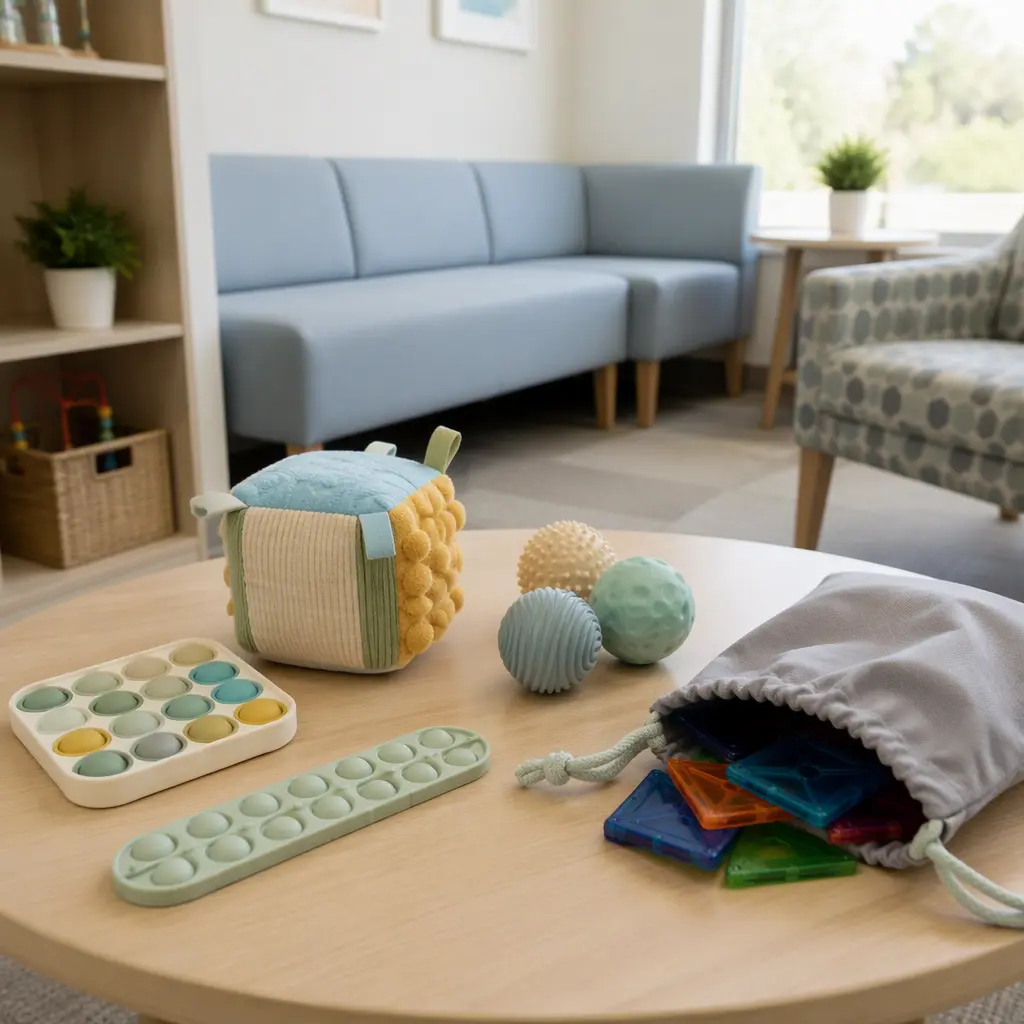
Quiet sensory toys can make long waits easier for preschoolers without relying on screens, noisy electronics, or messy activities. For children ages 3–5, the most useful options are usually small, portable toys that provide tactile feedback, simple repetition, and open-ended play while staying respectful of shared public spaces. Waiting rooms often have limited floor space, other families nearby, and strict expectations around noise and cleanup, so toys that work well at home may not always travel well. Choosing the right type depends on how your child stays regulated: some children prefer squeezing and stretching motions, while others focus longer with stacking, sorting, or repetitive hand movements.
What to look for
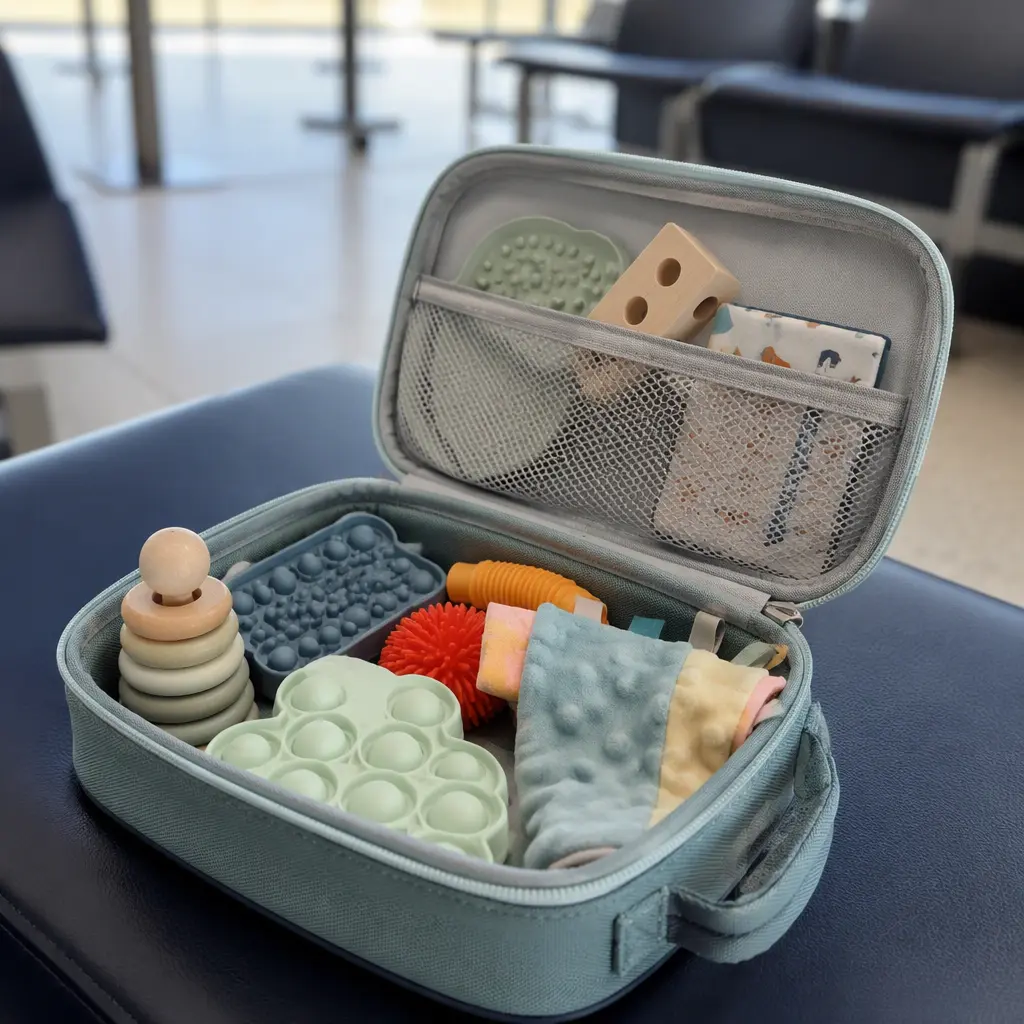
The best quiet waiting-room toys balance sensory engagement with practicality. Preschoolers often benefit from toys that provide physical feedback through touch, movement, or resistance, but parents also need toys that fit easily into a bag and can be cleaned quickly after use. Toys with many tiny pieces can create stress in crowded spaces, while hard plastic items may become noisy when dropped on tile floors. Compact toys with soft materials are usually easier to manage in medical offices, libraries, and restaurants.
- Choose toys that stay quiet when dropped or handled repeatedly.
- Look for compact storage such as zipper pouches or attached cases.
- Prioritize washable or wipe-clean materials for public use.
- Avoid toys with strong scents, sticky compounds, or loose sand-like fillings.
- Check for age guidance and small-part warnings, especially for younger preschoolers.
- Consider whether the toy works while seated rather than requiring floor space.
- Pick toys with open-ended play value so children can return to them during longer waits.
Age suitability
Children ages 3–5 are in a transition stage where simple sensory toys may still help with regulation, but many also want more purposeful play. A 3-year-old may enjoy repetitive squeezing, popping, or matching textures for several minutes at a time. By age 4 or 5, some children prefer toys with a challenge element such as simple building, sorting, threading, or magnetic construction. It is also important to think about supervision needs. Preschoolers may still mouth objects, throw toys when frustrated, or scatter pieces under chairs. Toys intended for older children can contain magnets, marbles, or tiny connectors that are unsuitable for younger preschoolers in public settings. Softer tactile toys, chunky building pieces, and self-contained fidget activities are generally easier to manage for this age group.
Options compared
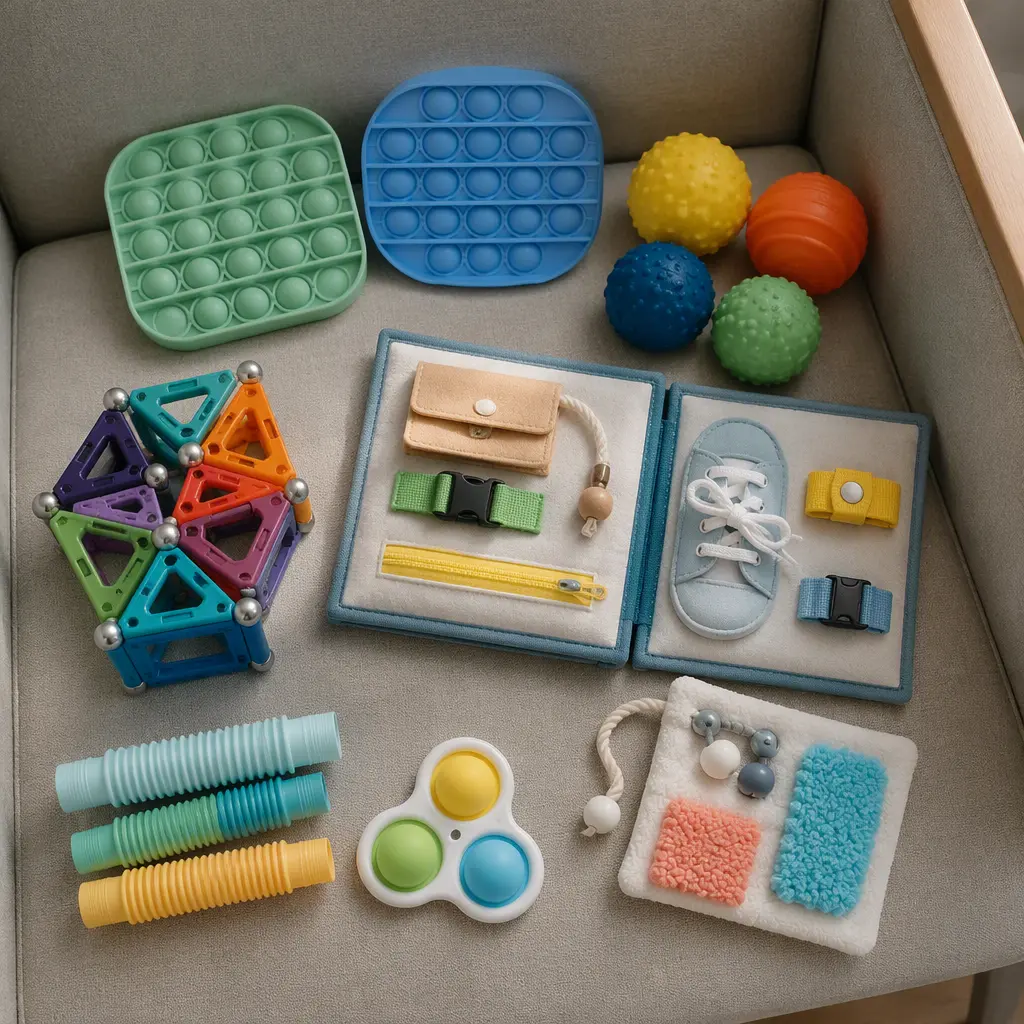
Silicone fidget toys are among the easiest choices for waiting rooms because they are lightweight, silent, and easy to wipe clean. Pop-style fidgets, textured squeeze toys, and stretchy sensory strings work well for children who calm themselves through repetitive hand movement. These toys are usually best for shorter attention spans or children who need physical sensory input rather than imaginative play. Some preschoolers lose interest quickly, however, especially if the toy only performs one action.
Small building and construction toys can hold attention longer, particularly for children closer to age 5. Chunky magnetic tiles, large interlocking blocks, or simple stacking sets provide quiet problem-solving play while still fitting into a travel pouch. The trade-off is cleanup and supervision. Pieces can slide under furniture or distract children from staying seated. Soft busy books and fabric sensory boards are another strong option for quieter environments because they combine textures, fasteners, matching activities, and pretend play in one compact format. They suit children who enjoy independent play and structured tasks, though some fabric toys are bulkier than silicone fidgets.
- Silicone fidgets: best for portability, silent use, and quick sensory regulation; less engaging for long waits.
- Textured sensory balls and squeeze toys: useful for tactile seekers; check durability and avoid overly sticky surfaces.
- Chunky magnetic or building toys: better for longer focus and quiet construction play; require closer supervision.
- Busy books and fabric sensory boards: good for independent seated play; may take more bag space.
- Simple threading or lacing toys: encourage fine motor skills and concentration; not ideal for children who become frustrated easily.
- Reusable sticker scenes or cling activities: quiet and screen-free with little mess; some children lose interest after repeated use.
Frequently asked questions
Are magnetic toys safe for ages 3–5?
Some magnetic toys are designed for preschoolers with large enclosed magnets and oversized pieces, but parents should still supervise closely. Small loose magnets can be dangerous if swallowed. For waiting-room use, larger magnetic tiles or enclosed magnetic drawing toys are generally easier to manage than tiny magnetic construction sets.
What types of sensory toys are least disruptive in public?
Soft silicone fidgets, fabric sensory activities, and quiet squeeze toys are usually the least disruptive because they do not create loud clicking sounds or require floor space. Toys made from hard plastic can become noisy if dropped repeatedly on hard surfaces.
How many toys should parents bring to a waiting room?
A small rotation of two or three compact activities is often more practical than carrying a large toy bag. Preschoolers may regain interest in a toy after a short break, especially when options are introduced gradually instead of all at once.
Are messy sensory toys a good idea for public spaces?
Messy sensory materials such as slime, kinetic sand, putty with loose glitter, or water beads are usually difficult to manage in shared environments. Waiting rooms typically work better with fully contained activities that can be cleaned quickly and packed away without residue.
Can quiet sensory toys help anxious children during appointments?
For some children, repetitive tactile play can provide a calming routine during stressful waits or unfamiliar environments. Toys that encourage squeezing, sorting, or predictable movement may help children stay occupied while waiting, though preferences vary widely between children.
The most useful quiet sensory toys for waiting rooms are usually simple, durable, and easy to carry rather than highly complex. For ages 3–5, screen-free options that support tactile play and independent focus can help pass time without adding noise or clutter to shared spaces. Parents balancing portability, supervision, and cleanup often find that a small mix of soft fidgets and one slightly more engaging activity provides the best overall flexibility for appointments, travel, and other long waits.