Best Quiet Toys for Early Risers Ages 3–5
A parent-focused guide to genuinely low-noise toys for preschoolers who wake early, with practical advice on mess, storage, supervision, and independent dawn play.
Compare prices and availability
Check current prices and availability for this guide on eBay.
As an eBay Partner, we may be compensated if you make a purchase.
For families with early-rising preschoolers, the challenge is not only finding engaging toys but finding toys that stay genuinely quiet at 5 or 6 in the morning. Many toys marketed as calm or educational still include clicking plastic, electronic sounds, rolling parts, or cleanup noise that travels through shared walls and sleeping households. For children aged 3–5, the most reliable low-noise options are usually open-ended building and construction toys with soft handling, simple storage, and enough familiarity that children can use them independently without needing adult setup. The right choice depends on your child’s play style, attention span, available floor space, and how much supervision is realistic before the rest of the household wakes up.
What to look for
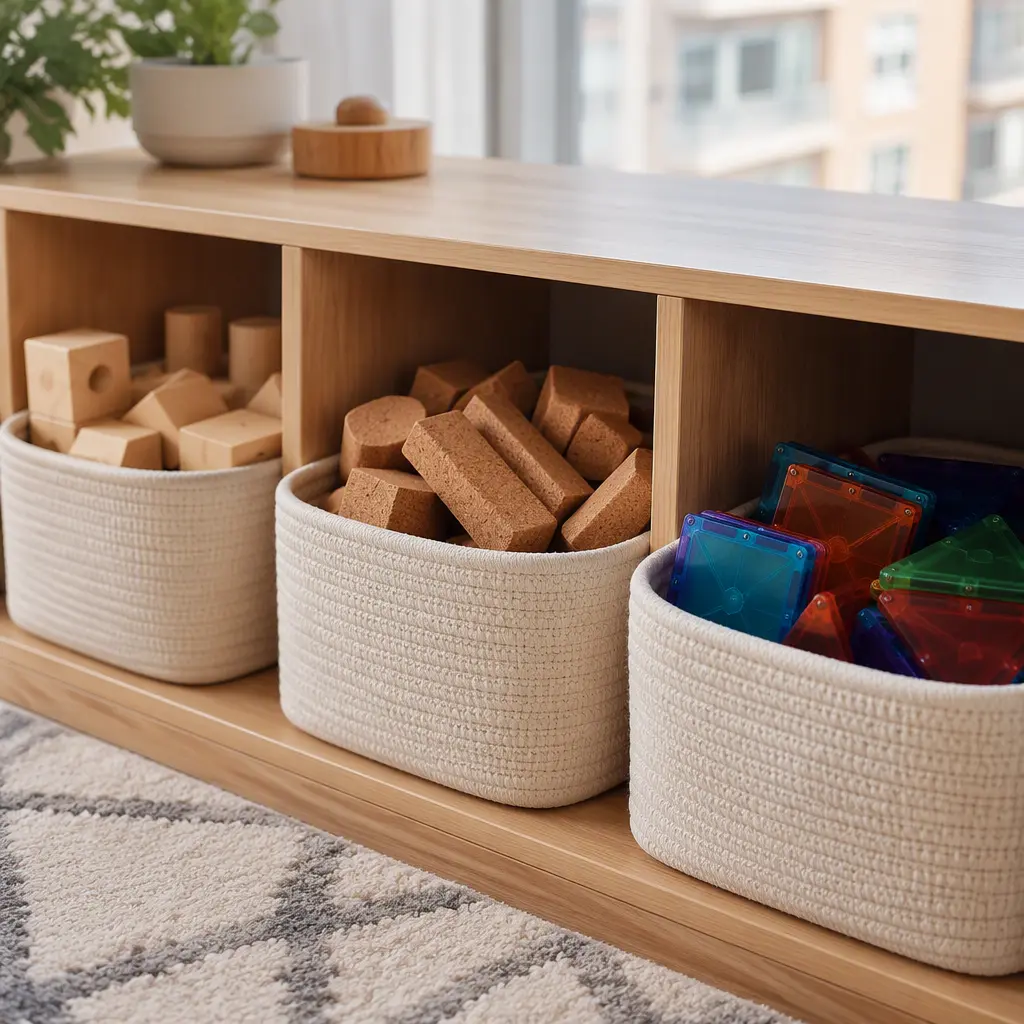
The quietest toys are not always the smallest or simplest. Material choice matters more than many parents expect. Hard plastic pieces dropped on wood floors can sound much louder than larger cork or wooden items placed on rugs. Independent usability also matters. If a child needs help opening containers, finding pieces, or resetting activities, the toy may not support peaceful early-morning play for long. Storage is another practical factor because noisy cleanup can become the loudest part of the experience.
- Soft-contact materials such as cork blocks, felt pieces, foam construction sets, or smooth wood used on rugs
- Large parts that are easy to grip quietly without snapping, clicking, or forceful connections
- Open-ended play that works without instructions, timers, sounds, or batteries
- Contained storage bins or fabric baskets that children can access independently
- Activities that work well seated at a low table, rug, or play mat rather than active floor racing
- Durable pieces that tolerate repeated daily use without breaking or creating sharp fragments
- Simple cleanup routines that preschoolers can manage without dumping large containers loudly
Age suitability
Children between ages 3 and 5 often vary widely in their ability to play independently in the early morning. Younger preschoolers may enjoy stacking, sorting, and simple pretend construction for short periods before needing interaction, while older children in this range may sustain imaginative building for much longer. Large-piece construction toys are generally the easiest starting point because they reduce frustration and avoid the loud snapping or collapsing common with smaller interlocking systems. Magnetic tiles can work well for some children, but they are quieter on carpet than hard flooring and may still create sharp clacking sounds if dumped. Cork blocks are among the quietest options available because they absorb impact noise well, though some children prefer the stronger stability of traditional wooden blocks. Foam building sets suit families prioritizing silence and safety in apartments or shared homes, but they usually provide less precise building feedback for children who enjoy detailed structures.
Options compared
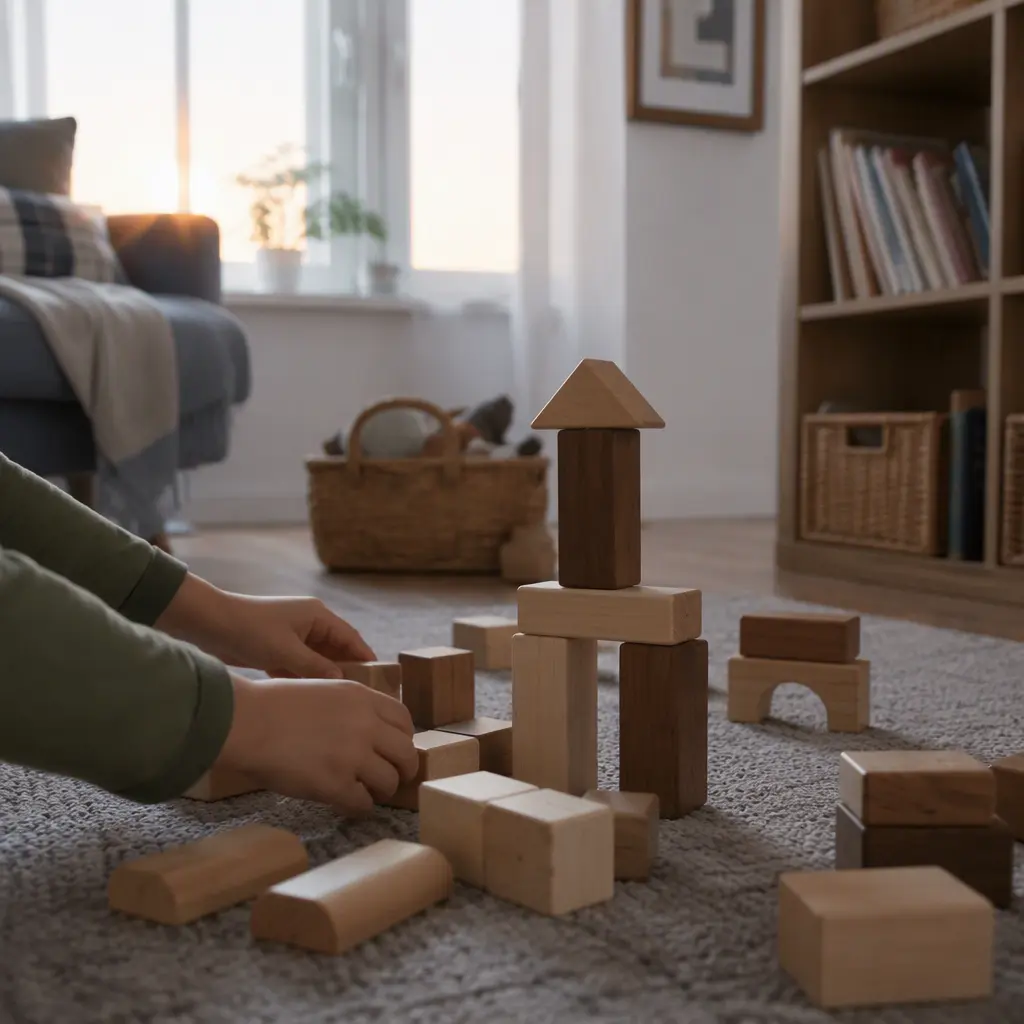
Traditional wooden blocks remain one of the strongest all-around choices for quiet independent play, especially when used on rugs or foam mats. They encourage open-ended creativity, scale well across ages, and store compactly. However, they are not completely silent. Tall towers crashing onto hard floors can still wake sleeping family members, so they work best for children who build calmly rather than aggressively knock structures down.
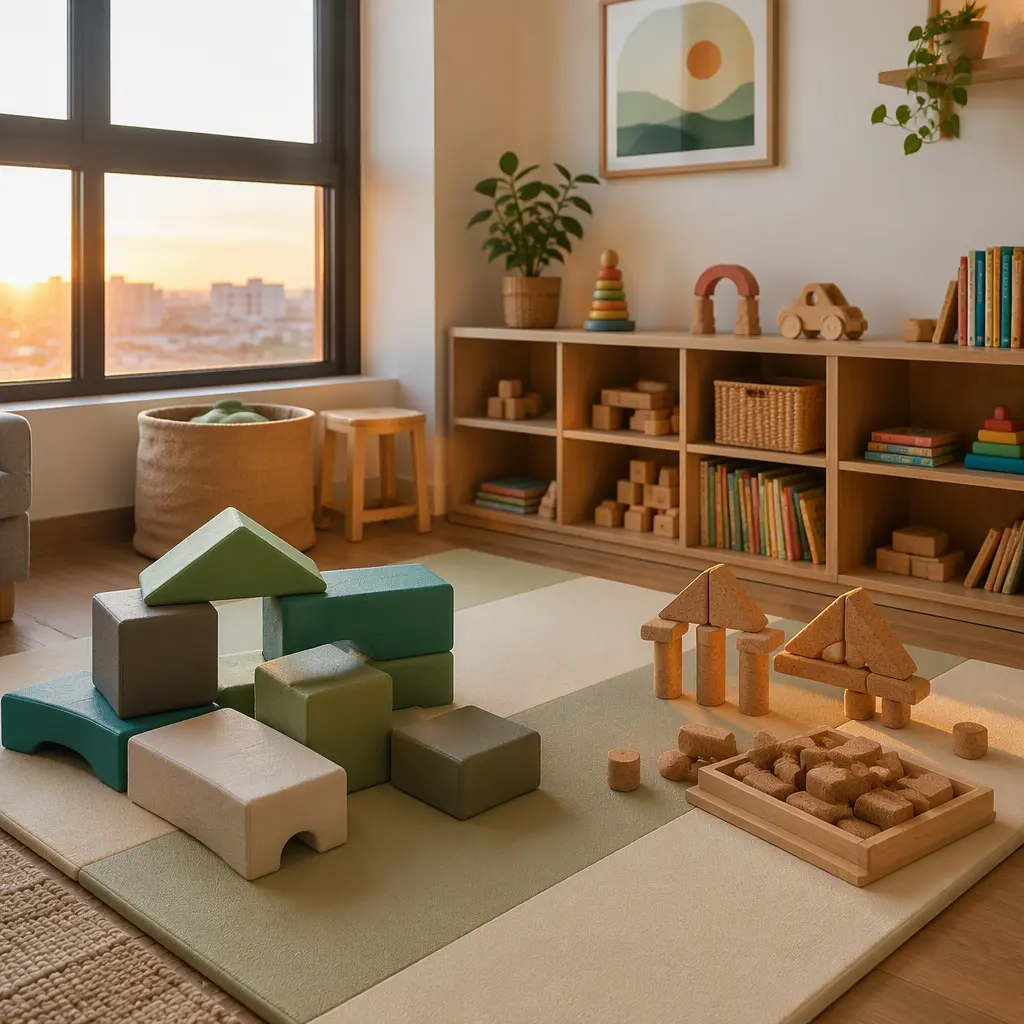
Cork blocks are quieter than standard wooden blocks and often work particularly well in apartments, duplexes, or homes with sleeping siblings nearby. Their softer texture reduces impact sound and sliding noise. The trade-off is that some elaborate structures may feel less stable. Foam construction toys are another strong option for noise-sensitive homes. They are lightweight, safer for energetic movement, and unlikely to damage walls or floors. On the other hand, foam pieces can take up more storage space and may not satisfy children who enjoy realistic building details.
- Large magnetic tiles: good for focused builders and independent play; quieter on rugs than hard flooring; avoid large unsorted bins that encourage loud dumping
- Wooden blocks: durable, long-lasting, flexible for imaginative play; moderate noise level if structures fall
- Cork blocks: among the quietest choices; excellent for shared walls and sleeping siblings; less rigid for complex builds
- Foam building sets: very low noise and safer for active play; bulkier storage requirements
- Felt construction or stacking toys: extremely quiet and lightweight; usually better for younger preschoolers than advanced builders
- Chunky interlocking brick systems: engaging and durable but often noisier because of snapping connections and hard plastic contact
Frequently asked questions
Are magnetic tiles too noisy for early mornings?
They can be, depending on the flooring and storage setup. Magnetic tiles are much quieter when children build on rugs or foam mats and when a small pre-selected set is available instead of a large tub that encourages dumping and sorting noise.
Which quiet toys work best in apartments?
Cork blocks, foam construction toys, felt play sets, and lightweight wooden toys used on carpet generally transfer less sound through floors and walls. Avoid toys with wheels, electronic sounds, or hard plastic connectors if noise transfer is a major concern.
How many pieces should an early-morning toy set include?
Smaller curated sets are often more successful than large collections before dawn. Around 20 to 40 accessible pieces is usually enough for meaningful preschool construction play without creating overwhelming cleanup or loud searching through bins.
Do quiet toys become boring more quickly?
Open-ended toys tend to stay engaging longer because children can reuse them in different ways. Rotating a few quiet options weekly often maintains interest better than keeping every toy available at once.
What flooring helps reduce toy noise?
Rugs, foam mats, and carpeted play areas make a noticeable difference with construction toys. Even naturally quiet toys become louder on hardwood, tile, or laminate flooring, especially during cleanup.
The best quiet toys for early risers balance independence, low noise, easy cleanup, and realistic household needs. For most families with children ages 3–5, simple open-ended construction toys remain the most reliable option because they support calm play without requiring screens or batteries. Choosing softer materials, limiting piece counts, and creating a dedicated quiet-play area can make early mornings more manageable for everyone in the home.