Screen-Free Couch-Time Toys for Kids Recovering From Illness
Low-energy, low-mess screen-free toys for children ages 6–8 recovering from illness. Compare quiet building, puzzle, craft and storytelling options that work well for couch time.
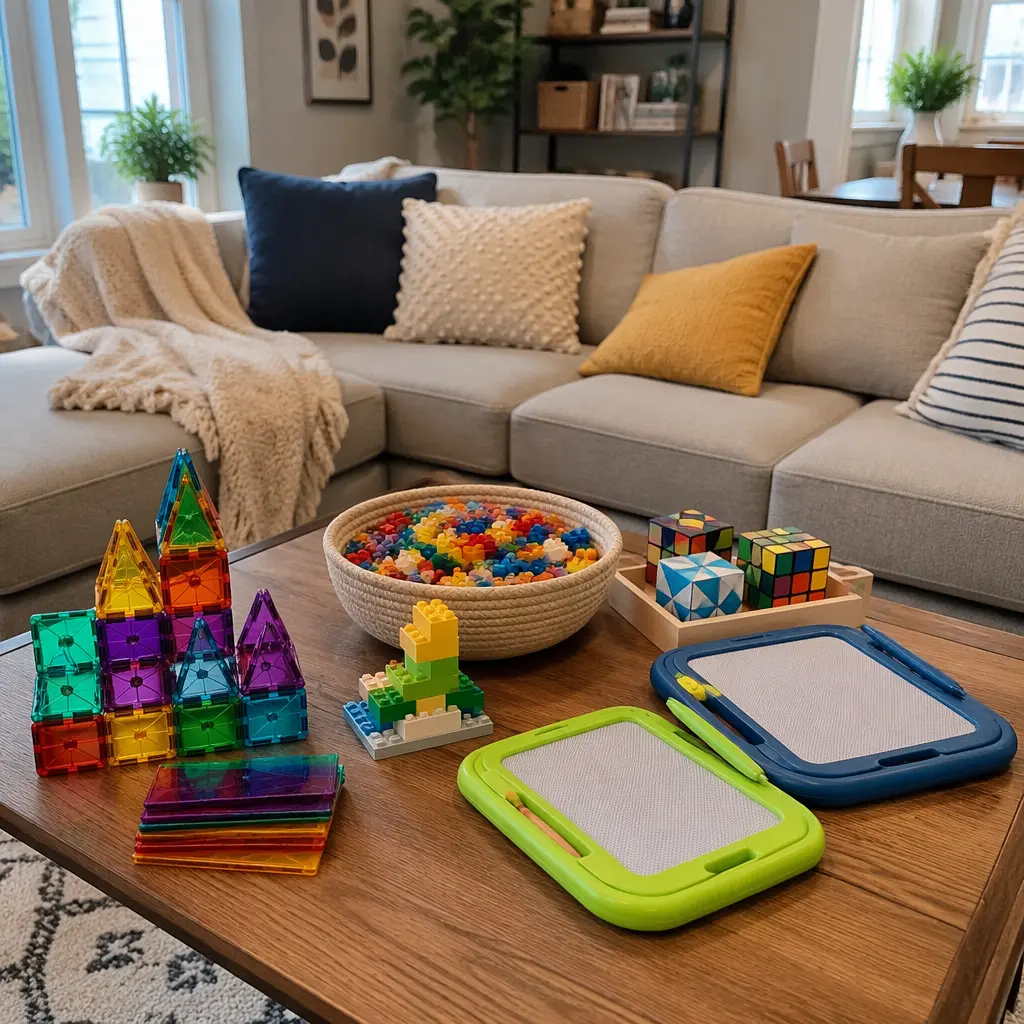
Compare prices and availability
Check current prices and availability for this guide on eBay.
As an eBay Partner, we may be compensated if you make a purchase.
When children are recovering from illness, energy levels can change quickly throughout the day. Many families look for quiet activities that hold attention without adding noise, mess, or too much physical effort. For children ages 6–8, screen-free toys can help break up long stretches of couch time while still encouraging creativity, problem-solving, and independent play. The most practical choices are usually compact, easy to pause and restart, and simple to tidy away if a child suddenly needs rest. Building and construction toys often work especially well because children can engage at their own pace without strict rules or time pressure.
What to look for
The best low-energy toys for recovery days are engaging without being overstimulating. Children may have shorter attention spans while tired, so flexible toys that support short play sessions tend to work better than activities with complicated setup or long instructions. Parents often also appreciate toys that stay contained to a blanket tray, lap desk, or coffee table rather than spreading across the whole room.
- Choose toys with easy cleanup, such as magnetic pieces, reusable boards, or contained kits.
- Look for quiet materials if siblings are resting nearby or if children are sensitive to noise during recovery.
- Compact storage matters because many couch-time toys stay in shared living spaces for several days.
- Activities with open-ended play often last longer than single-solution tasks.
- Avoid sets with hundreds of tiny loose pieces if children are tired or likely to spill them.
- Reusable activities usually provide better long-term value than disposable craft packs.
- Consider whether the toy can be used independently or needs regular adult supervision.
- Lighter toys are easier for children to manage from a couch or bed without frustration.
Age suitability
Children ages 6–8 are often ready for more detailed building and puzzle activities, but recovery time can temporarily reduce patience and coordination. Simpler construction sets, magnetic building tiles, interlocking bricks, tangram puzzles, and reusable mosaic boards tend to suit this age range well because children can scale the challenge up or down depending on energy levels. Story-building toys, card-based creativity games, and beginner engineering kits can also work for children who want more mental engagement without needing active movement. Very advanced construction kits with lengthy instructions may become frustrating during illness recovery, especially if children are dealing with fatigue, headaches, or reduced concentration.
Options compared
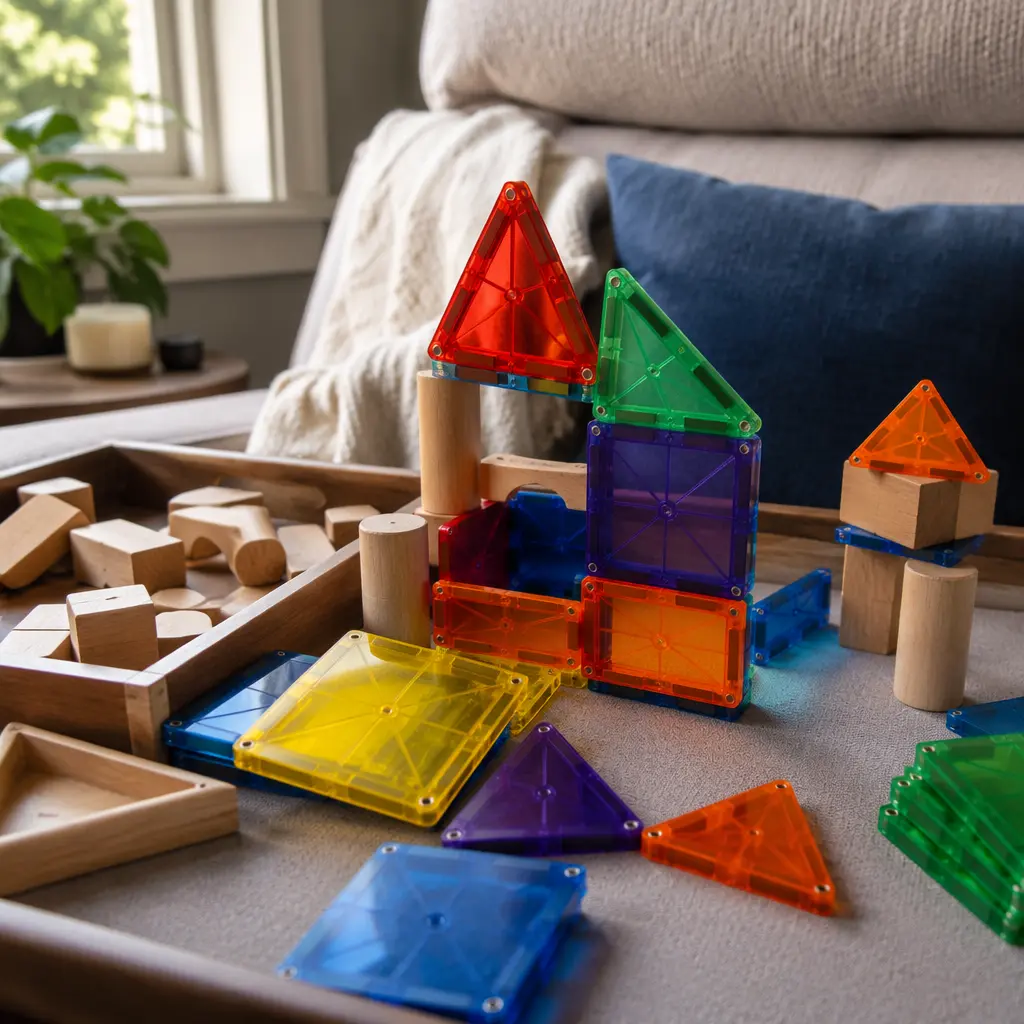
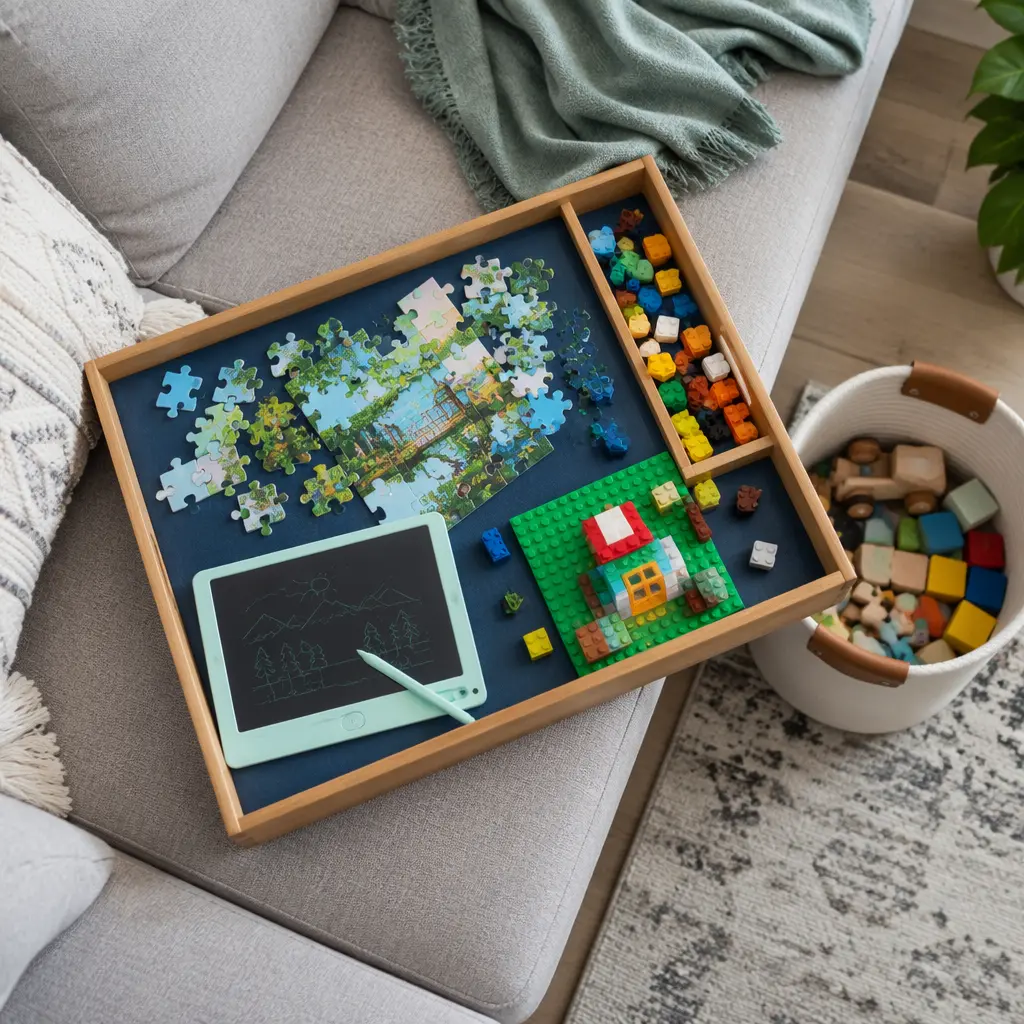
Magnetic building tiles are one of the easiest options for couch-time play because pieces connect quickly and structures can be rebuilt repeatedly without complicated instructions. They tend to suit children who enjoy creativity and experimentation, and they are usually quieter than hard plastic brick systems. However, larger tile sets can take up more storage space, and younger siblings may require supervision around magnets.
Traditional interlocking building bricks work well for children who enjoy following instructions or constructing detailed scenes. They often hold attention for longer periods, but small pieces can become frustrating if a child is tired or playing on soft blankets where parts disappear easily. For families prioritizing very low mess, larger brick formats or simplified sets are often easier to manage during recovery days.
- Wooden blocks: quiet, durable, and simple to tidy, but less engaging for children who prefer detailed builds.
- Magnetic mosaics and pattern boards: low mess and portable, good for short attention spans, though less imaginative than open-ended building toys.
- Tangram and spatial puzzles: compact and travel-friendly, suitable for children who enjoy problem-solving without large setups.
- Reusable drawing tablets and magnetic sketch boards: very low cleanup and easy to use independently, but some children lose interest faster than with construction toys.
- Card-based storytelling or logic games: useful for gentle social interaction on the couch, though they may require another player.
- Beginner engineering kits with large parts: engaging for curious children who want a challenge, but setup and cleanup can be slower.
Frequently asked questions
Are construction toys too stimulating during illness recovery?
Usually not, as long as the activity matches the child’s energy level. Open-ended construction toys often work well because children can pause easily and return later without losing progress. Quiet materials and smaller builds tend to feel calmer than fast-paced games.
What types of toys create the least mess?
Magnetic tiles, reusable drawing boards, pattern mosaics, and contained puzzle sets are among the easiest to keep tidy. Toys with glitter, glue, paint, slime, or hundreds of tiny loose pieces are usually harder to manage during couch recovery time.
How much supervision do children ages 6–8 need?
Many children in this age group can play independently for short periods, especially with familiar toys. Supervision is still important for toys containing magnets, small parts, batteries, or more advanced building components. Children recovering from illness may also need extra help with setup or cleanup.
Are screen-free toys realistic for long recovery days?
For many families, rotating several small activities works better than relying on one toy for hours. Combining construction toys with puzzles, audiobooks, coloring, or storytelling games can help children stay occupied without depending entirely on screens.
Which toys travel easily between couch, bed, and appointments?
Compact magnetic puzzles, card-sized logic games, reusable sketch boards, and small building kits with storage cases are generally easiest to move around. Lightweight activities with contained pieces are especially useful when children need flexible rest locations.
The most useful screen-free recovery toys are usually the ones that reduce friction for both children and parents. Quiet play, easy cleanup, flexible pacing, and manageable storage often matter more than complex features. For children ages 6–8, low-mess construction toys, puzzles, and creative activities can provide steady entertainment during recovery while still leaving room for rest when needed.