Best Screen-Free Toys for Kids on Crutches or Cast Rest
A parent-friendly guide to screen-free seated toys for children ages 6–8 recovering with crutches or a cast, including quiet options, storage needs, cleanup, supervision and age fit.
Compare prices and availability
Check current prices and availability for this guide on eBay.
As an eBay Partner, we may be compensated if you make a purchase.
When a child is using crutches or resting with a cast, play often needs to shift from active movement to comfortable seated activities. For children ages 6 to 8, the most useful screen-free toys tend to combine independent play, manageable cleanup and enough variety to stay interesting over several days indoors. Building and construction toys are especially helpful because they encourage problem-solving and creativity without requiring running, balancing or constant adult involvement. The challenge for parents is choosing options that fit limited mobility, temporary fatigue and the realities of recovery spaces such as couches, beds or small side tables.
What to look for
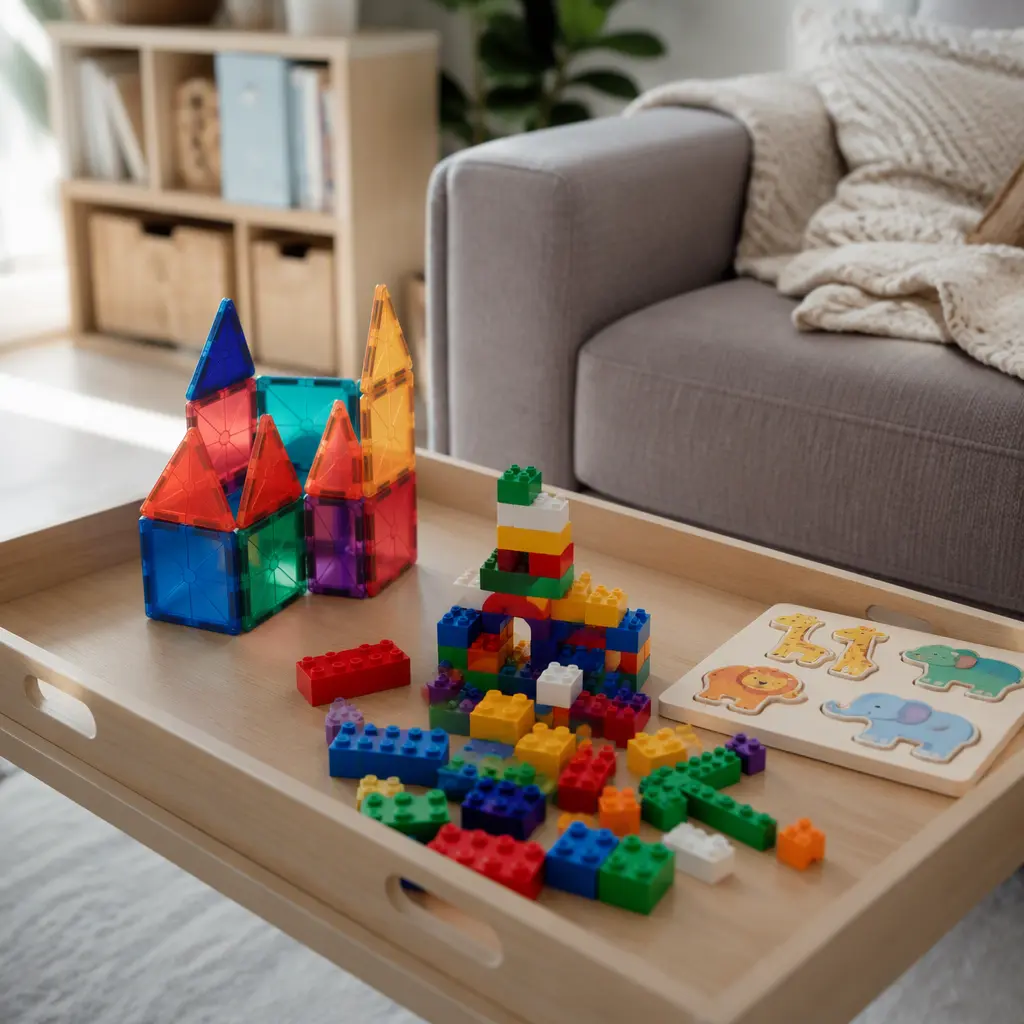
The best seated toys for cast rest usually work well on a lap desk, coffee table or bed tray and do not depend on standing up to reset pieces or retrieve rolling parts. Many families also appreciate toys that can be paused easily during medical appointments, rest breaks or discomfort. For this age group, open-ended building activities often last longer than single-solution toys because children can rebuild repeatedly without needing new instructions every time.
- Choose toys with medium-sized pieces that are easy to grip and unlikely to scatter across the floor.
- Look for activities that work comfortably while seated upright or reclining slightly on a couch or bed.
- Consider noise levels if recovery includes headaches, shared spaces or quiet time at home.
- Check storage needs carefully. Large building systems can spread quickly in smaller living rooms or bedrooms.
- Prefer sets with repeat play value, such as magnetic tiles, snap-together construction sets or marble runs that can be redesigned.
- Avoid toys that require frequent standing, chasing pieces or heavy lifting.
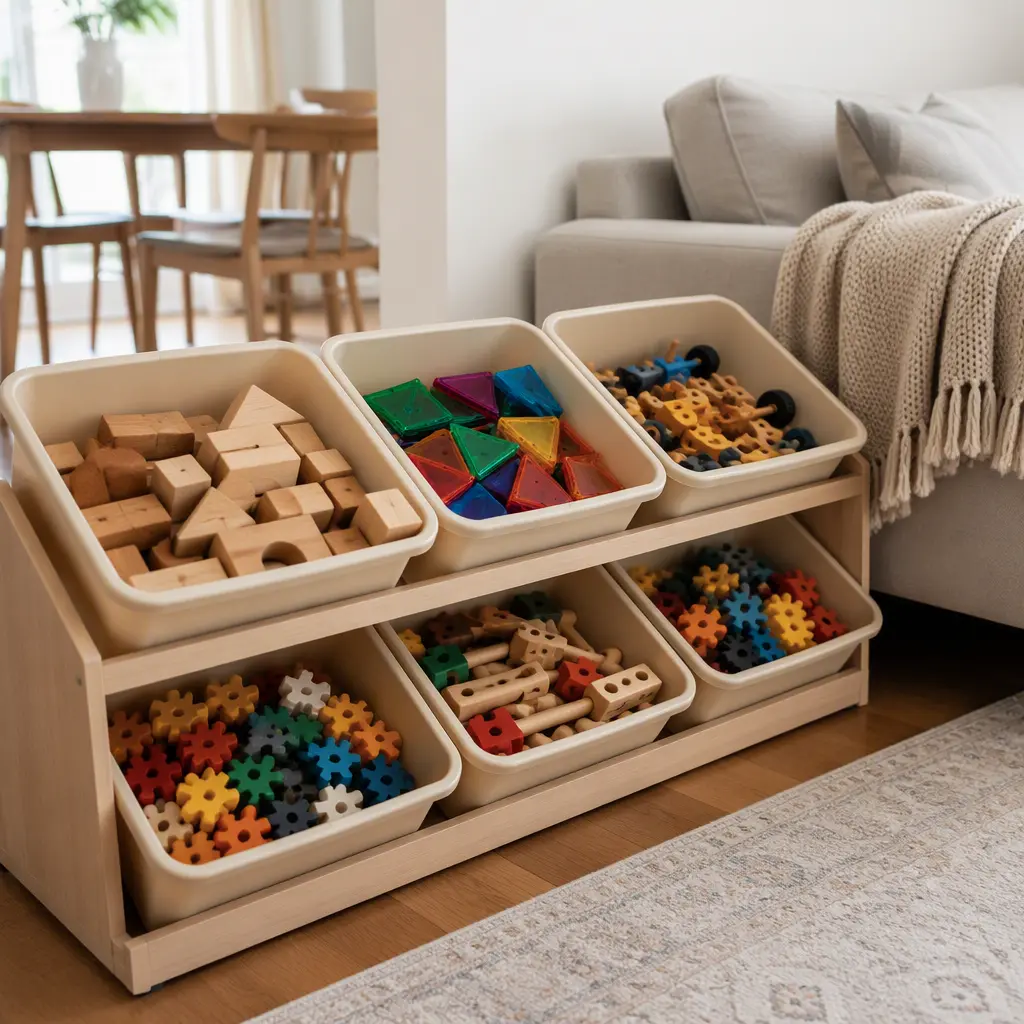
- Think about cleanup. Trays, bins and zippered cases can make temporary recovery spaces easier to manage.
Age suitability
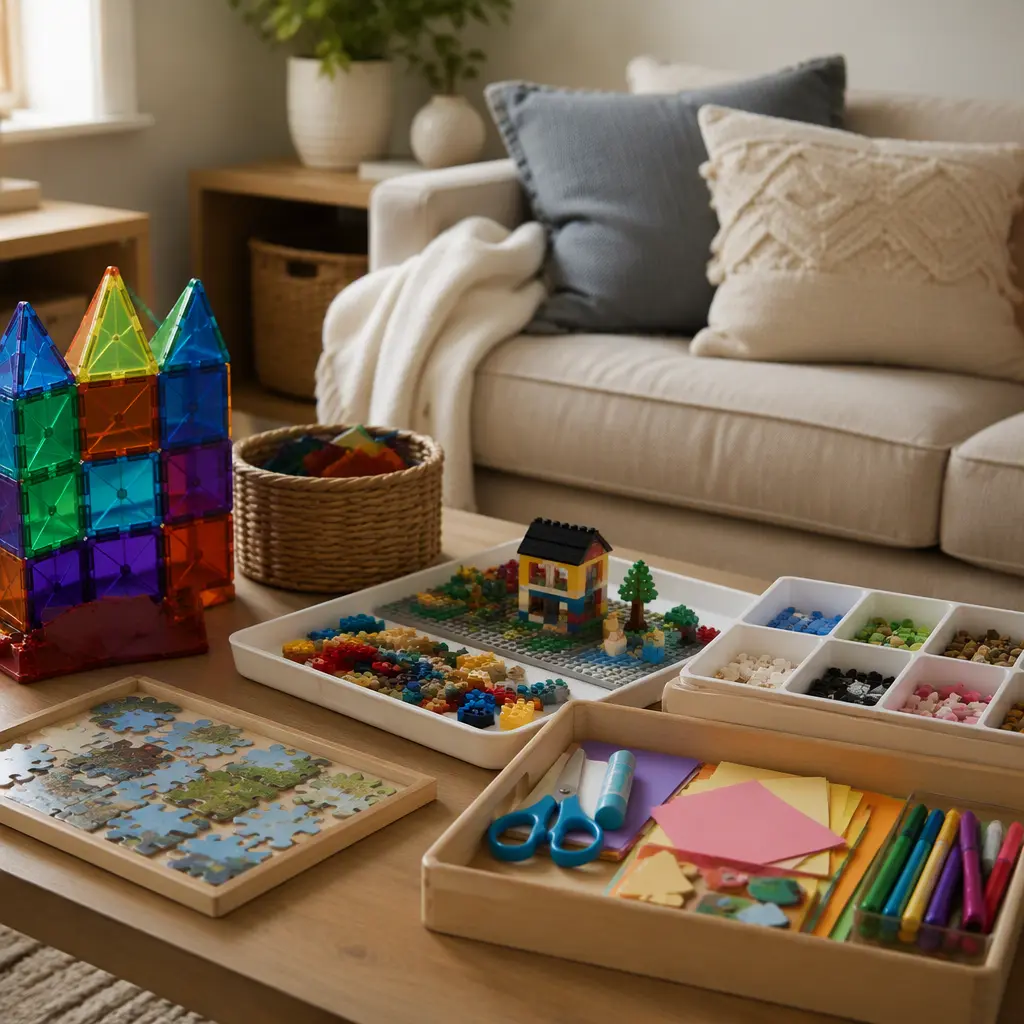
Children ages 6 to 8 are usually ready for more detailed construction projects, but attention span and frustration tolerance can vary widely during recovery. A child who is tired, uncomfortable or adjusting to temporary mobility limits may enjoy simpler projects than usual. Magnetic building tiles, classic interlocking bricks and beginner engineering kits often suit this age because they balance challenge with flexibility. Craft-based building activities, such as cardboard engineering kits or bead mosaics, can also work well for quieter personalities. Very advanced model kits with tiny parts may become frustrating if movement is limited or if the child needs to keep a leg elevated. Likewise, highly physical play sets designed for floor crawling, racing or large-scale movement are usually less practical during cast rest.
Options compared
Magnetic tile sets are one of the easiest options for children on crutches or cast rest because they connect quickly and work well on elevated surfaces like trays or side tables. They are usually quieter than hard plastic brick systems and easier to assemble without leaning forward repeatedly. The trade-off is that larger builds can slide apart if played with roughly, and magnetic pieces may take up more storage space than expected.
Traditional interlocking brick systems suit children who enjoy detailed projects and following instructions independently. These sets often provide longer concentration time and strong replay value, especially for children who like sorting and organizing. However, small pieces can scatter easily onto floors, which may be inconvenient when mobility is limited. Parents may prefer using a contained play mat or shallow storage bin during recovery periods.
- Wooden blocks: quiet, durable and easy to handle, but less suited for intricate builds or older children seeking challenge.
- Snap-together engineering kits: good for problem-solving and mechanical thinking, though some sets require stronger hand pressure or more adult help.
- Marble runs: engaging and highly replayable for seated play, but pieces can spread widely and rolling marbles may create cleanup challenges.
- Puzzle and construction hybrids: useful for calmer children who enjoy focused tabletop activities with minimal mess.
- Paper and cardboard building kits: lightweight and inexpensive, though less durable for repeated rebuilding.
Frequently asked questions
Are building toys practical for children who need to keep a leg elevated?
Yes, many tabletop building toys work well with leg elevation as long as the child has a stable surface nearby. Lap desks, bed trays and shallow bins can help keep pieces within reach without constant repositioning.
Which screen-free toys are usually the quietest?
Wooden blocks, magnetic tiles and cardboard construction kits are often quieter than electronic toys or hard plastic racing systems. Soft storage bins can also reduce noise during cleanup.
What toys are easiest to manage independently?
Open-ended building systems with simple connections are usually the most independent options for ages 6 to 8. Magnetic tiles and medium-sized snap-together pieces tend to require less adult setup than complicated model kits.
Should parents avoid small-piece toys during recovery?
Not necessarily. Many children this age handle small pieces well, but scattered parts can become frustrating if mobility is limited. Using trays, mats or divided containers can make cleanup easier and reduce the need for standing or bending.
How many toys are useful during cast rest?
A small rotation often works better than introducing many new toys at once. Two or three different activity styles, such as a building set, a puzzle activity and a simple craft option, can help maintain interest without overwhelming the recovery space.
The most practical screen-free toys for children on crutches or cast rest are usually the ones that support comfortable independent play without creating extra stress for parents. Seated-friendly building toys, contained craft activities and flexible construction sets can help children stay mentally engaged while movement is limited. Prioritizing manageable cleanup, easy access and replay value often matters more than choosing the most complex set available.