Best Screen-Free Toys After Tonsil Surgery for Ages 3–5
Quiet, low-movement toys can help preschoolers rest after tonsil surgery. This guide compares calm, screen-free options that work from bed or the couch with minimal setup or supervision.
Compare prices and availability
Check current prices and availability for this guide on eBay.
As an eBay Partner, we may be compensated if you make a purchase.
The days after tonsil surgery can be challenging for preschoolers. Many children feel tired, uncomfortable and less active than usual, but they may still want entertainment while resting on the couch or in bed. Screen-free toys can help pass the time without relying entirely on tablets or television, especially when parents want quieter activities that do not involve running, rough play or constant cleanup. For ages 3–5, the most practical choices are lightweight, calm and easy to use independently for short stretches. Toys that stay contained on a tray or blanket are often easier to manage during recovery than large sets spread across the floor.
What to look for
After tonsil surgery, many families look for toys that keep children occupied without encouraging too much movement or noise. Preschoolers may also tire quickly, so activities that can start and stop easily tend to work better than complicated projects. Building and construction toys can still be useful during recovery, but smaller, calmer formats are usually more practical than large floor-based sets. The goal is quiet engagement rather than energetic play.
- Choose lightweight toys that can sit comfortably on a lap tray, blanket or couch cushion.
- Look for larger pieces that are easy to grip when children are tired or resting.
- Prefer quiet materials such as foam, fabric, cardboard or smooth plastic over loud electronic toys.
- Avoid sets with hundreds of tiny pieces that scatter easily or require frequent parent cleanup.
- Magnetic building toys can work well because they stay connected more easily during couch play.
- Reusable sticker scenes, chunky puzzles and soft construction sets are often calmer than fast-paced games.
- Consider washable or wipe-clean materials in case children snack or spill drinks during recovery.
- Storage matters because recovery toys are often moved between the couch, bed and car rides to appointments.
Age suitability
For ages 3–5, attention spans and motor skills vary widely, especially when children are tired or uncomfortable. Younger preschoolers often do best with simple stacking toys, magnetic tiles with large pieces, felt boards or reusable sticker activities that do not require precise building. Older preschoolers may enjoy more detailed construction tasks such as connecting chunky interlocking bricks or creating pretend-play scenes from small structures. Parents should also consider supervision needs. Toys marketed to older children may include tiny parts that are frustrating or unsafe for younger preschoolers resting in bed. Recovery periods can also make children more emotional or impatient, so open-ended toys without strict rules are often easier than activities with winners, timers or complicated instructions.
Options compared
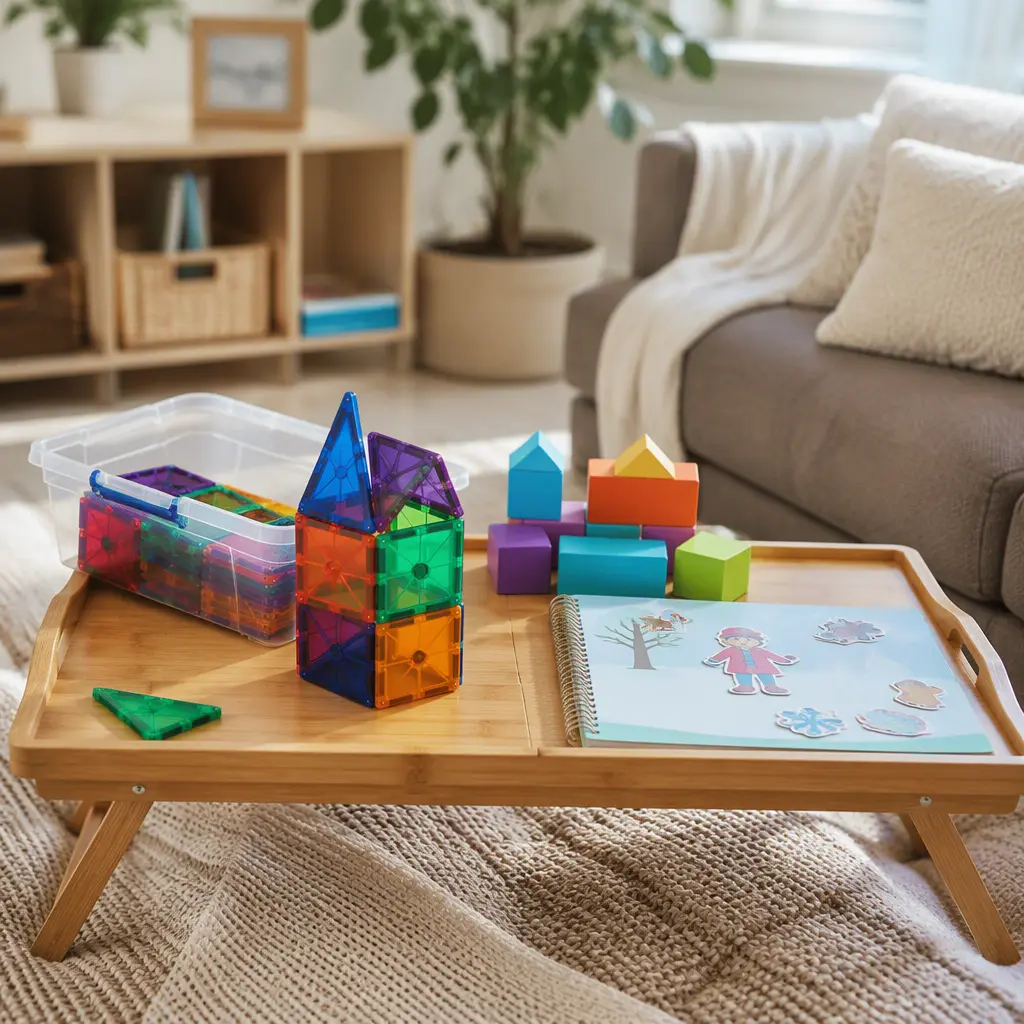
Magnetic tiles are one of the more flexible screen-free options for post-surgery recovery because they can be used while sitting still and usually stay contained better than loose blocks. Preschoolers can build flat patterns on a tray or make simple towers without needing much floor space. They tend to suit children who already enjoy building activities and can play gently. Families in small homes may also appreciate that many magnetic sets store compactly. However, some sets can be noisy when pieces snap together, and younger children may need reminders not to toss them around.
Soft foam blocks and fabric construction toys are quieter and lighter than wooden blocks, making them useful for children who feel sore or sleepy. These toys work well for calm stacking and imaginative play from the couch. The trade-off is that they usually offer less complex building potential for older preschoolers. Reusable sticker scenes and felt play boards are another strong option because they create very little mess and require minimal supervision. They suit children who like storytelling more than construction. Chunky interlocking bricks can also work during recovery, especially for older preschoolers, but large floor builds are often less practical when movement should stay limited.
- Magnetic tiles: good for contained couch play and open-ended building; can be slightly noisy.
- Foam or fabric blocks: quiet and lightweight; better for simple stacking than detailed builds.
- Reusable sticker sets: low mess and portable; less appealing for children who prefer hands-on construction.
- Chunky interlocking bricks: engaging for older preschoolers; cleanup and scattered pieces can become tiring.
- Felt boards and soft scene builders: calm, portable and easy during rest periods; limited building challenge.
Frequently asked questions
Are building toys too active after tonsil surgery?
Not necessarily. Calm building activities done from bed or the couch are usually very different from active floor play. Lightweight magnetic tiles, foam blocks and simple stacking toys can keep children occupied while still allowing plenty of rest.
What types of toys are easiest to supervise?
Contained activities with larger pieces are generally easier for parents to manage. Tray-based toys, sticker activities and magnetic sets often create less mess and need fewer interruptions than craft kits with glue, paint or tiny accessories.
Should electronic learning toys be avoided?
Some families use electronic toys during recovery, but quieter screen-free activities can help reduce overstimulation and noise. Battery-powered toys with bright sounds or flashing lights may become irritating during long rest periods, especially in shared spaces.
How many recovery toys are usually enough?
A small rotation often works better than a large pile of toys. Preschoolers recovering from surgery may move between activities quickly, so having three to five calm options available can help maintain interest without overwhelming the space.
Which toys travel well to appointments or relatives' homes?
Magnetic travel sets, reusable stickers, felt boards and compact building kits are usually easier to carry than traditional wooden blocks or large brick collections. Storage tins and zip pouches can also help keep pieces contained while traveling.
The best screen-free toys after tonsil surgery are usually the ones that match a child's energy level while keeping cleanup, noise and supervision manageable for parents. Quiet construction toys, reusable activities and soft open-ended play options can provide comfort and distraction without encouraging too much movement. For ages 3–5, simple and portable often works better than large complicated sets, especially during the first days of recovery.