Best Screen-Free Toys for Kids Sharing One Bedroom
A parent-focused guide to quiet, compact screen-free toys for children aged 6–8 sharing one bedroom, with practical advice on storage, durability, supervision and sibling-friendly play.
Compare prices and availability
Check current prices and availability for this guide on eBay.
As an eBay Partner, we may be compensated if you make a purchase.
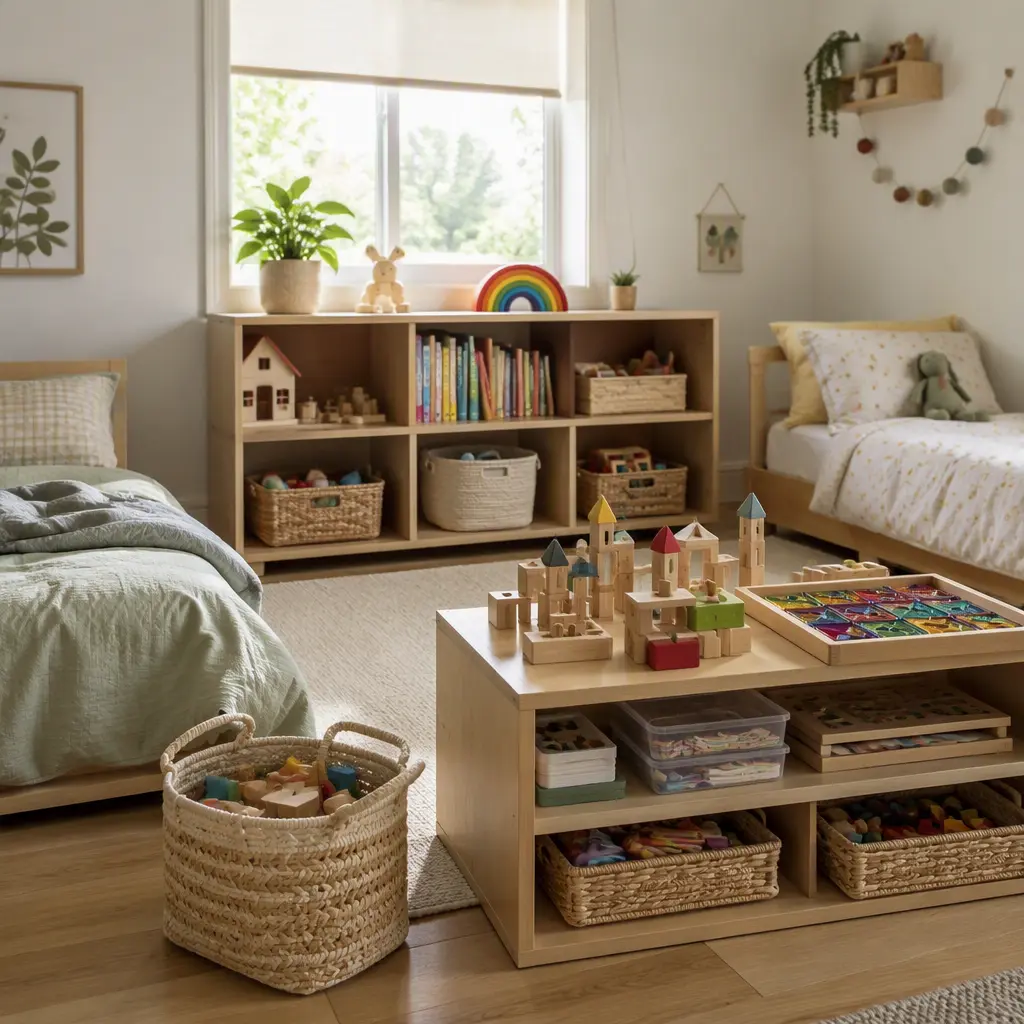
When two children share one bedroom, toy choices affect more than entertainment. Noise levels, storage space, bedtime routines and sibling dynamics all matter, especially for children aged 6–8 who are developing independence but still benefit from structured, cooperative play. Screen-free toys can work particularly well in shared spaces because they encourage focus, conversation and imaginative problem-solving without adding extra sound or screen glare before bedtime. The challenge is finding toys that stay manageable in a smaller room and reduce arguments over ownership, mess or turns.
What to look for
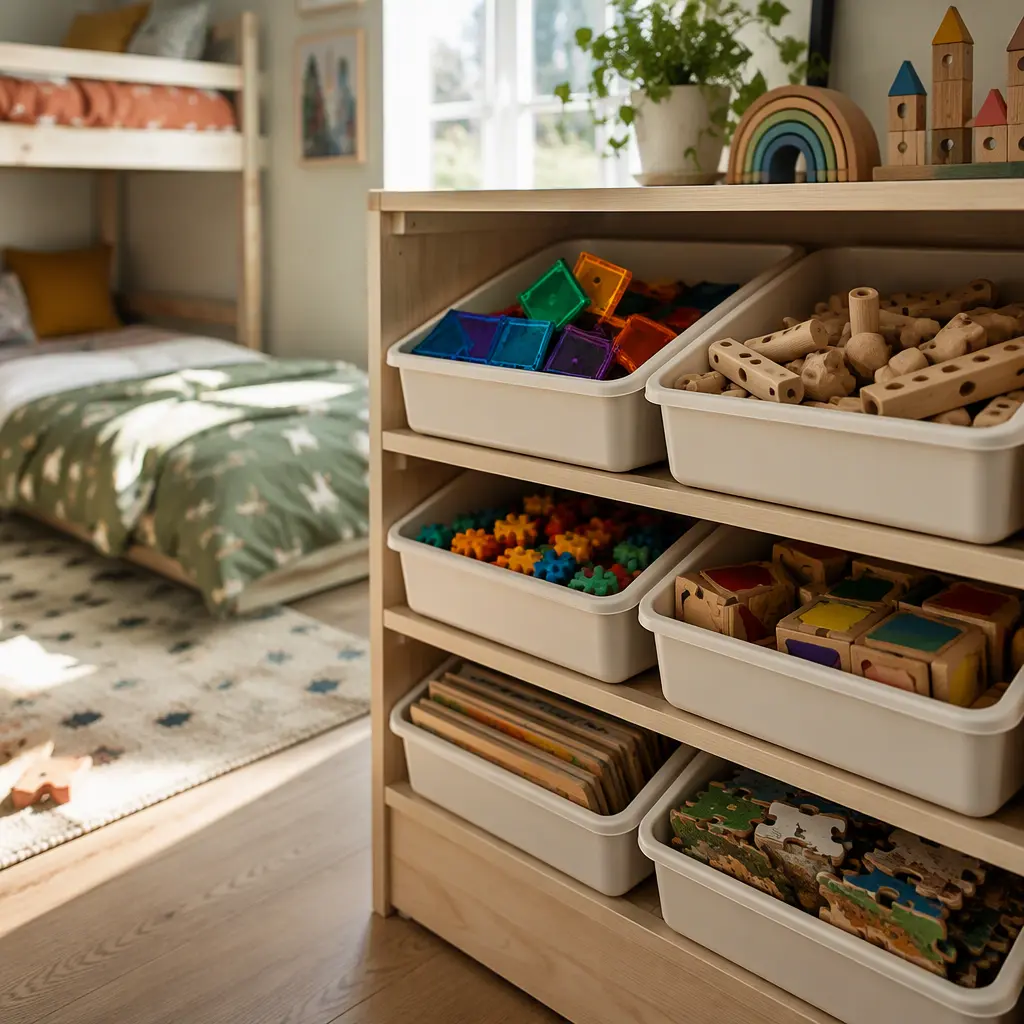
The best toys for a shared bedroom are usually quiet, easy to tidy and flexible enough for solo or cooperative play. Building and construction sets are often a strong fit because they can adapt to different skill levels and play styles. Some children prefer structured models while others enjoy open-ended building. Compact sets with reusable storage containers tend to work better than toys with many oversized pieces spread across the floor. Durability also matters because shared toys are handled more often and may be used in different ways by siblings.
- Choose toys with contained storage such as stackable bins, trays or lidded boxes.
- Prioritize quieter materials like wood, foam or magnetic pieces over loud electronic features.
- Look for open-ended play that supports both solo building and collaborative projects.
- Avoid toys with hundreds of tiny loose parts if floor space is limited.
- Consider whether the toy can pause easily for bedtime or shared routines.
- Pick sturdy materials that tolerate repeated rebuilding and shared use.
- Check whether cleanup can realistically be completed by children aged 6–8 without adult help.
Age suitability
Children aged 6–8 often enjoy toys that combine creativity with achievable challenges. Construction toys, marble runs, puzzle-building kits and cooperative board-style activities can hold attention longer than simpler preschool toys while remaining screen-free and relatively calm. At this age, many children are still learning conflict resolution, so toys that allow parallel play can help reduce tension in shared bedrooms. For example, magnetic tiles or modular building systems let each child work on a separate section while still participating in a shared project. Younger siblings under six may need supervision around smaller construction pieces, while older children approaching nine may prefer more advanced engineering-style sets with detailed instructions and longer build times.
Options compared
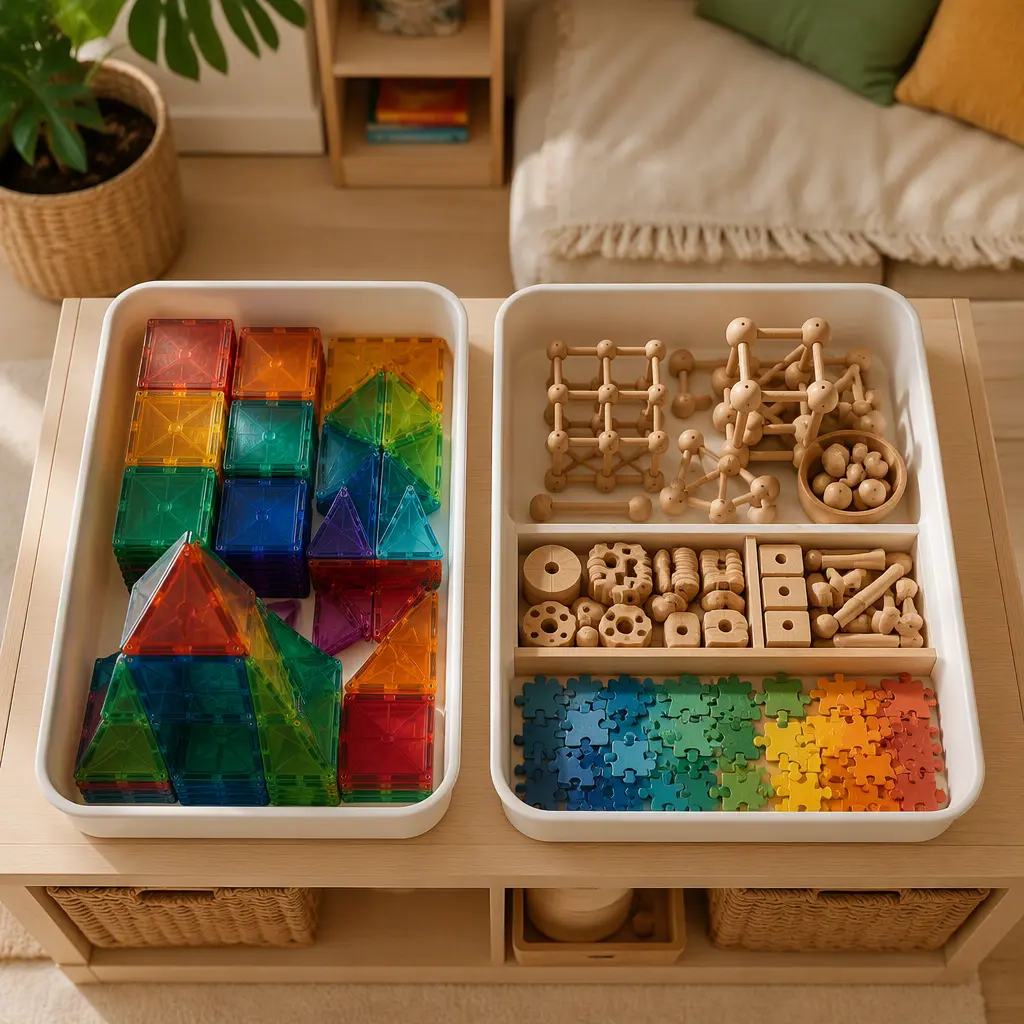
Magnetic building tiles are one of the most practical choices for shared bedrooms because they store flat, support cooperative play and create relatively little noise. Children can build together or separately without needing strict turn-taking. They also suit a wide range of creativity levels, from simple structures to more advanced designs. The main drawback is that larger collections can become expensive and loose tiles can spread quickly across the floor if storage routines are inconsistent.
Wooden construction sets tend to be durable and quieter than hard plastic toys. Many encourage engineering-style thinking while still feeling calm enough for bedroom play. However, some sets include small connectors that are easier to lose in shared spaces. Cardboard or paper-based building kits reduce storage bulk and are often budget-friendly, but they may wear out faster if siblings repeatedly rebuild the same models. Puzzle-based construction toys can work well for children who enjoy structured tasks and predictable outcomes, though they may create disagreements if one child prefers imaginative free-building instead.
- Magnetic tiles: compact storage, quiet play and flexible cooperation; better for children who enjoy open-ended creativity.
- Wooden building systems: durable and calm for shared spaces; often heavier and slightly bulkier to store.
- Marble runs: engaging and cooperative but noisier during active play and harder to leave assembled overnight.
- Puzzle construction kits: structured and tidy; less flexible for imaginative play.
- Interlocking plastic bricks: highly versatile and long-lasting but easy to scatter across small bedrooms and painful underfoot during nighttime routines.
- Craft-and-build kits: good for creative siblings sharing materials, though some involve glue, paper scraps or drying time that increases mess.
Frequently asked questions
How can parents reduce arguments over shared toys?
Toys that support parallel play often work best in shared bedrooms. Building systems with enough pieces for two children to work independently can reduce competition. Separate trays or containers for ongoing projects also help children feel ownership without fully separating the toy itself.
Are building toys too messy for small bedrooms?
They can be if the set includes many tiny loose parts without dedicated storage. Smaller collections stored in clear bins or under-bed drawers are usually easier to manage than oversized sets. Choosing toys with larger pieces can also speed up cleanup and reduce clutter.
Which screen-free toys are quiet enough for evening play?
Magnetic tiles, wooden blocks, tangram puzzles, paper craft kits and cooperative tabletop games are typically quieter than electronic toys or active play equipment. Soft materials and floor mats can also reduce noise in apartments or homes with thin walls.
What toys work well when siblings have different interests?
Open-ended construction toys are often more adaptable than character-based playsets. One child may focus on storytelling while another experiments with engineering or patterns. Flexible systems tend to stay interesting longer because children can approach them differently.
Should shared-bedroom toys stay permanently assembled?
That depends on available space. In smaller rooms, toys that can pause and pack away quickly are usually more practical. If children enjoy long-term building projects, a shelf or tray reserved for unfinished creations can prevent frustration without taking over the entire bedroom.
The most useful screen-free toys for children sharing one bedroom are usually the ones that balance creativity with practicality. Quiet construction sets, compact storage and flexible play styles can make shared spaces feel calmer and more cooperative. Focusing on durability, manageable cleanup and age-appropriate complexity often leads to toys that stay useful longer and fit more comfortably into everyday family routines.