Tile Town: How magnetic tiles became miniature worlds
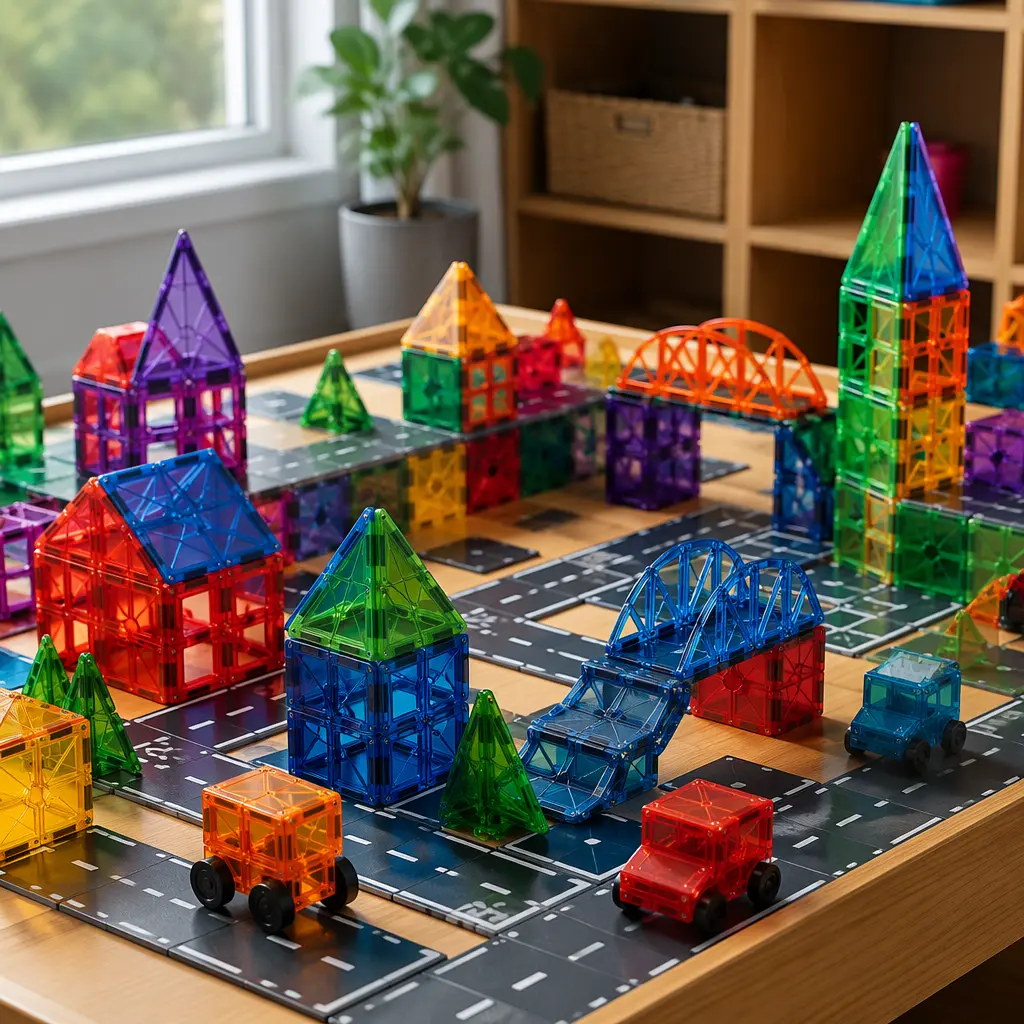
Tile Town reflects a newer phase of magnetic construction play, where flat tiles and simple connectors support not just towers but streets, vehicles, shops, and everyday storytelling.
Compare prices and availability
Check current prices and availability for this guide on eBay.
As an eBay Partner, we may be compensated if you make a purchase.
For years, magnetic tile toys were mostly associated with tall towers, geometric patterns, and marble-run style engineering builds. Tile Town represents a newer direction for the category: using magnetic construction pieces to create complete miniature environments. Instead of focusing only on height or symmetry, children build neighborhoods, roads, storefronts, garages, parks, and vehicles that support imaginative storytelling alongside construction play. That shift has helped magnetic tile systems appeal to a broader age range and a wider variety of play styles.
Where it came from
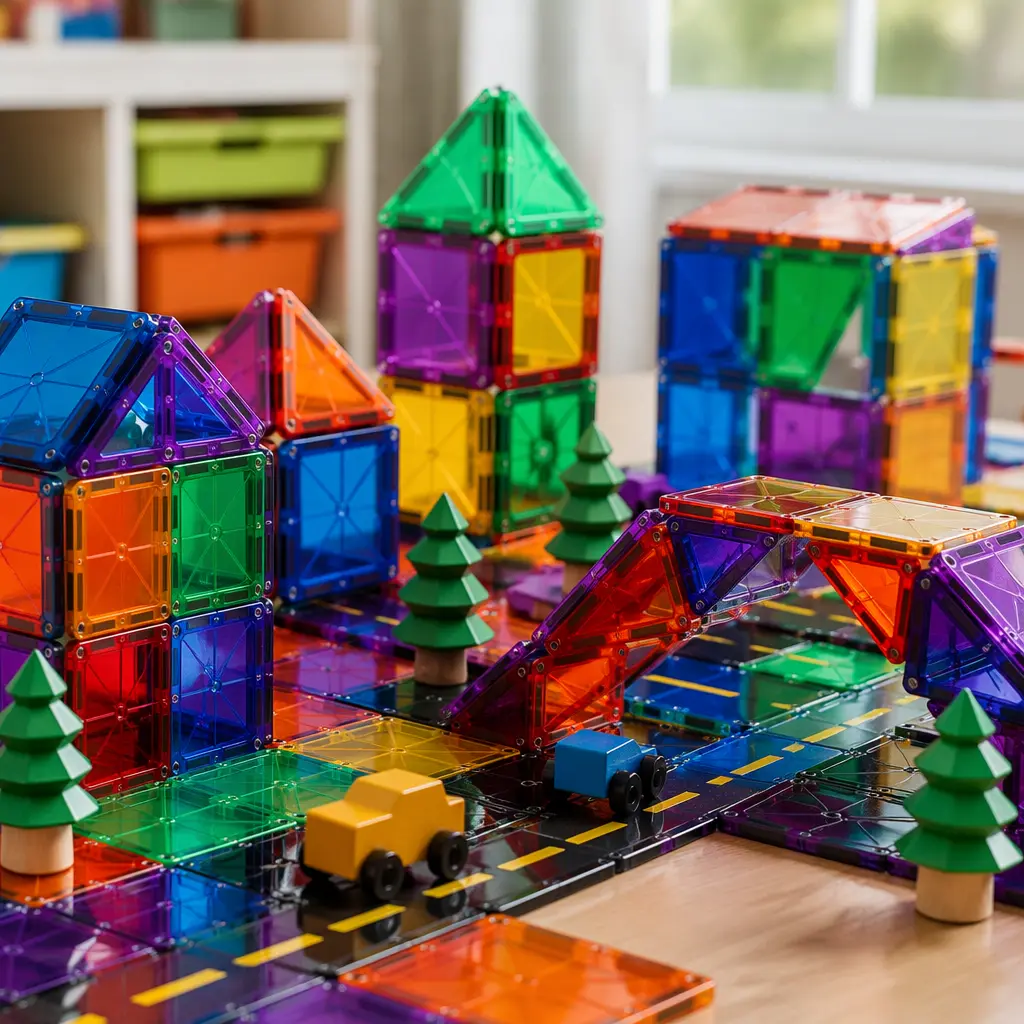
Tile Town emerged during a period when magnetic construction toys were already well established in homes and classrooms. By the early 2020s, parents and educators had embraced magnetic tiles as an accessible introduction to spatial reasoning, balance, and open-ended building. The next challenge for manufacturers was keeping older children engaged once basic towers and cubes became familiar.
Around 2022, toy makers increasingly expanded magnetic tile systems with roads, windows, vehicle bases, ramps, and decorative pieces designed for world-building. Tile Town fit directly into that trend. The concept combined the satisfying snap-together construction of magnetic tiles with the narrative flexibility of dollhouses, train sets, and miniature city play. The result was less about following instructions and more about designing spaces where pretend play could unfold naturally.
Why it works
The key strength of Tile Town style play is that it supports several kinds of learning and creativity at the same time. Children can experiment with engineering ideas like stability, weight distribution, and shape while also inventing stories about who lives in the buildings, where roads lead, or how vehicles move through the town. The toy shifts easily between STEM-oriented play and imaginative role-play without needing separate systems or complicated rules.
Magnetic tiles also lower the frustration level that can come with traditional interlocking bricks. Pieces connect quickly, structures can be rebuilt in seconds, and even younger children can achieve satisfying results. That ease of use encourages experimentation. Instead of spending long periods trying to force pieces together, children can focus on layout, design, and storytelling.
- Flat magnetic panels make large structures fast to assemble and easy to redesign
- Road and vehicle elements encourage storytelling instead of purely abstract construction
- Open-ended building supports solo play as well as collaborative group play
- Translucent colorful tiles create strong visual appeal in natural light
- Simple magnetic connections help younger builders participate earlier than with some brick systems
Who it's for
Tile Town style sets tend to work best for preschool and elementary-age children, though older kids often enjoy building larger cities or more elaborate transportation systems. Families often appreciate that the toy scales naturally with age. Younger children may focus on stacking and sorting, while older children begin creating organized neighborhoods, traffic systems, or themed locations. Adults sometimes join in as well, especially because magnetic tiles are quick to assemble and visually satisfying in a shared family play session.
Variants and what to look for today
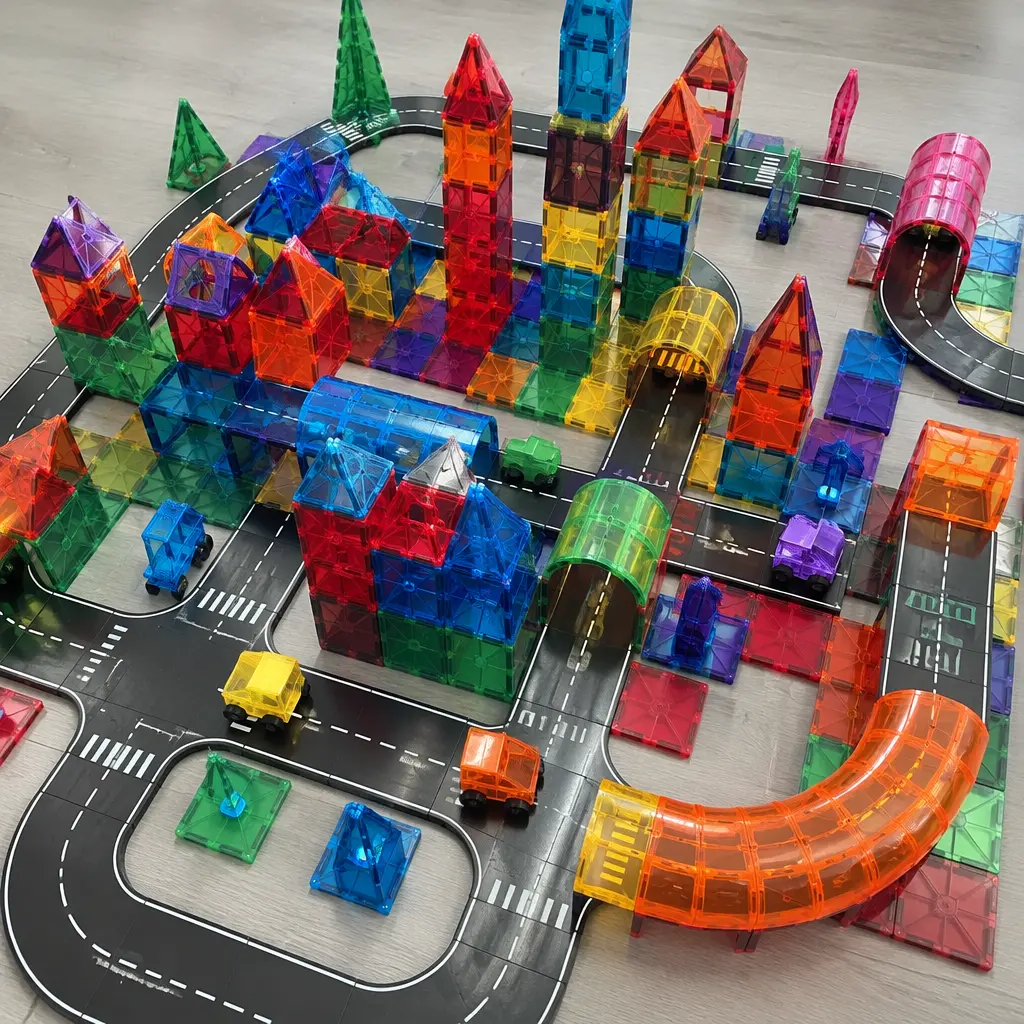
Modern Tile Town style products now appear in several forms. Some sets focus heavily on transportation, including road pieces, ramps, garages, and wheeled bases. Others lean toward architectural play with houses, towers, storefronts, and decorative window panels. There are also larger ecosystem-style sets that combine tracks, bridges, signs, and scenery pieces to support sprawling city layouts.
Compatibility matters when shopping for magnetic tile toys. Many contemporary systems are designed around similar tile sizing, allowing families to expand gradually across multiple sets. Build quality is worth paying attention to as well. Strong magnets, reinforced corners, and securely enclosed magnetic elements tend to produce more durable long-term play experiences.
- Starter sets are usually best for younger children or smaller play spaces
- Road and vehicle expansions add more storytelling opportunities
- Clear or translucent tiles often create the most dramatic light effects
- Storage bins or trays become important once collections grow larger
- Very lightweight off-brand pieces may connect weakly or feel less stable during large builds
Frequently asked questions
Are Tile Town style magnetic toys educational?
They are often used in classrooms and home learning environments because they combine spatial reasoning, fine motor skills, creative problem-solving, and imaginative storytelling. Much of the educational value comes from open-ended experimentation rather than strict instructions.
Do magnetic tile sets work together?
Many modern magnetic tile systems share similar dimensions and connection styles, though compatibility can vary slightly between brands. Families who expect to expand over time often look for systems built around common square and triangular tile sizes.
What ages are magnetic town-building toys best for?
Simple stacking and shape exploration can begin in the preschool years with supervision, while more advanced city planning and storytelling play often appeal to children in elementary school. Older children sometimes enjoy creating large collaborative layouts with siblings or friends.
Why did magnetic tiles become so popular?
Part of the appeal is flexibility. A single set can support engineering challenges, pretend play, artistic design, and cooperative building. The toys also photograph well and create colorful structures that feel rewarding even after short play sessions, which helped them spread widely through classrooms, parenting media, and social sharing.
Tile Town reflects how construction toys continue to evolve beyond simple building challenges. By combining magnetic engineering with miniature-world storytelling, the category turned a familiar educational toy into something closer to an expandable play environment. That blend of creativity, accessibility, and replay value explains why magnetic town-building sets have become a major part of contemporary family playrooms.