Toy Safes vs Locking Craft Boxes for Tiny Piece Storage
Compare toy safes and locking craft boxes for storing LEGO-sized parts, beads and magnets in homes with younger siblings. Learn the trade-offs around safety, access, storage and supervision.
Compare prices and availability
Check current prices and availability for this guide on eBay.
As an eBay Partner, we may be compensated if you make a purchase.
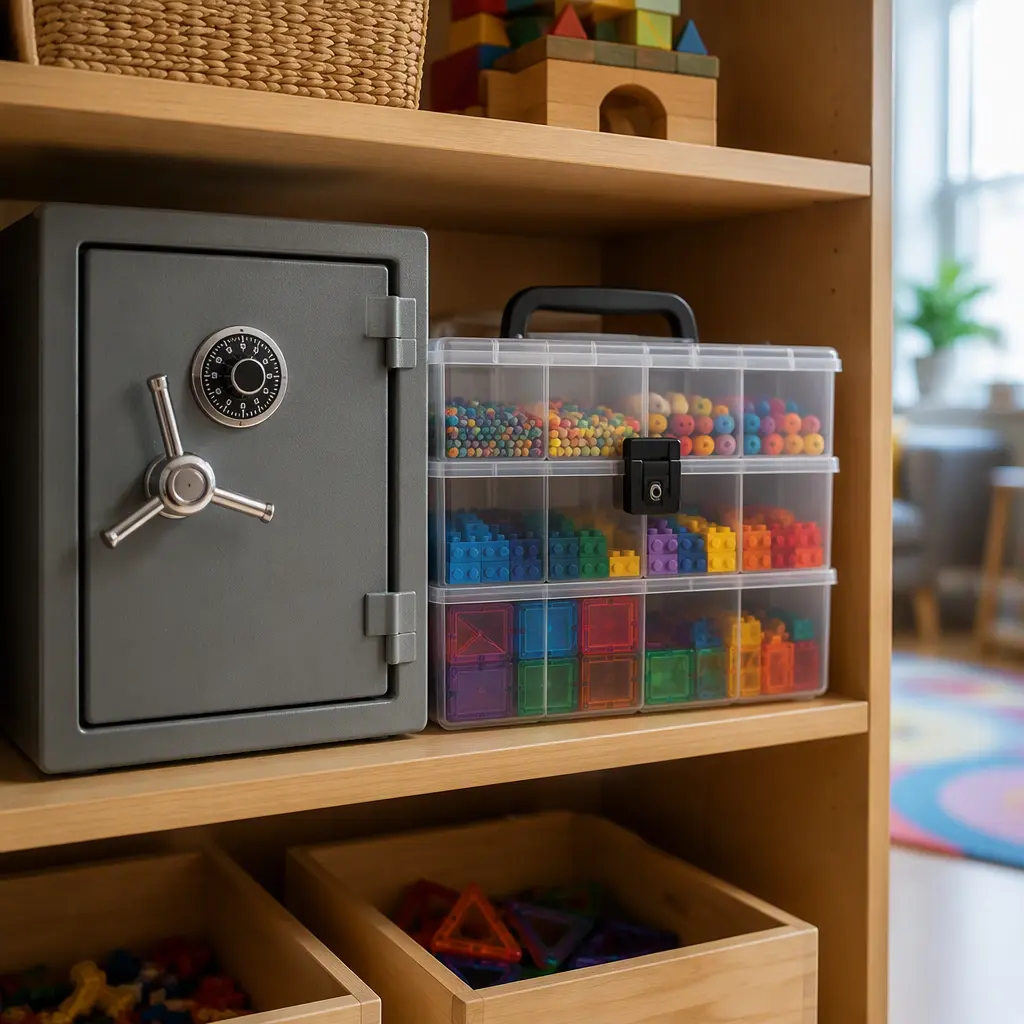
Tiny toy pieces create a familiar problem in shared family spaces. Older children may want easy access to LEGO-sized bricks, beads, mini figures or magnetic building parts, while younger siblings are still at an age where mouthing objects is common. Two common storage approaches are toy safes and locking craft boxes. Both can reduce clutter and improve organization, but they solve different problems. A toy safe leans toward restricted access and novelty, while a locking craft box usually focuses on visibility, portability and sorting. The better choice depends on how often the collection is used, how independently the older child plays, and how carefully the storage system needs to separate small parts from younger children.
What to look for
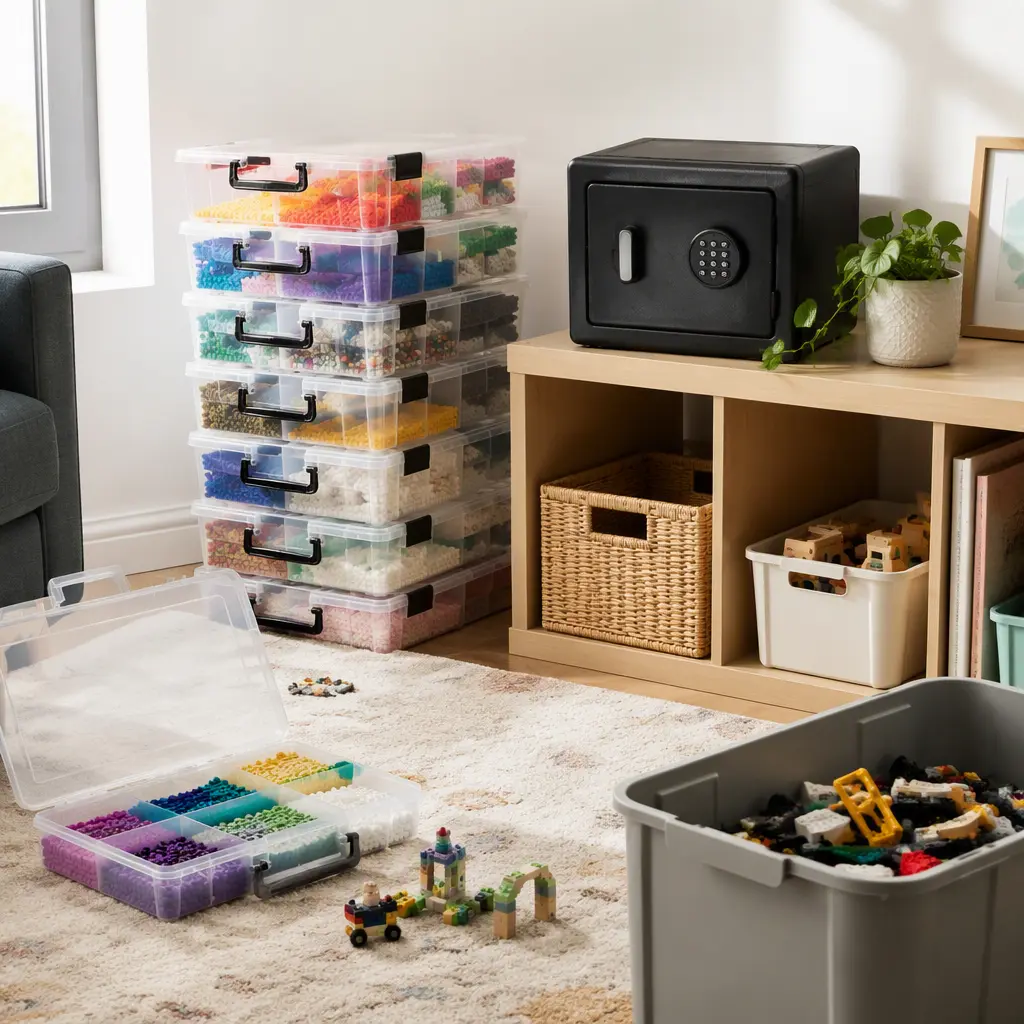
The safest and most practical option is usually the one that fits daily family habits. A storage container only works if older children can consistently use it and adults can quickly check whether tiny pieces have been put away properly. For children in the 6–8 age range, ease of opening matters almost as much as security. Containers that are frustrating to lock or organize often end up left open or partially packed away.
- Choose storage with secure closures that younger siblings cannot easily open accidentally.
- Transparent or partially visible compartments make cleanup faster and help children notice missing pieces.
- Removable trays are useful for bead projects or building sets that need sorting by color or size.
- Metal safes can feel special and private, but heavier designs may be awkward for younger children to carry safely.
- Craft boxes with multiple latches usually offer faster access during everyday play sessions.
- Consider where the container will live. High shelves reduce risk, but children still need adult-approved access.
- Magnets deserve extra caution because loose high-powered magnets can be hazardous if swallowed.
Age suitability
Children aged 6–8 are often ready to manage organized collections with reminders and routines, especially for building toys and craft materials they value. Locking craft boxes generally suit this age group well because compartments support independent sorting and cleanup. Toy safes may appeal more to children who enjoy privacy, collecting or role-play. However, neither option replaces supervision in homes with babies, toddlers or preschoolers. If younger siblings still explore by putting objects in their mouths, adults should treat all small-part toys as actively supervised items rather than relying only on a lock.
Options compared
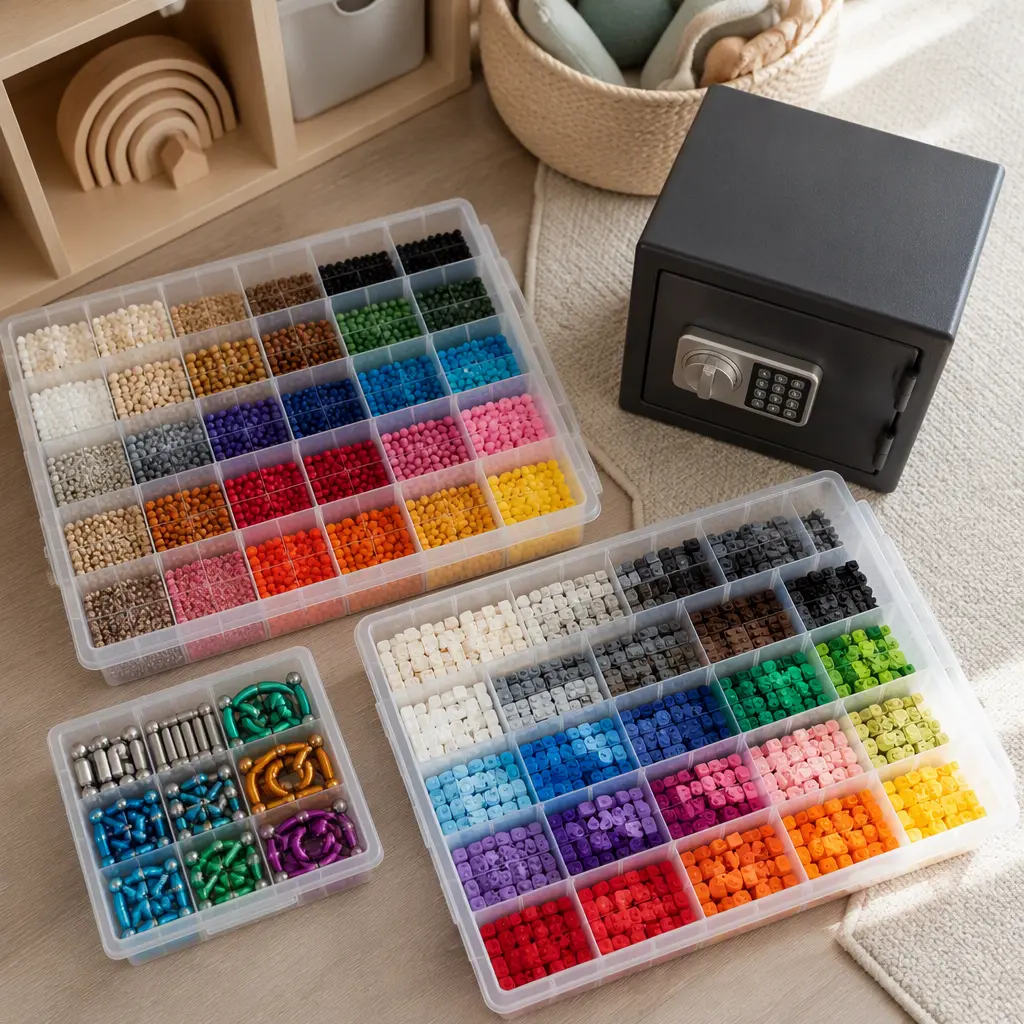
Toy safes work best when the main goal is limiting casual access. They are often useful for children who want a dedicated place for prized mini figures, rare building pieces or magnetic sets that should stay off-limits to younger siblings. The physical act of locking items away can reinforce responsibility and encourage children to put things back immediately after use. Some families also prefer safes because they blend into bedrooms or shelves more neatly than large craft organizers.
The trade-off is convenience. Many toy safes have a single open compartment, which means small parts may still require separate bags or trays inside. They can also slow down cleanup if children dump everything together rather than sorting it. Locking craft boxes are usually better for children who actively build, sort or craft several times a week. Clear compartments support quick visual checks, and portable cases can move easily from table to shelf. They are especially practical for beads, miniature accessories and color-coded brick collections. The downside is that many craft boxes prioritize organization over true security. Younger siblings may eventually figure out simple latches, especially if the container is stored at floor level.
- Toy safes suit collectors, children who value privacy, and families prioritizing restricted access.
- Locking craft boxes suit frequent builders, crafters and children who need organized compartments.
- Safes are usually better for storing a smaller number of valued items.
- Craft boxes are usually better for large mixed collections with many categories.
- Heavy safes may be less practical in shared bedrooms or homes with limited storage space.
- Clear craft organizers simplify inventory checks after play sessions.
Frequently asked questions
Are toy safes actually safer for younger siblings?
They can reduce accidental access, especially compared with open bins or drawers, but safety still depends on where the safe is stored and whether it stays locked consistently. A younger child may still gain access if the container is left open after play.
Do clear craft boxes encourage better cleanup habits?
For many children, yes. Visible compartments make it easier to sort pieces quickly and spot missing items. Children in the 6–8 age range often respond well to simple visual organization systems, especially for color-sorted bricks or bead kits.
What works best for magnetic building pieces?
A sturdy locking container with dedicated sections helps keep magnetic pieces together and reduces the chance of loose parts spreading around the home. Families with toddlers should be especially cautious about storing any small magnetic components within reach.
Is a toy safe too restrictive for everyday play?
It depends on the child. Some children enjoy the responsibility and routine of unlocking and relocking their collection. Others may stop using the system if access feels inconvenient. Frequent builders often prefer storage that opens quickly and keeps pieces visible.
How can parents reduce mess without constant sorting?
Limiting the number of active sets at one time can help more than buying larger storage. Some families rotate collections, keeping only one building set or craft project accessible while the rest stay stored on higher shelves.
For most families with younger siblings in the home, locking craft boxes are the more practical everyday choice because they combine organization, portability and fast cleanup. Toy safes make more sense when controlled access matters most or when a child treats their collection as something personal and valuable. In many homes, a combination works best: a compartment organizer for active projects and a locked container for higher-risk or special items. The key is choosing a system that children can realistically maintain with regular adult oversight.