Toy Vaults vs Open Bins for Kids Who Dump Everything
Compare toy vaults and open bins for preschoolers who empty every container. Learn how visibility, cleanup speed, storage size and supervision affect daily play and tidying.
Compare prices and availability
Check current prices and availability for this guide on eBay.
As an eBay Partner, we may be compensated if you make a purchase.
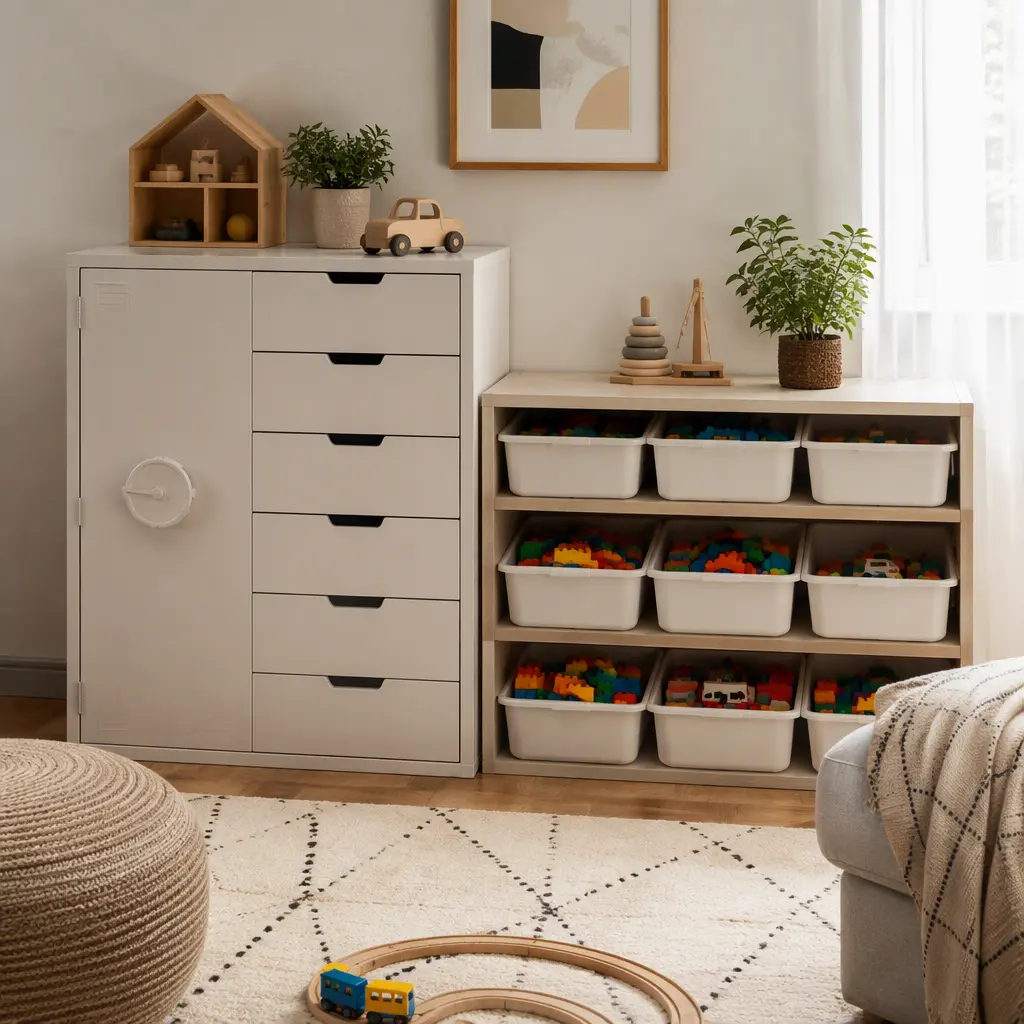
For many families with preschoolers, the biggest storage problem is not fitting toys into the room. It is managing the daily cycle of dumping, scattering and reluctant cleanup. Building blocks, magnetic tiles, train tracks and pretend-play pieces often end up mixed together on the floor within minutes. Two common approaches are toy vault-style storage with enclosed drawers or compartments, and open bins that keep toys visible and easy to reach. Each system changes how children play, how quickly they clean up and how much supervision parents need to provide. The better choice usually depends on whether your child benefits more from easy access or stronger limits around toy quantity and visibility.
What to look for
Storage for ages 3 to 5 works best when children can understand where toys belong without needing constant reminders. Preschoolers are still learning categorization, cleanup routines and impulse control, so the physical setup matters more than many parents expect. Open storage tends to encourage independent access and faster play setup, while enclosed storage can reduce visual clutter and limit how many toys come out at once. The ideal system also depends on the size of the toy collection, available floor space and how often adults want to rotate toys.
- Toy visibility: Open bins make it easier for preschoolers to find specific toys without dumping everything to search.
- Cleanup speed: Large open bins are fast for quick tidying, while smaller divided drawers help keep sets organized.
- Dumping behavior: Deep bins can invite full-container dumping, especially with mixed toys or overcrowded storage.
- Floor space: Vault-style cabinets use vertical storage efficiently but may need wall anchoring for stability.
- Noise levels: Hard plastic bins and wooden drawers can create loud cleanup noise in shared living spaces.
- Toy rotation: Enclosed systems make it easier to hide unused toys and reduce overstimulation.
- Durability: Lightweight fabric bins are quieter and safer indoors, while rigid bins handle heavier construction toys better.
Age suitability
Children aged 3 to 5 are usually capable of basic independent cleanup when the system is simple and consistent. Younger preschoolers often do better with fewer categories and wide openings they can use without fine motor effort. Open bins at child height are generally easier for 3-year-olds to manage. By ages 4 and 5, many children can handle more structured storage with separate drawers for different toy types, especially if building sets contain many small pieces. Some children become overwhelmed by seeing too many toys at once, while others lose interest if favorite toys are hidden behind closed doors or stacked containers.
Options compared
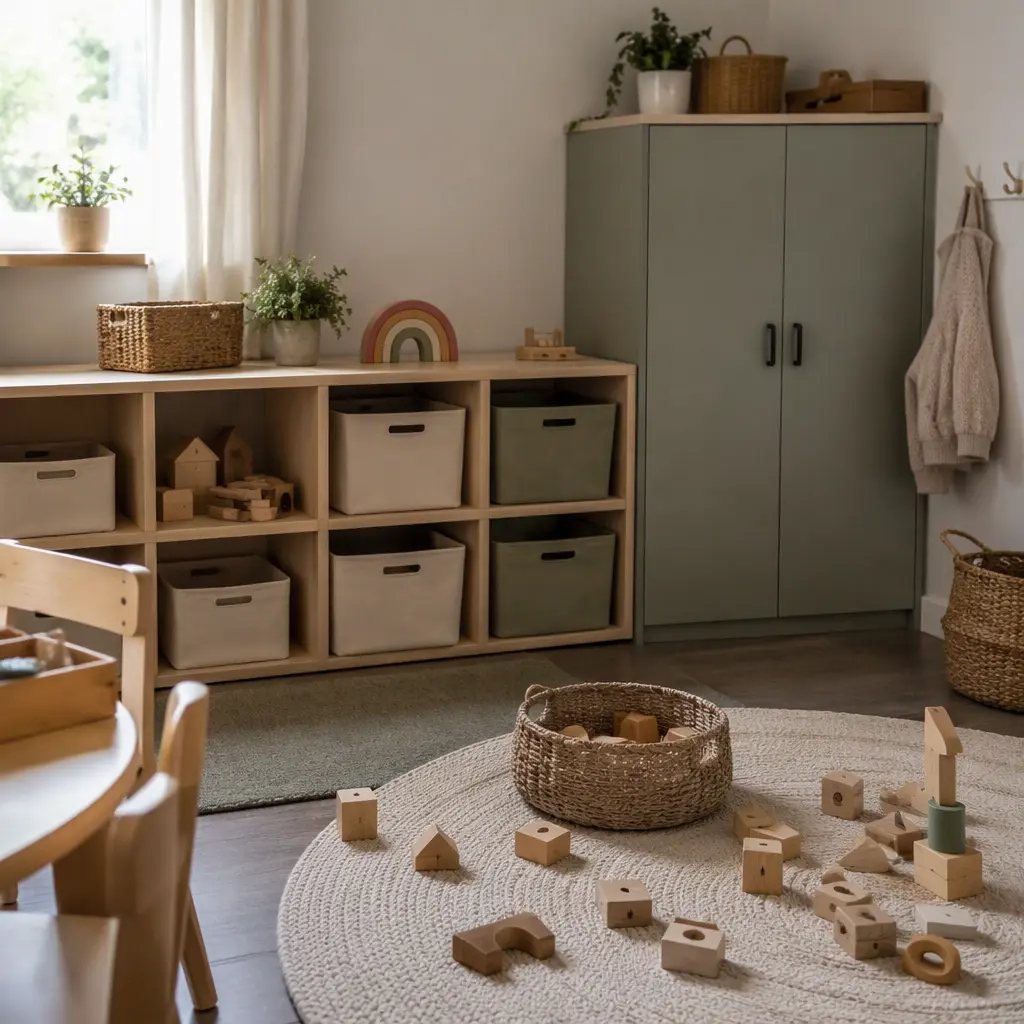
Open bins are often the fastest option for everyday cleanup. Preschoolers can quickly toss toys into large containers without sorting every piece. This can reduce cleanup battles at the end of the day, especially for mixed toy collections. Open systems also support independent play because children can see what is available immediately. The downside is that visibility sometimes encourages children to pull out multiple bins at once. Deep bins filled with assorted pieces are especially likely to be dumped completely onto the floor during play.
Toy vaults, drawer systems and enclosed cubbies create more structure. They can reduce visual overstimulation and make a room feel calmer, which some children respond to well. Families who rotate toys regularly may also prefer enclosed storage because unused items stay out of sight. However, closed drawers can slow down cleanup if children struggle to remember where items belong. Some preschoolers also empty every drawer while searching for one missing piece. Smaller, clearly separated compartments tend to work better than large deep drawers for construction toys and pretend-play accessories.
- Open bins suit children who like independent access, quick cleanup and visible toy choices.
- Open bins may frustrate parents who want toys neatly sorted or hidden between play sessions.
- Toy vaults suit families aiming to reduce visual clutter or rotate toys more intentionally.
- Drawer-based systems work well for separating building sets, craft materials and loose parts.
- Mixed systems are often the most practical approach, with open bins for daily favorites and closed storage for overflow toys.
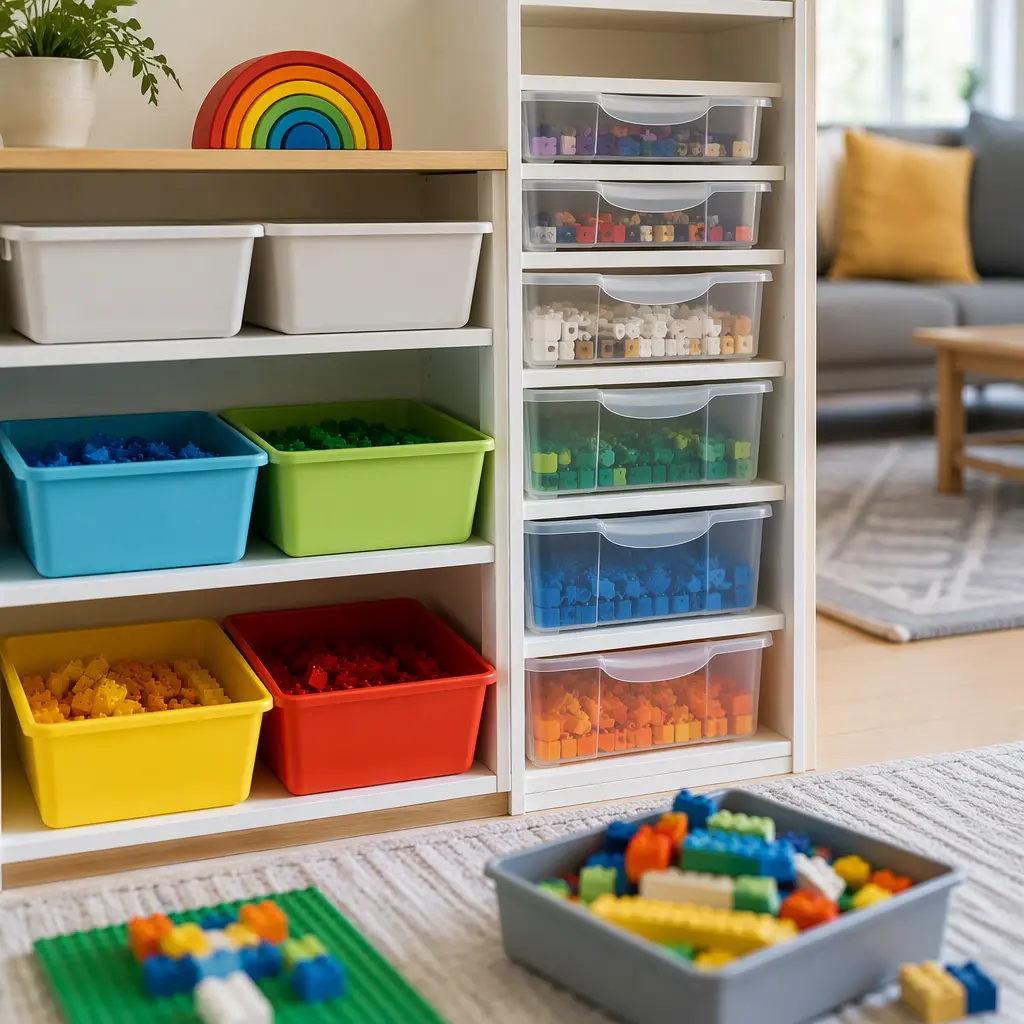
- Clear containers can reduce searching and dumping compared with opaque bins.
- Smaller bins usually create less mess than oversized toy boxes because children can manage one category at a time.
Frequently asked questions
Do open bins make dumping worse?
Sometimes. Large open bins filled with mixed toys often encourage full dumping because children search visually and physically at the same time. Smaller bins with one toy category each usually create less mess and make cleanup easier.
Are toy vaults better for small spaces?
They can be. Vertical drawer systems and enclosed cabinets often use wall space efficiently and hide clutter well. However, some large toy vaults take up significant floor depth, so measuring the room carefully is important before buying.
What works best for building and construction toys?
Construction toys usually benefit from divided storage rather than one oversized bin. Smaller containers help keep pieces sorted by type or set, which reduces frustration during play and lowers the chance of missing parts.
Should toys always stay visible?
Not necessarily. Some preschoolers play more calmly and creatively when fewer toys are visible at once. Rotating toys in and out of storage can maintain interest without requiring a large permanent play area.
Is one large toy box a good idea?
A single large toy box is usually the hardest system for organization. Toys become mixed together, children often dump the entire contents to search, and cleanup can feel overwhelming. Multiple smaller containers are typically easier for preschoolers to manage.
For most families with children aged 3 to 5, the most effective setup combines visibility with limits. A few open bins for frequently used toys can support independent play and faster cleanup, while closed storage helps reduce clutter and control toy volume. If dumping behavior is a daily frustration, reducing the number of available toys at one time is often more effective than changing storage style alone. The right system should make cleanup predictable, fit comfortably within the room and support the way your child actually plays rather than how an ideal playroom looks in photos.