Travel Tray Toys vs Window Clings for Toddler Car Rides
Compare travel tray toys and window clings for toddlers on long car rides. Learn which option suits your child's age, attention span, cleanup needs, and car-seat setup.
Compare prices and availability
Check current prices and availability for this guide on eBay.
As an eBay Partner, we may be compensated if you make a purchase.
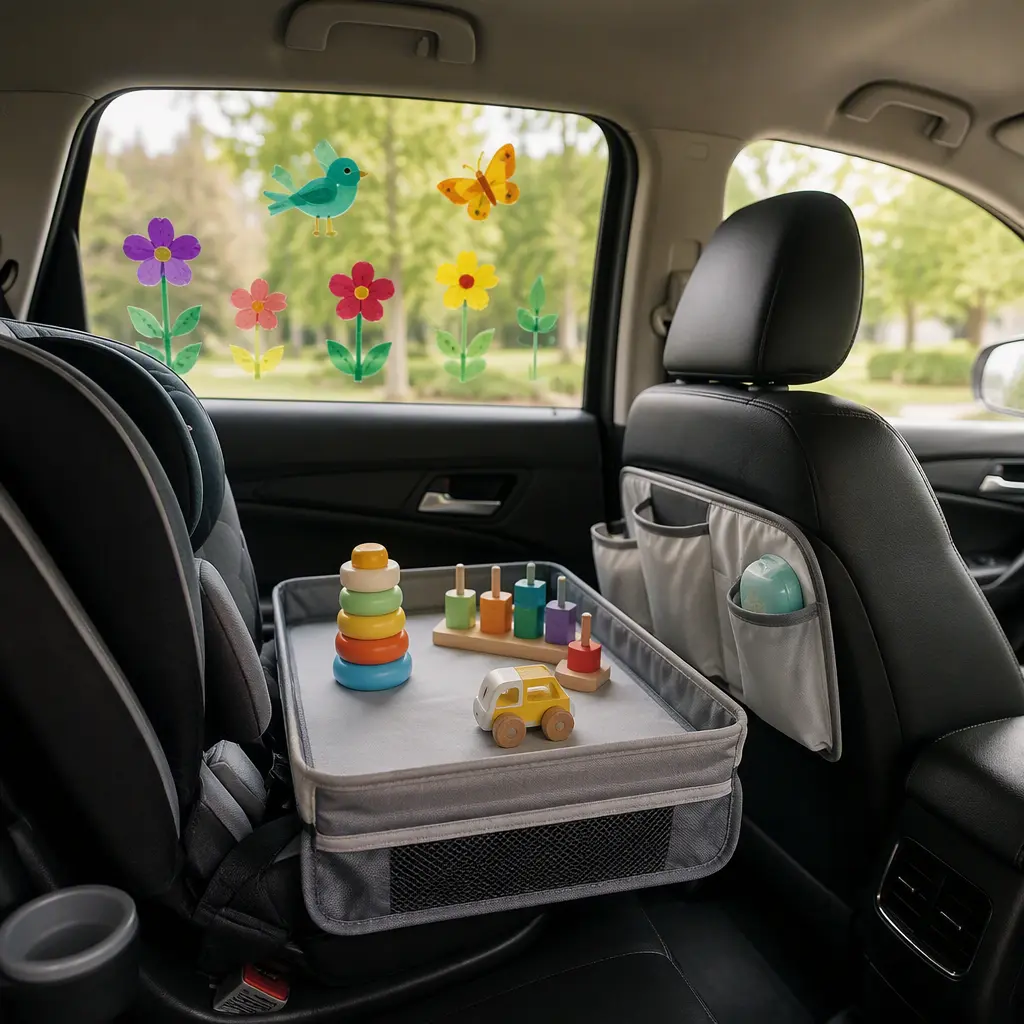
Long car rides with toddlers often come down to one challenge: keeping small children occupied while they remain safely strapped into a car seat. Two popular screen-free options are travel tray toys and reusable window clings. Both aim to reduce boredom without relying on tablets or loud electronic toys, but they work in very different ways. Travel trays create a contained play surface for toys, snacks, and simple activities, while window clings turn the car window itself into a reusable play area. The better choice depends on your child’s age, how much movement space they have in the car seat, how often you travel, and how much cleanup or supervision you can realistically manage during the trip.
What to look for
For toddlers between 1 and 2 years old, the biggest factors are reach, safety, mess control, and attention span. Many toys that work well at home become frustrating in a car because they fall out of reach or require more fine motor control than a younger toddler has developed. Parents should also think about how quickly a setup can be packed away during rest stops or transfers between vehicles. Compact, lightweight activities tend to work best for frequent travel.
- Choose activities with large pieces that are easy to grab from a car seat.
- Avoid toys with many loose parts that can roll under seats or become frustrating to retrieve.
- Look for wipe-clean materials if snacks, spills, or sticky hands are likely.
- Consider whether your child tolerates lap surfaces comfortably before choosing a travel tray.
- Check whether reusable clings leave residue on windows or lose stickiness after repeated use.
- Think about noise levels if siblings may nap during the journey.
- Prioritize lightweight storage that fits easily into a diaper bag or seat organizer.
Age suitability
At 1 to 2 years old, toddlers are still developing coordination, patience, and independent play skills. Younger toddlers closer to 12 months may prefer simple sensory interaction, such as peeling and sticking window clings or moving a single toy around a tray. Older toddlers approaching age 2 often enjoy more structured activities like stacking soft blocks, sorting large pieces, or using magnetic drawing boards placed on a travel tray. Window clings usually suit children who enjoy repetitive sticking and peeling motions without needing much setup. Travel trays tend to suit toddlers who can sit comfortably with a surface across their lap for longer periods and who enjoy rotating between small activities. Some children dislike feeling confined by a tray, especially during warm weather or long stretches without breaks.
Options compared
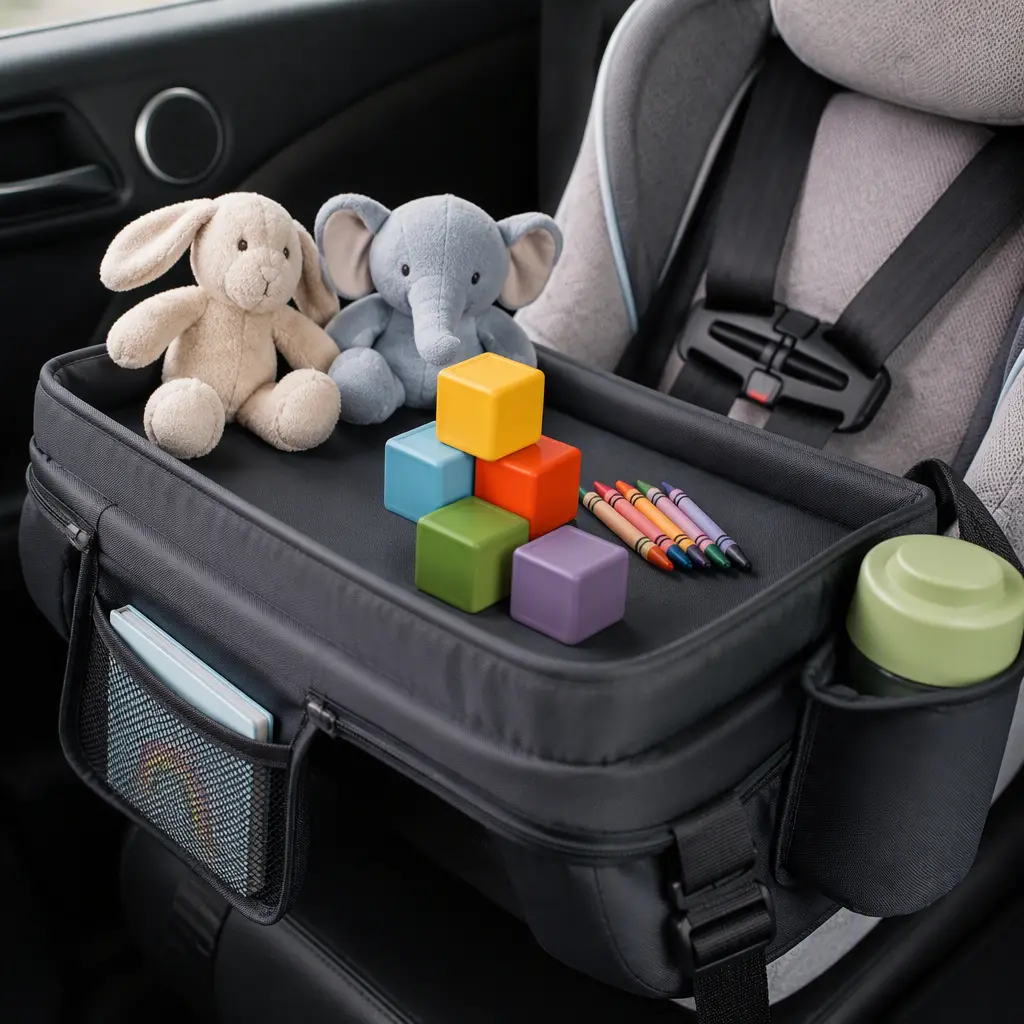
Travel trays work best when parents want contained play with fewer dropped items. A tray creates a stable surface for crayons, board books, soft building toys, magnetic activities, or snack containers. This can help extend play sessions because toddlers can see and access multiple items at once. Many families also like that trays create a familiar activity zone during flights, restaurant stops, or stroller use. The trade-off is bulk. Even foldable trays take up storage space, and some toddlers become frustrated by the extra restriction across their lap. Cleanup can also take longer if multiple toys are used at the same time.
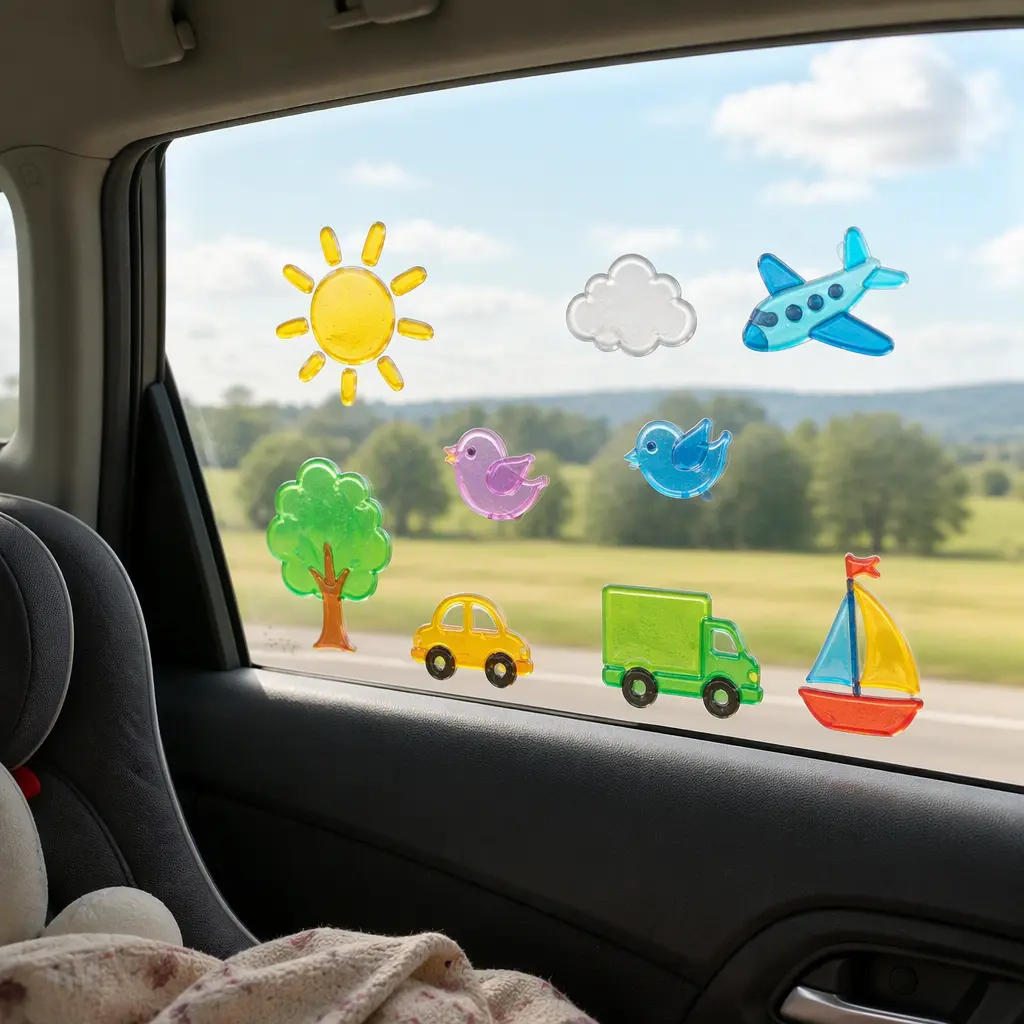
Window clings are simpler and usually easier to pack. They encourage repetitive fine motor play that suits many toddlers in this age group, especially children who enjoy stickers but are not ready for paper sticker books. Because the pieces attach directly to the window, there are fewer dropped toys to retrieve during the drive. They are also quieter than many tray-based activities. However, window clings usually hold attention for shorter periods than a fully stocked tray, especially for older toddlers who want more variety. Some children may also become frustrated if clings slide off warm windows or stick together. Families driving long distances may find that clings work best as one activity in a larger rotation rather than the only entertainment option.
- Travel trays suit toddlers who enjoy switching between several quiet activities during longer journeys.
- Window clings suit toddlers who like simple peel-and-stick play with minimal setup.
- Travel trays can reduce toy loss but require more storage space.
- Window clings are lightweight and portable but may not hold attention as long.
- Mess-sensitive families may prefer clings because there are fewer loose accessories.
- Children prone to motion sickness may tolerate window clings better than lap-based activities.
Frequently asked questions
Are travel trays safe for toddlers in car seats?
Travel trays designed for children should sit below the harness area and should not interfere with proper car-seat positioning. Parents should still avoid heavy accessories and remove hard objects during sleep periods or difficult road conditions. Simpler, soft items are usually the safest choice for toddlers.
Do window clings damage car windows?
Most reusable window clings made for children are designed to peel away cleanly from smooth glass surfaces. Dust, heat, and repeated use can affect how well they stick, so occasional rinsing may help restore usability. It is still worth checking manufacturer guidance before use on tinted windows.
Which option works better for very long drives?
For several hours of travel, many parents find travel trays more versatile because they can support multiple activity types. Window clings often work best as part of a rotation alongside books, snacks, music, or soft toys. Toddlers in this age group usually benefit from changing activities regularly rather than relying on one toy alone.
What if my toddler throws toys during car rides?
Children who frequently throw items may do better with reusable window clings because there are fewer loose pieces falling onto the floor. If using a tray, choosing attached, tethered, or oversized toys can reduce frustration and repeated stops to retrieve dropped objects.
Are these activities useful beyond car travel?
Travel trays can also be useful on airplanes, trains, waiting-room visits, or restaurant outings. Window clings are commonly reused at home on mirrors, sliding doors, bathtubs, or high chairs for short sensory play sessions.
For toddlers aged 1 to 2 years, both travel trays and window clings can support calmer, more screen-free car rides when chosen with realistic expectations. Travel trays offer flexibility and longer activity potential, while window clings offer simplicity, portability, and lower mess. Families planning frequent road trips may appreciate having both available and rotating them throughout the journey. The most successful setup is usually the one that matches the child’s attention span, comfort in the car seat, and the parent’s tolerance for cleanup and storage.