Wooden vs Plastic Marble Runs for Ages 9–12
Comparing wooden and plastic marble runs for ages 9–12, including stability, noise, expandability, storage and long-term building challenge for different play styles and family spaces.
Compare prices and availability
Check current prices and availability for this guide on eBay.
As an eBay Partner, we may be compensated if you make a purchase.
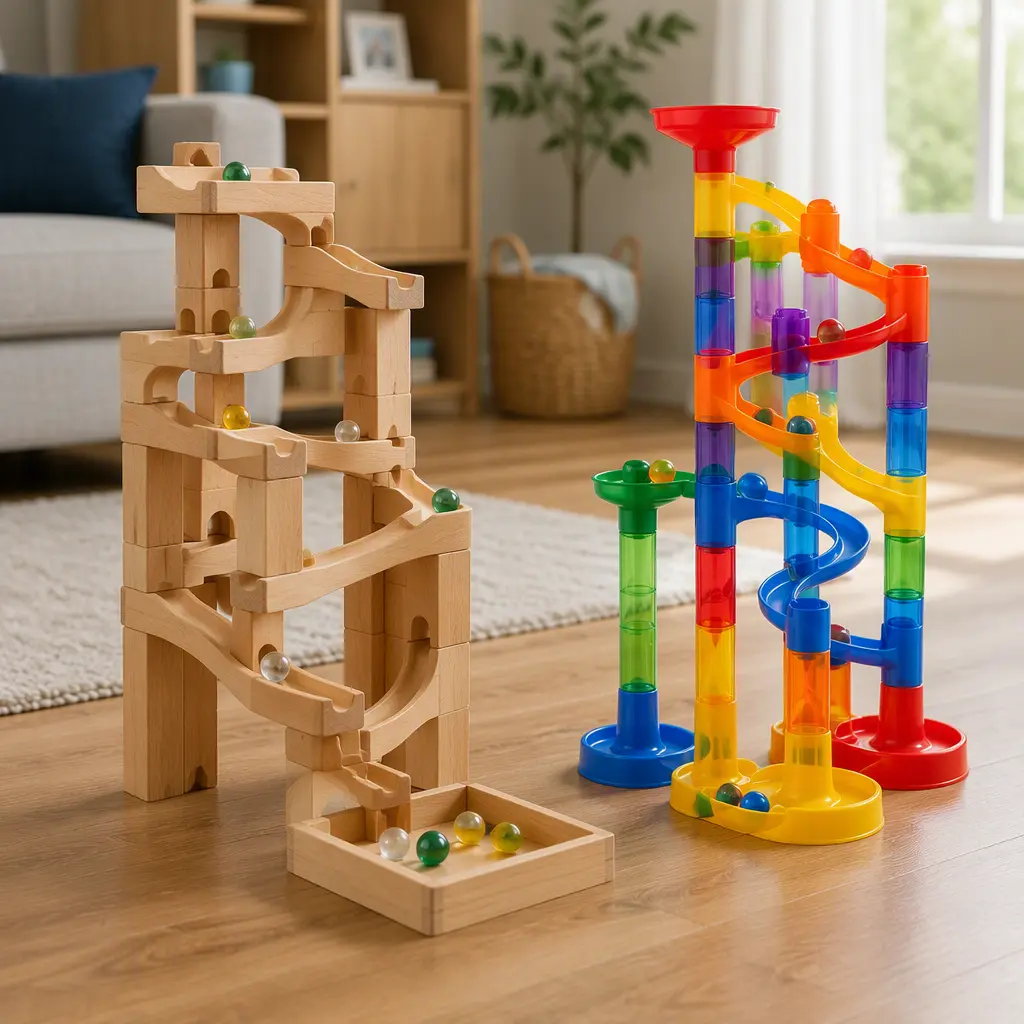
Marble runs remain one of the few building toys that can keep older children experimenting for long stretches without needing screens or complicated instructions. For ages 9–12, the choice often comes down to wooden systems versus plastic sets. Both can encourage problem-solving, patience and creative building, but they behave quite differently once children start constructing larger, more ambitious designs. Stability, expansion options, noise levels and storage needs can all affect whether a set becomes a long-term favorite or something that rarely leaves the shelf. Parents choosing between the two materials should focus less on appearance and more on how the toy fits the child’s building style, available space and tolerance for rebuilding after collapses.
What to look for
At ages 9–12, children are usually ready for more than simple gravity tracks. They often want taller builds, chain reactions, loops, switches or collaborative projects that can evolve over time. A useful marble run for this age group should balance creative freedom with enough structural stability to avoid constant frustration. Material choice affects nearly every part of the experience, including how loudly marbles travel, how easy pieces are to align and whether the system can grow over several years.
- Check how securely pieces connect. Loose-fitting parts can make taller builds frustrating for older children attempting complex layouts.
- Consider expansion potential. Some systems are designed for gradual add-on packs, while others work best as standalone sets.
- Think about noise levels. Plastic tracks often create louder rolling and clacking sounds than wooden channels.
- Look at storage size. Large plastic towers may need bins or shelves, while wooden sets can be heavier but stack neatly.
- Evaluate building challenge. Simpler snap-together systems suit children who enjoy quick experimentation, while precision-based wooden tracks may appeal to patient planners.
- Check marble size and visibility. Smaller marbles can roll faster and increase challenge, but also require more supervision around younger siblings or pets.
- Consider durability over time. Thick wooden blocks may resist cracking, while flexible plastic connectors can sometimes warp or loosen with heavy use.
Age suitability
Most children between 9 and 12 can handle either wooden or plastic marble runs, but the ideal choice depends on temperament and play habits. Children who enjoy engineering puzzles, careful alignment and repeated rebuilding may prefer wooden systems, especially those with open-ended layouts. These sets can feel more like construction projects than quick-play toys. Plastic sets often suit children who like speed, movement and dramatic track features such as spirals, launchers or transparent tubes. They can also be easier for group play because parts connect quickly and visual results appear faster. Families with younger siblings should consider supervision carefully, since both styles include marbles that can present choking hazards outside the intended age range.
Options compared
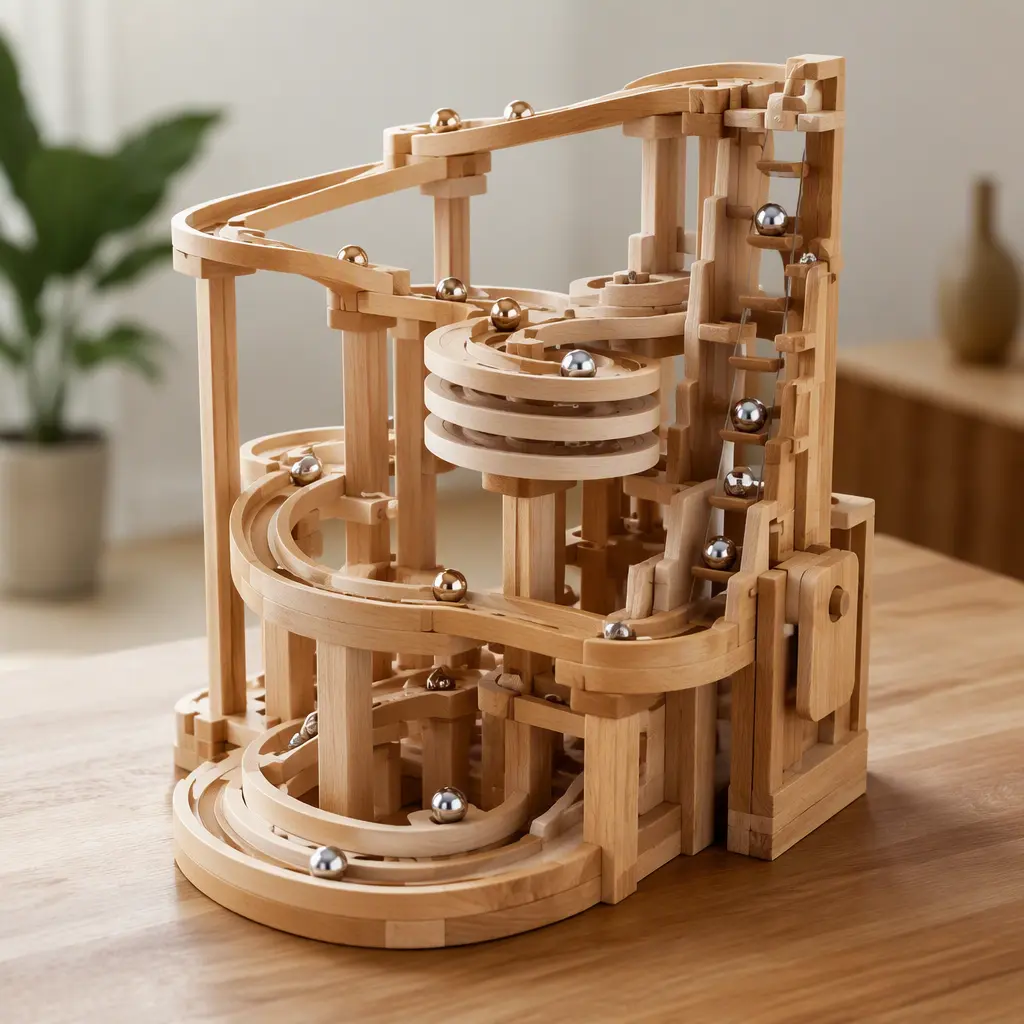
Wooden marble runs are often quieter, heavier and more stable once properly assembled. Many use grooves, blocks or modular channels that rely on gravity and precise placement rather than interlocking clips. This can create a deeper long-term building challenge because children must think carefully about angles, spacing and momentum. The trade-off is that wooden systems may collapse more easily during construction if the foundation is uneven or the design becomes too ambitious. Some children enjoy that trial-and-error process, while others may find it discouraging.
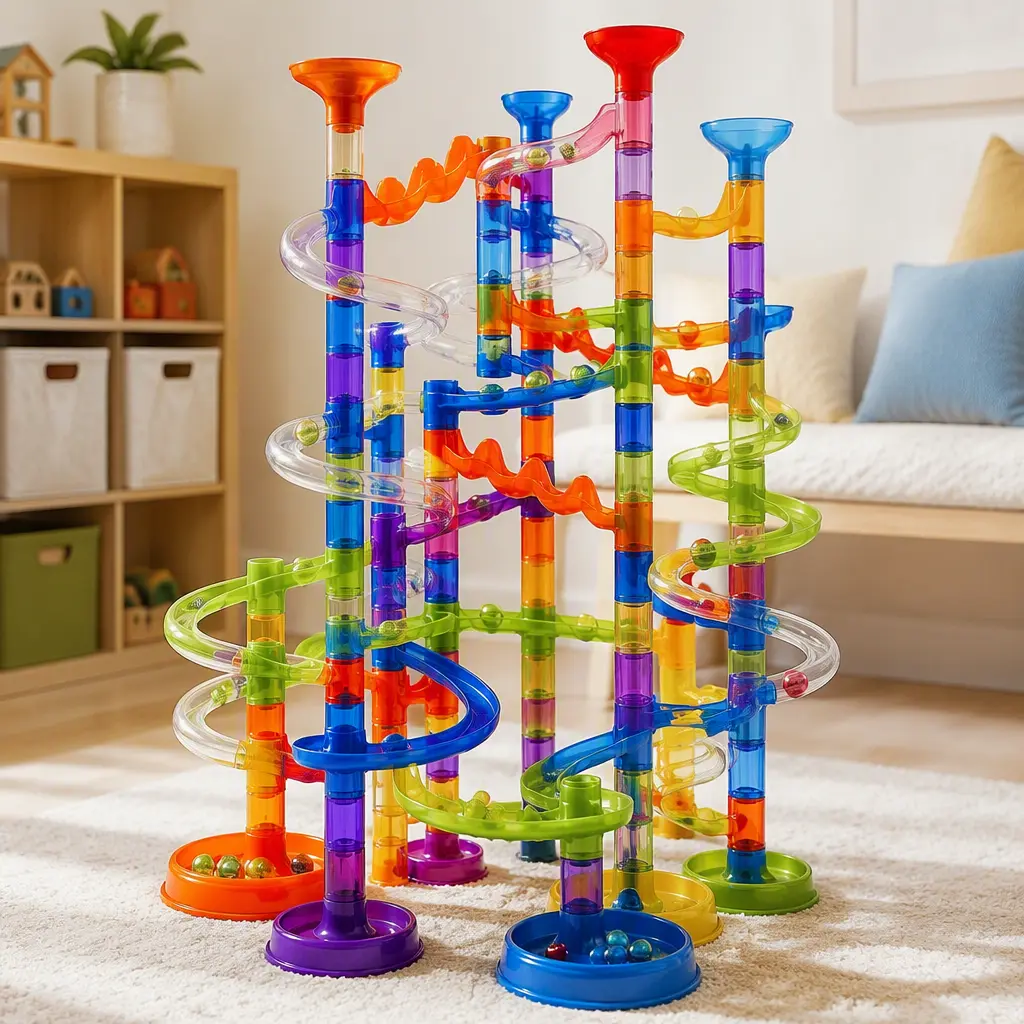
Plastic marble runs usually prioritize speed and visual excitement. Snap-together towers can rise quickly, making them appealing for children who want immediate results or large dramatic structures. Transparent tubes and moving components also make it easier to watch marble motion and troubleshoot mistakes. However, lightweight plastic towers can wobble on carpet, and some systems become noisy during active play. For families in apartments or shared spaces, the repeated clattering of marbles may become a factor. Plastic sets also vary widely in compatibility, so expansion can become difficult if pieces from different systems do not connect cleanly.
- Wooden systems generally suit patient builders who enjoy engineering-style problem solving and quieter play sessions.
- Plastic systems often suit children who prefer fast assembly, motion features and highly visual builds.
- Wooden tracks may take longer to master but can stay interesting for years because layouts remain open-ended.
- Plastic sets are often easier for siblings or friends to build together quickly.
- Wooden pieces can be heavier and require sturdier storage space.
- Plastic pieces are lighter and easier to transport, but large collections can become messy without sorting bins.
- Children sensitive to frustration may prefer secure snap-fit plastic systems over balance-based wooden builds.
Frequently asked questions
Are wooden marble runs better for STEM learning?
Both wooden and plastic marble runs can support STEM-style learning through experimentation, gravity, momentum and structural planning. Wooden systems sometimes encourage more careful engineering because alignment and balance matter more, while plastic systems may make it easier to test many rapid design changes in one session.
Which type is quieter?
Wooden marble runs are usually quieter overall because the material absorbs some sound and tracks are often more open. Plastic tubes and connectors can amplify rolling and clicking noises, especially on hard floors or during multi-marble races.
Do older children lose interest quickly?
Children in the 9–12 range are more likely to stay interested when the set allows increasing complexity over time. Expansion packs, challenge cards or open-ended building possibilities can extend replay value. Smaller beginner sets may feel limiting for this age group unless they connect to larger systems.
Are magnetic marble runs a good alternative?
Magnetic systems can work well for older children because they encourage vertical building and experimentation on metal surfaces. They are often compact and visually appealing, though they may not create the same large-scale engineering feel as floor-based wooden or plastic towers.
What works best for small homes?
Compact wooden sets with stackable pieces may suit smaller homes better than sprawling plastic towers with many lightweight parts. Storage matters as much as footprint during play, so lidded bins or tray organizers can help keep marbles and connectors manageable.
For ages 9–12, the best marble run choice depends less on which material is considered superior and more on how the child prefers to build. Wooden systems usually reward patience, precision and long-term experimentation, while plastic sets emphasize speed, visual action and rapid redesign. Families balancing noise, storage and durability should consider where and how often the toy will be used before choosing a system that can grow alongside the child’s interests.