Foam Pogo Jumpers vs Balance Boards for Indoor Play
Choosing between a foam pogo jumper and a balance board for active kids indoors? Compare noise, floor impact, supervision, storage and age suitability for ages 6–8.
Compare prices and availability
Check current prices and availability for this guide on eBay.
As an eBay Partner, we may be compensated if you make a purchase.
When energetic children are stuck indoors, active toys can help burn off energy without adding screens or turning the living room into a full obstacle course. Two popular options for ages 6–8 are foam pogo jumpers and balance boards. Both encourage movement, coordination and body awareness, but they work very differently in practice. Parents often end up deciding based less on fun value and more on noise levels, floor safety, storage space and how much supervision the toy realistically needs. The right choice depends on your home setup, your child’s confidence with movement and whether you want short bursts of high-energy play or calmer balance-focused activity.
What to look for
Indoor active toys need to work with your space rather than against it. A toy that sounds manageable in a store can become frustrating in a small apartment or upstairs room. Before choosing between a foam pogo jumper and a balance board, think about the type of movement your child enjoys and how much room you can comfortably dedicate to active play.
- Noise level matters in shared homes or apartments. Foam pogo jumpers create repetitive squeaking or bouncing sounds, while wooden balance boards can produce knocking sounds on hard floors.
- Check floor compatibility. Rugs, foam mats and carpet reduce slipping and protect floors from repeated impact.
- Think about supervision needs. Children who enjoy jumping at full speed may need closer monitoring with pogo-style toys, especially around furniture.
- Consider storage. Foam pogo jumpers are lightweight but awkwardly shaped, while balance boards slide under beds or sofas more easily.
- Look at durability. Dense foam and reinforced handles generally hold up better for pogo jumpers, while wooden balance boards often last longer if kept dry and used appropriately.
- Match the toy to energy style. Jumpers encourage active cardio-style movement, while balance boards support slower balance play, rocking and imaginative use.
Age suitability
For children aged 6–8, both toy types can work well, but developmental differences matter. Foam pogo jumpers are often easier for children who like obvious movement and physical challenge. Many children can start using them quickly because the motion is repetitive and straightforward. Balance boards usually require more body control and patience at first, especially for children who become frustrated easily. However, they often stay interesting for longer because children use them in multiple ways: balancing, rocking, building obstacle courses or incorporating them into pretend play. Children who are highly sensory-seeking may prefer the constant movement of a pogo jumper, while cautious or quieter children sometimes enjoy the lower-intensity challenge of balance play.
Options compared
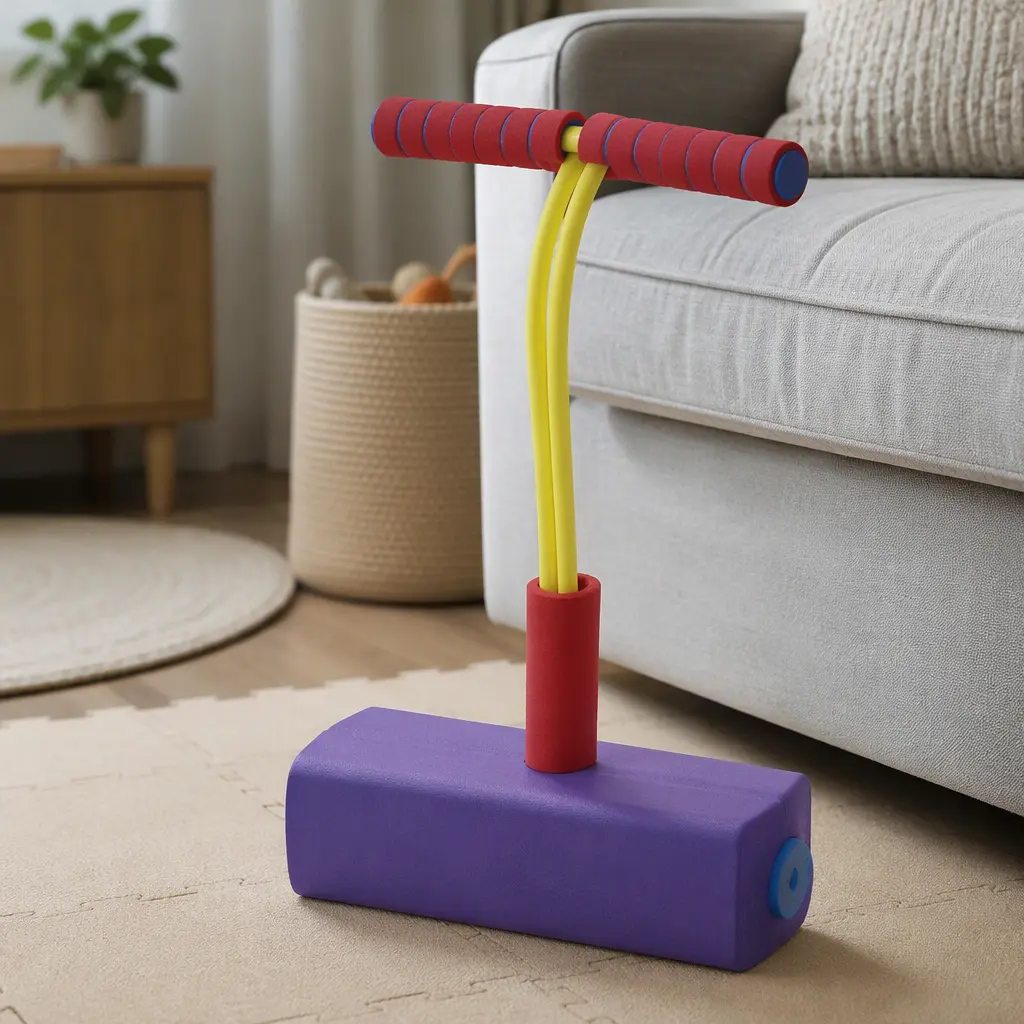
Foam pogo jumpers are designed for active bouncing. Most use a foam base instead of a spring-loaded mechanism, which makes them lighter and generally safer for indoor use than traditional pogo sticks. They suit children who need energetic movement breaks and enjoy repetitive physical activity. They can help with coordination and balance, but they also create more noise and repeated floor impact. In smaller homes, the constant bouncing can become disruptive quickly. Children also tend to use them in short bursts rather than sustained play sessions.
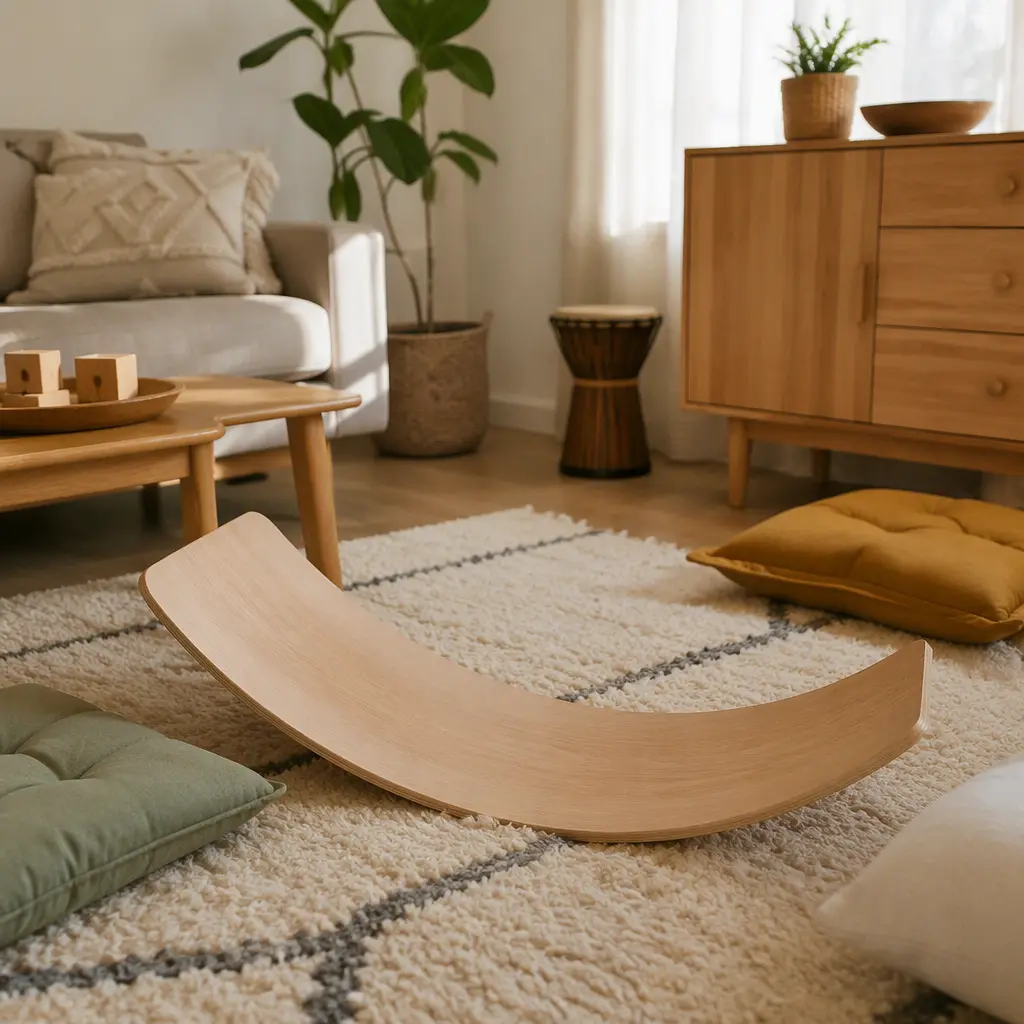
Balance boards are quieter overall, although wooden versions can still thump against floors if used aggressively. They usually fit better into calmer indoor environments and take up less visual space when stored. One advantage is versatility. Children may stand and rock, use the board as part of imaginative games, or include it in obstacle courses. The trade-off is that some children lose interest faster if they expected a high-energy toy. Balance boards also require enough open floor space to avoid collisions with furniture during rocking or stepping exercises.
- Foam pogo jumpers suit energetic children who enjoy jumping and movement-heavy play sessions.
- Balance boards suit children interested in coordination, balance challenges and imaginative play.
- For apartments or shared walls, balance boards are usually easier to manage than repeated pogo bouncing.
- For delicate flooring, both benefit from rugs or play mats, but pogo jumpers create more repetitive impact.
- Children who become overexcited easily may need firmer boundaries with pogo jumpers indoors.
- Balance boards typically store more neatly in smaller homes.
Frequently asked questions
Are foam pogo jumpers safe for hardwood floors?
They are generally softer than traditional pogo sticks because they use foam bases, but repeated jumping can still leave marks or create noise on hardwood floors. A rug or foam play mat helps protect surfaces and reduce slipping.
Do balance boards require constant supervision?
Most children aged 6–8 can use a balance board independently after learning basic control, but supervision is still important around furniture, stairs and slippery floors. Extra monitoring may be needed if multiple children are using it at once.
Which option is quieter for indoor use?
Balance boards are usually quieter overall, especially on rugs or carpet. Foam pogo jumpers often create repetitive squeaks, bouncing sounds or foot impact noise that travels through floors more easily.
Can balance boards replace outdoor active play?
They can help children stay active indoors, but they do not provide the same level of cardio movement as running, climbing or outdoor sports. Many families use them as a supplement for rainy days or short movement breaks.
Which toy works better in small spaces?
Balance boards are usually easier to manage in compact homes because they store flat and support slower movement. Foam pogo jumpers need more vertical clearance and enough surrounding space for safe bouncing.
For indoor energy release, foam pogo jumpers and balance boards solve different problems. A pogo jumper is the stronger choice for children who need active movement and enjoy bouncing games, but it comes with more noise and supervision considerations. A balance board fits better in quieter homes and offers more flexible long-term play, particularly for children who enjoy coordination challenges or imaginative activities. Looking at your available floor space, tolerance for noise and your child’s play style will usually make the better option clear.