Indoor Climbing Toys vs Nugget-Style Cushions for Toddlers
Comparing indoor climbing toys and nugget-style cushions for toddlers aged 1–2. Learn the trade-offs around storage, supervision, durability, and long-term play in small homes.
Compare prices and availability
Check current prices and availability for this guide on eBay.
As an eBay Partner, we may be compensated if you make a purchase.
Indoor climbing toys and nugget-style play cushions are both popular ways to support active indoor play for toddlers, especially during bad weather or in small homes where outdoor space is limited. While they can look similar in purpose, they solve different problems for families. Climbing toys usually focus on gross motor development through structured movement such as climbing, balancing, and sliding. Nugget-style cushions are more flexible and can shift between soft play, lounging, forts, obstacle courses, and quiet-time seating. For parents of children aged 1–2 years, the main decision often comes down to available floor space, how much supervision is realistic during daily routines, and whether the toy needs to adapt as the child grows.
What to look for
At this age, indoor active toys work best when they match both the child’s coordination level and the household’s practical limits. A large climbing structure may look appealing, but in a small home it can quickly become difficult to move around safely. Soft modular cushions take up floor space too, but they often compress, stack, or double as furniture when not in use. Think about how the toy fits into daily life rather than how it looks in a playroom photo.
- Stable construction and low climbing height for early walkers
- Soft landings or padded flooring nearby
- Storage needs when the toy is not in use
- Whether the toy can serve multiple purposes over several years
- Ease of cleaning, especially for fabric surfaces
- Noise levels on apartment floors or shared walls
- How much hands-on supervision is required during active play
- Whether the child prefers climbing, building, jumping, or pretend play
Age suitability
Children between 1 and 2 years old are usually developing balance, coordination, and confidence with movement, but the pace varies widely. Many younger toddlers are still learning how to climb down safely, which makes lower, softer setups easier to manage. Nugget-style cushions can suit cautious toddlers because they allow gradual exploration close to the floor. Indoor climbing frames may appeal more to children who actively seek movement and repeatedly climb furniture. Some climbing toys are marketed broadly for toddlers, but larger structures may be better reserved for older preschoolers with stronger balance and body awareness. Parents should also consider whether siblings of different ages will share the play area, since older children may use equipment more energetically than younger toddlers can safely handle.
Options compared
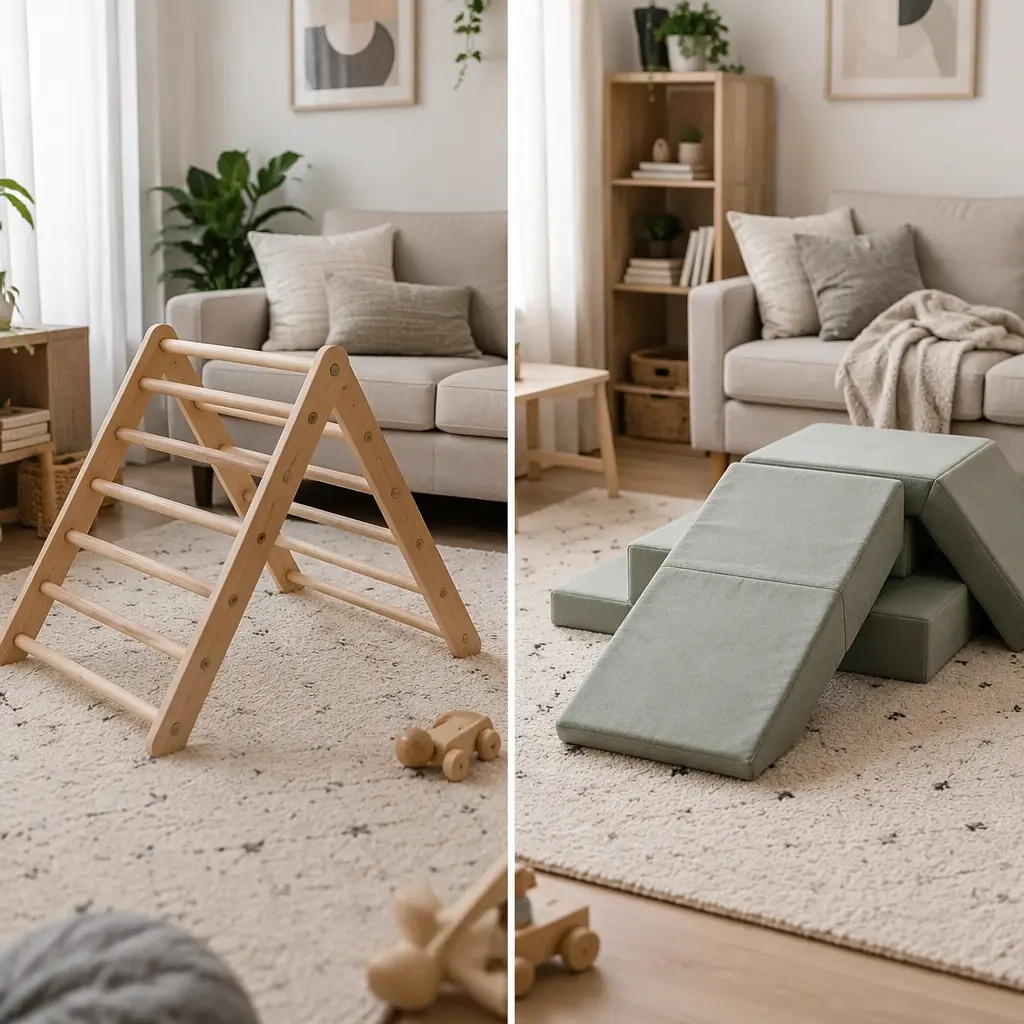
Indoor climbing toys usually include items such as climbing triangles, ramps, arches, or low slides. Their biggest advantage is clear physical challenge. They encourage climbing, stepping, balancing, and controlled risk-taking in a structured way. For energetic toddlers who constantly climb sofas or coffee tables, a dedicated climbing setup can redirect that behaviour toward something designed for movement. Wooden climbing toys are also often durable enough to last through multiple children. The trade-off is that many pieces are bulky even when foldable, and some quickly dominate a small living room. They can also create more noise on hard floors, particularly when ramps or movable parts shift during play.
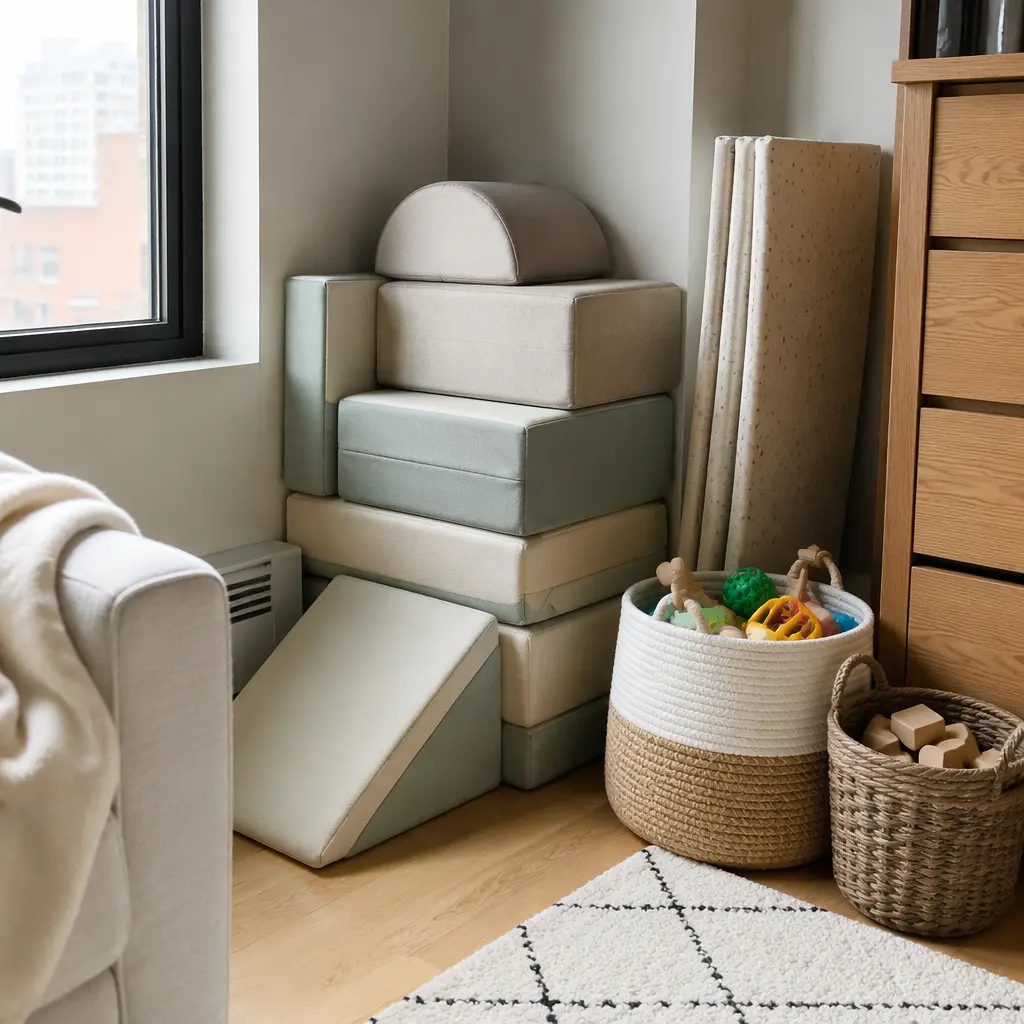
Nugget-style cushions are softer and usually more flexible for mixed-use homes. They can become a crash pad, tunnel, reading nook, pretend shop, mini obstacle course, or extra seating. In small apartments, that flexibility can matter more than having a dedicated climbing structure. They also tend to feel less visually intrusive because they resemble floor cushions or modular furniture. However, toddlers looking for intense climbing challenges may outgrow simple cushion stacking fairly quickly. Fabric covers also require occasional cleaning, especially in homes with snacks, pets, or potty-training toddlers. Parents who prefer quieter indoor play often lean toward cushion systems because they reduce impact noise compared with wooden climbing equipment.
- Choose indoor climbing toys if your toddler actively climbs furniture, seeks physical challenges, and you have consistent floor space available.
- Choose nugget-style cushions if you need flexible play that can be packed away, shared with siblings, or used for quiet activities too.
- Avoid large climbing structures in very tight spaces where safe fall zones are difficult to maintain.
- Avoid oversized cushion sets if storage space is already limited and floor clutter causes stress during daily routines.
- For apartment living, softer modular cushions may create less noise for neighbours below.
- For long-term versatility, modular cushions often adapt more easily into preschool years for forts, reading corners, and imaginative play.
Frequently asked questions
Are indoor climbing toys safe for 1-year-olds?
Some low climbing toys are designed with younger toddlers in mind, but supervision is still important. Children at this age are often confident climbing up before they understand how to climb down safely. Lower heights, stable bases, and soft flooring nearby are usually easier starting points.
Do nugget-style cushions help with physical development?
Yes, they can support crawling, rolling, balancing, jumping, and obstacle-course play. They are generally less structured than climbing frames, so the level of challenge depends on how the cushions are arranged and how adventurous the child is.
Which option works better in a small apartment?
For many small homes, modular cushions are easier to live with because they can stack, double as seating, and adapt to different activities. Compact foldable climbing toys can also work well, but they usually need a dedicated safe area during use.
How long do toddlers typically use these toys?
Usage depends on the child’s interests and the flexibility of the setup. Simple climbing frames may lose appeal once children seek bigger physical challenges, while modular cushions often continue into preschool years through imaginative play and lounging.
What flooring works best underneath?
Carpet, foam mats, or other non-slip surfaces can help reduce slipping and soften tumbles. Hard floors may increase noise and make falls less forgiving, especially for early walkers still developing balance.
For families in small homes, the better choice is often the one that fits naturally into everyday routines rather than the one with the biggest movement challenge. Indoor climbing toys suit toddlers who crave structured physical activity and have enough room for safe setup. Nugget-style cushions suit homes where flexibility, quieter play, and easy storage matter more. Both can encourage active, screen-free play when matched carefully to the child’s stage, the available space, and the level of supervision parents can realistically provide.