Kids’ Flashlights vs Headlamps for Backyard Exploring
Compare kids’ flashlights and headlamps for camping, forts and night walks. Learn which features matter most for safety, durability, comfort and age-appropriate outdoor play.
Compare prices and availability
Check current prices and availability for this guide on eBay.
As an eBay Partner, we may be compensated if you make a purchase.
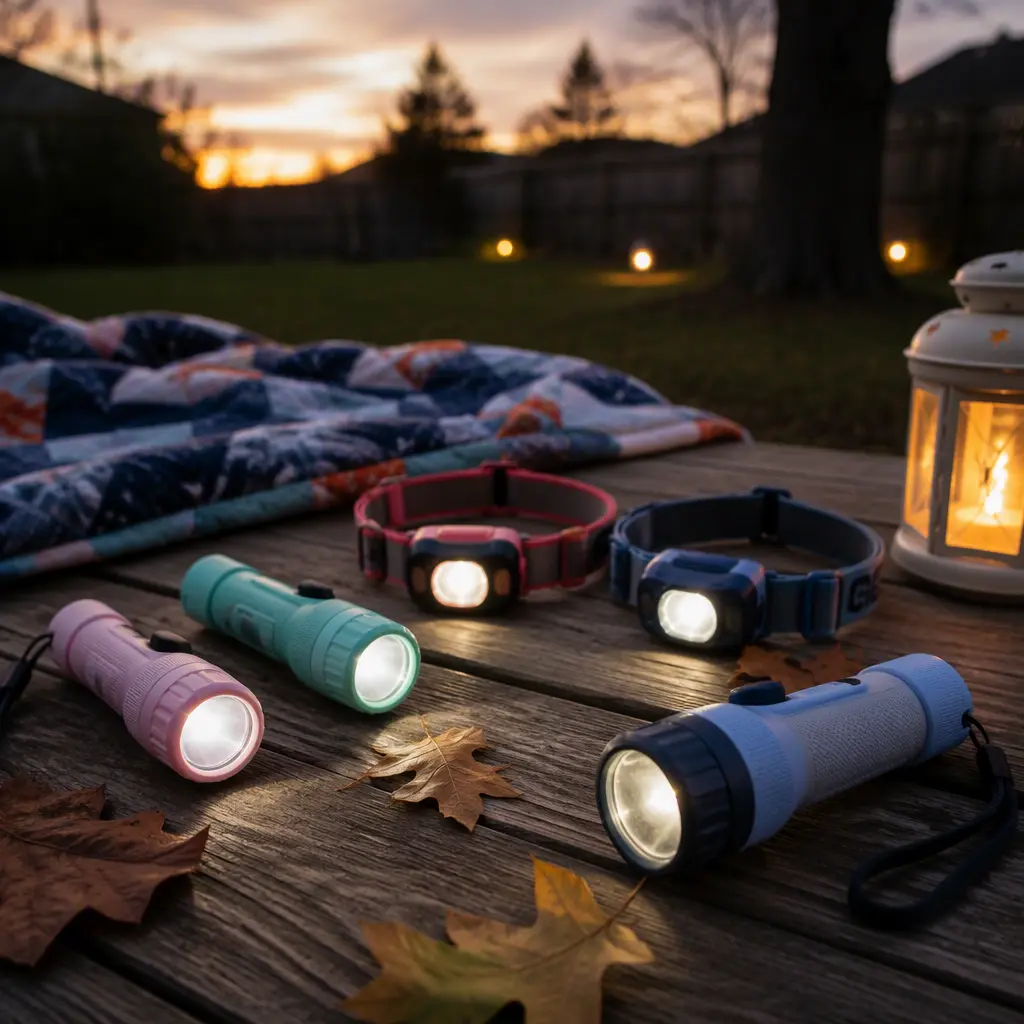
Flashlights and headlamps can turn an ordinary backyard into an adventure space for children ages 6 to 8. They support screen-free play, encourage outdoor movement and help kids feel more confident during camping trips, evening walks or blanket-fort games after dark. The main decision for parents is whether a handheld flashlight or a wearable headlamp fits their child’s habits and environment better. Both can work well, but they solve different problems. A flashlight is often simpler and easier to share, while a headlamp keeps both hands free for climbing, collecting sticks or carrying gear. Comfort, brightness, durability and supervision needs matter more than novelty features.
What to look for
For this age group, simple designs usually work better than feature-heavy gadgets. Many children lose interest if controls are confusing or batteries run out quickly. Parents may also prefer lights that survive drops, dirt and occasional rain. A lightweight design is especially important because bulky headlamps can slide around or feel uncomfortable after a few minutes. Battery access should be secure enough to avoid constant opening, but still manageable for adults during replacement or charging.
- Choose moderate brightness rather than extremely powerful beams that can shine directly into eyes.
- Look for large, simple buttons that are easy to use with gloves or cold hands.
- Soft adjustable straps help headlamps stay comfortable during walks or camp games.
- Rubberized or impact-resistant casings tend to hold up better to drops onto concrete or gravel.
- Rechargeable options reduce battery waste, while replaceable batteries may suit longer camping trips.
- Red-light or low-light modes can help preserve night vision and reduce glare inside tents or forts.
- Water-resistant construction is useful for damp grass, light rain and muddy outdoor play.
- Compact sizes are easier for younger children to carry without fatigue.
Age suitability
Most children ages 6 to 8 can comfortably manage either a flashlight or a basic headlamp, but personality and activity level often determine the better fit. Kids who like building forts, climbing over logs or helping set up camp may benefit from hands-free lighting. Children who become distracted easily sometimes do better with flashlights because parents can quickly see where the beam is pointed. Some younger children within this range may also find headlamp straps irritating or too warm during summer use. For sleepovers or indoor fort play, softer lights with lower brightness can feel less overwhelming and reduce accidental shining into other children’s eyes.
Options compared
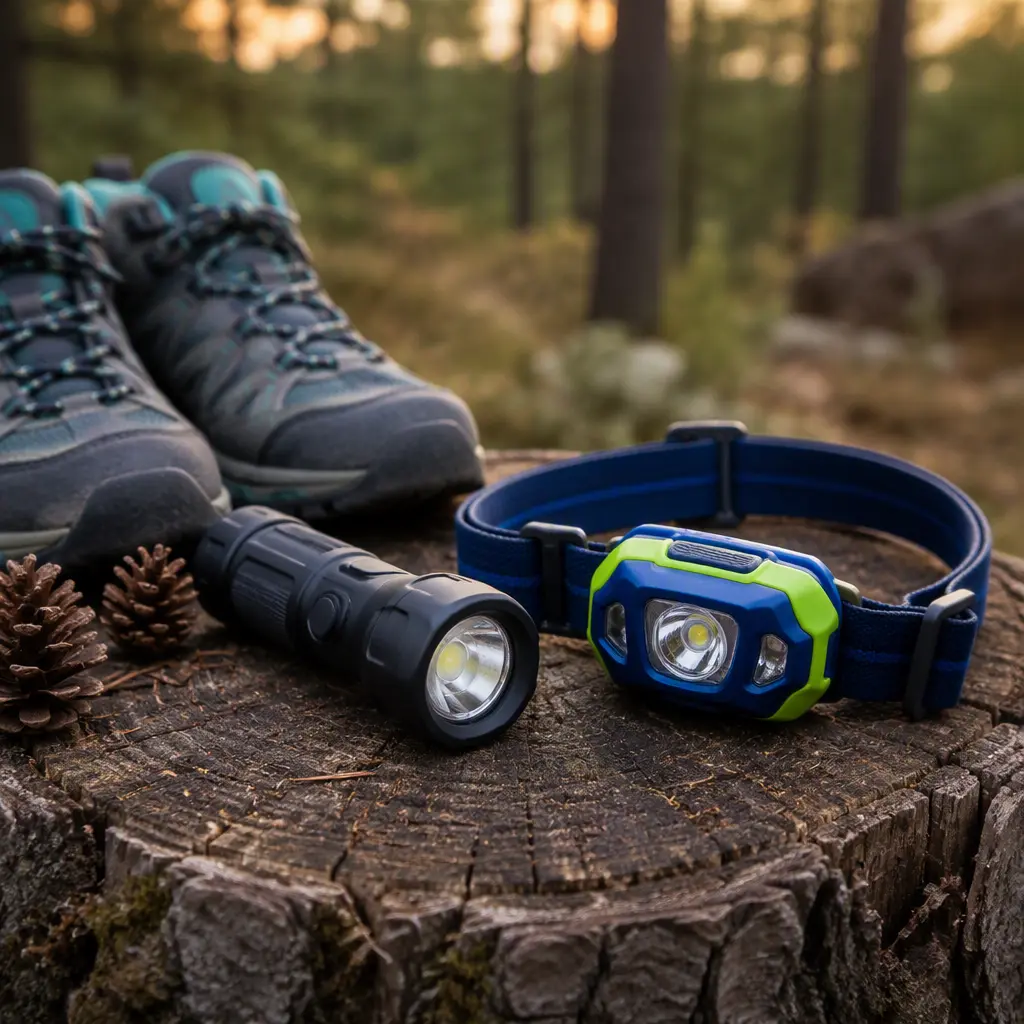
Flashlights are usually the simpler choice for casual backyard use. They work well for scavenger hunts, reading inside forts and short evening walks. Many children enjoy aiming the beam and using it like a discovery tool while searching for insects, frogs or reflective trail markers. Flashlights also avoid some of the comfort issues that come with elastic head straps. They are easier to hand between siblings or store in a drawer near the door. The trade-off is that children often need one hand free to carry the light, which can become inconvenient during climbing or while carrying camping equipment.
Headlamps are often the better fit for active outdoor play and family camping trips. Hands-free lighting makes it easier to roast marshmallows, gather sticks, zip sleeping bags or ride scooters on dim paths with supervision. A well-fitted headlamp also keeps the light pointed where the child is looking, which can help with balance and coordination in darker areas. However, some children repeatedly tilt the beam upward or forget they are wearing it, which can lead to accidental glare toward others. Headlamps can also feel less comfortable during long use if the strap is stiff or poorly adjusted.
- Choose a flashlight if your child mainly plays in forts, enjoys simple controls or shares toys with siblings.
- Choose a headlamp for camping, hiking, obstacle courses or activities where both hands need to stay free.
- Avoid very small novelty lights that are easy to lose or difficult to grip with cold hands.
- Avoid oversized adult headlamps that may feel heavy and bounce during movement.
- If storage space matters, compact flashlights often fit more easily into drawers, backpacks or bedside bins.
- For noise-sensitive households, avoid lights with built-in sirens, loud sound effects or flashing toy modes.
Frequently asked questions
Are rechargeable lights better for kids?
Rechargeable lights can reduce ongoing battery costs and are convenient for regular backyard use. Families who camp frequently away from power sources may still prefer replaceable batteries for easier backup during longer trips.
How bright should a child’s flashlight be?
Children generally do not need extremely bright beams for backyard play. Moderate brightness is usually enough for paths, forts and camping tasks while reducing harsh glare and accidental eye exposure.
Do headlamps help children feel safer outside at night?
Some children feel more confident with a hands-free light because they can see where they are walking while carrying objects or holding an adult’s hand. Others prefer the familiarity and control of a handheld flashlight. Comfort level often depends on the child’s personality and previous outdoor experience.
What materials hold up best outdoors?
Rubberized plastic and impact-resistant casings tend to handle drops and damp conditions better than thin brittle plastics. Adjustable woven straps on headlamps are usually more durable and comfortable than narrow elastic bands.
Are novelty projector lights good for outdoor exploring?
Projector lights and heavily themed designs may entertain children briefly, but they are often less practical for real outdoor use. Simpler lights with dependable controls are usually easier for children to use during camping, walking and nighttime games.
For most families, the right choice comes down to how children actually play outdoors. Flashlights suit simpler backyard adventures and shared use, while headlamps support more active exploration and camping tasks. Prioritizing comfort, durability and easy controls will usually matter more than extra modes or flashy designs, especially for children ages 6 to 8 who are still building confidence outdoors after dark.