Pretend Play Toys Toddlers Can Use Independently
A parent-focused guide to pretend play toys for ages 1–2 that encourage imagination without scripts, screens, or adult help. Learn what to look for, age fit, and safe, open-ended categories.
Compare prices and availability
Check current prices and availability for this guide on eBay.
As an eBay Partner, we may be compensated if you make a purchase.
For toddlers ages 1–2, pretend play is less about acting out stories and more about exploring everyday actions. Toys that work independently let young children scoop, stack, open, close, feed, or push without instructions, sounds, or adult setup. These simple play experiences support imagination, focus, and confidence while fitting naturally into short attention spans.
What to look for
At this age, the best pretend play toys are simple, sturdy, and intuitive. Toddlers should be able to understand how a toy works just by touching it. Avoid toys that rely on buttons, narration, or fixed outcomes. Instead, look for materials and designs that invite repetition and experimentation.
- Open-ended design: No single “right” way to play, so children can repeat actions or invent their own.
- Everyday familiarity: Objects that resemble real-life items toddlers see daily, such as food, tools, or household routines.
- Hands-on actions: Scooping, pouring, stacking, pushing, or placing pieces in and out.
- Durable materials: Solid wood, thick plastic, or soft fabric that can handle drops and mouthing.
- Minimal parts: Fewer pieces reduce frustration and make independent play easier to start and finish.
Age suitability
For 1–2 year olds, pretend play is mostly about imitation and motor skills rather than storytelling. A toddler might pretend to stir a bowl, feed a doll, or push a toy stroller without naming what they are doing. That’s developmentally appropriate. Look for toys scaled to small hands, with oversized pieces and simple cause-and-effect actions. As toddlers approach age two, they may begin combining actions, such as feeding a doll and then putting it to bed, but the toy should still function without adult direction.
Standout categories or types
Some pretend play categories are especially well-suited for independent toddler play because they mirror simple daily routines. These toys don’t need a storyline or sound effects to be engaging. The child supplies the imagination through repeated actions.
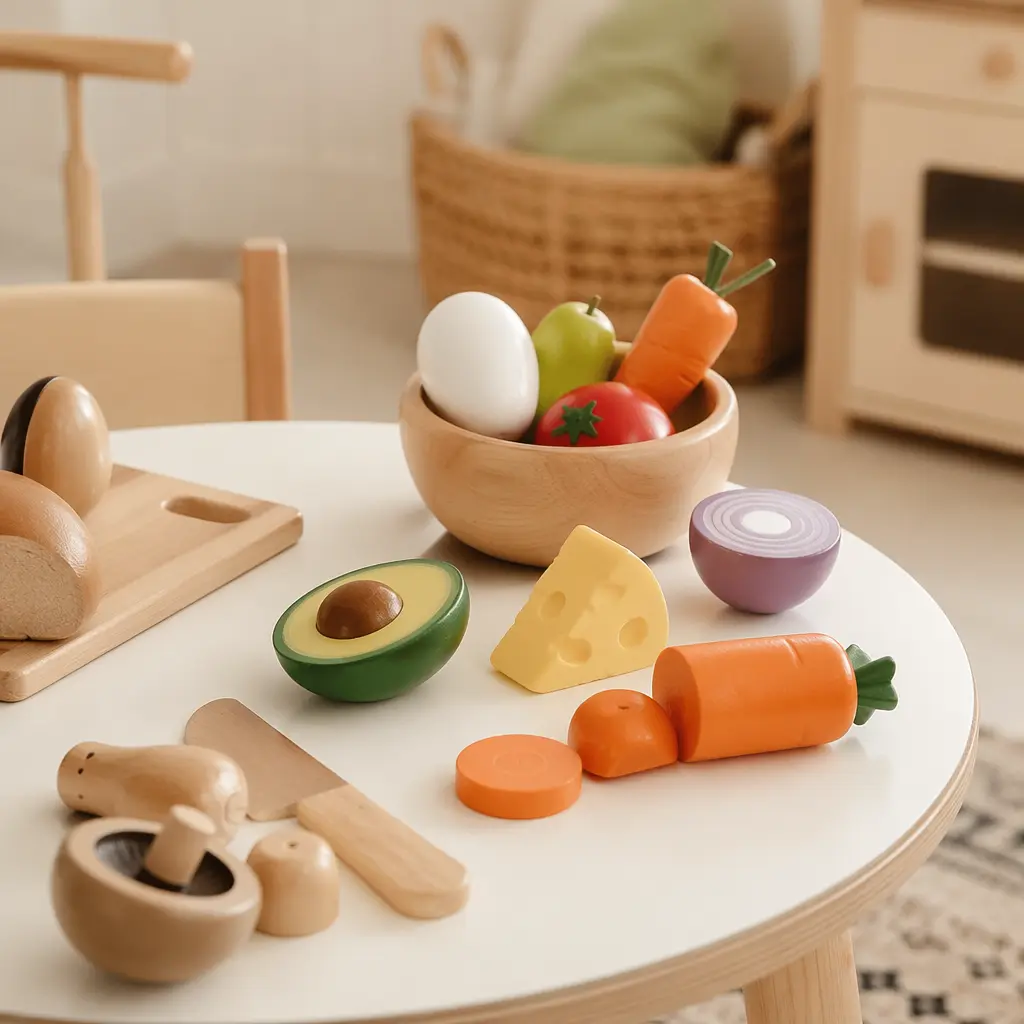
- Pretend food and kitchen basics: Bowls, cups, and chunky food pieces support scooping, stacking, and serving motions.
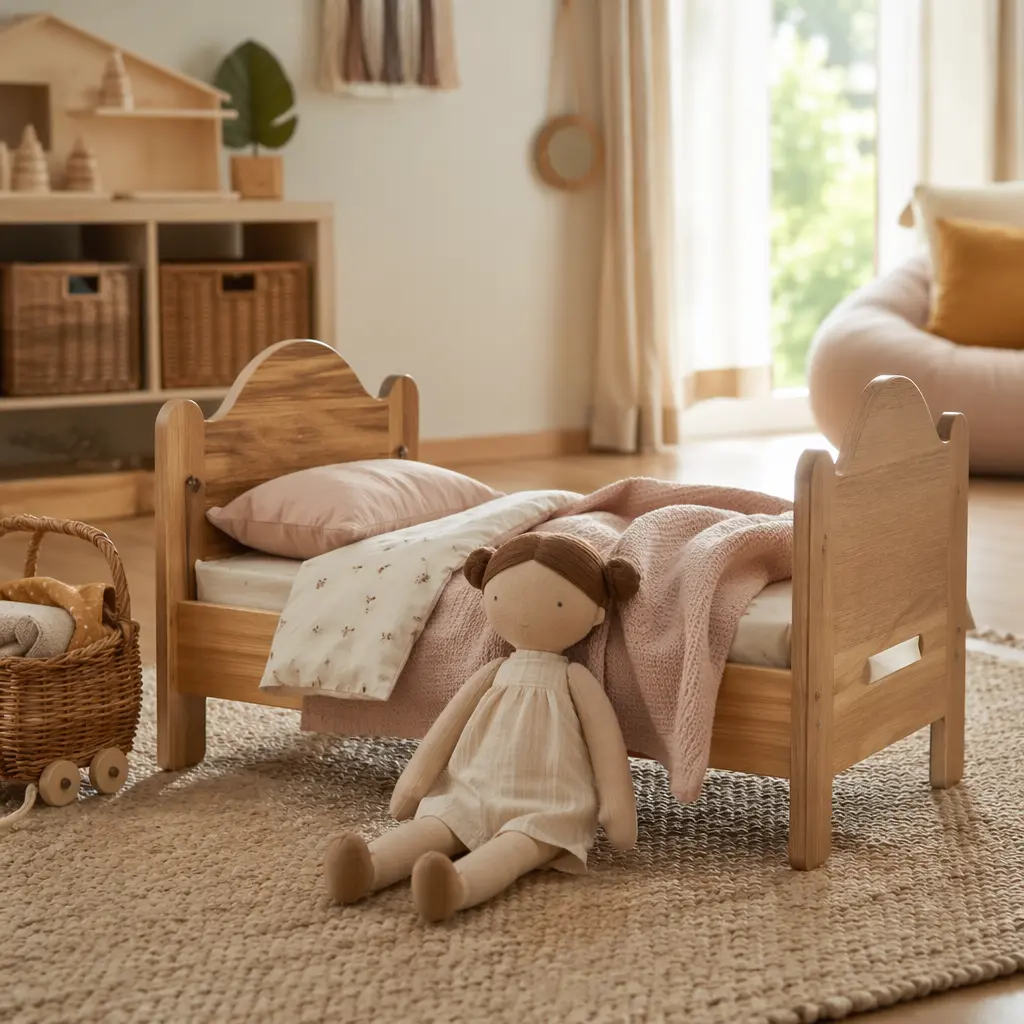
- Caregiving toys: Simple dolls or stuffed animals with bottles, blankets, or beds encourage nurturing actions without complex role-play.
- Cleaning and household sets: Toy brooms, cloths, or dustpans let toddlers copy what they see adults do.
- Tool and workbench basics: Large toy tools that turn, slide, or fit into holes focus on motion rather than sound.
- Transportation with figures: Push-along vehicles or animal figures that can be loaded and unloaded promote repetition and focus.
Frequently asked questions
Can toddlers really play pretend on their own at this age?
Yes, but pretend play looks different for toddlers than for older children. Independent pretend play at ages 1–2 often involves repeating simple actions rather than acting out stories. This still supports imagination and learning.
Are sound-free toys better for independent play?
Often, yes. Toys without batteries or scripts allow toddlers to control the pace and focus on physical interaction. They also tend to stay interesting longer because the play isn’t limited to pre-set responses.
How many pretend play toys should a toddler have?
A small rotation usually works better than a large collection. A few well-chosen toys that are easy to access encourage deeper, more focused play than many options offered at once.
What if my child only plays with a toy the same way every time?
Repetition is normal and beneficial at this stage. Toddlers learn through doing the same action again and again. Over time, new variations often appear naturally without adult prompting.
Independent pretend play toys for toddlers don’t need to be flashy or complex. When toys reflect everyday life and invite simple actions, they give young children space to explore, practice skills, and build early imagination at their own pace.