Pretend Play Toys That Help Kids Act Out Big Feelings
A parent-friendly guide to pretend play toys that support emotional expression, empathy, and problem-solving for kids ages 6–8.
Compare prices and availability
Check current prices and availability for this guide on eBay.
As an eBay Partner, we may be compensated if you make a purchase.
Between ages six and eight, children experience bigger emotions and more complex social situations. Pretend play toys can give them a safe, familiar way to act out feelings like frustration, excitement, worry, or pride. Through make-believe stories, kids often explore what they are feeling, practice empathy, and try out problem-solving skills before facing similar situations in real life.
What to look for
Not all pretend play toys support emotional growth in the same way. When choosing toys for this age group, focus on open-ended designs that let children create their own stories rather than follow a single script. The goal is to give kids room to express feelings and perspectives in their own words.
- Open-ended play: Toys without fixed outcomes encourage kids to explore many emotions and scenarios.
- Relatable roles: Characters and settings based on everyday life make it easier for kids to connect play with real experiences.
- Durability: Strong materials hold up to repeated play, especially when kids revisit emotional themes again and again.
- Inclusive design: A mix of roles, family structures, and abilities can help children practice empathy and understanding.
- Simple accessories: Fewer, well-chosen pieces often lead to deeper storytelling than overly complex sets.
Age suitability
For children ages six to eight, pretend play shifts from simple imitation to more detailed storytelling. Kids in this range often enjoy toys that allow them to explore friendships, teamwork, disagreements, and fairness. Look for playsets that match their growing attention span and fine motor skills, without being so detailed that play becomes frustrating. At this age, children may also start replaying school or social situations, which can be a healthy way to process emotions.
Standout categories or types
Certain types of pretend play toys are especially helpful for emotional expression. These categories tend to invite conversation, role-switching, and reflection, which are all key parts of social-emotional learning.
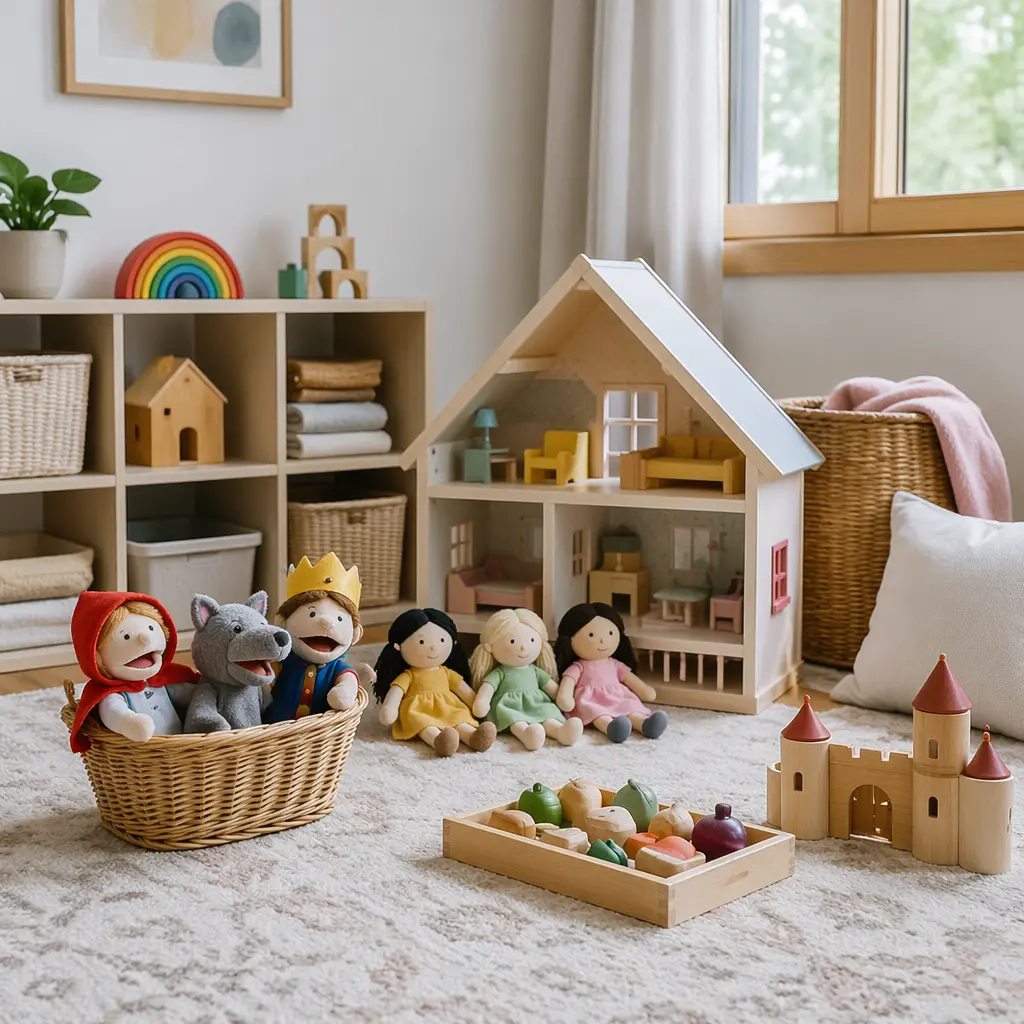
- Dolls and figures: These allow kids to act out family life, friendships, and conflicts from different viewpoints.
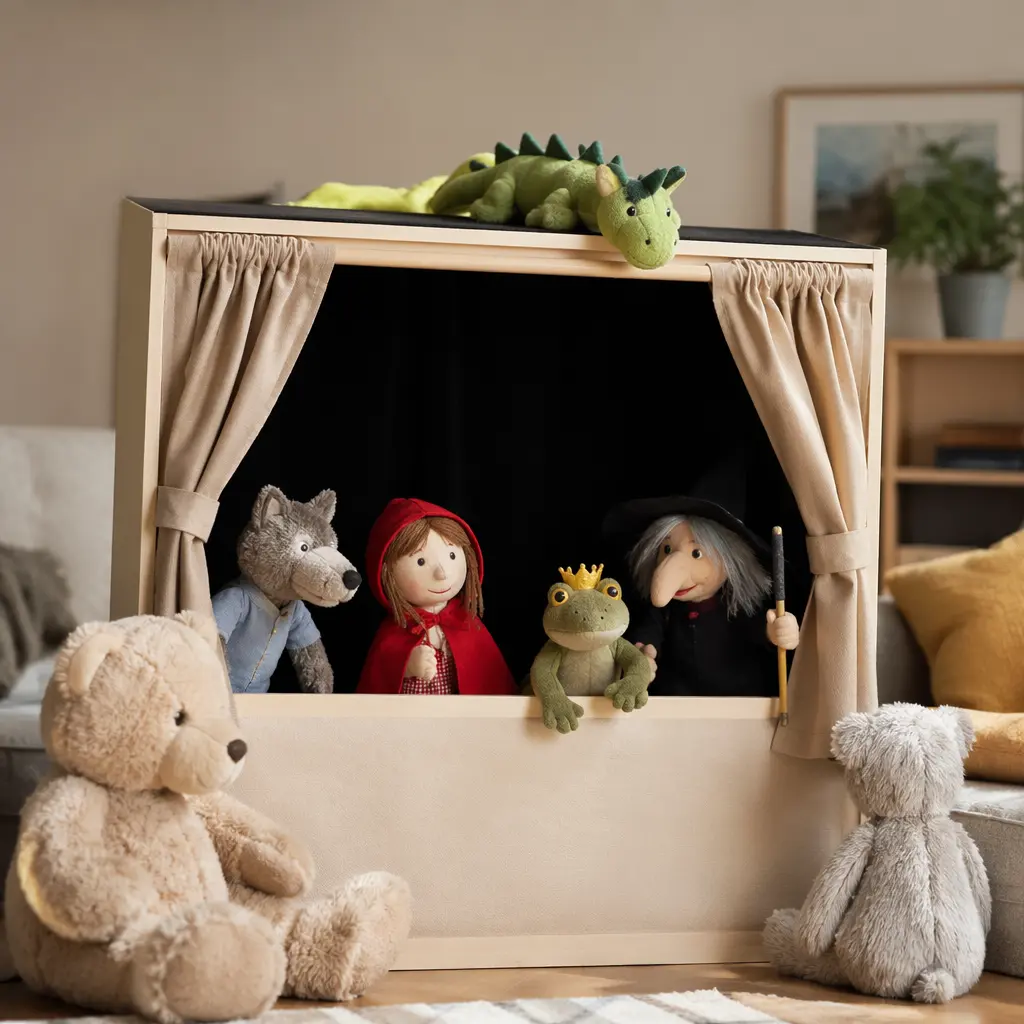
- Puppets: Puppets often help children express feelings they might hesitate to say directly, using a character as a stand-in.
- Play environments: Houses, classrooms, or community settings give context for real-life emotions and routines.
- Role-play kits: Sets centered on helpers or everyday jobs can support empathy and understanding of others’ responsibilities.
- Story-building toys: Pieces that can be rearranged or combined encourage kids to build narratives around emotions and outcomes.
Frequently asked questions
How do pretend play toys help with emotional development?
Pretend play lets children explore feelings in a low-pressure way. By assigning emotions to characters, kids can process experiences, practice empathy, and experiment with different responses to problems.
What if my child acts out negative behavior during play?
This is common and not usually a cause for concern. Acting out difficult behavior can be a way for kids to understand it. Parents can observe, ask gentle questions, and guide play toward constructive solutions when needed.
Do these toys replace talking about feelings?
No. Pretend play works best alongside open conversations. Toys can open the door to discussions about emotions, but children still benefit from direct, age-appropriate talks with adults.
Are pretend play toys useful for older kids too?
Yes. While the style of play may change, older children can still use pretend scenarios to explore social dynamics, especially during times of change or stress.
Pretend play toys that support emotional expression are less about teaching lessons and more about giving kids space to explore their inner world. By choosing flexible, age-appropriate options and staying engaged with your child’s play, you can help turn everyday make-believe into a powerful tool for empathy and emotional growth.