Low-Tech Pretend Play Toys That Beat Screens at Home
Classic pretend play toys can hold a preschooler’s attention without screens while building language, creativity, and social skills. Here’s what parents should look for when choosing them.
Compare prices and availability
Check current prices and availability for this guide on eBay.
As an eBay Partner, we may be compensated if you make a purchase.
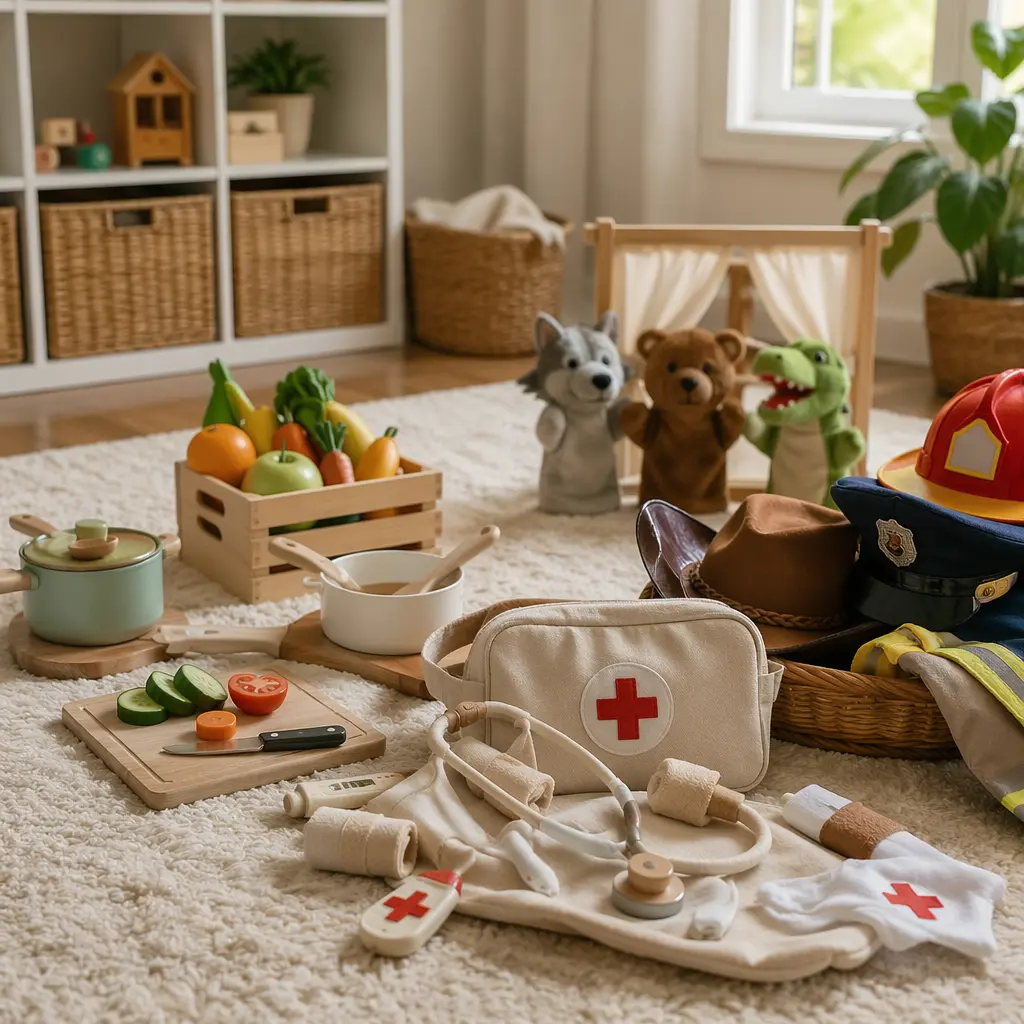
Many parents notice the same pattern: a tablet or TV can grab attention quickly, but imaginative toys often keep children engaged longer once play gets started. For preschoolers ages 3 to 5, low-tech pretend play toys encourage open-ended storytelling, role-playing, movement, and conversation in ways that passive entertainment cannot. A toy doctor kit can become a full afternoon of caring for stuffed animals. A simple play kitchen may turn into a restaurant, bakery, or grocery store depending on the day. These toys work because children control the experience instead of following a scripted digital activity. The best pretend play toys also grow with a child’s imagination, making them useful for years rather than weeks.
What to look for
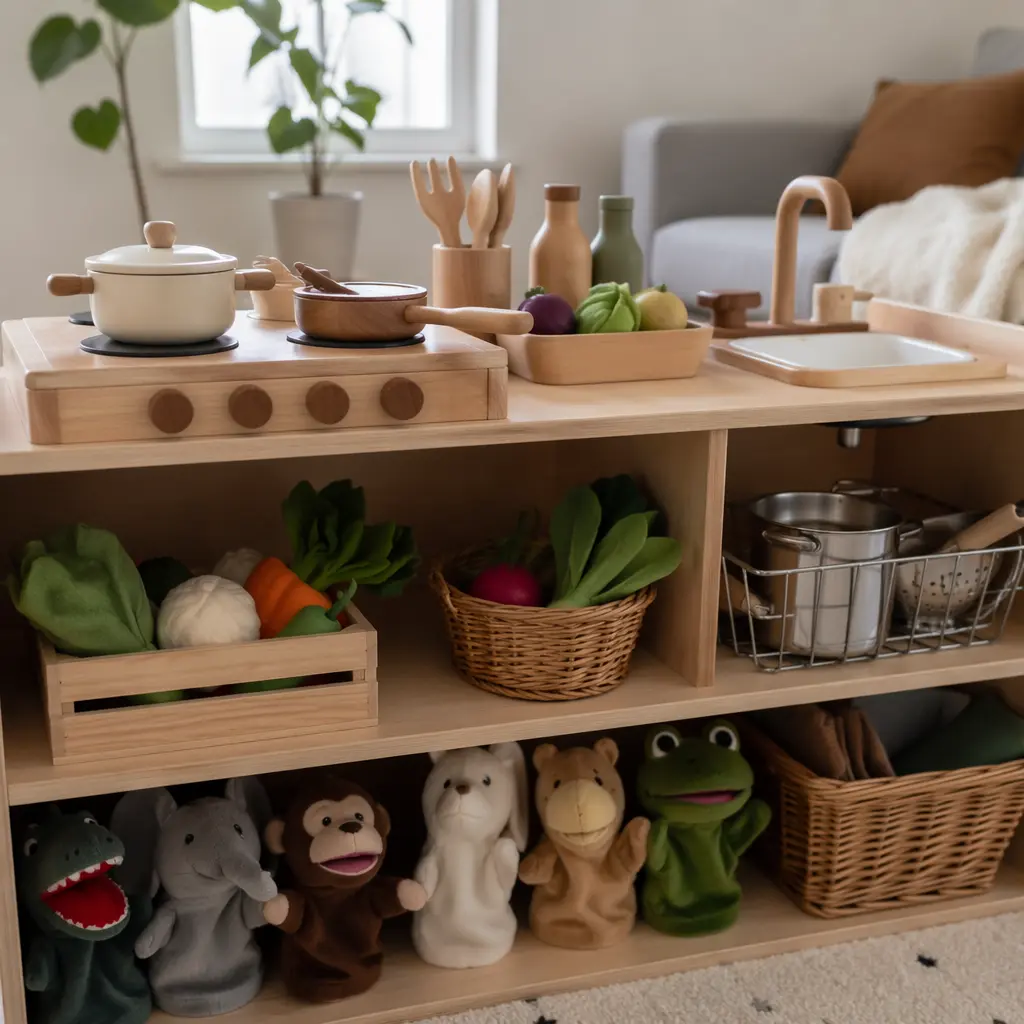
The strongest screen-free toys are usually the simplest. Toys that leave room for imagination tend to hold attention better than toys that light up, speak constantly, or direct every action. Preschoolers benefit from pretend play materials that can support many different scenarios instead of only one fixed activity. Durability also matters because children in this age group often combine toys, carry them around the house, and play energetically. Storage size, cleanup, and ease of use are practical details worth considering too.
- Choose open-ended toys that support multiple kinds of pretend play.
- Look for durable materials that can handle daily use and occasional drops.
- Simple accessories often inspire more creativity than heavily electronic features.
- Pick toys sized appropriately for preschool hands and attention spans.
- Consider sets that encourage cooperative play between siblings or friends.
- Look for easy-to-clean fabrics, smooth wood, or washable plastic surfaces.
Age suitability
Children ages 3 to 5 are usually ready for more detailed imaginative play than toddlers. At this stage, many children enjoy acting out routines they observe in everyday life such as cooking, shopping, caring for pets, driving vehicles, or visiting the doctor. They also begin creating original stories with characters, rules, and dialogue. Toys with too many small pieces may still be frustrating for younger preschoolers, while older children in this range often appreciate more accessories and role-play options. Matching the toy’s complexity to the child’s developmental stage can help maintain interest without causing overwhelm.
Standout categories or types
Play kitchens remain one of the most versatile pretend play options for preschoolers. Cooking scenarios naturally encourage language development, sequencing, and social interaction. Children can pretend to prepare meals, serve customers, organize ingredients, or host tea parties. Adding simple extras like reusable containers, fabric food, or child-safe utensils can expand the experience without adding screens or batteries.
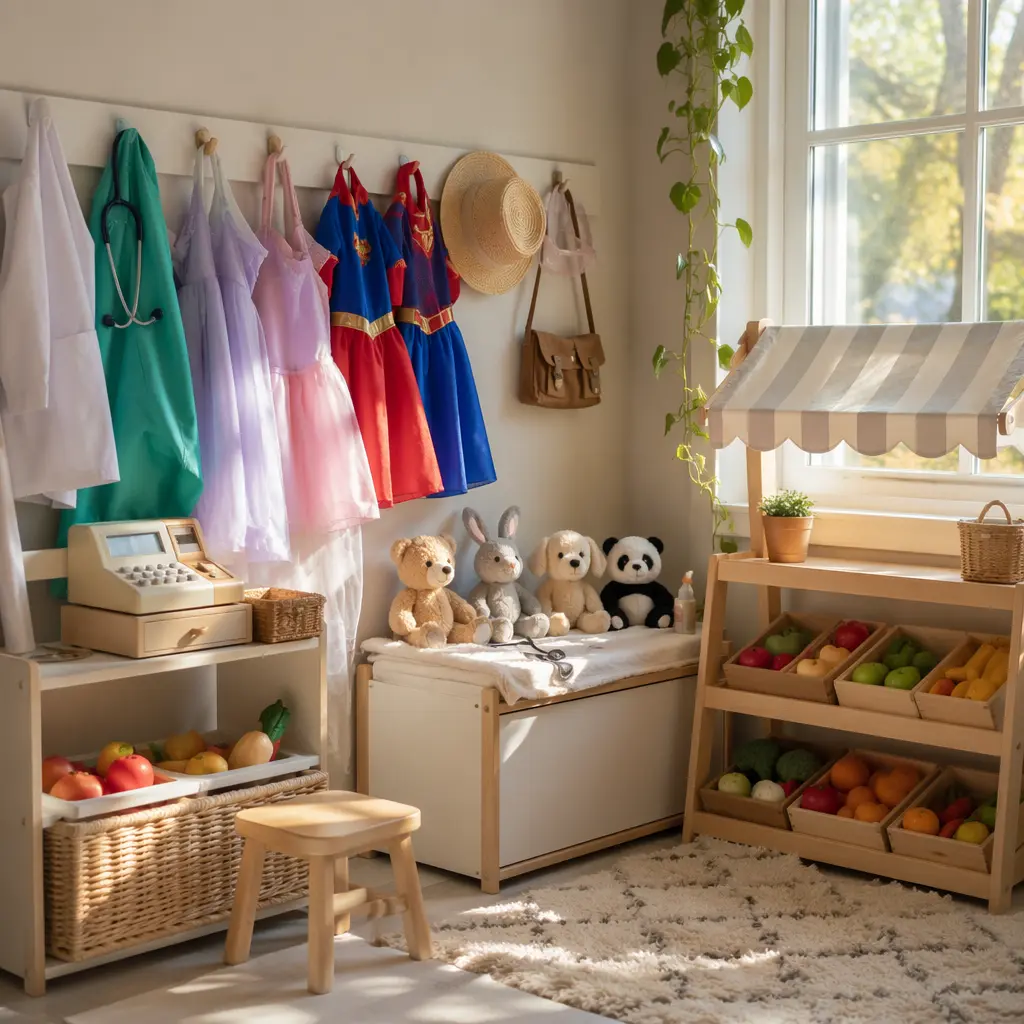
Dress-up sets are another strong category because they support movement and storytelling at the same time. Hats, capes, aprons, animal ears, and simple costumes can quickly transform a room into a veterinary clinic, castle, grocery store, or campsite. Puppet theaters, toy tools, market stands, and doctor kits also encourage children to imitate real-world activities while practicing communication and empathy.
- Play kitchens and pretend food sets for everyday role-play
- Doctor and veterinarian kits for nurturing and caregiving scenarios
- Dress-up clothes and costume accessories for storytelling
- Toy shops, markets, and cash registers for social interaction
- Puppets and stuffed animals for emotional expression and dialogue
- Toy vehicles and small-world play scenes for adventure storytelling
Frequently asked questions
Why do pretend play toys often hold attention longer than screens?
Pretend play gives children control over the pace and direction of the activity. Instead of consuming content passively, they create stories, solve problems, and change roles as they play. That flexibility can keep the experience feeling fresh even with the same toy set.
Are electronic features always a bad choice?
Not necessarily. Some sound or light features can add excitement, especially for younger preschoolers. However, toys with constant noise or scripted interactions sometimes limit creativity because the toy leads the play instead of the child. Many parents prefer a balance between interactive features and open-ended use.
How many pretend play toys does a preschooler actually need?
A small collection of flexible toys is often more effective than a large number of highly specific sets. A few versatile items such as costumes, play food, puppets, or toy tools can combine in many different ways. Rotating toys occasionally may also renew interest without requiring constant new purchases.
What materials work best for pretend play toys?
Wood, sturdy fabric, silicone, and durable plastic are all common choices. Wooden toys are often valued for longevity and simple design, while fabric accessories can be lightweight and easy to store. The best option usually depends on cleanup needs, storage space, and how actively the child tends to play.
Can pretend play support learning at home?
Yes. Pretend play naturally encourages conversation, turn-taking, problem-solving, and emotional understanding. Activities like pretending to shop or cook can also introduce counting, sorting, and sequencing skills in a playful and low-pressure way.
Low-tech pretend play toys continue to stand out because they adapt to a child’s imagination instead of replacing it. Whether the setup is a toy kitchen, costume bin, puppet stage, or pretend store, these toys create opportunities for storytelling, communication, and independent play that can remain engaging long after the novelty of a screen fades. Choosing versatile, durable, and age-appropriate pretend play toys can help build a home environment where creativity becomes part of everyday play.