Pretend Play Toys That Keep Toddlers Playing Solo
A parent-friendly guide to pretend play toys for ages 1–2 that support independent, repeat play—what to look for, age fit, and common questions about safety and learning.
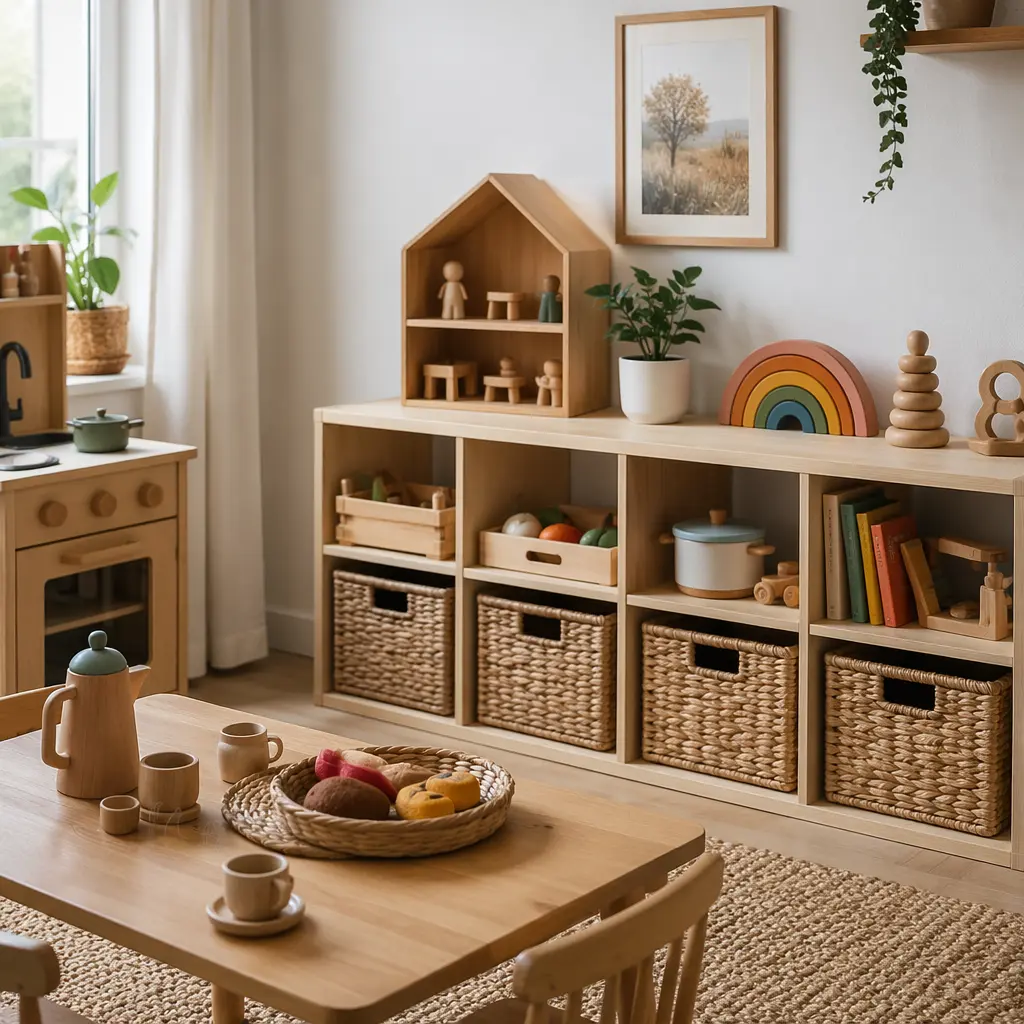
Compare prices and availability
Check current prices and availability for this guide on eBay.
As an eBay Partner, we may be compensated if you make a purchase.
Toddlers ages 1–2 are just beginning to explore pretend play. Simple role-play toys can encourage them to act out everyday routines—feeding a doll, talking on a toy phone, or stirring an empty pot—without needing constant adult direction. For parents, the goal is finding toys that invite repeat play, hold attention for short stretches, and feel intuitive enough for a young child to use independently.
What to look for
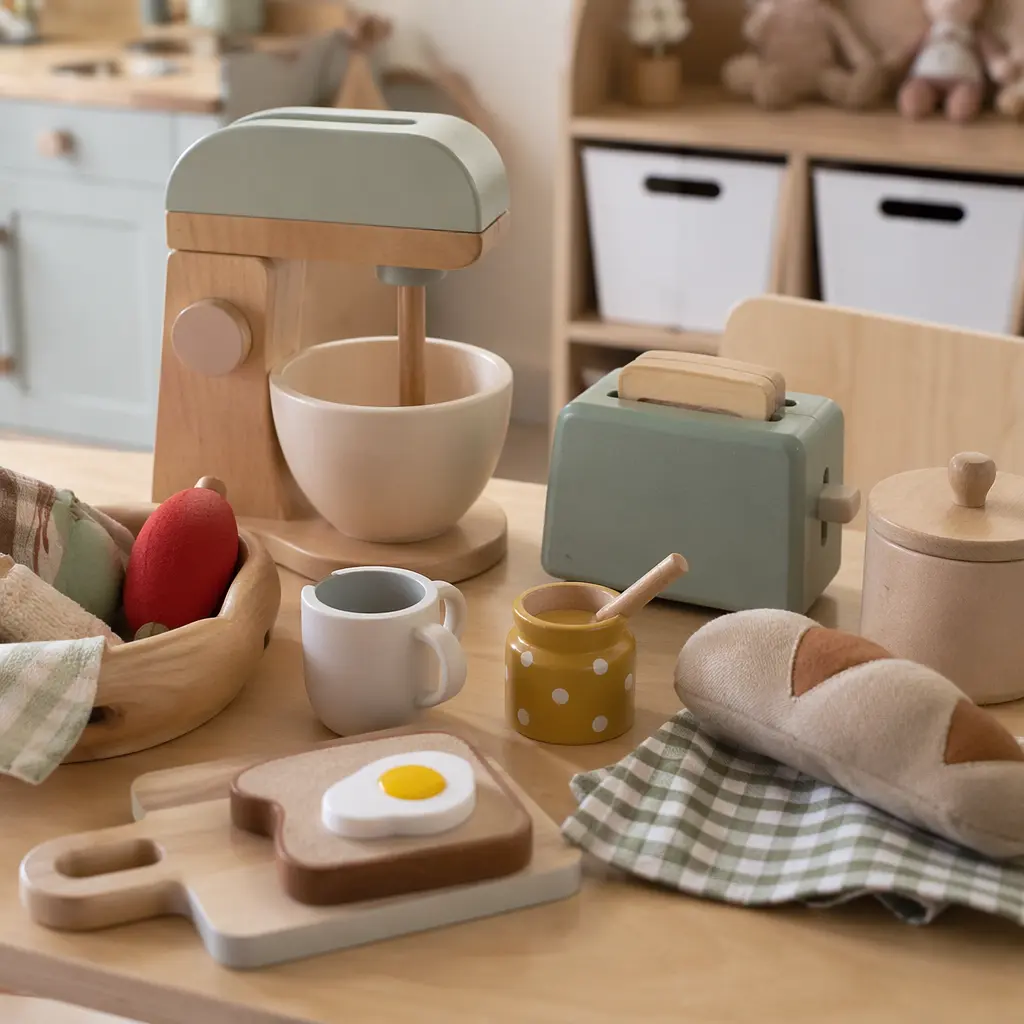
At this age, solo pretend play works best when toys mirror real life in a very basic way. Toddlers are still learning cause and effect, so open-ended items that don’t rely on rules or instructions tend to get more use. Durability and safety matter just as much as play value.
- Simple actions: Toys that do one or two things well, like opening, closing, stacking, or placing.
- Familiar themes: Everyday activities such as eating, cleaning, caring for a baby, or talking on the phone.
- Open-ended design: Pieces that can be used in more than one way encourage repeat play.
- Sturdy construction: Thick plastic, wood, or fabric that can handle drops and rough handling.
- Easy storage: Toys that reset quickly make it easier for a child to start playing again.
Age suitability
For children between 12 and 24 months, pretend play is mostly about imitation rather than storytelling. A toddler might copy what they see adults do—holding a spoon to a doll’s mouth or pressing a button and listening. Look for toys labeled for toddlers, with large pieces and no small parts. As skills grow closer to age two, children may begin combining actions, like feeding a doll and then tucking it into bed, which adds to longer solo play sessions.
Standout categories or types
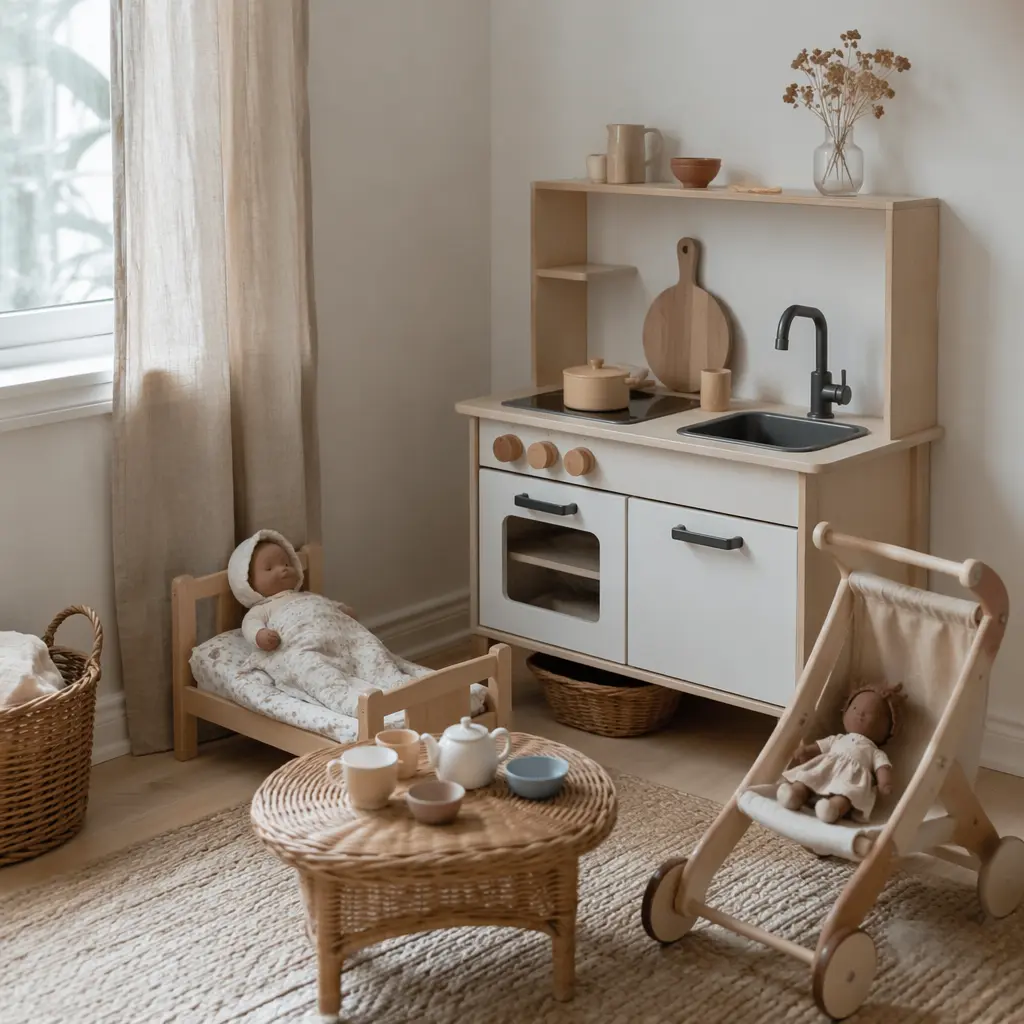
Some types of pretend play toys consistently support independent play for young toddlers. These categories focus on routine and repetition, which helps children feel confident playing on their own.
- Caregiving toys: Soft dolls or stuffed animals with simple accessories like bottles or blankets.
- Pretend food and kitchen basics: A few large food pieces, cups, or utensils without complex features.
- Everyday objects: Toy phones, keys, or remote-style toys designed specifically for toddlers.
- Dress-up basics: Hats or simple clothing pieces that don’t require fasteners.
- Vehicle role-play: Push cars or trucks paired with simple actions like loading or parking.
Frequently asked questions
Can a 1-year-old really play pretend alone?
Yes, in short bursts. Solo play at this age may last only a few minutes, but it still counts. Toddlers often repeat the same action again and again, which is part of how they learn.
How many pretend play toys does a toddler need?
A small selection is usually better than a large pile. Too many options can be overwhelming. Rotating a few toys every couple of weeks can renew interest without adding clutter.
What makes a toy good for independent play?
Toys that don’t require adult setup, batteries, or explanations tend to work best. If a child can pick it up and start playing right away, it’s more likely to support solo use.
Is pretend play educational at this age?
Pretend play helps build early language, fine motor skills, and understanding of daily routines. Even simple imitation supports cognitive and social development.
Should parents join in or step back?
Both matter. Briefly modeling how to use a toy can help a toddler get started, then stepping back allows them to explore independently at their own pace.
Pretend play toys designed for everyday role-play can be a helpful tool for encouraging independent play in toddlers. By choosing simple, age-appropriate options and keeping expectations realistic, parents can support solo play that feels natural, safe, and developmentally appropriate.