Mechanical Banks vs Cash Register Toys for Money Play
Comparing mechanical banks and cash register toys for ages 6–8, with practical advice on counting skills, pretend shopping, storage, supervision and screen-free money play.
Compare prices and availability
Check current prices and availability for this guide on eBay.
As an eBay Partner, we may be compensated if you make a purchase.
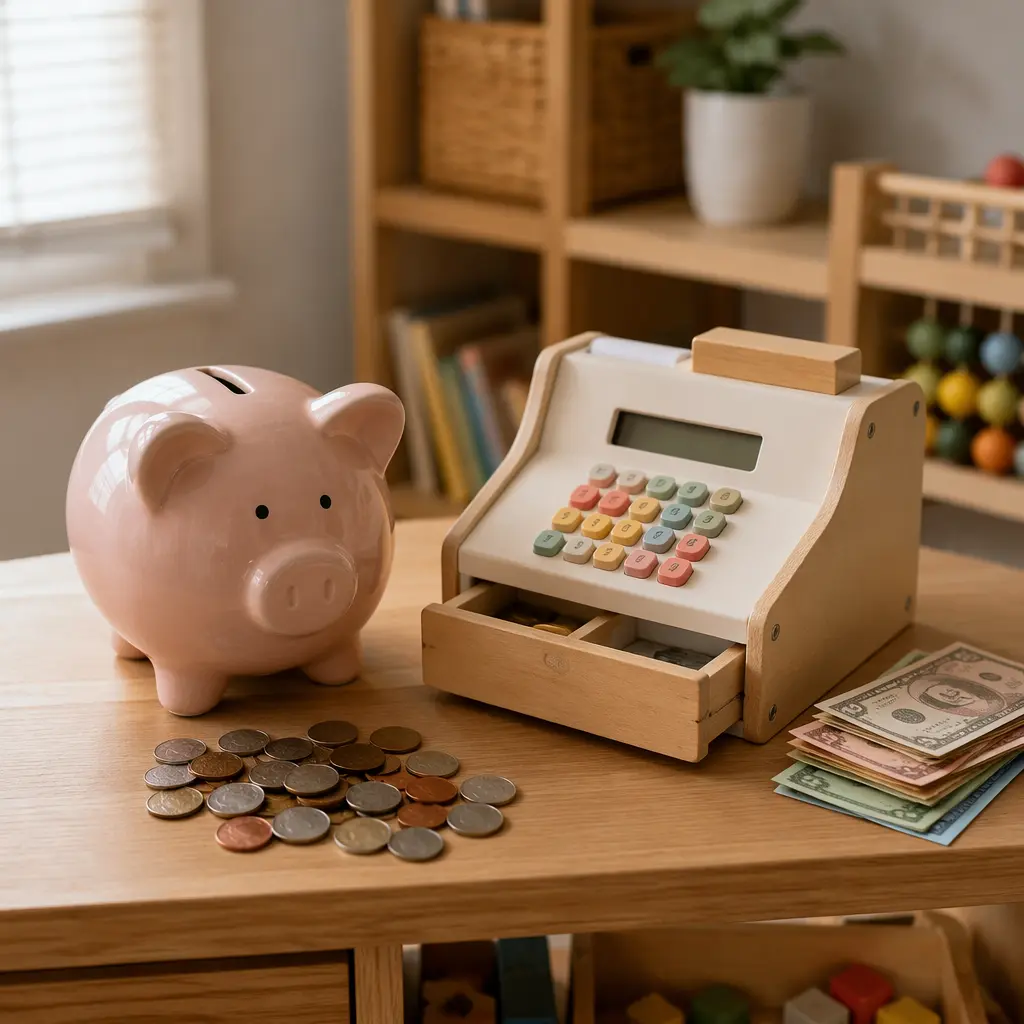
Mechanical banks and toy cash registers both encourage screen-free money play, but they teach different skills. A mechanical bank usually focuses on saving habits, coin recognition and simple counting, while a cash register toy leans more toward pretend shopping, role-play and mental math during back-and-forth play. For children aged 6–8, the better choice often depends on whether the goal is independent number practice or social pretend play. Parents may also want to consider noise levels, storage space, durability and how much supervision each type of toy needs during regular use.
What to look for
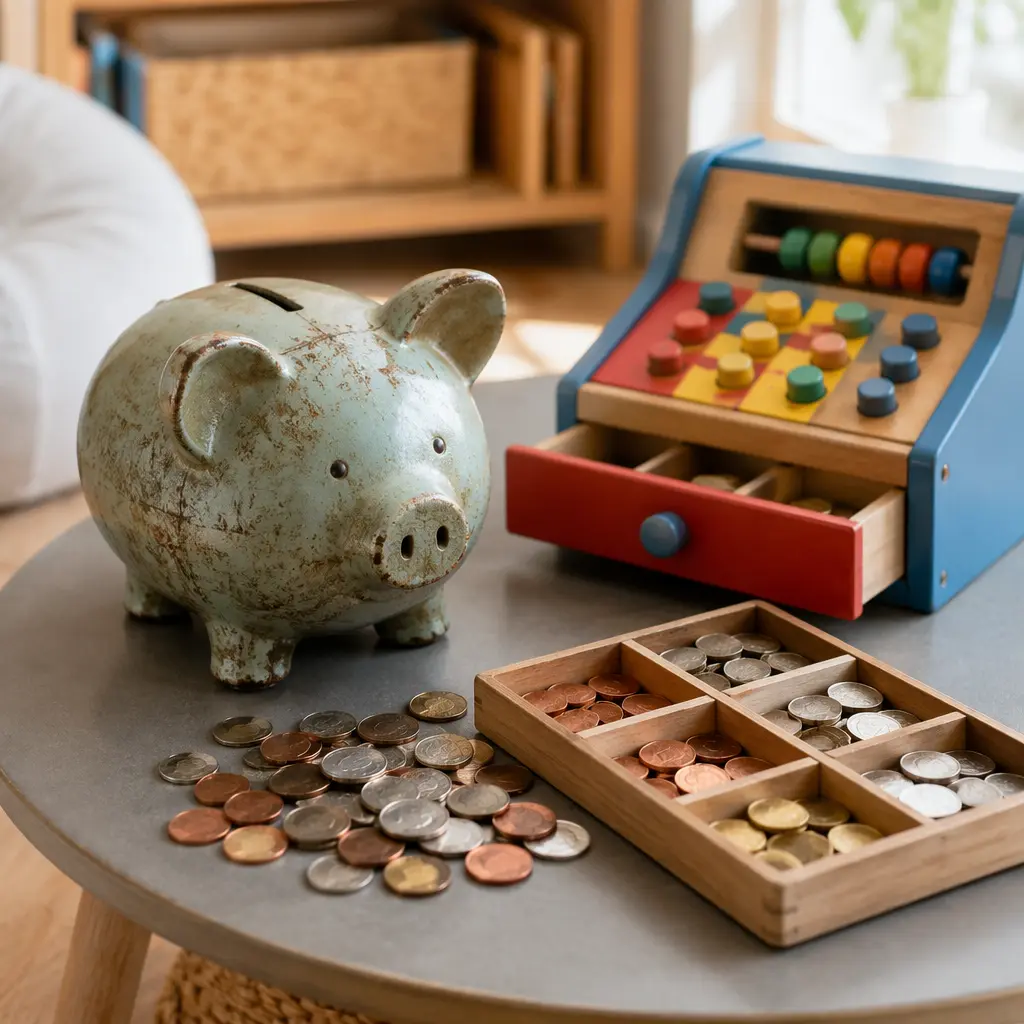
The most useful money-play toys at this age are simple enough for independent use but open-ended enough to grow with stronger math skills. Children between 6 and 8 are often moving beyond basic coin recognition into addition, subtraction and understanding value differences. Toys that encourage repeated hands-on practice usually hold attention longer than novelty features or electronic extras.
- Choose durable materials and sturdy moving parts, especially for coin slots, drawers and buttons that will be used repeatedly.
- Look for clear number layouts and realistic money sizes rather than oversized novelty pieces that make counting harder.
- Consider storage needs. Cash register sets often include coins, bills, cards and accessories that can spread across a room.
- Think about noise. Some electronic registers include loud sounds or voice prompts that may become tiring during long play sessions.
- Mechanical banks are usually compact and easier to tidy away, making them useful for smaller homes or shared bedrooms.
- Pretend paper money can tear easily. Laminated or thicker pieces usually last longer in classrooms or busy households.
- Screen-free designs encourage children to handle real objects and practice mental math without relying on app feedback or animations.
Age suitability
Children aged 6–8 are often ready for more structured money play than preschoolers. Many can count coins, make simple totals and understand the idea of saving toward a goal. Mechanical banks work well for children who enjoy routines, collecting coins or tracking savings over time. Cash register toys tend to suit children who prefer imaginative play, running pretend shops or involving siblings and friends. Some children enjoy both styles together, especially when paired with play food, board games or homemade shopping activities. Parents should also think about frustration levels. Younger children in this age range may struggle with tiny coin slots or complicated electronic features, while older children may quickly lose interest in very simple banks with limited interaction.
Options compared
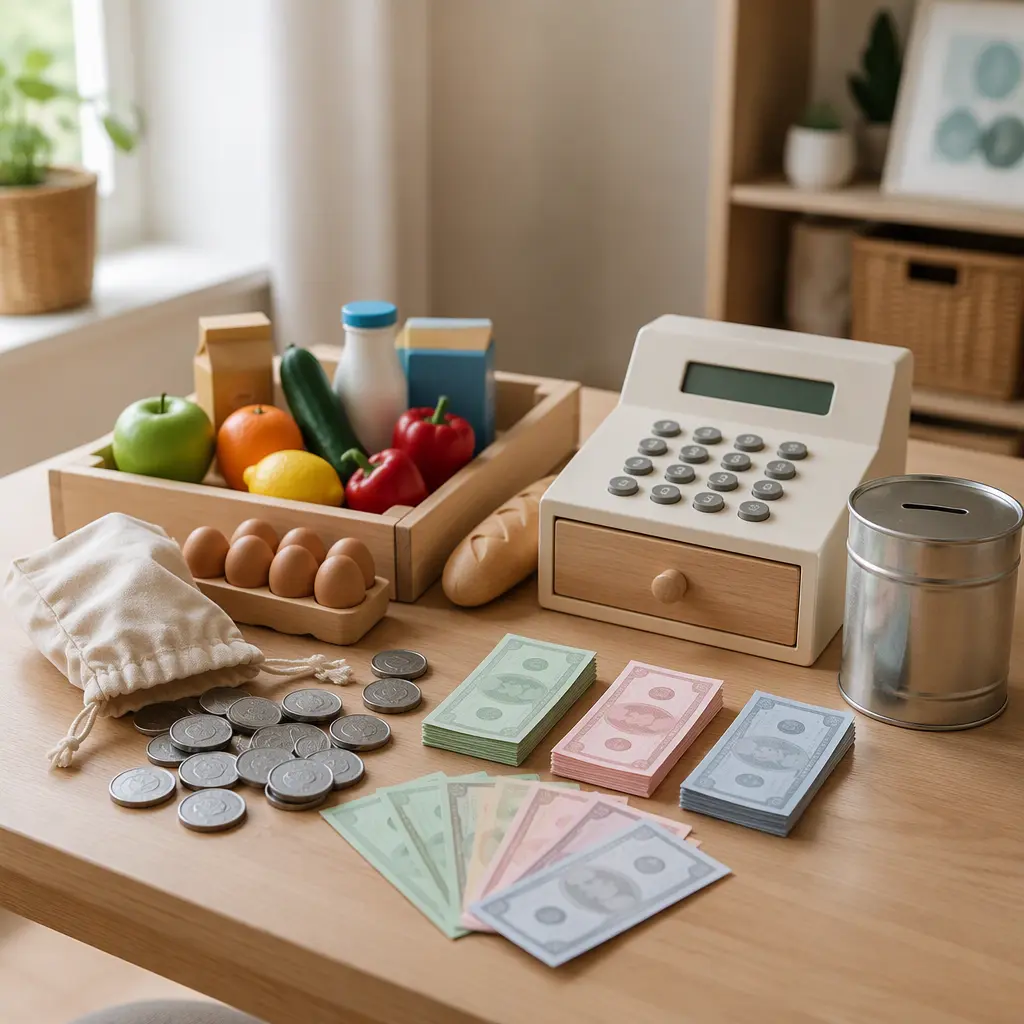
Mechanical banks are usually the stronger choice for focused saving habits and quiet solo play. Children physically insert coins, sort denominations and watch savings build over time. This can help reinforce patience and delayed rewards in a concrete way. Basic designs also tend to be durable and compact. For families trying to reduce battery-operated toys or manage clutter, a mechanical bank is often easier to maintain. However, some children may find repetitive coin depositing less engaging after the novelty fades, particularly if they prefer social interaction or imaginative storytelling.
Cash register toys generally offer broader pretend-play opportunities. Children can take turns being shoppers and cashiers, practice addition and subtraction, and create imaginative store scenarios. These toys often support cooperative play better than banks do. A register can also make math feel more practical because children repeatedly exchange coins and calculate totals during pretend purchases. The trade-off is that larger sets usually create more mess and require more setup time. Electronic versions may rely heavily on sounds or flashing features instead of genuine counting practice. Simpler mechanical registers without apps or screens are often the best fit for families prioritizing offline learning.
- Mechanical banks suit children who enjoy collecting, organizing and independent play sessions.
- Cash register toys suit children who like role-play, group activities and conversational pretend shopping.
- Quiet households or shared spaces may prefer non-electronic banks or manual registers.
- Families with limited storage may find compact banks easier to manage than large checkout sets.
- Children already confident with counting may get more long-term value from open-ended pretend shop play.
- Children who lose small accessories easily may benefit from simpler bank designs with fewer loose pieces.
Frequently asked questions
Do children learn real money skills from pretend cash registers?
They can, especially when children actively count coins, make change and compare prices during play. Registers are most useful when adults or other children participate in realistic shopping games rather than relying only on sound effects or automatic calculators.
Are electronic cash registers better for learning?
Not necessarily. Electronic features can increase excitement, but they may also distract from mental math and imaginative play. Many parents prefer simpler manual registers because children do more of the counting themselves.
Is a mechanical bank too simple for ages 6–8?
It depends on the child. Some children enjoy tracking savings and sorting coins for years, while others quickly want more interactive play. Pairing a bank with real-world saving goals or allowance routines can help maintain interest.
Which option works better for siblings?
Cash register toys are usually better for cooperative play because multiple children can take turns shopping and selling items. Mechanical banks are more individual and may lead to arguments if siblings want separate savings spaces.
Do these toys need adult supervision?
Most children in this age group can use them independently once rules are clear, but adults may still need to help organize accessories, monitor small parts and encourage realistic counting practice instead of rushing through play.
For most families, the decision comes down to play style. Mechanical banks are better for quiet saving practice, simple routines and compact storage, while cash register toys encourage social pretend play and practical counting during imaginative shopping games. Children who enjoy both math and role-play may benefit from combining a basic savings bank with a simple non-digital register for a more complete screen-free money play setup.