Play Couches vs Indoor Tents for Apartment Kids
Comparing play couches and indoor tents for children aged 3–5 in small homes, including storage, supervision, noise, active play, durability and long-term value.
Compare prices and availability
Check current prices and availability for this guide on eBay.
As an eBay Partner, we may be compensated if you make a purchase.
For families in apartments, indoor play equipment has to work harder than it might in a larger home. It needs to fit into shared living areas, store reasonably well, handle frequent use and support active play without creating constant clutter or noise. Two popular options for preschoolers are modular play couches and indoor play tents. Both encourage screen-free imaginative play, but they suit different homes, routines and budgets. A play couch usually focuses on climbing, building and movement, while an indoor tent creates a quieter pretend-play space for reading, role play or downtime. Choosing between them often comes down to storage, supervision needs, how energetic your child is indoors and how long you expect the toy to stay useful.
What to look for
Apartment families often benefit from toys that can serve multiple purposes instead of taking up permanent floor space. Both play couches and indoor tents can support imaginative play, but the practical details matter more in smaller homes. Consider how often the toy will need to be packed away, whether it blocks walkways, and how easily adults can supervise play while cooking, working or sharing the room.
- Storage footprint matters more than assembled size. Some play couches stack into compact seating, while many tents need folding, disassembly or dedicated closet space.
- Noise levels vary. Foam climbing and jumping can create thumping sounds for downstairs neighbors, while tents are usually quieter.
- Think about longevity. Modular foam pieces may continue to work for forts, obstacle courses and reading corners beyond preschool years, while some tents are outgrown sooner.
- Cleaning is important in shared living spaces. Removable washable covers are often easier to maintain than fabric tents with fixed poles and stitched sections.
- Supervision differs between the two. Open play couches are easier to monitor from across the room, while enclosed tents can block visibility.
- Active children may benefit from movement-focused play options, especially during bad weather when outdoor play is limited.
- Check setup time. Frequent assembly and folding can become frustrating in apartments where living rooms change functions throughout the day.
- Consider multipurpose use. Some families use a play couch as everyday seating, guest floor cushions or quiet reading spaces when not used for play.
Age suitability
For children aged 3–5, both options can work well when matched to the child's play style and coordination level. Play couches generally suit preschoolers who enjoy climbing, jumping, building forts and creating obstacle courses. They often appeal to children with high energy levels who need indoor movement opportunities. Indoor tents tend to suit children who enjoy pretend play, stuffed animals, reading corners or quiet sensory breaks. At this age, many children still need help setting up larger fort structures or safely rearranging cushions. In shared apartment spaces, some families find tents easier for calmer evening play, while play couches are more useful during active daytime play sessions. Children who are rough with furniture may also treat foam pieces more energetically than intended, so adult guidance still matters.
Options compared
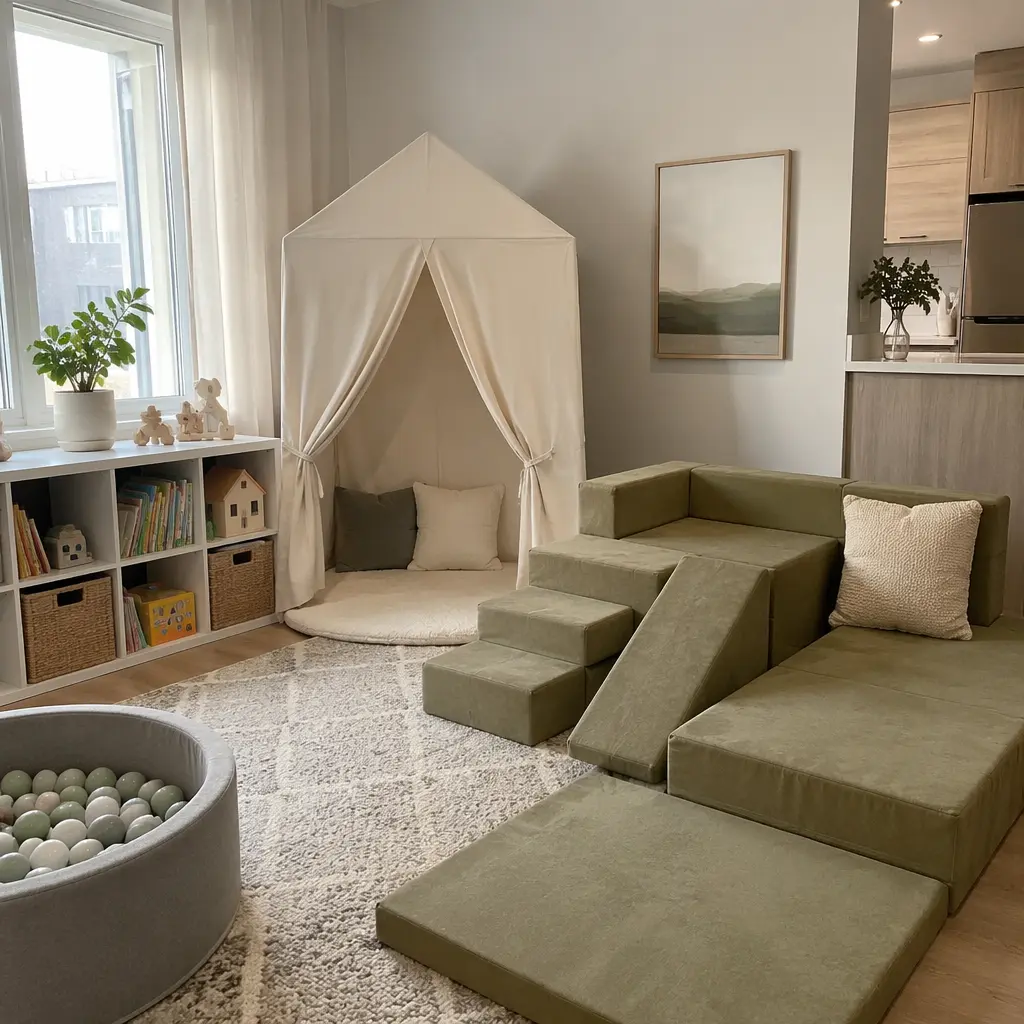
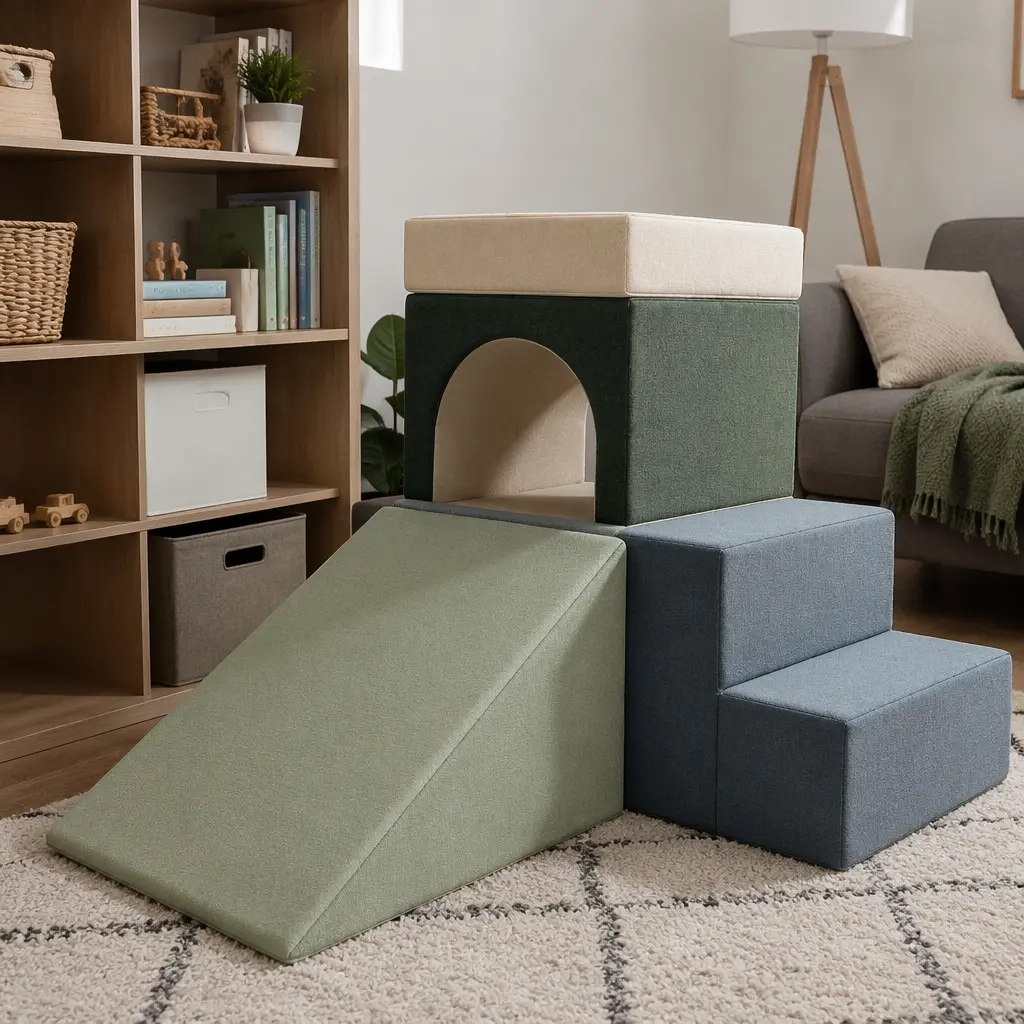
A modular play couch is usually the more flexible choice for active indoor play. Foam sections can become ramps, forts, tunnels, stepping stones or quiet seating depending on the day. In apartments without easy outdoor access, this flexibility can help preschoolers burn energy indoors during poor weather. The trade-off is that these setups can spread across the room quickly and may create more noise from jumping, dragging cushions or collapsing builds. Storage is simpler if the pieces stack neatly, but the overall footprint is still substantial compared with smaller toys.
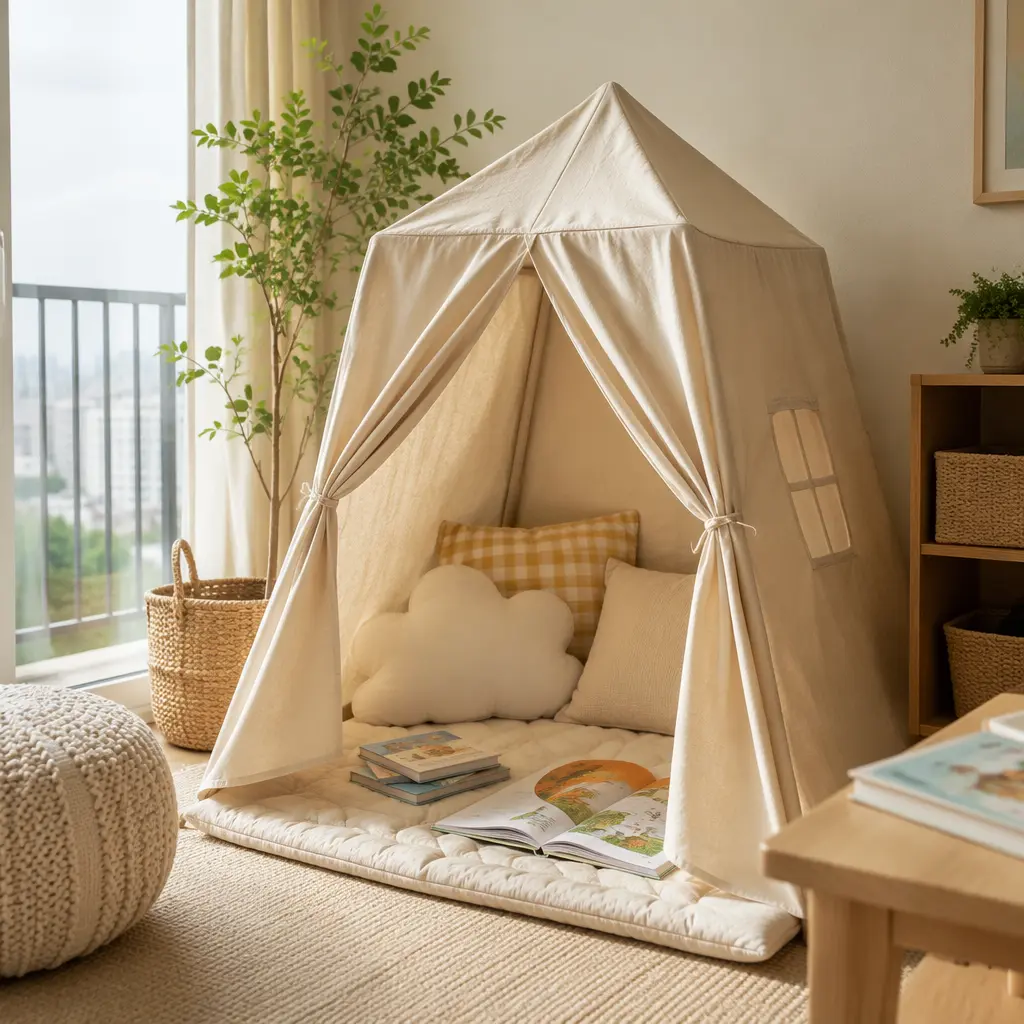
Indoor tents usually take up less visual space and encourage calmer forms of play. Many children use them as pretend campsites, reading dens or quiet hideaways. They can work especially well in homes where the living room doubles as a shared adult space because they create a defined play zone without encouraging as much physical activity. However, tents are generally less versatile over time. Some children lose interest once the novelty fades, especially if the structure stays the same every day. Visibility can also be a challenge in small homes where adults need to monitor multiple activities at once.
- Choose a play couch if your child needs active indoor movement, enjoys building forts and you can tolerate occasional noise and larger floor setups.
- Choose an indoor tent if your child prefers imaginative role play, quiet spaces or reading corners and your home benefits from calmer play.
- Avoid oversized foam setups in very tight apartments with limited storage or noise-sensitive neighbors below.
- Avoid tents with complicated assembly if you expect to fold and store them frequently between uses.
- Families with siblings may get more long-term use from modular foam pieces because they support cooperative building and obstacle games.
- Children who become overstimulated easily may prefer the enclosed, quieter feel of a tent over highly physical climbing play.
Frequently asked questions
Do play couches take up too much space for apartments?
They can, especially in smaller living rooms. The key difference is whether the couch stacks into usable seating or becomes permanent clutter. Some families use the pieces daily as loungers or reading cushions so they do not feel like separate toy storage.
Are indoor tents easier to store?
Many are lighter and smaller when folded, but storage convenience depends on the frame design. Pop-up tents are usually quicker to pack away than pole-based designs, although folding large fabric structures can still take practice.
Which option lasts longer as children grow?
Modular play couches often have broader long-term use because they adapt to different types of play. Older children may still use them for reading corners, floor seating or fort building. Simple indoor tents are more likely to be outgrown after the preschool years.
What works better for shared sibling play?
Play couches typically support more collaborative physical play because multiple children can build and rearrange structures together. Tents may work well for quieter pretend games, but smaller enclosed spaces can sometimes create conflicts over personal space.
Are these toys suitable for everyday unsupervised play?
Short periods of independent play are common at this age, but both options still need regular supervision. Preschoolers may experiment with climbing furniture, standing on unstable cushions or wrapping tent fabric around other household items during imaginative play.
For many apartment families, the choice comes down to whether indoor playtime needs more movement or more calm. A play couch generally offers greater versatility and longer use, especially for energetic children who spend long stretches indoors. An indoor tent may fit better in homes where quiet play, smaller storage needs and lower noise levels are priorities. Looking closely at your available floor space, storage options and daily routine will usually point toward the better fit more clearly than trends or social media setups.