Play Food Sets That Store in One Small Bin
A parent-focused guide to pretend food sets for ages 3–5 that stay organized, limit clutter, avoid tiny pieces and hold up to everyday preschool play.
Compare prices and availability
Check current prices and availability for this guide on eBay.
As an eBay Partner, we may be compensated if you make a purchase.
Pretend food sets can encourage imaginative play, turn-taking and early language skills, but many parents discover that the smallest accessories are also the easiest toys to lose. For homes with limited storage, shared bedrooms or busy play areas, a compact set that fits into one small bin is often easier to manage than a large kitchen collection spread across multiple baskets. The most practical options for ages 3–5 usually focus on chunky pieces, durable materials and simple themes instead of dozens of tiny extras. Choosing the right set often comes down to balancing realism with cleanup, storage space, durability and how independently a child can play without constant sorting help.
What to look for
For preschoolers, the best compact pretend food sets are usually the ones that stay easy to reset after play. A smaller collection with recognizable items often gets used more consistently than oversized sets with miniature accessories that scatter across the floor. Storage matters just as much as the toy itself. Sets that naturally stack or fit into one container are easier for children to tidy independently, which can reduce frustration for both kids and adults.
- Choose chunky pieces that are easy for small hands to grip and difficult to lose under furniture.
- Look for sets with fewer loose accessories such as tiny utensils, coins or miniature cartons.
- Consider softer materials or rounded wooden pieces if the toys will be thrown, stepped on or used in shared spaces.
- Fabric food sets can work well for travel and quieter play but may flatten over time with heavy use.
- Wooden pretend foods are often durable and simple to wipe clean, though they can be heavier and noisier on hard floors.
- Plastic sets are usually lightweight and affordable but vary widely in durability and storage efficiency.
- Simple food categories such as fruits, vegetables or breakfast items are easier to organize than mixed supermarket collections.
- Check whether the storage bin or basket is included, since many compact sets rely on separate storage solutions.
Age suitability
Most pretend food sets labeled for preschoolers are designed for children around ages 3–5, but the ideal level of complexity changes quickly during those years. Younger children often benefit from larger pieces with simple pretend functions, such as stacking, sorting or basic role play. Older preschoolers may enjoy sets that support pretend cooking, grocery shopping or cooperative play with siblings. If younger siblings are present in the home, avoiding tiny detachable parts becomes especially important. Compact sets also tend to work better for children who become overwhelmed by large toy collections or who play in smaller apartments, bedrooms or classroom corners.
Options compared
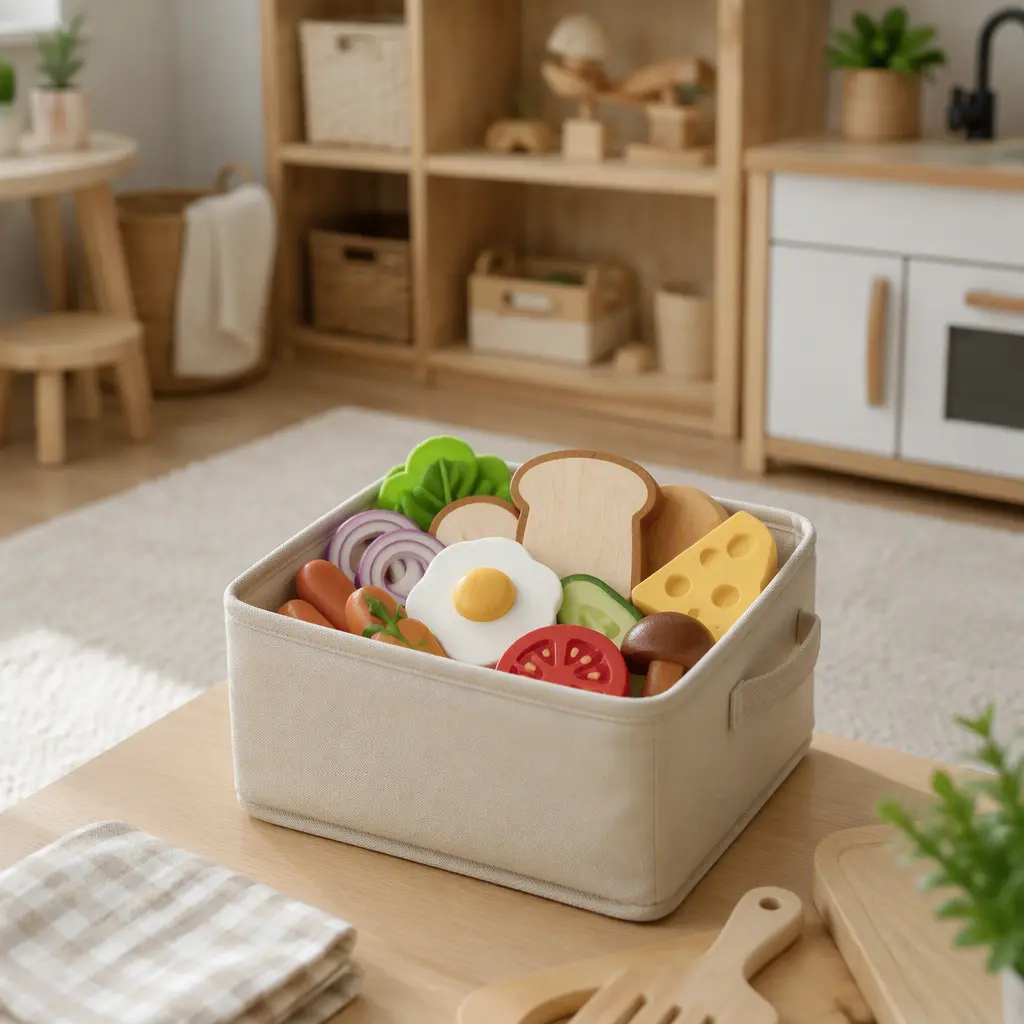
Wooden pretend food sets are often the easiest to keep organized because they usually include fewer, larger pieces. Many focus on core foods like fruit, vegetables or sandwich ingredients instead of detailed packaging. They tend to survive rough handling well and can last through multiple children, but they are heavier to carry and can become noisy when dumped into bins on tile or hardwood floors. These sets suit families prioritizing durability and long-term use over maximum variety.
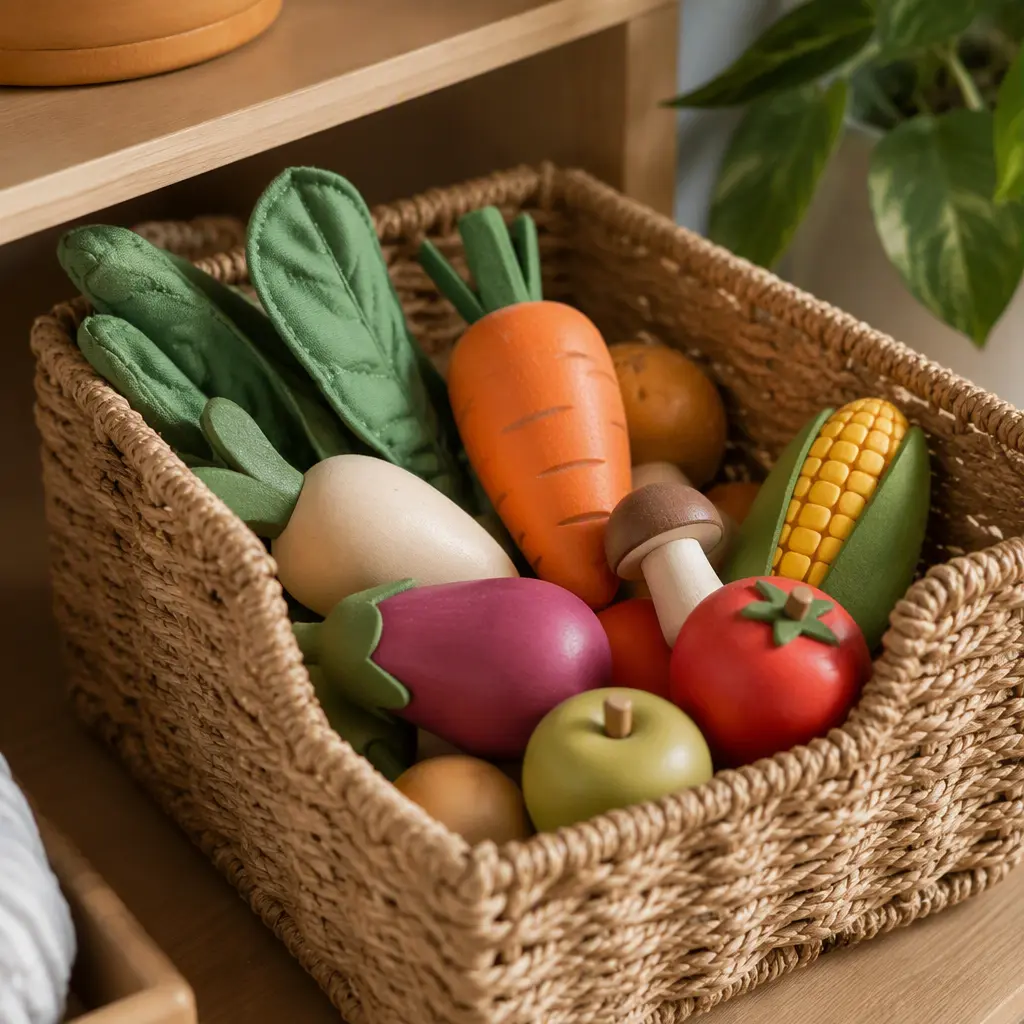
Soft fabric food sets are quieter and lighter, which can help in apartments or shared living spaces. They also compress easily into small storage bins. However, fabric items may lose shape over time and can be harder to clean thoroughly after spills or outdoor play. These sets often suit calmer indoor pretend play or travel situations better than high-energy kitchen play.
- Chunky plastic food sets: Often affordable, lightweight and easy to wipe clean. Good for everyday use and larger group play, but oversized collections can become cluttered quickly.
- Cut-and-play food sets: Encourage motor skills and pretend cooking through hook-and-loop or magnetic connections. Best for children interested in role play, though loose knife accessories can add cleanup.
- Theme-specific sets: Breakfast, picnic or produce-focused kits usually stay smaller and more organized than full grocery assortments.
- Market or cash-register sets: Add social pretend play and counting opportunities, but often include the highest number of tiny accessories and paper-like pieces.
- Travel-sized food sets: Designed for portability and small bins, making them useful for grandparents' homes, waiting rooms or compact apartments.
Frequently asked questions
How many pieces are practical for a small-space play food set?
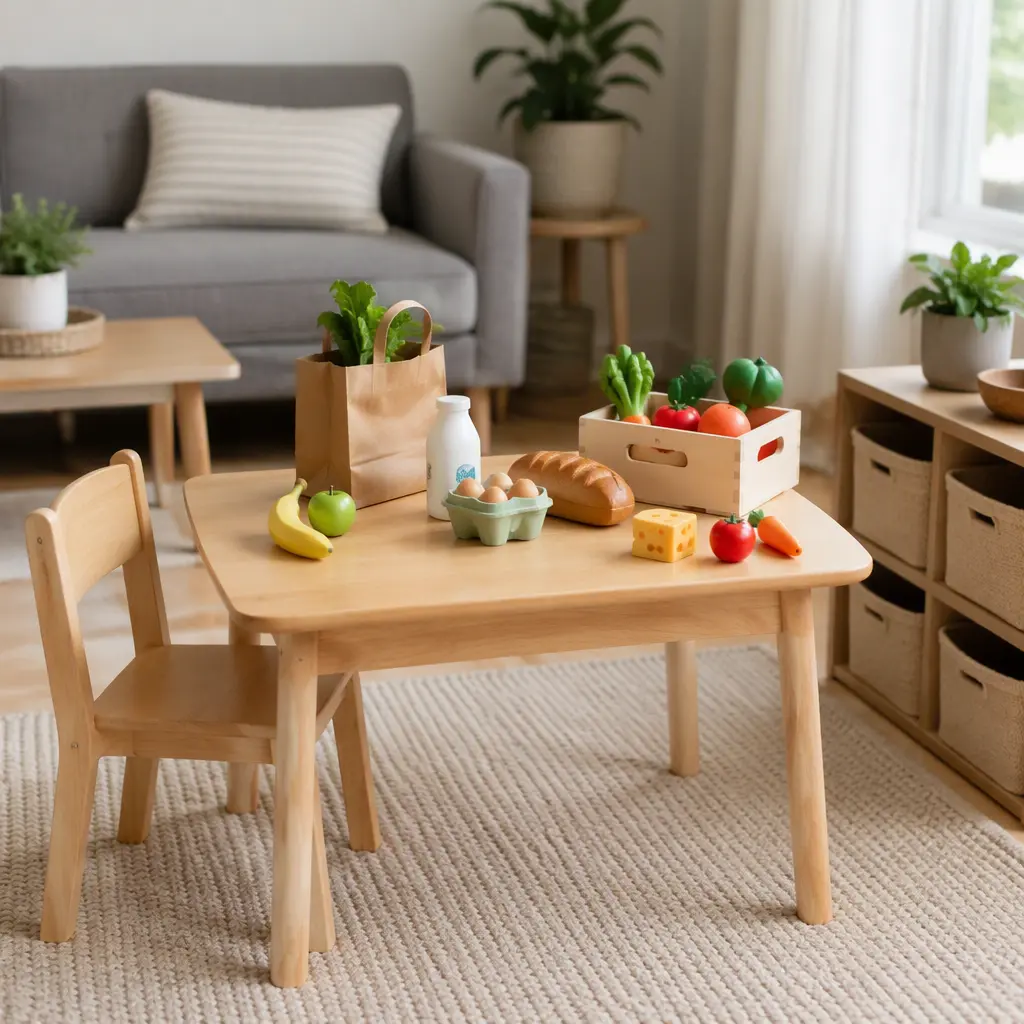
For many families, around 10 to 25 larger pieces is enough to support imaginative play without creating constant cleanup problems. Preschoolers often use a handful of favorite foods repeatedly rather than interacting with every item in a very large set.
Are wooden or plastic pretend foods more durable?
Both can hold up well depending on construction quality and play style. Wooden foods generally resist crushing and heavy handling, while thicker plastic pieces may survive moisture and outdoor use more easily. Durability also depends on whether accessories have small attached parts that can loosen over time.
What type of storage works best?
A small open-top bin, low fabric cube or handled basket usually works better than divided containers for preschoolers. Simple storage encourages independent cleanup and reduces the chance that pieces will be left scattered because sorting feels too complicated.
Do compact play food sets still support imaginative play?
Yes. Preschool pretend play usually depends more on open-ended interaction than on owning a very large number of toy foods. A smaller collection can still support cooking games, grocery shopping, tea parties and storytelling while remaining easier to maintain.
Which accessories are most likely to create clutter?
Tiny menu cards, pretend money, miniature condiment bottles and small utensils are often the first pieces to disappear. Families aiming for low-mess play may prefer simpler food-only sets with fewer detachable extras.
A compact pretend food set can make imaginative play easier to manage rather than adding another difficult-to-store toy category. For most families with children ages 3–5, the most practical choice is usually a durable, easy-to-clean collection with larger pieces and straightforward storage. Fewer accessories often means faster cleanup, less frustration and more independent play, especially in smaller homes or shared play spaces.