Pretend Play Toys That Help Siblings Play Together
A parent-focused guide to pretend play toys that encourage shared storytelling for siblings aged 3–5, with practical advice on age gaps, storage, noise, supervision and long-term play value.
Compare prices and availability
Check current prices and availability for this guide on eBay.
As an eBay Partner, we may be compensated if you make a purchase.
Pretend play toys can make sibling play smoother when they give children clear roles, flexible story ideas and enough pieces to share without constant disputes. For families with children around ages 3–5, the most useful sets usually support open-ended play instead of strict rules or one-player-only activities. Toy kitchens, market stalls, doctor kits, doll accessories, puppets and construction-themed role-play sets can all encourage siblings to build stories together while practicing turn-taking and communication. The challenge for parents is finding options that work across small age gaps, fit available space and stay engaging after the novelty wears off.
What to look for
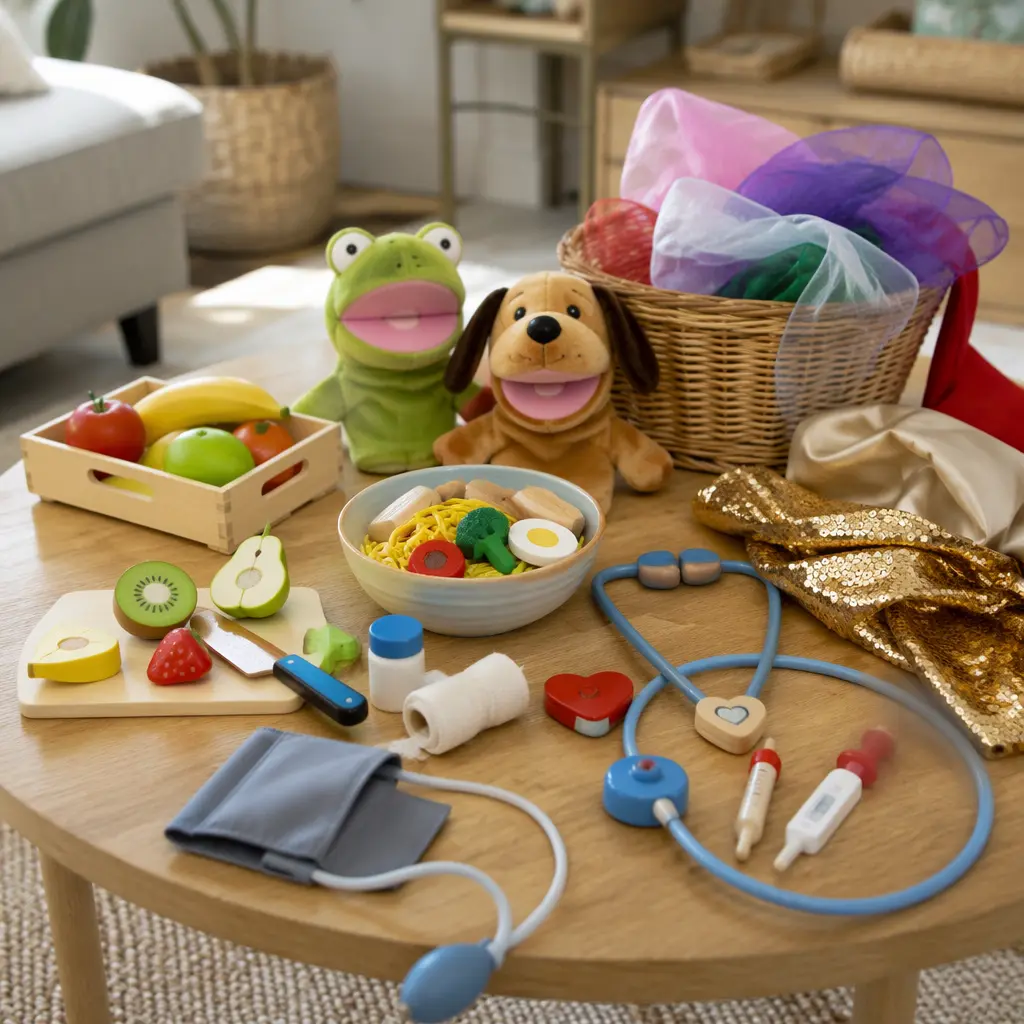
Shared pretend play works best when toys allow children to participate at different skill levels. A younger child may enjoy copying actions and naming objects, while an older sibling creates more detailed stories or assigns roles. Toys with multiple accessories, broad themes and durable parts generally hold attention longer in mixed-age households. Storage also matters more than many parents expect, since pretend play collections tend to grow over time with extra food pieces, costumes or figures.
- Choose toys with multiple roles so children can play side by side instead of competing for a single feature.
- Look for open-ended themes such as cooking, caring, shopping or building that adapt to different ages and interests.
- Consider noise levels if play happens in shared living areas. Mechanical or battery-powered sounds can become tiring during long role-play sessions.
- Check whether small accessories require close supervision around younger siblings.
- Foldable play tents, compact doctor kits and stackable food crates can help in smaller homes.
- Simple wooden or fabric accessories often last longer than thin plastic pieces with moving parts.
- Avoid overly scripted electronic toys that direct every interaction and leave little room for imagination.
Age suitability
For children aged 3–5, pretend play usually shifts from simple imitation toward longer collaborative stories. Three-year-olds often enjoy repetitive actions such as serving toy meals or putting dolls to bed, while older preschoolers may create scenarios with rules, characters and problem-solving. In mixed-age households, broad role-play themes tend to work better than highly detailed sets aimed at older children only. Toys designed for school-aged children may include small pieces, complex assembly or fragile components that frustrate younger siblings. On the other hand, very basic toddler toys can feel limiting to older preschoolers who want richer storytelling opportunities. Flexible sets that can expand over time usually provide the best long-term value.
Options compared
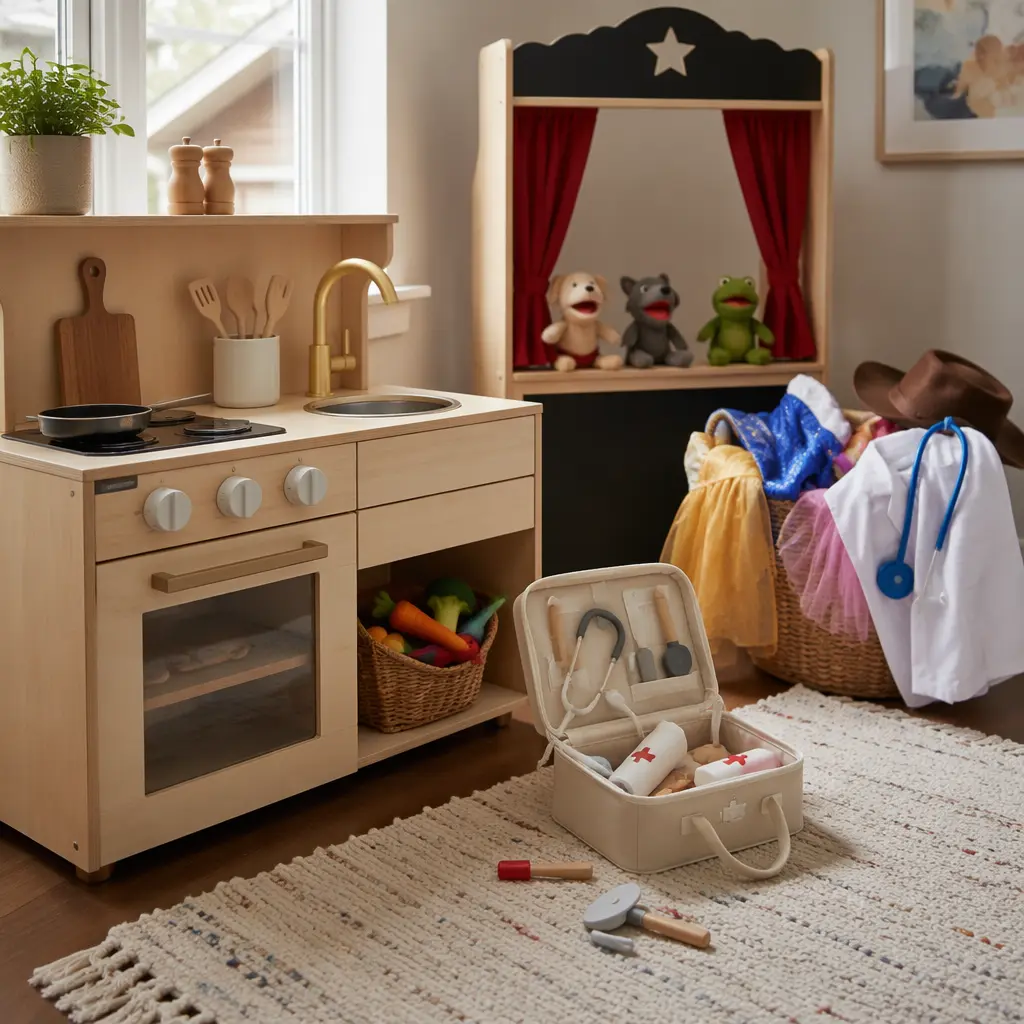
Toy kitchens remain one of the strongest choices for sibling play because they naturally create multiple jobs. One child can cook while another serves food, washes dishes or shops for ingredients. Kitchens also pair well with extra accessories already found around the home, including cardboard boxes, reusable containers or play food sets. The downside is storage space. Full-sized kitchens can dominate smaller rooms, and loose food pieces spread easily across the house.
Doctor and vet kits are useful for children who enjoy nurturing play and cooperative problem-solving. These sets often encourage turn-taking because children naturally swap between patient and caregiver roles. Softer fabric-based kits are usually quieter and easier to store than hard plastic versions. Families who dislike clutter may prefer compact carry-case kits rather than large examination stations.
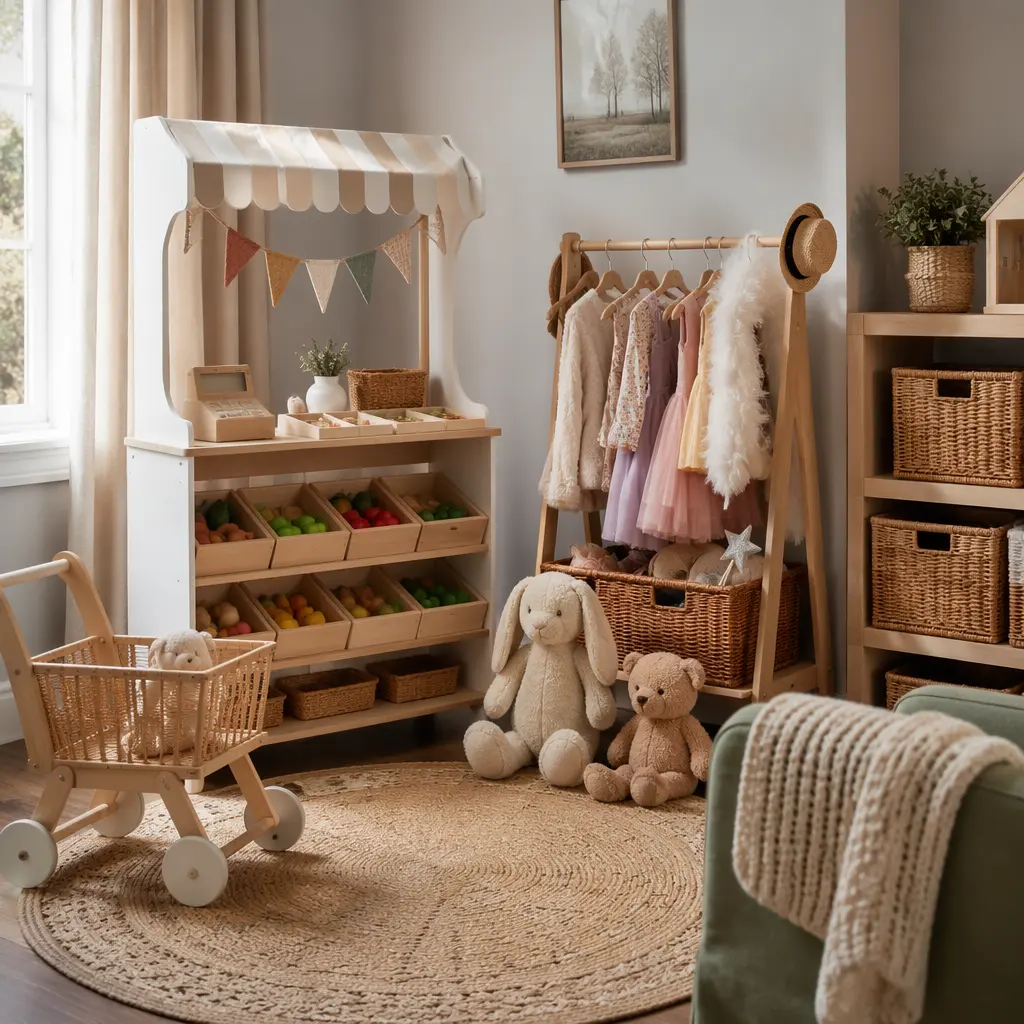
- Market stalls and cash-register play support social interaction and simple number practice, but they often involve many small accessories that need organizing.
- Dress-up clothing works well across wider age gaps because children can invent different characters together. Capes, hats and scarves tend to stay useful longer than highly character-specific costumes.
- Puppet theaters encourage collaborative storytelling without requiring large floor toys. They also suit quieter indoor play, though some children lose interest if there are too few puppets or story prompts.
- Construction-themed role-play sets with toy tools or workbenches appeal to children who prefer action-based play. Some include realistic noises that may not suit shared living spaces.
- Dollhouses and figure play can support long storytelling sessions, especially for siblings close in age, but compact layouts may lead to arguments if too many children want access at once.
Frequently asked questions
Are battery-powered pretend play toys a good choice for siblings?
Some electronic features can add excitement, especially for younger preschoolers, but heavily scripted sounds and lights may limit creativity over time. Simpler toys often encourage longer conversations and more flexible storytelling between siblings.
What pretend play toys work best in small homes?
Compact doctor kits, puppet sets, foldable play tents and dress-up baskets are usually easier to store than large kitchens or market stands. Multi-purpose toys that fit into existing shelving can help reduce clutter.
How can parents reduce sibling arguments during pretend play?
Toys with several roles and duplicate accessories tend to reduce competition. Open-ended sets also help because children can create parallel activities instead of fighting over one specific feature or character.
Do pretend play toys need to match a child's interests exactly?
Not always. Broad everyday themes such as cooking, caring for animals or shopping often attract children with different personalities because they leave room for many types of stories and play styles.
How long do pretend play toys usually stay relevant?
Open-ended role-play toys often remain useful for several years because the stories become more detailed as children grow. Accessories may rotate in and out of use, but flexible themes generally outlast novelty-based toys tied to one gimmick or character.
The best pretend play toys for siblings usually create opportunities for cooperation instead of competition. Families with limited space may prefer compact kits and dress-up accessories, while larger shared playrooms can support kitchens or market setups with more moving parts. Focusing on flexible, screen-free role-play themes can help children of different ages build stories together while keeping play adaptable as interests change.