Quiet Pretend Play Toys for Early Morning Kids
A parent-focused guide to quiet pretend play toys for children aged 3–5, covering low-noise role-play options, storage, durability, supervision and which toy styles work best for calm early mornings.
Compare prices and availability
Check current prices and availability for this guide on eBay.
As an eBay Partner, we may be compensated if you make a purchase.
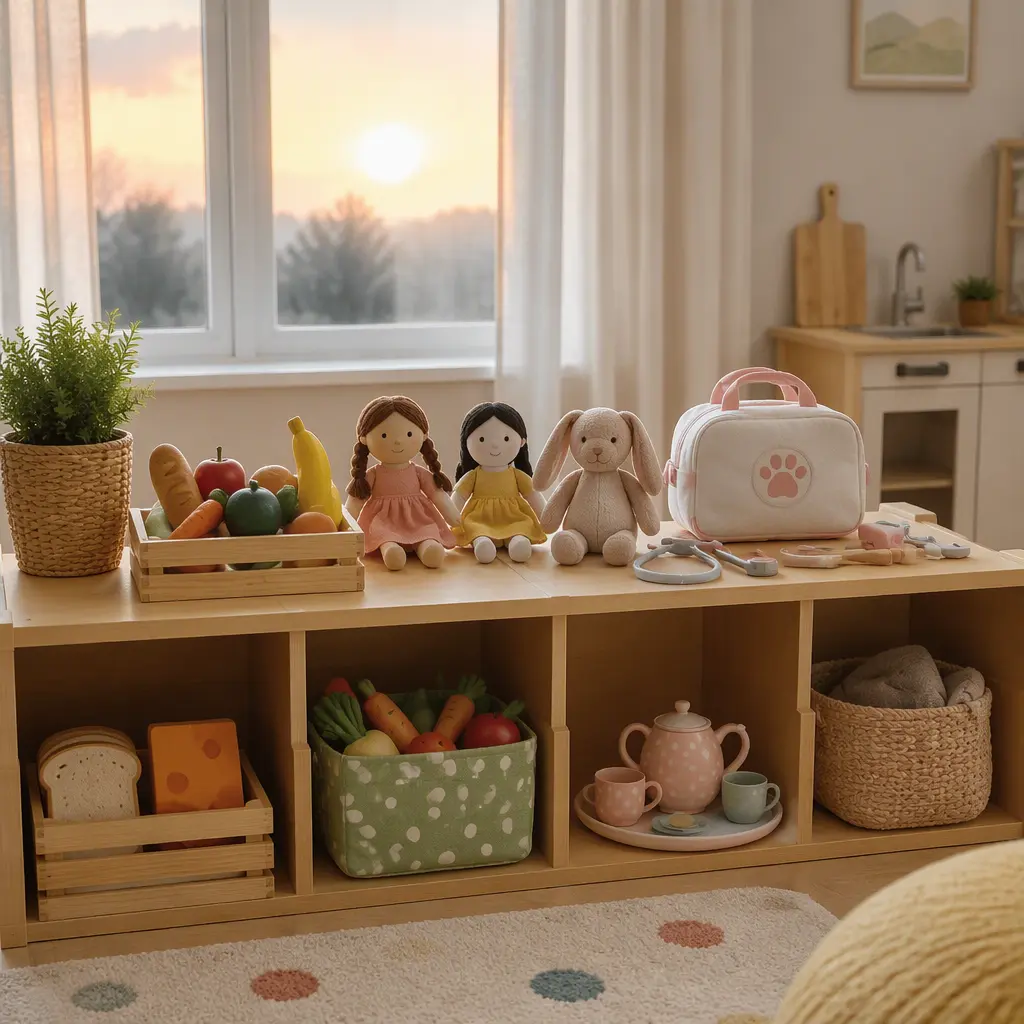
Quiet pretend play toys can make early mornings easier for households where younger children wake before everyone else. For children aged 3–5, role-play toys often hold attention longer than simple puzzles or stacking toys because they encourage storytelling, routines and imaginative repetition. The challenge is choosing toys that stay engaging without electronic sounds, hard plastic crashes or large accessory piles scattered across the floor. The most useful quiet options tend to combine soft materials, open-ended play and simple setups children can manage independently.
What to look for
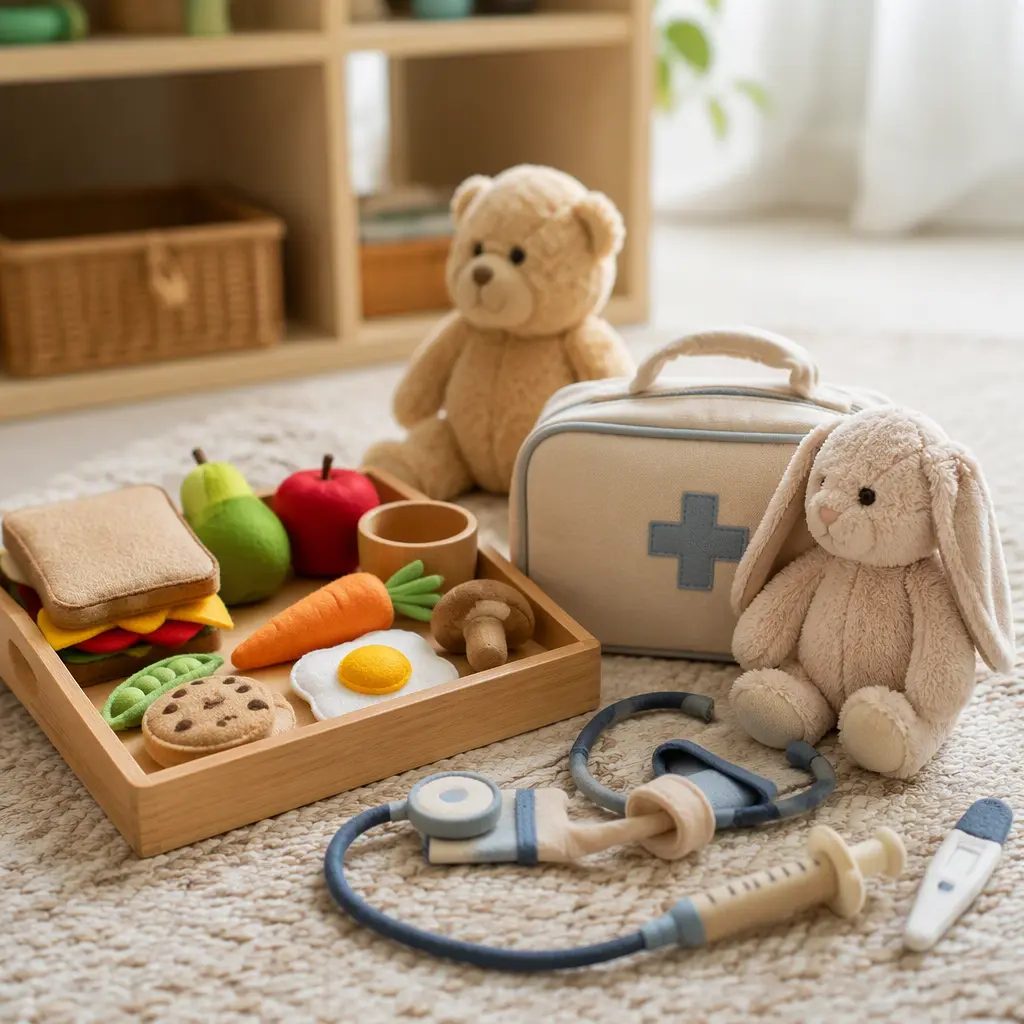
The quietest pretend play toys are usually simple, durable and easy to reset without adult help. Preschoolers often return to familiar role-play themes repeatedly, so toys do not need flashing features or complicated moving parts to stay interesting. In fact, battery-powered sounds and rigid plastic accessories are often what make pretend play noisier. Materials matter too: fabric, felt, silicone and smooth wood are generally quieter than hollow plastic pieces that clatter on hard floors.
- Choose soft or fabric-based accessories where possible to reduce clattering and dropped-piece noise.
- Look for open-ended themes such as kitchens, caring for dolls, vet play or picnic sets that encourage calm repetition.
- Prefer smaller contained sets over large multi-bin collections that create cleanup and storage problems.
- Check whether children can access and pack away the toy independently for quieter self-directed play.
- Avoid toys with sirens, voice prompts or electronic cash-register sounds if low noise is the priority.
- Consider floor surfaces in the play area, since wooden toys on rugs are much quieter than plastic toys on tile or hardwood.
Age suitability
Most quiet pretend play toys work well across the 3–5 age range, but the style of play changes quickly during these years. Younger preschoolers often prefer simple routines such as feeding dolls, serving pretend meals or putting toy animals to bed. At this age, fewer accessories usually means longer independent play. Older preschoolers may enjoy more detailed storytelling with doctor kits, pretend shops or camping setups that involve organising objects and acting out conversations. Parents should also think about fine motor skills and cleanup ability. Small fabric accessories can still become frustrating if a child struggles to fasten, stack or store them independently during early morning play.
Options compared
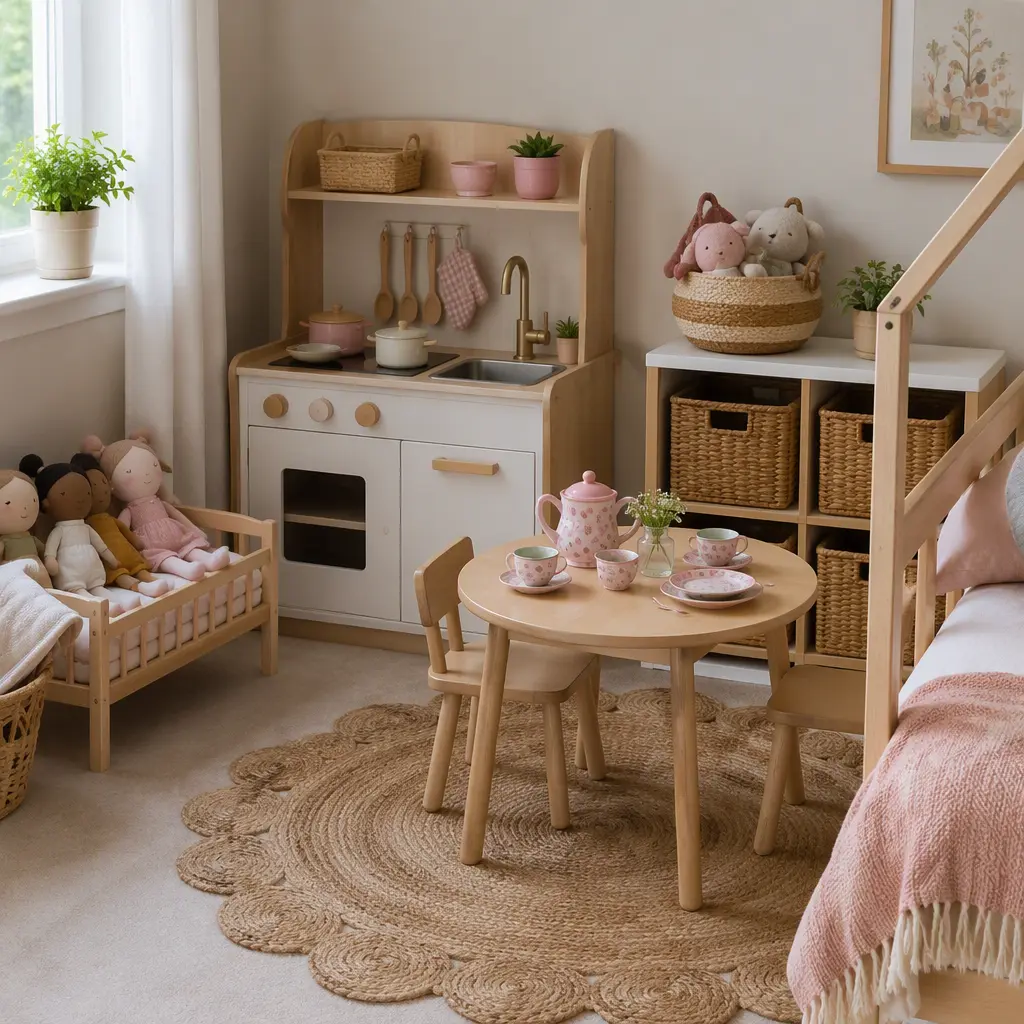
Soft household role-play toys are often the easiest starting point for quiet early morning play. Fabric tea sets, felt breakfast foods and plush cleaning tools encourage familiar routines without loud movement or assembly. These toys suit children who enjoy imitating everyday tasks and tend to work well in smaller homes because they store compactly. The trade-off is that some children lose interest if there are too few interactive pieces or storytelling prompts.
Doll care and stuffed-animal play can also stay surprisingly quiet for long stretches. Simple accessories such as blankets, soft carriers and fabric medical kits support calm imaginative play without requiring large setups. These toys generally suit children who like nurturing or repetitive routines. However, very accessory-heavy doll sets may create clutter and become harder to tidy independently.
- Wooden play kitchens: durable and engaging for shared play, but can become noisy if they include many hard accessories or metal pans.
- Fabric food and picnic sets: lightweight, compact and quiet, especially useful for apartment living or shared bedrooms.
- Doctor and vet kits: good for storytelling and independent role-play, though plastic tools vary widely in noise and durability.
- Puppet sets and soft dolls: low mess and portable, suitable for calmer children who enjoy conversation-based pretend play.
- Toy shops and market stalls: encourage sorting and counting but often require more storage space and floor setup.
- Cardboard playhouses or tents: can create quiet private play zones, though larger items may not suit smaller homes.
Frequently asked questions
Are wooden toys always quieter than plastic toys?
Not necessarily. Wooden toys often feel calmer and more durable, but hard wooden accessories can still create noise when dropped or stacked on hard floors. Fabric and silicone pieces are usually quieter overall. Rugs, foam mats and storage baskets also reduce noise significantly regardless of material.
Which pretend play themes keep preschoolers busy longest?
Pretend kitchens, doll care, vet play and picnic sets tend to support longer independent play because children already understand the routines involved. Open-ended themes usually last longer than novelty toys with a single action or gimmick.
What works best for apartment living?
Compact fabric sets, soft dolls and felt food toys are often the easiest to manage in smaller spaces. They store easily, create less floor noise and are less likely to disturb neighbours during early morning play.
Should quiet toys still include accessories?
A moderate number of accessories usually works best. Too few pieces can limit imaginative play, while very large sets often increase mess, noise and cleanup frustration. Preschoolers generally benefit from enough variety to create stories without overwhelming storage bins.
Do children lose interest without electronic features?
Many children remain engaged longer with open-ended pretend play because they control the story themselves. Electronic features can be exciting initially, but they sometimes shorten imaginative play by limiting how children interact with the toy.
The best quiet pretend play toys for early mornings are usually simple, screen-free and easy for children to manage independently. Soft materials, familiar role-play themes and manageable storage all make a noticeable difference in keeping play calm and sustainable. Choosing a toy that matches both a child’s interests and the household environment matters more than finding the largest or most detailed set.