Toy Bowls vs Busy Boards for Restaurant Toddlers
Compare toy bowls and busy boards for keeping 1–2 year olds occupied at restaurants. Learn which option is quieter, easier to clean, harder to drop and better for short outings.
Compare prices and availability
Check current prices and availability for this guide on eBay.
As an eBay Partner, we may be compensated if you make a purchase.
Restaurant toys for toddlers need different qualities than toys used at home. Parents are usually looking for something quiet, compact, easy to wipe clean and unlikely to end up scattered across the floor. For children around 1–2 years old, toy bowls and busy boards are two common screen-free options because both encourage hands-on play while staying mostly contained at the table. The better choice depends on how long you expect to stay seated, how active your toddler is and how much cleanup you are willing to manage before leaving the restaurant.
What to look for
The most useful restaurant toys share a few practical traits. They should stay interesting without making noise, fit into a small bag and avoid tiny loose parts that disappear under tables. Since toddlers in this age range often explore by dropping, shaking and mouthing objects, durability and easy cleaning matter as much as entertainment value.
- Choose soft or lightweight materials that will not create loud banging noises on restaurant tables.
- Look for toys with attached pieces or contained storage to reduce dropped items.
- Avoid sets with many tiny accessories that are difficult to recover from floors.
- Prioritize wipe-clean surfaces because restaurant tables can be sticky or crowded.
- Compact foldable toys are easier to carry during errands or travel.
- Simple cause-and-effect activities usually hold attention longer than complicated pretend play at this age.
- Check age guidance carefully, especially for buttons, cords, beads or detachable parts.
Age suitability
Children between 1 and 2 years old are usually still developing attention span, fine motor control and impulse control. That means the best restaurant toy often focuses on repetition rather than variety. Toy bowls typically work well for younger toddlers around 12–18 months because they support filling, dumping, sorting and touching different textures. Busy boards often become more engaging closer to age 2, when toddlers can manipulate zippers, buckles, sliders and simple latches with more intention. Some younger toddlers enjoy busy boards, but frustration can happen if the activities are too difficult. For older toddlers who want constant movement, neither option may hold attention for an entire meal without breaks, snacks or interaction from adults.
Options compared
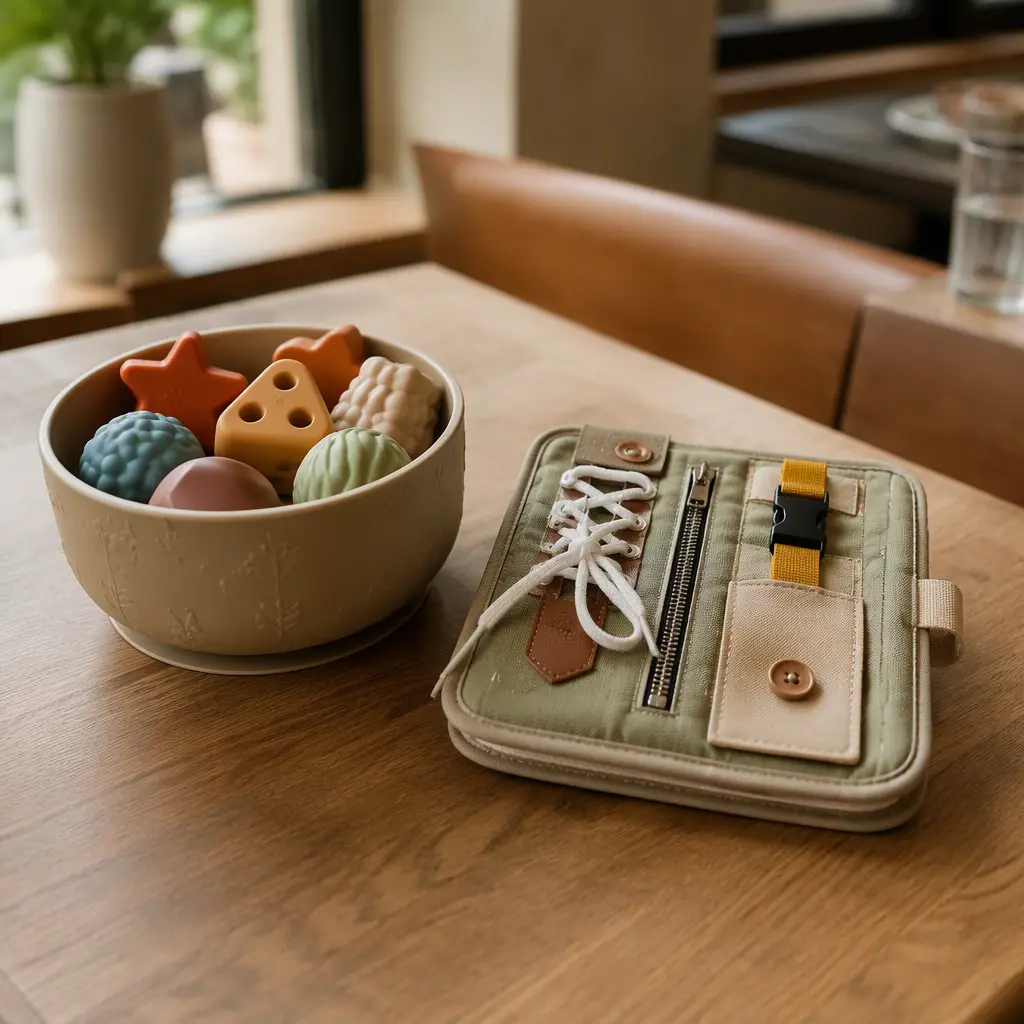
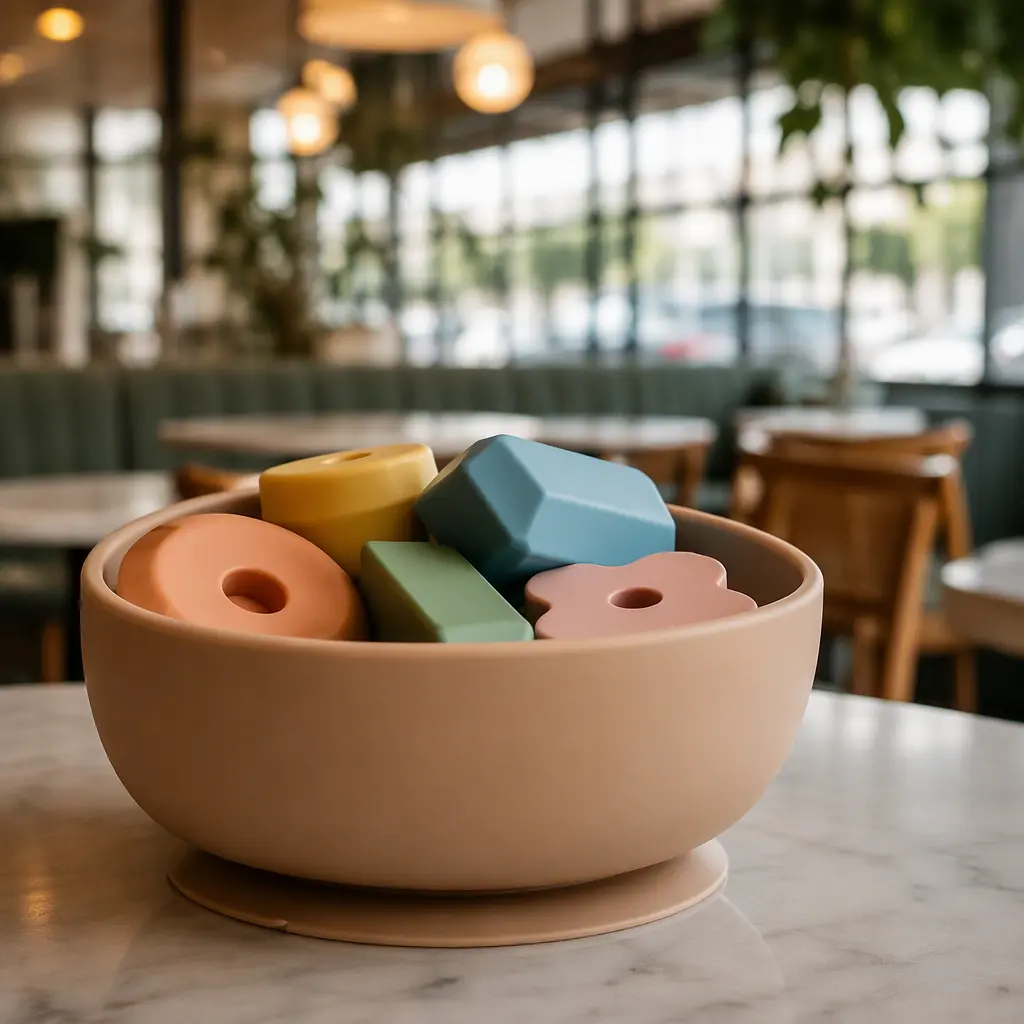
Toy bowls are usually the simpler option. A bowl may contain large pom-poms, silicone shapes, chunky rings or other toddler-safe items designed for scooping and transferring. The main advantage is flexibility. Toddlers can dump everything out, put items back in and repeat the process many times. This repetitive play suits children who like sensory exploration and movement. Toy bowls also tend to work well while waiting for food because the activities are easy to start and stop.
The downside is cleanup. Even with large pieces, toddlers often throw or drop objects when bored. A bowl with six or eight separate items can quickly spread across the floor under nearby tables. Some restaurants are noisy enough that this is manageable, but in smaller or quieter spaces, constant retrieval can become stressful. Parents who want the least possible mess may find toy bowls more effort than expected.
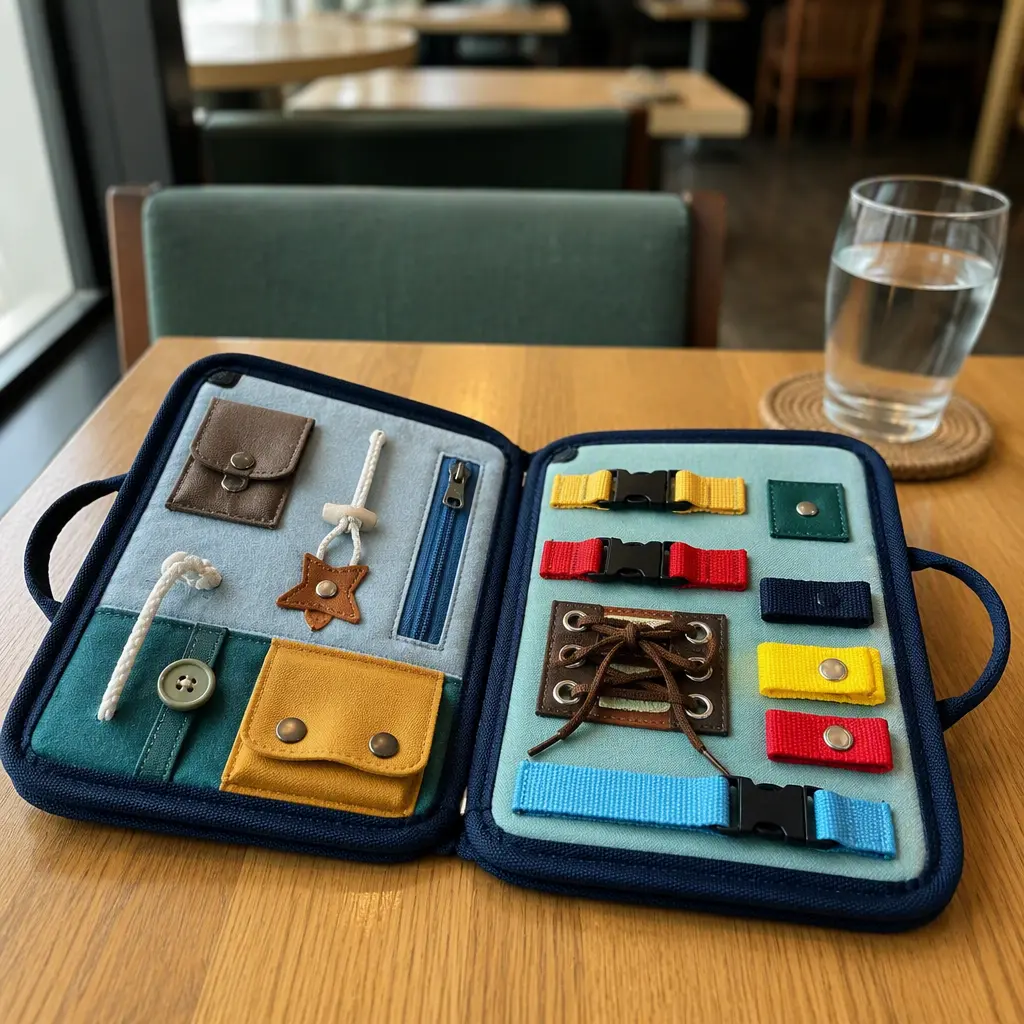
Busy boards are generally better for containment. Most pieces stay attached to the board, making them useful in tighter restaurant booths or places where floor space is limited. Fabric busy boards are also quieter than wooden versions because zippers, snaps and felt parts create less noise against tables and plates. These toys suit toddlers who enjoy fine motor challenges and repetitive hand movements such as opening pockets, flipping tabs or threading straps.
- Toy bowls: better for sensory play, easier for younger toddlers, but more likely to create dropped-piece cleanup.
- Busy boards: better for containment and travel, usually quieter, but some toddlers lose interest if activities are too challenging.
- Soft fabric versions are generally more restaurant-friendly than hard plastic or wooden table toys.
- Minimal-piece designs are often easier to manage than activity kits with many accessories.
- For short meals or quick cafe stops, simple toys often work better than elaborate activity sets.
Frequently asked questions
Are busy boards too advanced for a 1-year-old?
Some are. Boards with simple textures, flaps or large zippers can work well for younger toddlers, but complicated buckles or laces may lead to frustration. Simpler designs are usually the better fit for restaurant use because toddlers can engage independently for longer.
Which option is quieter in restaurants?
Soft busy boards are usually quieter because pieces stay attached and fabric absorbs sound. Toy bowls with silicone or fabric items can also stay relatively quiet, while hard wooden or plastic pieces tend to create more noise when dropped or banged on tables.
What if my toddler throws everything?
A busy board is often easier to manage for toddlers who are in a throwing phase because attached activities reduce cleanup. If using a toy bowl, fewer and larger items are usually easier to recover than many small accessories.
How many toys should parents bring into a restaurant?
For most toddlers, one compact activity is enough. Rotating a single toy during the meal often works better than bringing several distractions at once. Too many options can lead to clutter on small restaurant tables.
Are suction toys a better alternative?
They can work well on smooth tables, especially for toddlers who enjoy pulling and sticking motions. However, suction toys depend heavily on the table surface and may not attach reliably in every restaurant. They can also become frustrating if they repeatedly fall off.
For many families, the most practical restaurant toy is the one that minimizes stress rather than maximizing entertainment. Toy bowls suit toddlers who enjoy sensory repetition and do not immediately throw pieces, while busy boards are often easier for travel, quieter in public spaces and simpler to contain during longer meals. Choosing soft materials, limited pieces and age-appropriate activities usually matters more than finding the most elaborate toy.