Toy Cameras Without Screens for Kids Ages 6–8
A parent-focused guide to screen-free toy cameras for ages 6–8, comparing viewfinder cameras, kaleidoscope viewers and instant-print styles by durability, mess, supervision and play value.
Compare prices and availability
Check current prices and availability for this guide on eBay.
As an eBay Partner, we may be compensated if you make a purchase.
Toy cameras without screens appeal to children who enjoy role play, collecting little observations and copying the routines they see adults use every day. For ages 6–8, the most successful options are usually simple enough to work independently but open-ended enough to stay interesting after the novelty wears off. Some children mainly want to pretend to take photos, while others enjoy visual effects, printed keepsakes or scavenger-hunt style games. Choosing the right type depends less on appearance and more on how the toy fits your home, storage space and tolerance for noise, paper clutter or small accessories.
What to look for
The best screen-free toy cameras for this age group encourage imaginative play without becoming frustrating to use. Children between 6 and 8 often care about realistic details such as clicking shutters, carrying straps and pretend film compartments, but they also benefit from durable construction and easy cleanup. Since these toys are often carried around the house, outdoors or on trips, size and sturdiness matter as much as novelty features.
- Choose simple mechanical controls over complicated buttons or menus that interrupt pretend play.
- Check whether accessories such as paper rolls, cards or discs need regular replacement or tidying.
- Look for rounded edges and sturdy straps if the toy will travel in backpacks or cars.
- Consider noise levels. Some toy cameras make loud shutter sounds or play music that may become repetitive indoors.
- Viewfinder-style toys suit independent imaginative play, while instant-print styles often work better for shared activities.
- Kaleidoscope viewers and optical toys usually store more easily than bulkier pretend instant cameras.
- Avoid overly small detachable pieces if younger siblings are nearby.
Age suitability
Ages 6–8 is a good range for toy cameras because children are usually old enough to invent stories around travel, journalism, nature walks or detective games. Many also enjoy collecting souvenirs, drawing pretend photographs or setting up scenes for friends and toys. Simpler viewfinder cameras often work well at the younger end of the range because they are lightweight and intuitive. Instant-print style toys can appeal more to older children within this band who enjoy crafts, scrapbooks or sharing pretend photos with friends. Kaleidoscope viewers tend to suit children who like visual experimentation and sensory play rather than realistic role play. Some children lose interest quickly if the toy only performs one repetitive trick, so toys with multiple ways to play often last longer.
Options compared
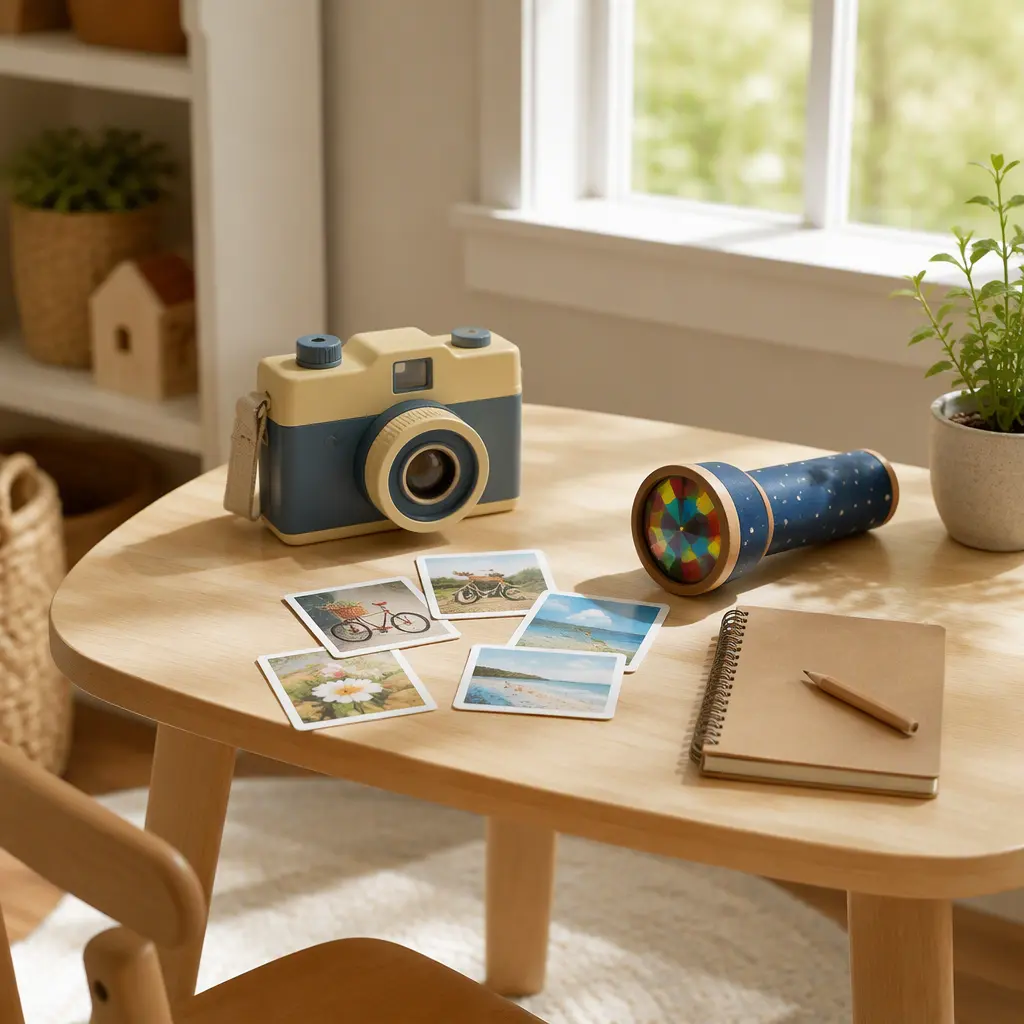
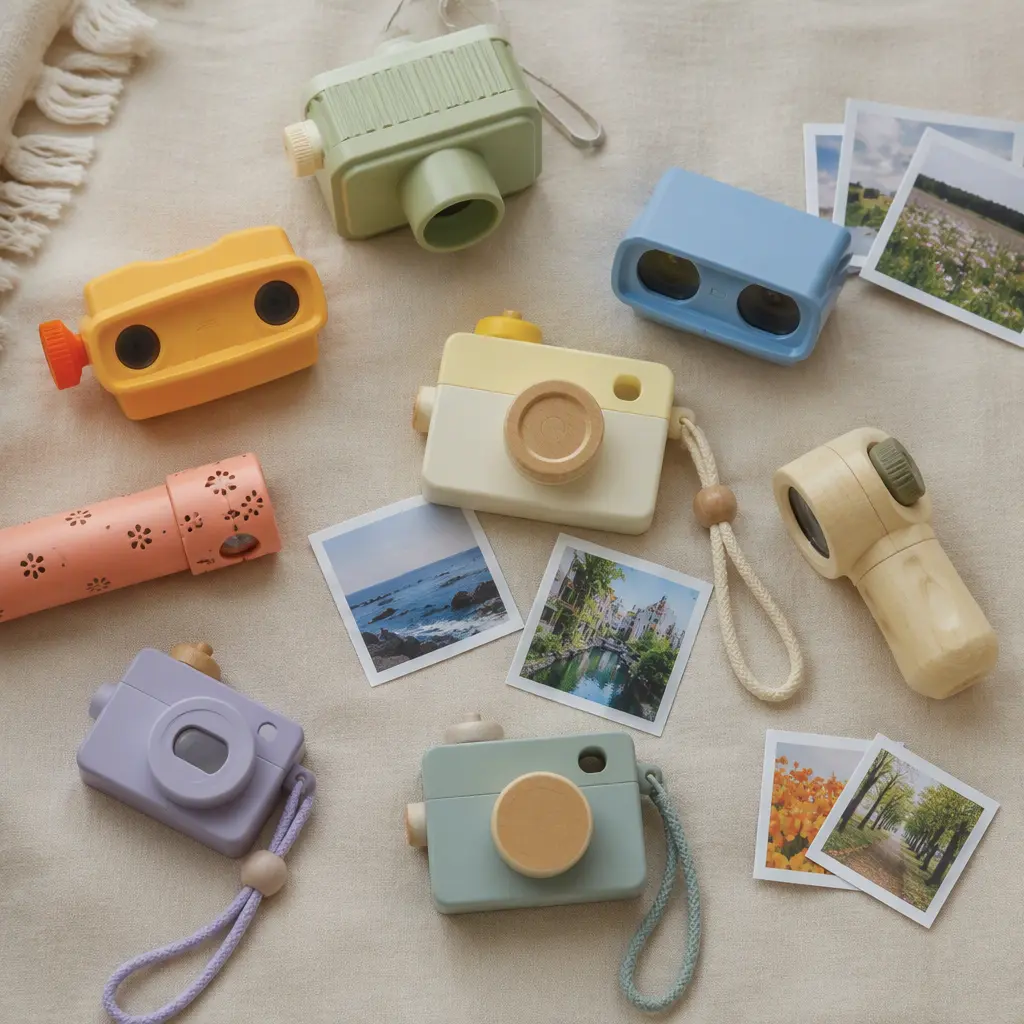
Viewfinder-style toy cameras are usually the easiest option for everyday pretend play. Many include rotating image discs, simple lenses or click-and-flash style features without requiring batteries or refills. They tend to be lightweight, relatively durable and easy to pack for travel. This type suits children who naturally invent stories and enjoy independent play. They are less ideal for children who want a lasting result or craft element because there is nothing to keep after the activity ends.
Kaleidoscope viewers focus more on visual effects than realistic photography. Children look through lenses that reflect shapes, colors or outdoor objects into repeating patterns. These toys are often compact, quiet and inexpensive, making them useful for calmer play environments or travel bags. However, they may not satisfy children specifically looking to imitate real photography or document adventures.
- Viewfinder toy cameras: best for imaginative role play, travel games and independent play; usually lower mess and easy storage.
- Kaleidoscope viewers: best for sensory curiosity, quiet time and nature observation; less focused on realistic camera play.
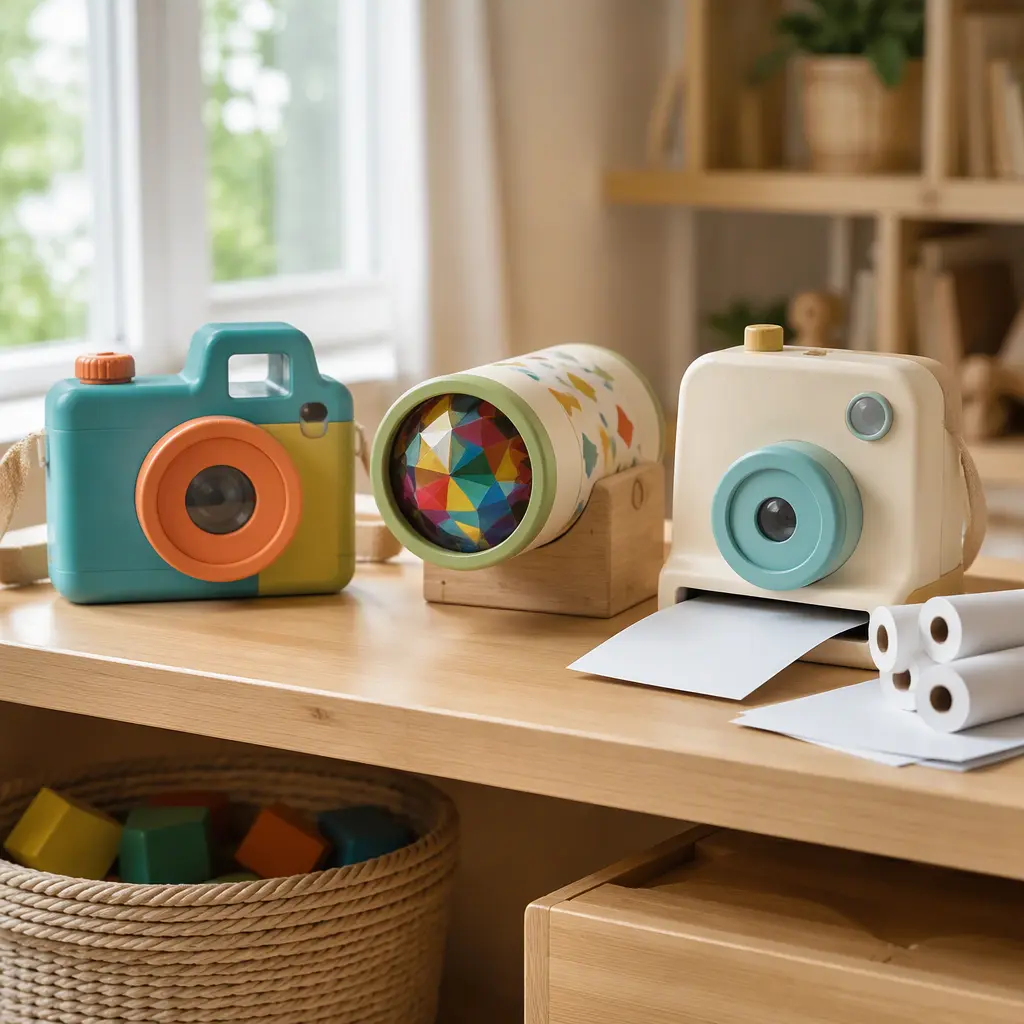
- Instant-print style toy cameras: best for children who enjoy crafts, pretend scrapbooking and sharing creations; often involve paper storage and more cleanup.
- Wooden toy cameras: best for minimalist pretend play and durability; fewer interactive features but often sturdy and decorative.
- Mechanical clicker cameras with moving parts: best for children who enjoy tactile fidget-style play; check noise levels before buying.
Frequently asked questions
Do toy instant-print cameras create a lot of mess?
They can. Even when designed for children, instant-print style toys usually involve paper strips, pretend photos or printable rolls that collect around play areas. Families with limited storage or children who dislike tidying may prefer simpler viewfinder toys instead.
Are screen-free toy cameras still interesting for older children?
Some are, especially for children who enjoy role play, journaling, scavenger hunts or travel-themed games. At ages 7–8, toys with creative extensions such as printable elements, mystery games or pretend detective activities tend to hold attention longer than basic novelty clickers.
Do these toys usually need batteries?
Many screen-free toy cameras work mechanically with lenses, mirrors, clicking shutters or rotating picture discs. Others include lights or sound effects that may require batteries. If quiet play is important at home, battery-free options are often easier to live with long term.
What works best for car trips or holidays?
Compact viewfinder cameras and kaleidoscope viewers are typically the easiest travel choices because they fit into small bags and do not require paper refills. Toys with many loose accessories can become difficult to manage during travel days.
Are wooden toy cameras practical for active play?
They can be durable and visually appealing, but many are intentionally simple. Children looking for moving parts, pretend printing or interactive features may find them less engaging over time. They tend to work best for open-ended pretend play rather than feature-driven play.
For most families with children aged 6–8, the most practical screen-free toy camera is the one that matches the child’s style of play rather than the one with the most features. A compact viewfinder camera often gives the best balance of portability, durability and independent play. Children who enjoy crafts may get more from instant-print styles, while sensory-focused children may prefer kaleidoscope viewers. Paying attention to cleanup, noise and storage before buying usually leads to toys that stay in regular rotation instead of disappearing into a drawer after a week.