Toy Cash Registers vs Play Kitchens for Small Spaces
Choosing between a toy cash register and a play kitchen for ages 3–5? This guide compares storage needs, solo play value, noise, cleanup, and long-term interest for smaller homes.
Compare prices and availability
Check current prices and availability for this guide on eBay.
As an eBay Partner, we may be compensated if you make a purchase.
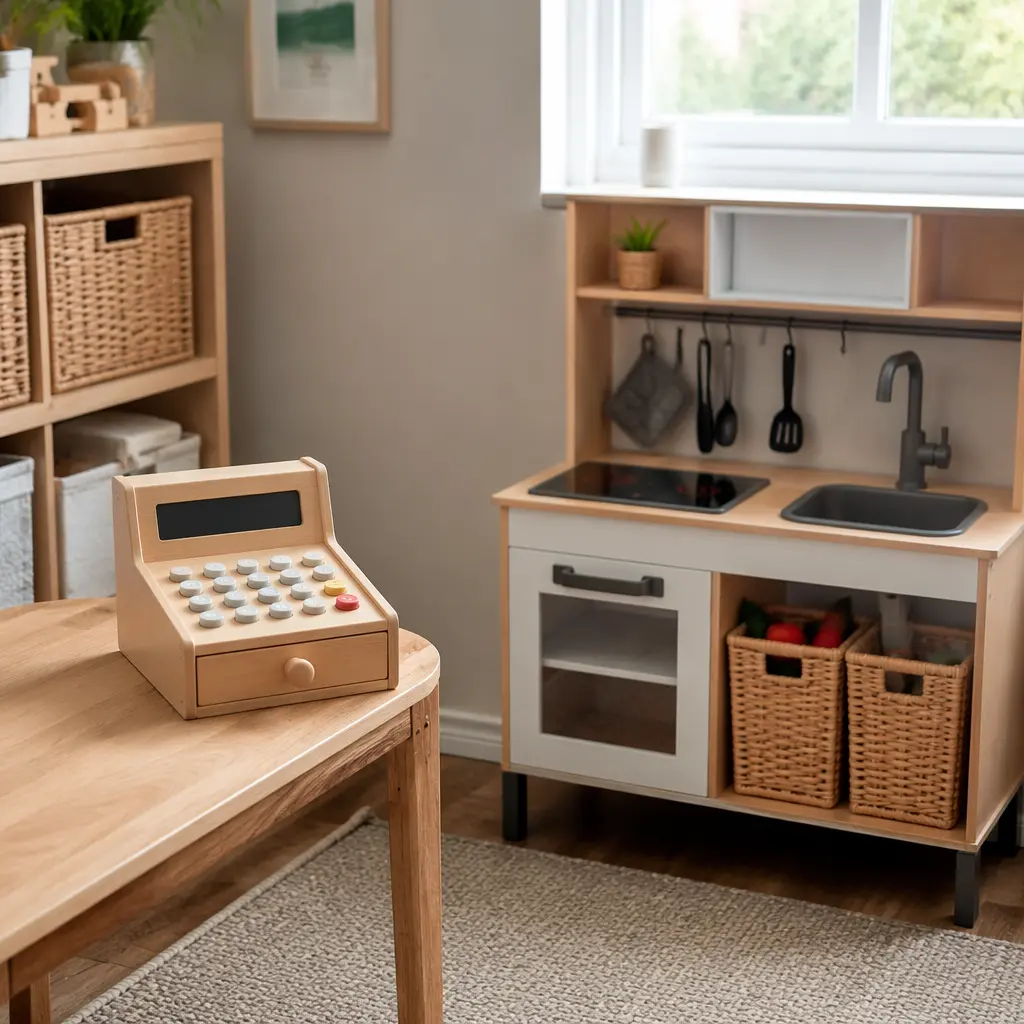
Toy cash registers and play kitchens both support imaginative play for preschoolers, but they fit very differently into a small home. For children aged 3–5, both options can encourage role play, language development, turn-taking and independent play. The better choice usually comes down to three practical questions: how much floor space you can spare, whether your child prefers solo or social play, and how long you expect the toy to stay interesting. A toy cash register tends to take up less room and works well for short, repeatable play sessions. A play kitchen usually creates broader pretend-play scenarios and may hold attention longer, but it requires more storage space and regular tidying. Parents dealing with shared bedrooms, apartment living or limited playroom storage may find that the smallest footprint matters as much as the play value itself.
What to look for
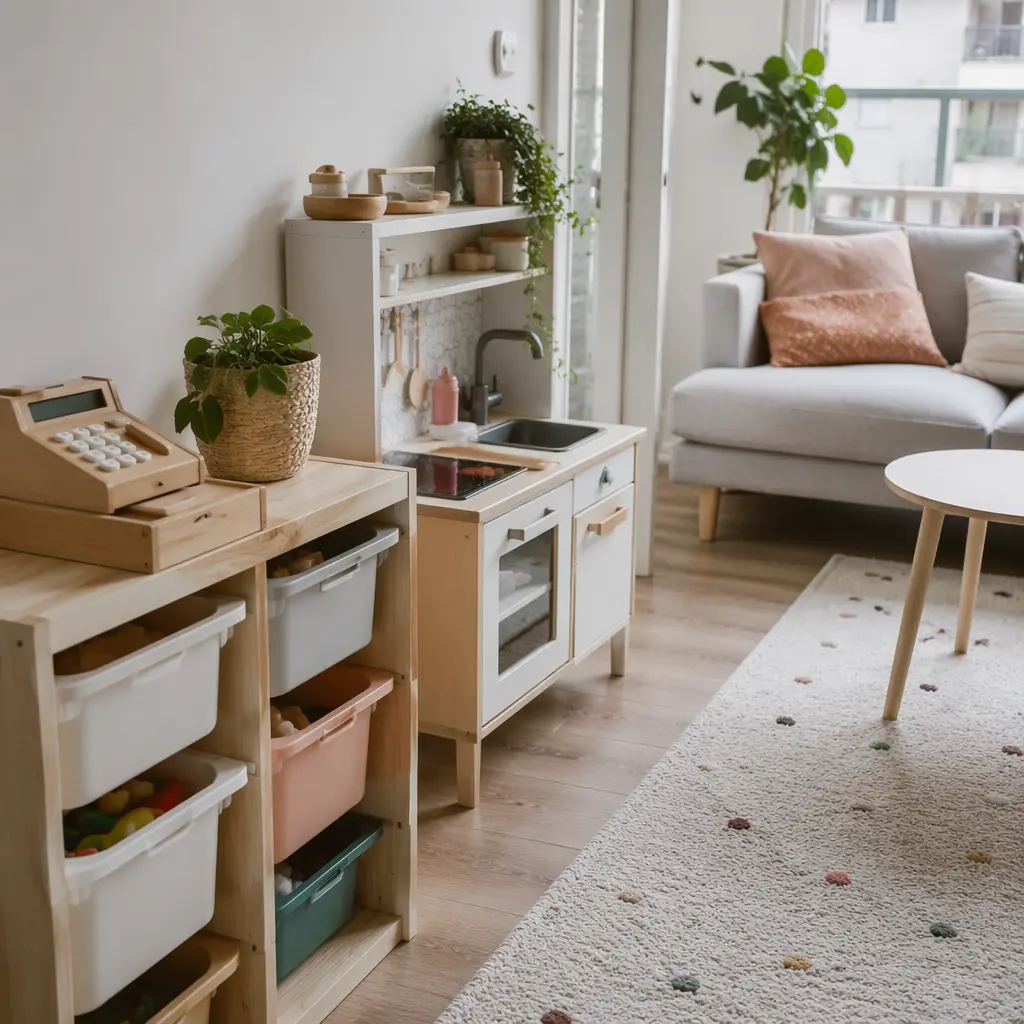
When comparing pretend-play toys for smaller homes, focus on how the toy fits daily routines rather than how many accessories come in the box. Preschool toys often spread beyond their original footprint once pretend food, play money or shopping baskets become part of the game. Consider whether the toy can stay assembled permanently or whether it needs to be packed away after use. Some children also prefer toys that allow them to play independently for longer periods, especially in homes without dedicated play areas.
- Measure floor space before buying, including room for doors, stools or extra accessories.
- Look for vertical or compact designs if storage is limited.
- Consider noise levels: electronic cash registers may include sounds and buttons that repeat frequently.
- Check how many loose pieces are included and whether they can be stored inside the toy itself.
- Think about solo play habits. Cash registers often support independent setup more easily than large kitchens.
- Choose sturdy materials if younger siblings may also use the toy later.
- Look for open-ended play features instead of heavily themed designs that may lose appeal quickly.
Age suitability
For ages 3–5, both toy types can work well, but they suit slightly different developmental stages and interests. Around age 3, many children enjoy copying familiar routines such as shopping, serving food or taking payments. Toy cash registers often appeal to children who like sorting, counting and repetitive role play. Some children enjoy lining up groceries, scanning items and organizing pretend money for long stretches. Play kitchens usually support broader storytelling and cooperative play because children can cook, serve meals and create pretend household routines. By ages 4–5, kitchens may continue to evolve into restaurant, café or family-role games, while simpler cash registers sometimes need additional accessories to stay engaging. Children with strong interest in numbers, categorizing or shop games may still prefer a register well beyond preschool age, especially when paired with pretend groceries or market stalls.
Options compared
A toy cash register is usually the easier option for tight spaces. Many fit on a bookshelf, small table or storage cube and can be packed away quickly. This makes them practical for families who use living rooms as shared spaces or need toys that disappear at the end of the day. Registers also tend to support shorter bursts of play that children can start independently without needing extensive setup. For quieter households, non-electronic versions may be preferable because they avoid repeated sounds, flashing lights and batteries. Wooden or simple mechanical designs often encourage more open-ended pretend play than highly electronic versions.
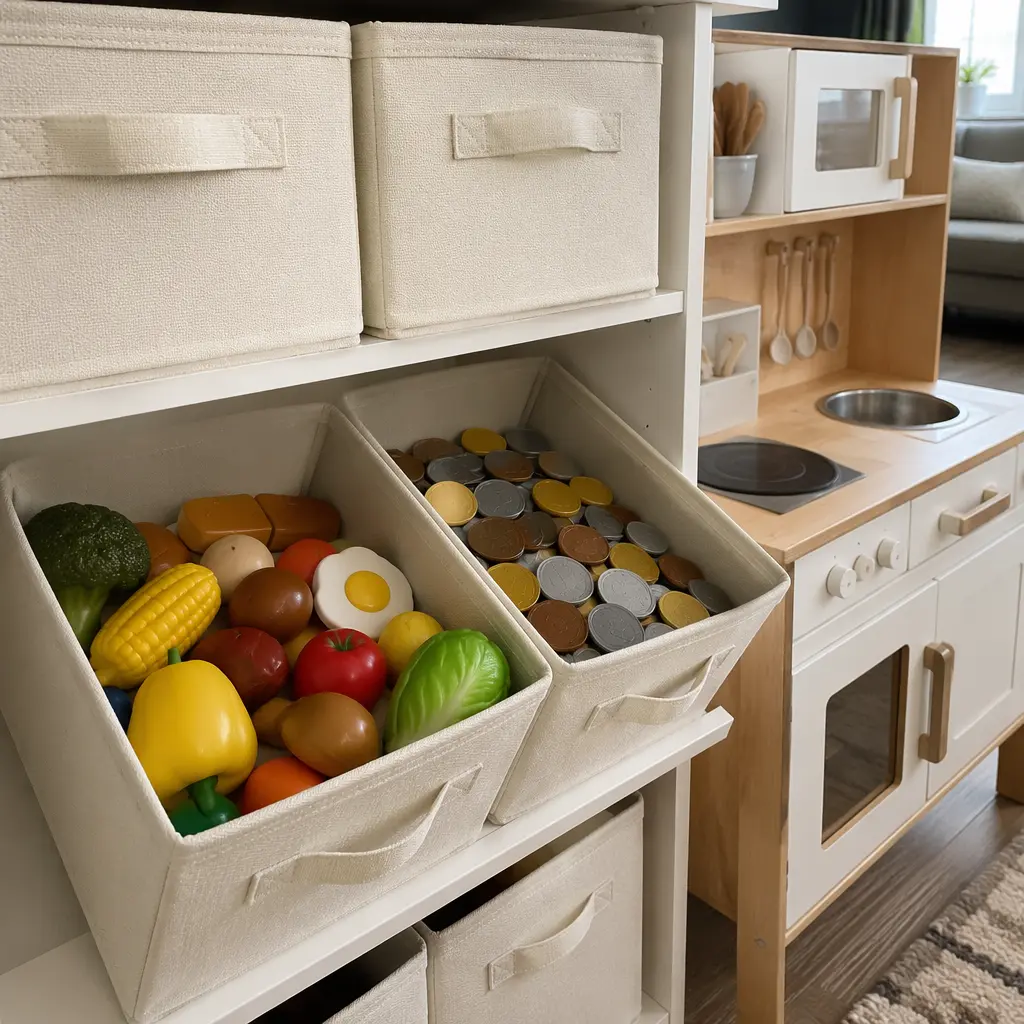
Play kitchens generally require more commitment in terms of floor space, cleanup and storage, but they often deliver broader long-term play possibilities. A kitchen can become the center of social pretend play, especially for siblings or visiting friends. Children may combine it with dolls, toy food, shopping baskets or craft-made menus, extending its usefulness over several years. The trade-off is that accessories can spread easily throughout the home. Compact kitchens with fewer built-in features are often easier to manage in apartments than oversized multi-section sets. Some families also prefer kitchens because they blend into shared living spaces more neatly when finished in neutral colors or wood tones.
- Choose a toy cash register if you need a small footprint, easy cleanup, portable play or independent activities for one child.
- Choose a play kitchen if your child enjoys storytelling, social pretend play and longer imaginative sessions.
- Avoid large kitchen setups if storage is already difficult or toys must be packed away daily.
- Avoid heavily electronic registers if repetitive sounds may become disruptive in small shared spaces.
- Consider modular pretend-play pieces that can expand gradually instead of buying a very large setup at once.
Frequently asked questions
Which toy keeps children interested longer?
Play kitchens often have longer overall lifespan because children can adapt them into many different pretend scenarios over time. Cash registers may stay engaging longer for children who specifically enjoy counting, sorting or shop role play, especially if paired with additional pretend groceries or baskets.
Are play kitchens too large for apartments?
Not necessarily. Compact kitchens designed for corners or narrow walls can work well in apartments. Before buying, check the assembled dimensions carefully and think about accessory storage as well as the main unit itself.
Do toy cash registers help with early math skills?
Many cash register games involve counting coins, recognizing numbers and sorting items, which can support early numeracy through play. Preschool children usually benefit most when the activity stays simple and imaginative rather than focused on correct calculations.
Which option works better for solo play?
Toy cash registers are often easier for independent play because children can quickly set up a pretend shop on their own. Play kitchens can also support solo play, but many children use them most actively when playing with siblings, parents or friends.
How can parents reduce pretend-play clutter?
Limiting accessories can make a major difference in small homes. Rotating play food, using labeled bins and choosing toys with built-in storage help keep cleanup manageable. Some families also store only a few pretend-play items at a time and rotate the rest later.
For small spaces, the most practical choice is often the toy that fits naturally into everyday family routines rather than the largest or most detailed set. A toy cash register usually suits families prioritizing portability, independent play and minimal storage demands. A play kitchen may be worth the extra footprint for children who enjoy immersive pretend play and collaborative games that can grow over several years. Measuring available space, considering cleanup habits and matching the toy to your child’s play style will usually lead to the better long-term purchase.