Toy Grocery Carts vs Baskets for Toddler Pretend Play
Comparing toy grocery carts and baskets for toddlers aged 1–2 years, including storage, tipping risk, noise, supervision, and which style suits independent pretend play best.
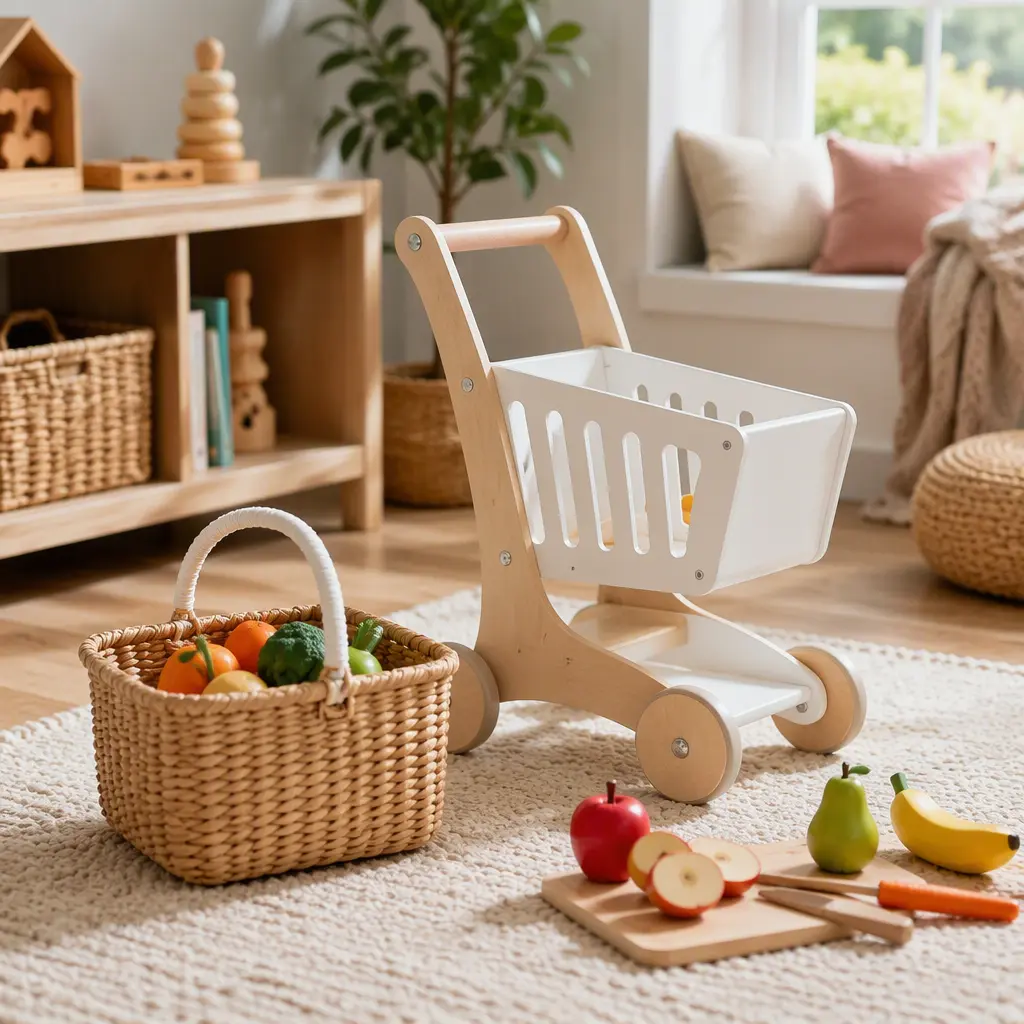
Compare prices and availability
Check current prices and availability for this guide on eBay.
As an eBay Partner, we may be compensated if you make a purchase.
Toy grocery carts and toy shopping baskets both support early pretend play, but they work quite differently for toddlers aged 1–2 years. At this age, children often enjoy copying everyday routines like carrying groceries, loading items, pushing objects around the house, and putting things away. The main choice for parents is whether a push-style cart or a carry basket better matches the child’s balance, play space, storage limits, and supervision needs. Carts tend to encourage movement and longer role-play sessions, while baskets are simpler, quieter, and easier to store. The right option depends less on trends and more on how the toy fits daily family life.
What to look for
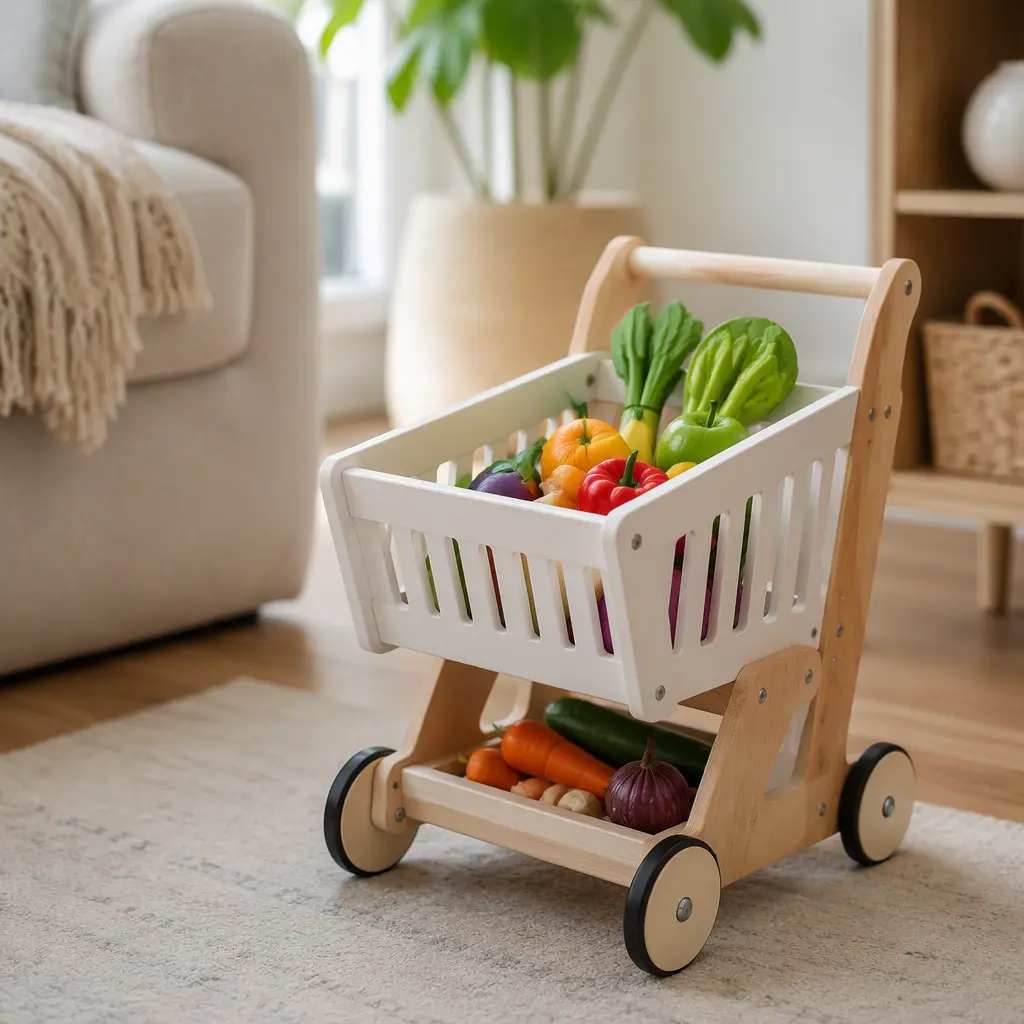
For toddlers between 1 and 2 years old, stability and ease of use matter more than realism. Many children this age are still developing balance and coordination, so a toy that looks attractive but tips easily can become frustrating. Materials, wheel design, handle height, and toy weight all affect how independently a toddler can use the toy. Parents may also want to consider noise levels on hard floors, available floor space, and whether the toy doubles as storage for pretend food or stuffed animals.
- Choose wide-based carts that are less likely to tip when toddlers lean on them.
- Look for lightweight baskets that toddlers can lift without frustration.
- Soft or rubberized wheels are usually quieter on wood or tile floors.
- Open basket designs make it easier for toddlers to load and unload independently.
- Consider storage size if the toy will stay in a shared living area.
- Fabric baskets are often quieter and easier to store than rigid plastic versions.
- Avoid overly tall handles that force toddlers to push with raised shoulders or poor balance.
Age suitability
Children closer to 12 months often do better with simple baskets because carrying and dropping objects is usually easier than steering a cart. Baskets also reduce the temptation to climb or lean heavily on the toy. Around 18–24 months, many toddlers begin to enjoy longer pretend routines, such as “shopping,” unloading items, and pushing toys from room to room. At that stage, a stable grocery cart can support more active play and movement. Some toddlers enjoy both styles together, using the basket to collect items before loading the cart. Families with small apartments may prefer baskets because they take up less floor space and can often nest inside toy storage bins when not in use.
Options compared
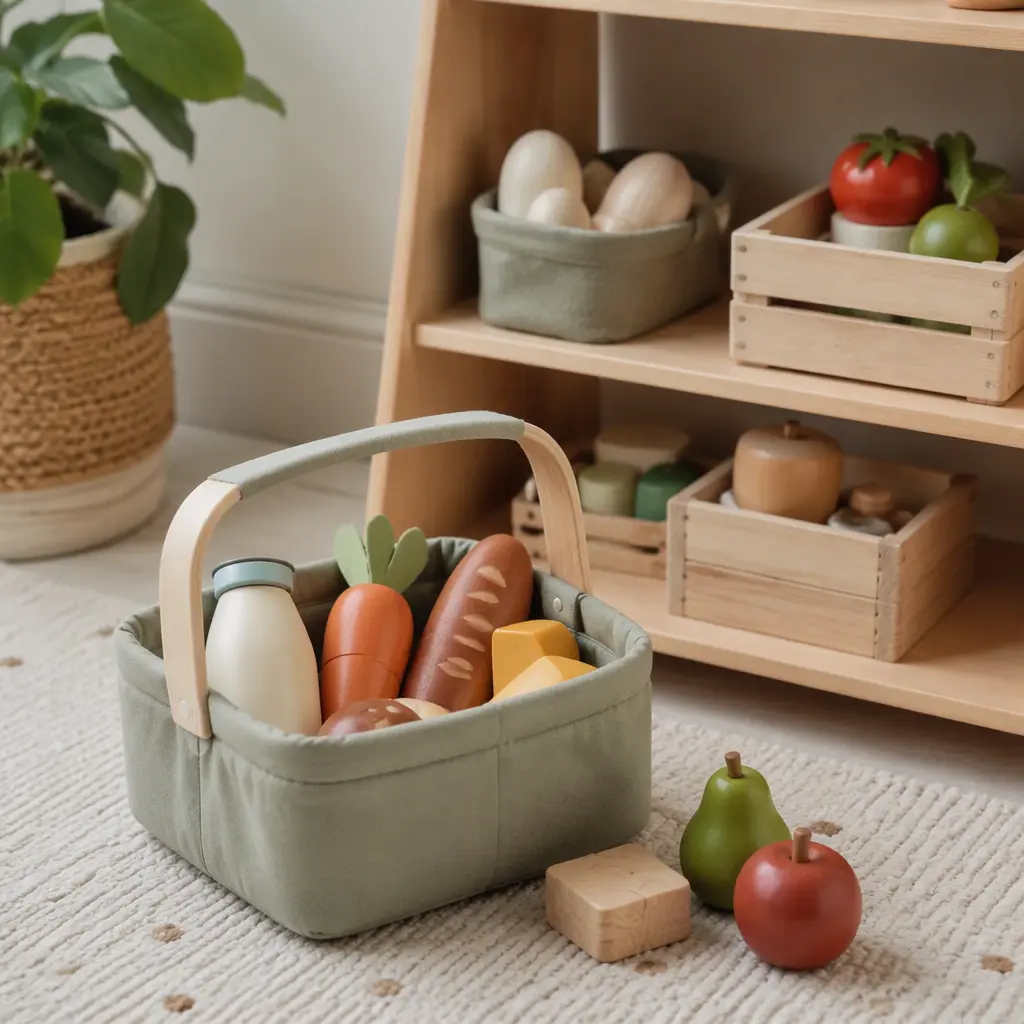
Toy grocery carts usually offer the strongest solo play value for active toddlers. Many children enjoy pushing them through multiple rooms, filling them repeatedly, and copying adults during shopping routines. A cart can also encourage gross motor movement because toddlers walk while steering and transporting objects. The trade-off is that carts require more space, can bump into furniture, and may become noisy on hard flooring. Lightweight plastic carts can also tip if a toddler leans heavily on the handle or climbs into the basket area.
Toy shopping baskets are simpler but often easier to manage in everyday family spaces. They work well for toddlers who enjoy sorting, collecting, and carrying objects without needing a large push toy. Baskets are usually quieter and easier to clean up after play sessions. They also suit calmer independent play because toddlers can carry items between rooms without navigating bulky wheels. The downside is that baskets may not hold a child’s attention as long as a moving cart, particularly for toddlers who enjoy active physical play.
- Toy grocery carts suit toddlers who enjoy movement, pushing toys, and longer pretend routines.
- Shopping baskets suit toddlers who prefer collecting, sorting, and quieter independent play.
- Carts generally need more storage space and floor clearance.
- Baskets are easier for travel, small homes, and quick cleanup.
- Heavy wooden carts can feel sturdier but may be harder for younger toddlers to steer.
- Soft fabric baskets are lightweight and quieter but may collapse when overfilled.
- Plastic carts are often easier to wipe clean after outdoor or messy play.
Frequently asked questions
Are toy grocery carts safe for early walkers?
They can be, but stability matters. Some toddlers try to use carts for support while walking, which increases tipping risk if the toy is lightweight or narrow. A low, wide cart with steady wheels is generally easier to manage than a tall design with a small base.
Do shopping baskets still encourage pretend play?
Yes. Pretend play at this age is usually simple and repetitive. Carrying pretend groceries, moving household objects, or unloading toys into containers all support imitation and independent play skills. A basket can encourage these routines without taking up much space.
Which option is quieter for apartments?
Shopping baskets are usually quieter because they do not roll across hard floors. If choosing a cart for apartment living, softer wheels and lighter loads can reduce noise. Fabric baskets also tend to create less impact noise than rigid plastic bins.
Is wood or plastic better for toddler pretend play toys?
Both materials can work well. Wooden toys are often heavier and may feel more stable, while plastic toys are usually lighter and easier to wipe clean. The better choice depends on whether parents prioritize durability, portability, storage weight, or noise levels.
Do toddlers need pretend food sets with these toys?
Not necessarily. Many toddlers happily use blocks, stuffed toys, cups, or household-safe objects during pretend shopping games. A small number of larger pretend food pieces is often easier for younger toddlers to handle than large detailed sets with many tiny items.
For many families, the decision comes down to space and play style. Grocery carts usually create more active, movement-based pretend play, while baskets offer a simpler and quieter option for everyday use. Toddlers aged 1–2 years often benefit most from toys that are easy to use independently, simple to tidy away, and sturdy enough for repeated daily play.