Toy Kitchens vs Tool Benches for Small Playrooms
Choosing between a toy kitchen and a tool bench for ages 3–5? Compare noise, storage, pretend-play depth, replay value and space needs for smaller shared playrooms.
Compare prices and availability
Check current prices and availability for this guide on eBay.
As an eBay Partner, we may be compensated if you make a purchase.
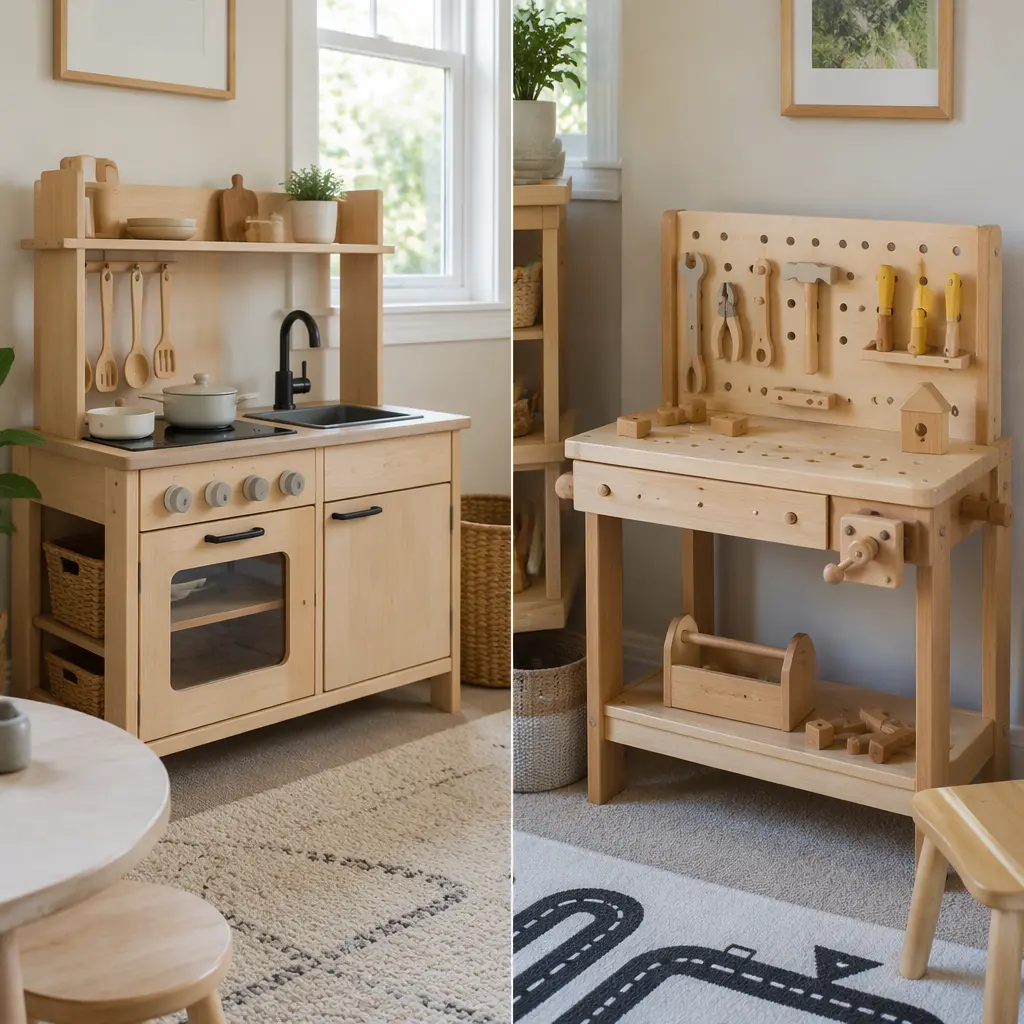
Toy kitchens and tool benches both support imaginative play for preschoolers, but they work differently in a small shared playroom. A toy kitchen usually encourages quieter role-play, cooperative games and longer pretend routines, while a tool bench often focuses on building, motion and cause-and-effect play. For families balancing storage limits, sibling sharing and noise levels, the better option depends less on trend appeal and more on how children actually play day to day. Ages 3–5 are especially important because children at this stage often repeat familiar routines, imitate adults and move rapidly between focused solo play and active social play.
What to look for
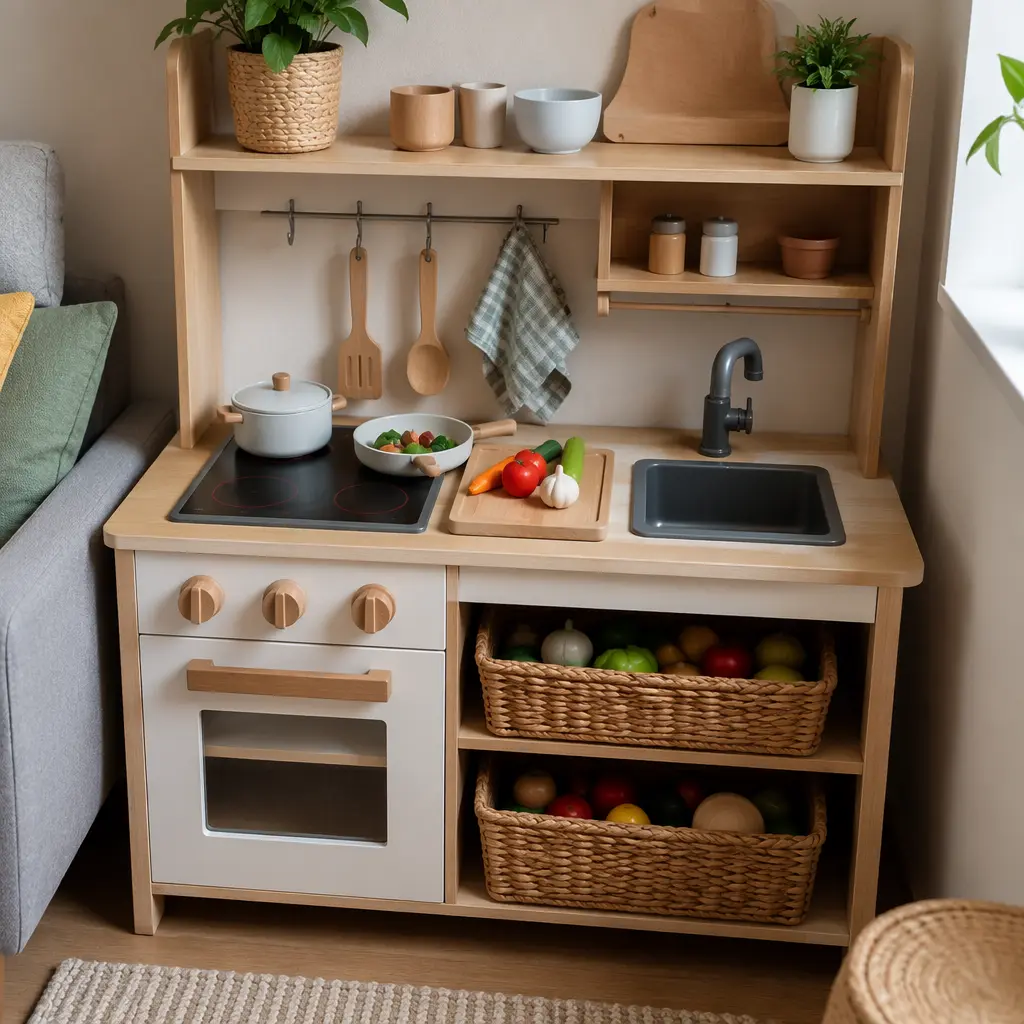
The biggest difference between these toy categories is how they use space and accessories over time. Toy kitchens often become part of broader pretend worlds involving dolls, shopping games or play cafés, while tool benches tend to revolve around construction tasks, fixing scenarios and hands-on manipulation. In smaller homes, storage design matters almost as much as the toy itself. Large accessory collections can quickly spread across floors, and some electronic features add unnecessary noise without improving play depth.
- Footprint: Narrow vertical designs usually fit shared bedrooms or apartment play corners more easily than wide sets with side extensions.
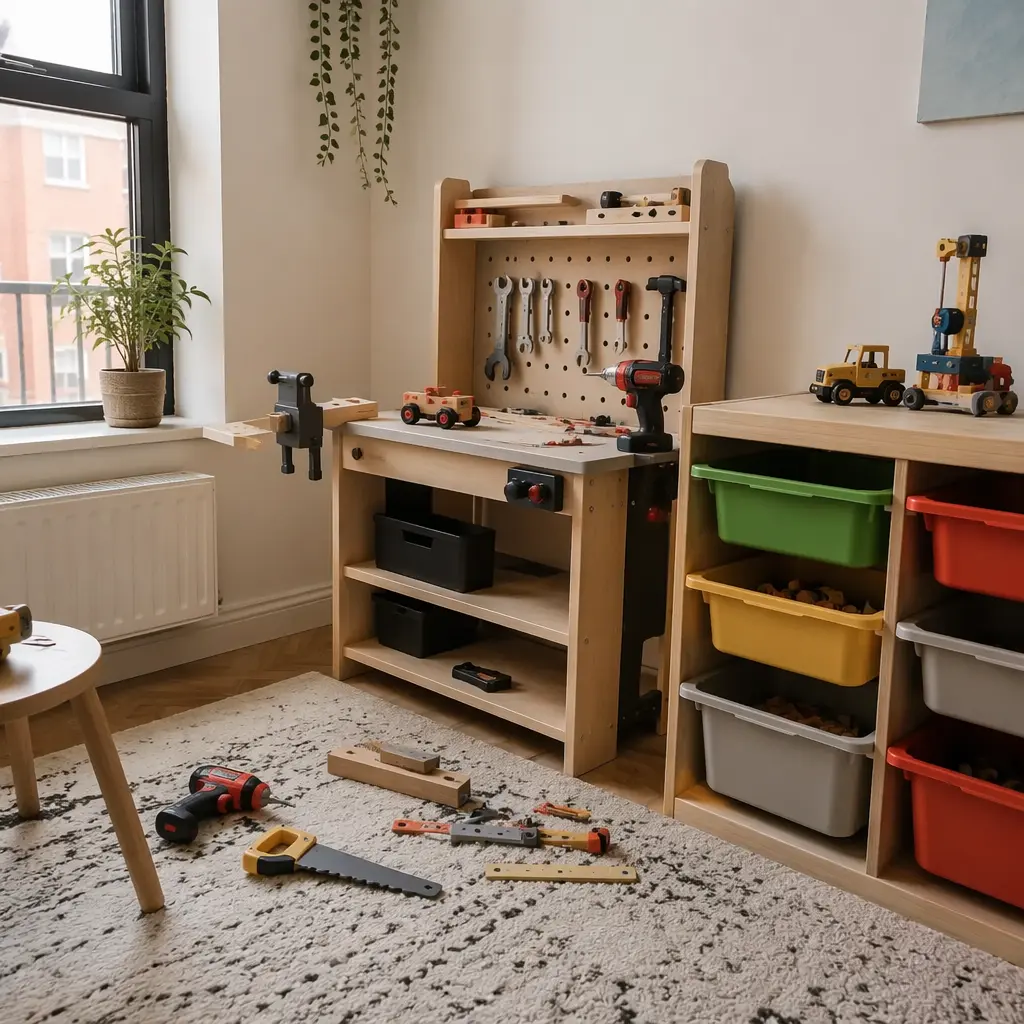
- Accessory storage: Look for shelves, bins or hooks that keep loose food pieces or toy tools contained when play ends.
- Noise level: Mechanical clicking and hammering from tool benches can carry through walls more than kitchen role-play.
- Durability: Wooden sets generally handle rougher preschool use better, though they are often heavier to move.
- Replay value: Kitchens support open-ended social role-play, while benches often suit children who enjoy repetitive building tasks.
- Sibling sharing: Kitchens frequently encourage cooperative play; tool benches may work better for turn-taking and independent play.
- Ease of cleanup: Smaller accessory counts are easier to manage in homes with limited storage space.
Age suitability
For ages 3–5, both toy types can work well when matched to a child's interests and motor skills. Younger preschoolers often enjoy simple kitchen routines such as serving food, washing dishes or copying family habits. Older preschoolers may expand that into restaurant games, shopping stories and multi-step pretend scenarios. Tool benches usually appeal strongly to children who like movement, assembly and experimenting with how objects connect. Some children quickly lose interest in benches that only involve repetitive hammering, while others return to them daily for structured play. If floor space is tight, compact toy kitchens often stay relevant slightly longer because they can absorb other toys into the same pretend setup.
Options compared
Toy kitchens usually offer deeper pretend-play variety in shared spaces. Children can cook, host, clean, shop and serve using the same setup, and siblings often join in naturally. They also tend to be quieter overall, especially non-electronic wooden styles. The trade-off is accessory sprawl. Play food, dishes and utensils multiply quickly, so kitchens work best when paired with dedicated bins or shelf storage. Families wanting calmer evening play or lower-noise indoor activities often lean toward kitchens for this reason.
Tool benches are often more compact and can suit children who prefer physical interaction over social storytelling. Turning bolts, hammering pegs and building simple structures help develop fine motor coordination and problem-solving. However, the repetitive tapping sounds can become tiring in apartments or shared family spaces. Benches also vary widely in replay value. Sets with interchangeable parts and open-ended building pieces usually last longer than benches focused on a single gimmick. For children who enjoy construction toys, vehicles or taking objects apart, a tool bench may hold attention better than a kitchen.
- Choose a toy kitchen if your child enjoys role-play, hosting games, dolls or cooperative pretend scenarios.
- Choose a tool bench if your child prefers building, movement, assembling parts or hands-on mechanical play.
- Avoid oversized kitchens in very small rooms unless accessory storage is already planned.
- Avoid electronic versions with lights and sounds if noise control is important in shared living spaces.
- Consider combination storage furniture if the toy will stay in a living room rather than a dedicated playroom.
- For siblings close in age, kitchens often support parallel play more smoothly than single-user workbenches.
Frequently asked questions
Which option usually keeps children interested longer?
Toy kitchens often have slightly longer replay value because children can adapt them into many different pretend scenarios over time. Tool benches can also last well when they include flexible building components rather than fixed activities.
Are wooden sets better than plastic ones?
Wooden sets are typically sturdier and quieter, especially for kitchens. Plastic sets are often lighter and easier to move or wipe clean. The better choice depends on storage needs, room layout and how roughly the toy will be used.
How much storage space do these toys really need?
The accessories usually take up more room than the main structure. Kitchens can accumulate many small food items and utensils, while tool benches may include loose screws, bolts and parts. Dedicated bins or shelves make a noticeable difference in keeping shared spaces manageable.
Do toy tool benches become too noisy indoors?
They can. Hammering and repetitive clicking noises are common concerns in apartments or homes with shared walls. Softer materials, rubber-tipped tools and carpeted play areas can help reduce noise levels.
Can these toys work well in a shared sibling playroom?
Yes, but the type of interaction differs. Kitchens often support collaborative pretend games, while tool benches may encourage side-by-side building or turn-taking. In small shared rooms, compact layouts and clear cleanup systems matter more than toy category alone.
For most small playrooms, the better long-term fit comes down to household rhythm as much as child preference. Families wanting quieter cooperative play often find toy kitchens easier to integrate into shared spaces, while tool benches can be a stronger match for children who enjoy building and active hands-on play. Measuring the available floor area, planning accessory storage in advance and choosing a simpler non-electronic design can make either option more practical for everyday use.