Toy Tape Roads vs Play Mats for Small Apartments
Choosing between removable road tape and play mats for preschool city play? This guide compares cleanup, storage, floor protection, replay value and daily practicality in small homes.
Compare prices and availability
Check current prices and availability for this guide on eBay.
As an eBay Partner, we may be compensated if you make a purchase.
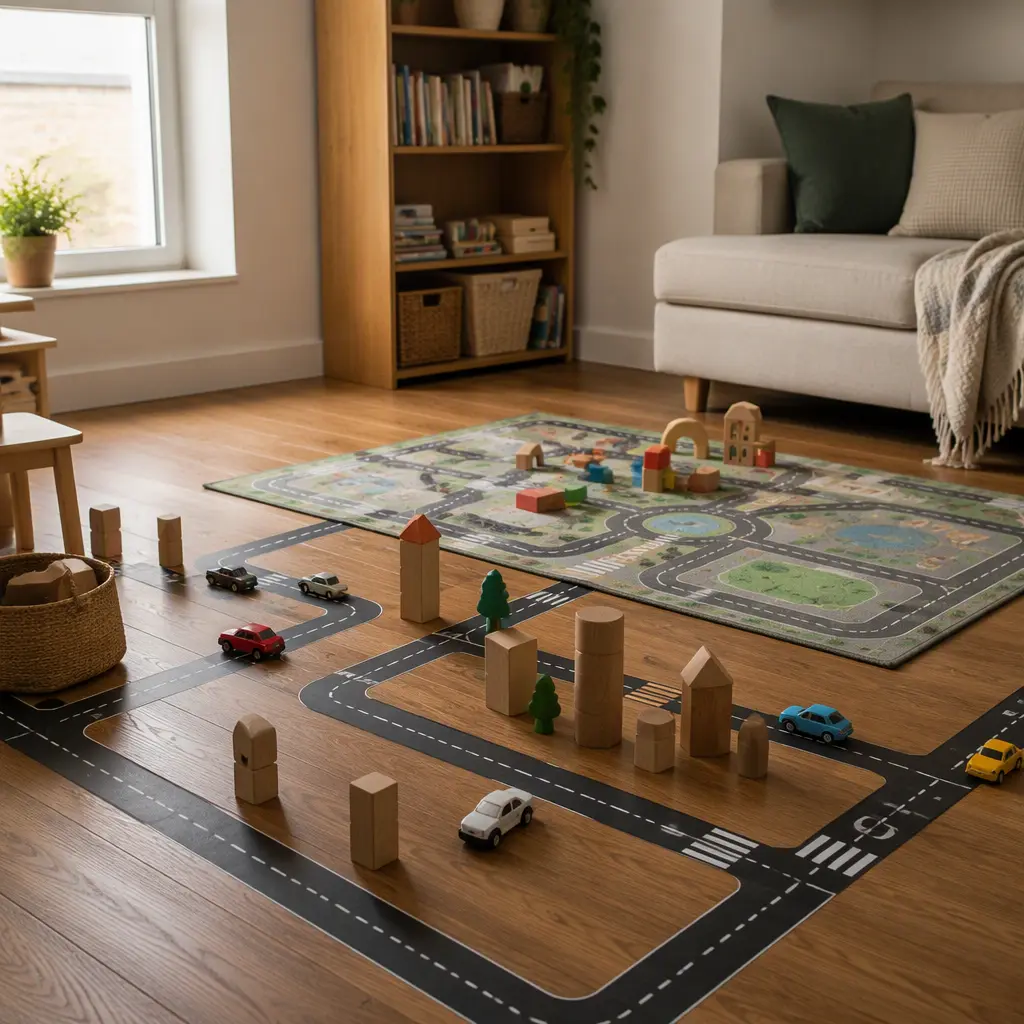
For children who build roads, parking lots and pretend cities every day, both toy road tape and play mats can support hours of screen-free play. The better choice often depends less on the child’s imagination and more on the realities of apartment living. Floor space, cleanup time, shared rooms and storage limits all affect which option feels manageable long term. Road tape offers flexible layouts and compact storage, while play mats create a quick ready-made play zone with less setup. Parents balancing limited square footage with frequent pretend play may find that one approach fits their routine much better than the other.
What to look for
The main differences between road tape and play mats come down to flexibility, storage and how much daily effort parents want to spend setting up and packing away. In small apartments, toys that spread across walkways or require permanent floor space can become frustrating quickly. Materials also matter. Some tapes are designed to peel away cleanly from hard floors, while thicker mats may cushion noise but take up more room when stored. Children in the 3–5 age range also vary in how they play. Some enjoy building new layouts every day, while others prefer a stable town setup they can return to immediately.
- Choose removable tape designed for indoor play if protecting hardwood, laminate or rental flooring is important.
- Look for mats that roll or fold compactly if storage space is limited.
- Consider noise levels: padded foam mats usually soften toy car sounds better than bare floors with tape.
- Think about cleanup time. Mats are faster to roll away, while tape layouts may encourage longer unfinished play sessions.
- Check whether the child prefers open-ended building or familiar repeatable setups.
- Measure available floor space before buying larger mats that may block walkways or furniture.
- If siblings share the area, modular systems are often easier to divide and reorganize.
Age suitability
For ages 3–5, both options can work well, but they support slightly different styles of play. Younger preschoolers often enjoy play mats because the printed roads, buildings and parking spaces provide visual prompts without much setup. This can help children jump into pretend play quickly. Around ages 4–5, many children become more interested in designing their own cities, changing routes and combining roads with blocks, train tracks or animal figures. Road tape usually supports this kind of creative building more naturally because layouts can change every day. Parents should also consider attention span and frustration tolerance. Some children enjoy carefully placing tape and rebuilding scenes, while others may become impatient with setup or upset if tape peels up accidentally during play.
Options compared
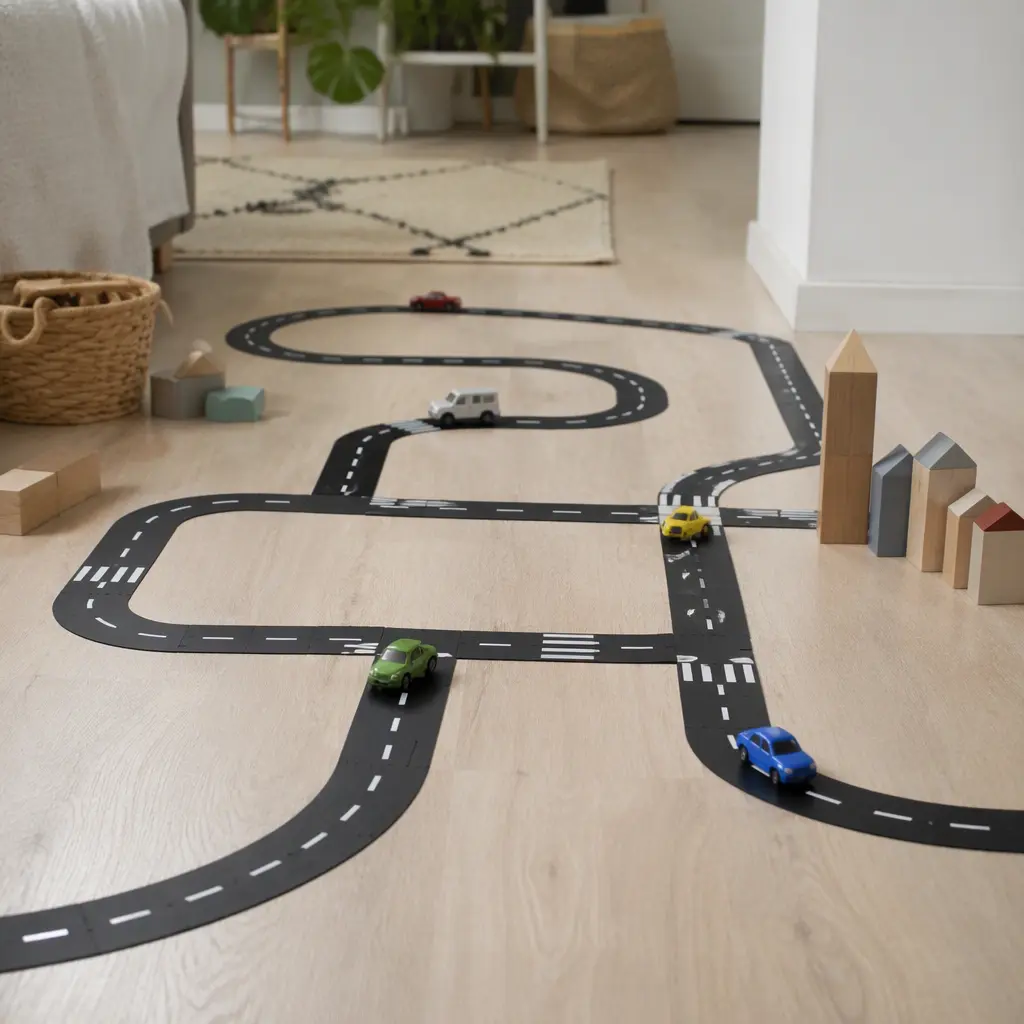
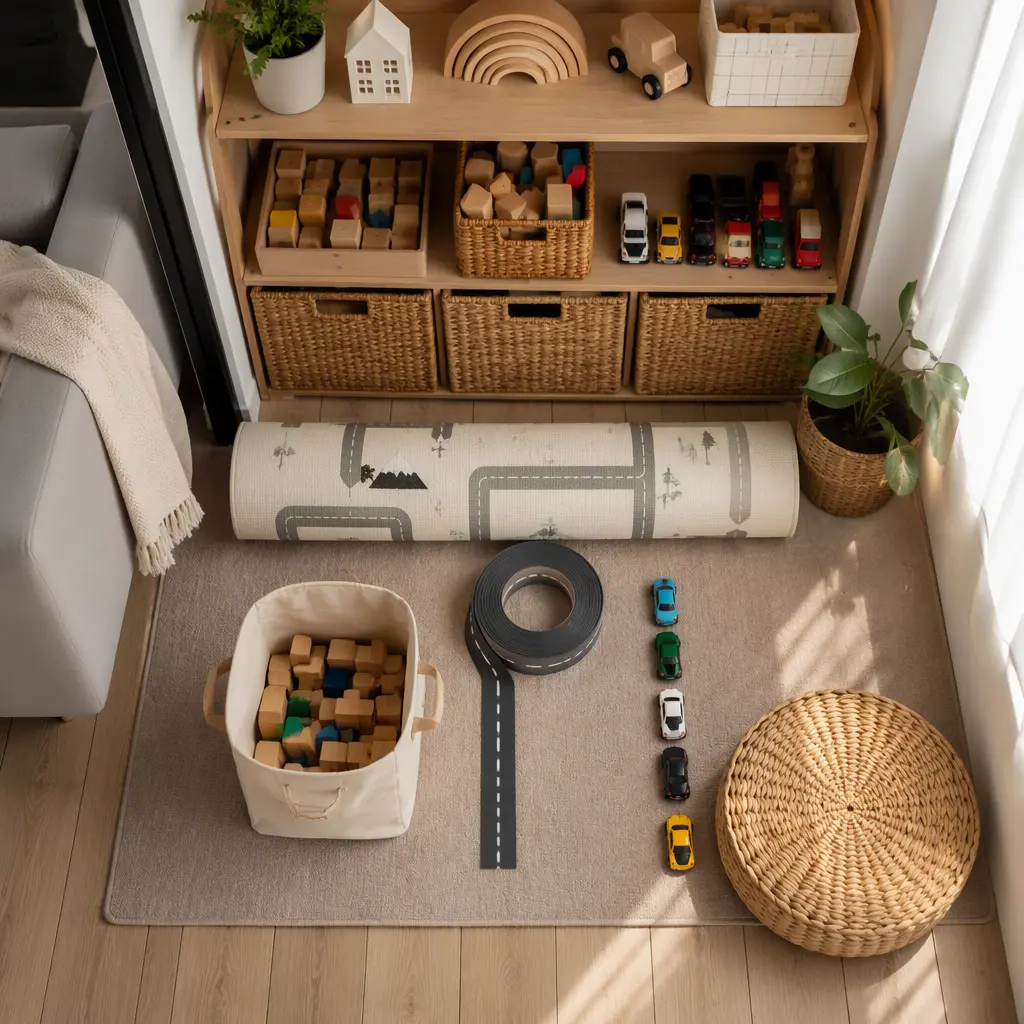
Toy road tape is usually the more flexible choice for children who like building new environments constantly. Roads can loop around furniture, connect block towers or create elaborate parking systems across the floor. In a small apartment, this flexibility helps children adapt play to whatever space is available that day. Storage is another advantage. A roll of tape fits easily into a drawer or toy bin, which matters in homes without dedicated playrooms. Replay value is often high because layouts rarely look the same twice.
The trade-off is that tape can create more daily management for parents. Some children expect road systems to stay in place for days, which may not work in shared living spaces. Lower-quality adhesive may also collect dust, curl at the edges or leave residue on sensitive flooring. Tape works best for families comfortable with temporary floor play and regular cleanup. It tends to suit children who enjoy construction-style creativity and combining toys from different sets.
Play mats are usually easier for fast setup and cleanup. Unroll the mat, add vehicles and play can start immediately. This simplicity can be especially useful in apartments where toys need to disappear before meals, visitors or bedtime. Mats also define boundaries clearly, helping contain play within one area. Some parents find this makes living rooms feel less cluttered during the day.
The downside is reduced flexibility. Printed roads and buildings stay fixed, so children eventually play within the same layout repeatedly. Large mats may also become awkward to store in tight apartments, especially if they cannot fold neatly. Foam-style mats can help protect floors and soften noise, which may matter in upstairs units with neighbors below. However, thicker mats take up more closet space and can slide on smooth floors unless paired with a non-slip surface.
- Road tape suits children who enjoy designing cities, changing layouts and mixing toys creatively.
- Play mats suit families wanting fast setup, easier cleanup and more contained play zones.
- Tape is usually easier to store in very small apartments.
- Mats may reduce toy-car noise and provide extra floor cushioning.
- Tape can require more supervision around delicate flooring or persistent adhesive residue.
- Play mats work well for routine daily play where consistency matters more than customization.
Frequently asked questions
Can toy road tape damage apartment floors?
Some removable tapes are designed to peel away cleanly, but flooring materials vary widely. Hardwood finishes, older laminate and delicate sealed surfaces may react differently. Testing a small hidden area first is usually the safest approach, especially in rental properties.
Which option is easier to clean up every day?
Play mats are generally faster for daily cleanup because they can be rolled or folded quickly. Road tape often encourages more elaborate setups that children may not want to dismantle immediately. Families with shared living areas often prefer mats for this reason.
Do play mats limit creativity?
Not necessarily. Many children still build stories, garages and towns around a fixed mat layout. However, tape usually offers more freedom for children who enjoy redesigning routes and expanding play scenes with blocks or construction toys.
What works best in very small apartments?
Road tape usually stores more compactly and adapts better to narrow or temporary spaces. A child can create short road systems in hallways, beside sofas or around furniture without needing one large open floor area.
Are foam play mats better for downstairs neighbors?
Foam mats can help soften impact noise from dropped toys and rolling cars compared with hard floors alone. They may be helpful in apartments where sound transfer is a concern, although they take up more storage space than flat fabric mats or tape.
For most small apartments, the better choice depends on whether flexibility or convenience matters more day to day. Road tape offers adaptable, highly creative play with minimal storage needs, while play mats simplify setup and help keep play contained. Families managing frequent cleanup, shared rooms or noise concerns may lean toward mats, while children who rebuild cities constantly often get more long-term replay value from tape-based layouts.