Toy Toolboxes vs Workbenches for Small Apartments
Compare toy toolboxes and kids’ workbenches for ages 3–5, with practical guidance on storage space, replay value, cleanup, supervision and apartment-friendly play.
Compare prices and availability
Check current prices and availability for this guide on eBay.
As an eBay Partner, we may be compensated if you make a purchase.
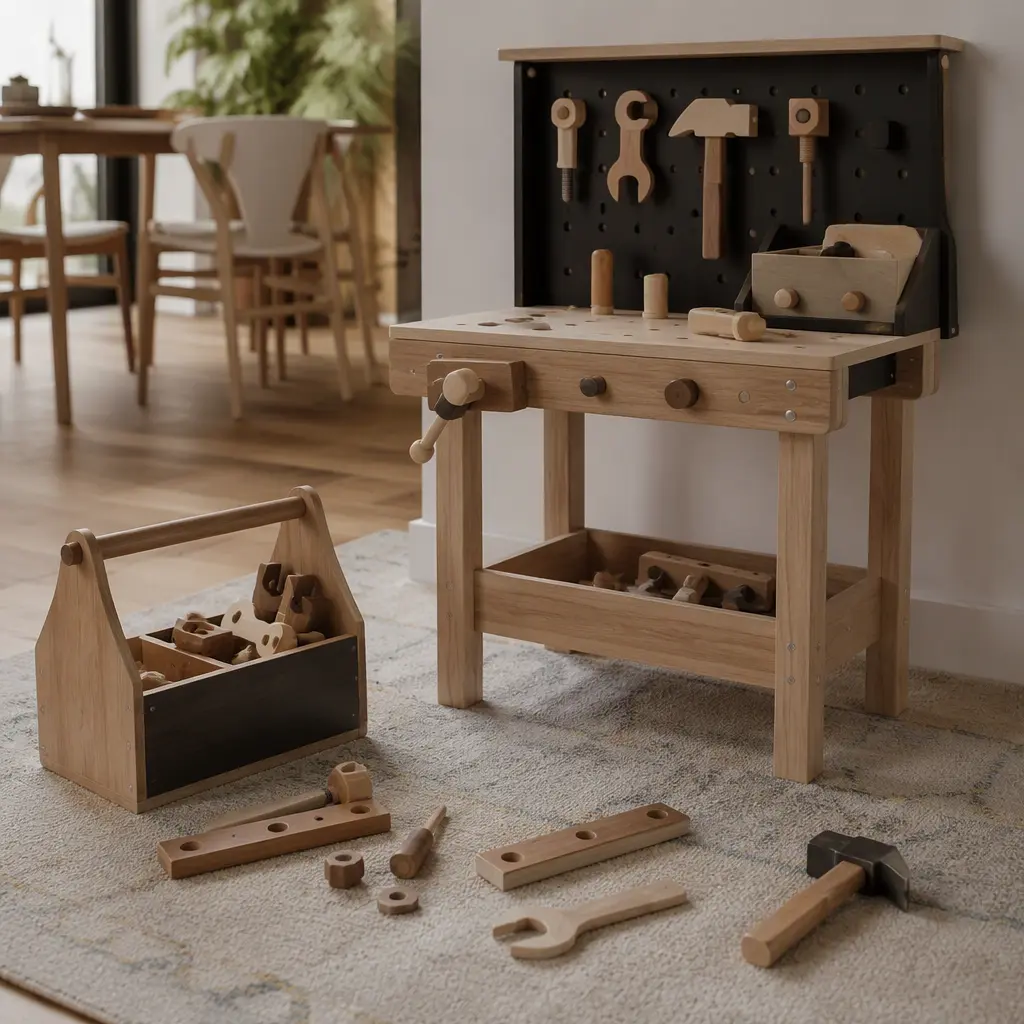
Toy tool sets are a popular screen-free option for children who enjoy copying everyday jobs, building structures and taking objects apart. For families in small apartments, the biggest decision is often whether to choose a portable toolbox or a larger workbench setup. Both encourage imaginative play, hand coordination and problem-solving, but they create very different storage, cleanup and noise demands. A toolbox usually takes up less floor space and can travel easily between rooms, while a workbench can offer longer play sessions and more room for pretend construction projects. The better choice depends on how much space you can dedicate to play, how often toys need to be packed away and whether your child prefers quick role-play or longer building-focused activities.
What to look for
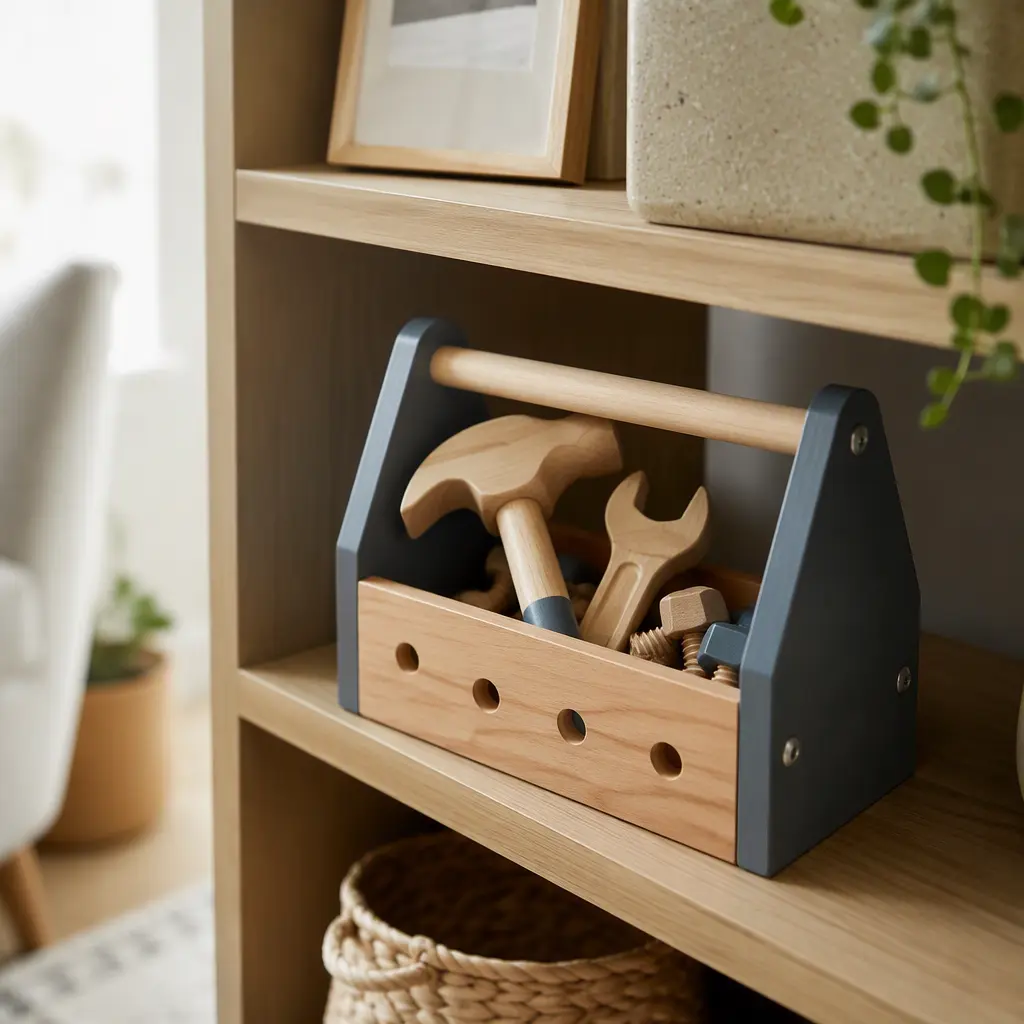
For ages 3–5, the best pretend tool toys balance durability, manageable size and easy cleanup. Apartment-friendly toys should fit comfortably into existing storage rather than permanently occupying valuable floor space. Many children also mix pretend repair play with block building, vehicles or household role-play, so modular sets that combine with other toys can stretch replay value. Material choice matters too. Wooden sets often feel sturdier and quieter on hard floors, while plastic sets are lighter and easier for younger children to carry. Some workbenches include many loose pieces, which can increase cleanup time in smaller homes.
- Choose a toolbox if toys need to move easily between rooms or store inside a closet.
- Choose a workbench if you can dedicate a steady play corner without daily setup and pack-away.
- Look for chunky pieces sized appropriately for preschool hands and avoid very small fasteners for younger children.
- Check whether tools attach securely to the bench or store inside the case to reduce lost parts.
- Consider floor noise if you live in an apartment with downstairs neighbors; wooden tapping can still be loud on bare floors.
- Foldable or lightweight workbenches can help in multipurpose living spaces.
- Simple open-ended tool sets often hold attention longer than heavily electronic versions with lights and sounds.
Age suitability
Most toy toolboxes and beginner workbenches are designed for preschoolers, but the play style changes noticeably between ages 3 and 5. Younger children often enjoy carrying tools, pretending to repair furniture and practicing simple motions like hammering or turning oversized screws. Around ages 4 and 5, many children become more interested in assembling parts, matching shapes and creating pretend building projects. A basic toolbox can suit a younger preschooler who becomes overwhelmed by too many pieces, while a larger workbench may better fit children who enjoy structured building tasks and longer independent play sessions. Height also matters. Oversized benches can frustrate smaller children if the work surface sits too high for comfortable reach.
Options compared
Toy toolboxes are usually the easier fit for apartment living. They store compactly, travel well and can be packed away quickly after short bursts of play. Many include just enough tools for imaginative repair games without creating major clutter. They also work well for children who like carrying toys from room to room or joining adults during household tasks. The trade-off is that some children outgrow simpler toolboxes faster once they begin wanting more detailed construction play.
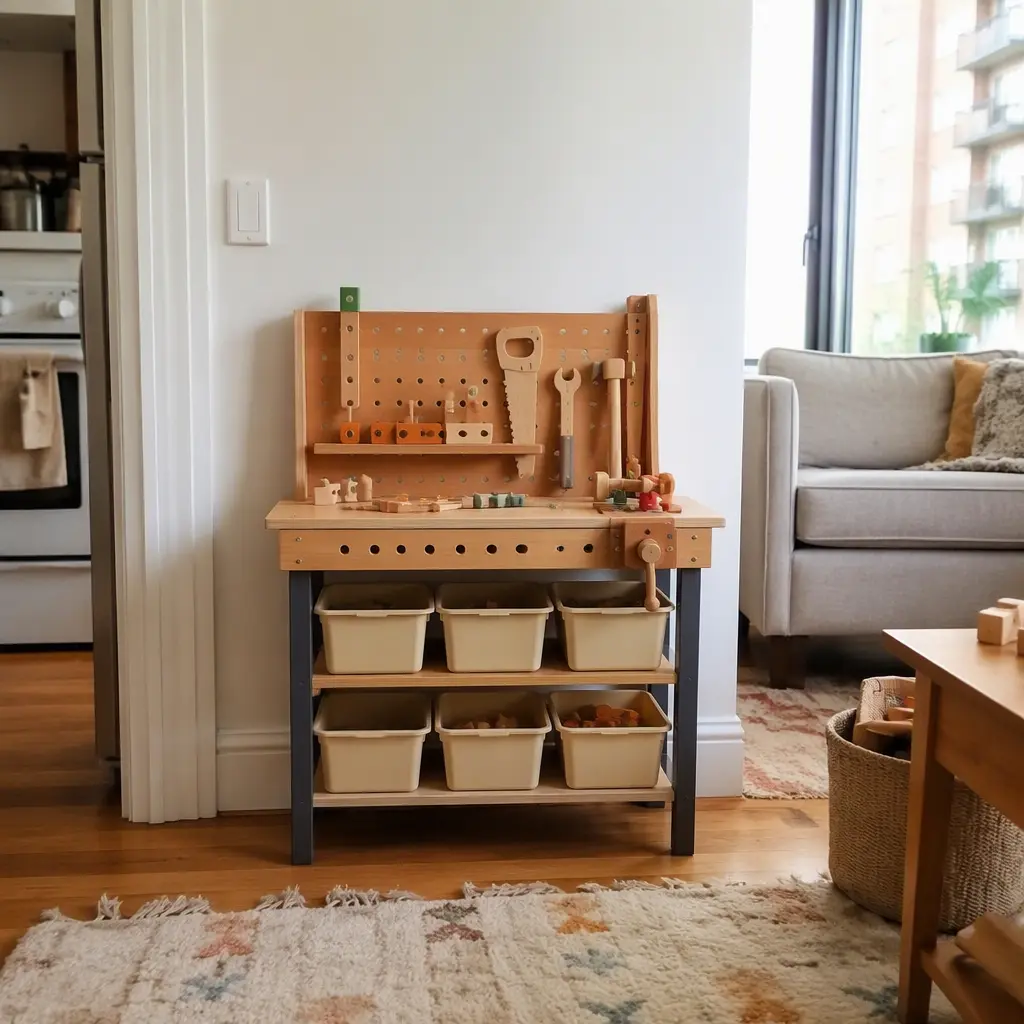
Workbenches tend to deliver stronger replay value for children who enjoy building routines and repeated pretend projects. The upright structure creates a dedicated play zone and can encourage longer independent sessions. Benches with shelves or peg-style storage sometimes help organize accessories better than loose bins, but they still occupy visible floor space even when not in use. Cleanup can take longer because many sets include screws, connectors and detachable parts. Families in very small apartments may prefer compact benches that fold or separate into smaller sections. Electronic workbenches with sound effects can initially attract attention, but they may become noisy in shared buildings and often rely more on buttons than open-ended pretend play.
- Portable toolbox: best for limited storage, quick cleanup and flexible play around the apartment.
- Basic wooden workbench: best for longer focused play and quieter non-electronic building activities.
- Plastic workbench with accessories: best for children who enjoy lots of pretend construction details but may require more cleanup.
- Foldable workbench: useful in multipurpose rooms where toys cannot stay out permanently.
- Electronic tool sets: may appeal to some children but are less ideal for noise-sensitive apartments or families prioritizing screen-free style play.
Frequently asked questions
Are toy workbenches too large for apartments?
Not always. Some modern preschool workbenches are relatively compact, especially corner-style or foldable designs. The key question is whether you can leave the bench assembled full time or need to store it daily. In smaller apartments, even a compact bench can feel bulky if the living room also serves as dining or office space.
Which option creates less mess?
Toolboxes usually create less visible clutter because all pieces store inside one container. Workbenches often include larger numbers of screws, bolts and building parts that spread across the floor during play. Open shelving can also encourage children to leave pieces out between sessions.
Are wooden toy tools quieter than plastic ones?
Wooden sets often avoid electronic sounds and can feel less rattly overall, but hammering wooden pieces on hardwood floors can still create noticeable noise. A play mat or rug makes a significant difference in apartment settings regardless of material.
Do children lose interest quickly in tool toys?
Replay value depends on how open-ended the set is and whether it connects naturally to everyday pretend play. Children who enjoy copying adult repair tasks often return to tool toys regularly, especially when combined with blocks, toy vehicles or household role-play.
Is a toolbox or workbench better for shared sibling play?
A larger workbench may support cooperative play more easily because multiple children can gather around the structure. Compact toolboxes work better for one child at a time or for portable play in tight spaces.
For most apartment households, a compact toolbox is the more practical starting point because it limits clutter and stores easily while still supporting imaginative play. A workbench becomes worthwhile when a child consistently enjoys construction-style activities and your home can accommodate a dedicated play area. Focusing on durable, open-ended sets with manageable numbers of pieces usually leads to longer-lasting play than choosing oversized or highly electronic options.