Toy Vacuum vs Play Kitchen for Copycat Toddlers
Choosing between a toy vacuum and a play kitchen for a 1–2 year old? This guide compares space, noise, replay value, supervision, and developmental fit for copycat toddlers.
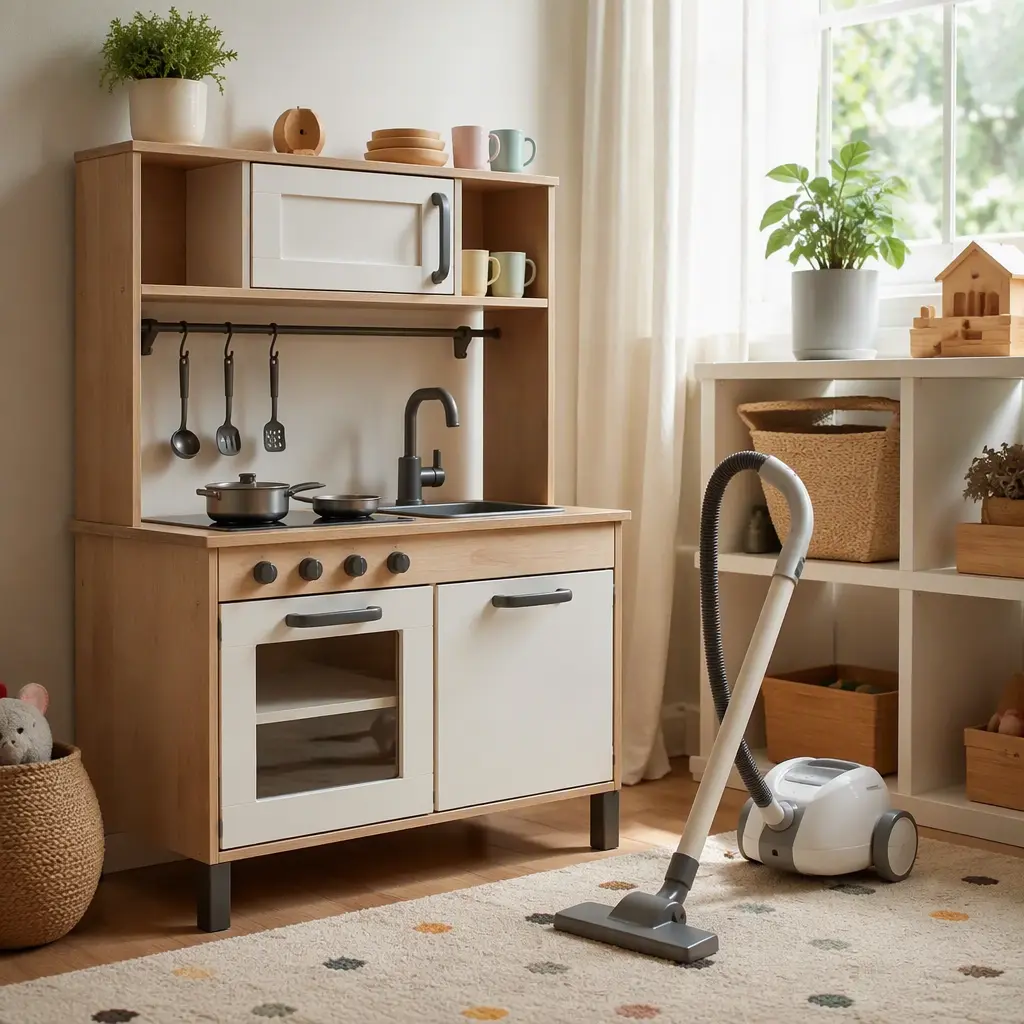
Compare prices and availability
Check current prices and availability for this guide on eBay.
As an eBay Partner, we may be compensated if you make a purchase.
Many toddlers between 1 and 2 years old become intensely interested in copying everyday routines. Sweeping, wiping counters, stirring bowls, and pushing a vacuum often seem more exciting than battery-powered toys or complex games. For parents deciding between a toy vacuum and a play kitchen, the better choice usually depends less on trends and more on how your child likes to imitate adults, how much floor space you have, and how much setup you are willing to manage every day. Both options support screen-free pretend play, but they create different kinds of play habits and household trade-offs.
What to look for
At this age, simple and durable usually works better than feature-heavy toys. Toddlers often repeat the same actions many times in a row, so the best pretend toys for 1–2 year olds tend to be easy to understand immediately and sturdy enough for rough handling. Consider how the toy fits your home routines as much as your child's interests.
- Choose stable designs that are hard to tip over, especially for early walkers who lean on toys while moving around.
- Check storage needs before buying. Play kitchens often become permanent furniture pieces, while toy vacuums are easier to tuck into a closet or corner.
- Think about noise levels. Some toy vacuums include sounds or popping beads that can become repetitive in small homes or apartments.
- Look for large accessories without tiny detachable parts that could create choking risks for younger toddlers.
- Consider cleanup. Play kitchens with many pretend foods and dishes can spread across multiple rooms quickly.
- Prioritize open-ended play over electronic features. Toddlers usually get more long-term use from toys that encourage imitation rather than button pressing.
- Notice your child's existing habits. A toddler already fascinated by sweeping or following the real vacuum may stay engaged with a toy vacuum longer than with cooking play.
Age suitability
For most children in the 1–2 year range, both toy vacuums and beginner play kitchens can work well, but developmental stage matters. Younger toddlers closer to 12 months often enjoy gross-motor repetition more than detailed pretend scenarios. They may prefer pushing, carrying, opening doors, or moving knobs without understanding cooking sequences yet. Around 18 to 24 months, pretend play usually becomes more recognizable, with toddlers feeding dolls, pretending to cook meals, or copying cleaning routines after watching adults. Toy vacuums are often easier for younger toddlers to use immediately because the action is simple and physical. Play kitchens tend to grow with children longer because they support more varied pretend situations over time.
Options compared
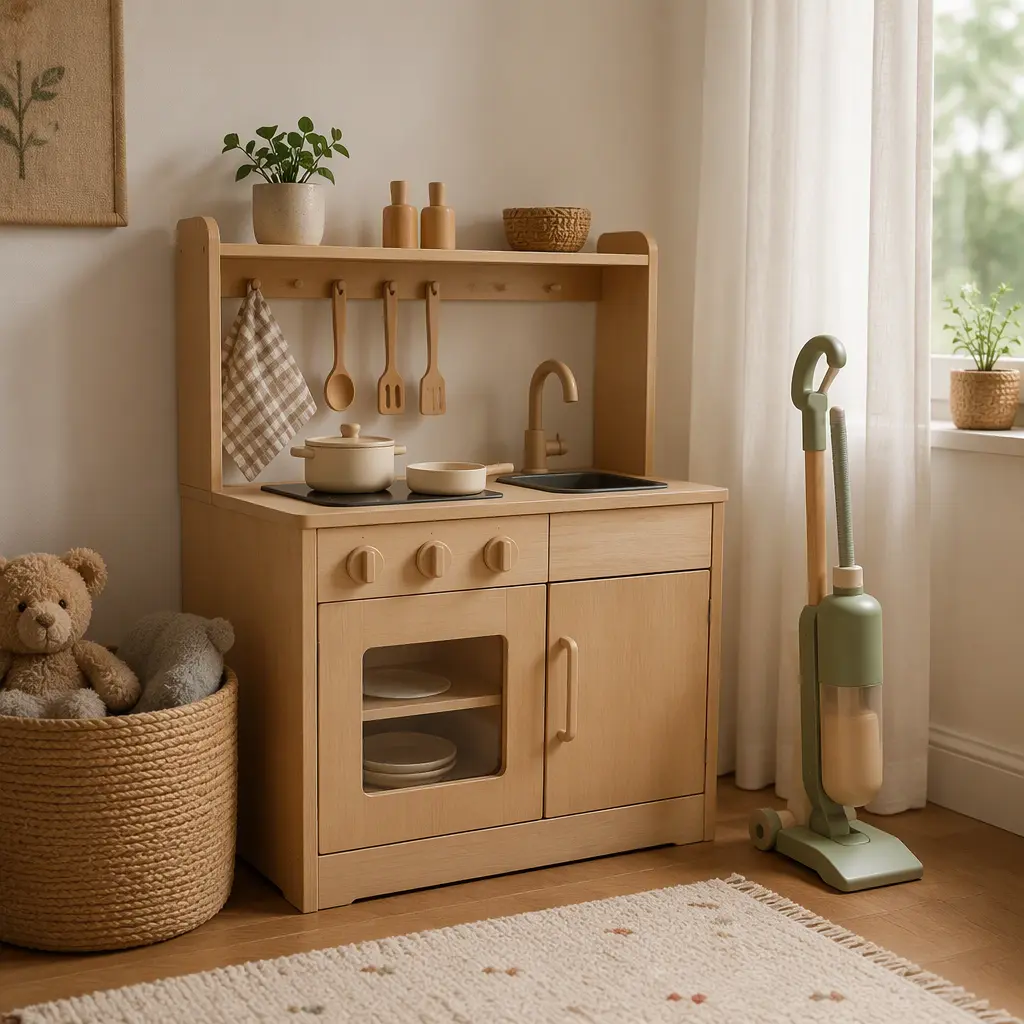
A toy vacuum usually suits toddlers who love movement and repetition. These toys encourage walking, pushing, turning, and copying visible household routines. They can work especially well for children who follow caregivers around during chores or show strong interest in real cleaning tools. Toy vacuums also tend to take up less space and require less daily tidying than larger pretend setups. For families in apartments or smaller homes, this can matter as much as the play value itself. The downside is that the play pattern can become narrow. Some toddlers use the toy enthusiastically for a few months and then move on once the novelty of imitation fades.
Play kitchens usually offer broader replay potential. Even very simple kitchens can support pretend cooking, washing dishes, sorting objects, serving snacks, and role-play with stuffed animals or siblings. They often stay useful into the preschool years because the play scenarios become more imaginative over time. However, they also create more clutter, require more floor space, and may need accessory limits to avoid overwhelming younger toddlers. A large kitchen packed with tiny pretend foods is not always ideal for a newly mobile 1-year-old. Families who prefer calmer, slower-paced indoor play may appreciate kitchens more than active push toys.
- Toy vacuum: best for toddlers who enjoy movement, copying chores, and push toys; easier to store; usually less messy; may have shorter long-term replay value.
- Play kitchen: best for toddlers beginning pretend role-play; supports longer imaginative growth; takes more space; often creates more accessory clutter.
- Minimalist play kitchen setups suit smaller homes better than oversized multi-piece sets.
- Sound-heavy electronic toys may overstimulate some toddlers and become tiring in shared living spaces.
- Children with older siblings often get more long-term use from play kitchens because group pretend play develops naturally.
Frequently asked questions
Is a toy vacuum too limited for long-term play?
For some toddlers, yes. A toy vacuum often creates a very specific style of imitation play, so interest may fade once the child masters the action. However, toddlers who strongly enjoy copying household chores may return to it regularly, especially when caregivers are cleaning nearby.
Do play kitchens require lots of accessories?
Not necessarily. Many toddlers are happiest with just a few pots, cups, and larger pretend foods. Too many pieces can actually reduce independent play because cleanup becomes frustrating for both child and parent.
Which option works better in a small apartment?
A toy vacuum is usually easier to manage in tight spaces because it stores vertically and creates less clutter. Compact play kitchens can still work well, but it helps to choose smaller designs with limited accessories rather than large corner units.
Are electronic pretend toys better for this age?
Not always. Toddlers between 1 and 2 years old often benefit more from simple, hands-on imitation play than from toys filled with lights and sounds. Mechanical or non-electronic toys also tend to be quieter and easier to use flexibly.
Can toddlers use both together?
Yes. Some families combine a small play kitchen with one or two household-style pretend tools instead of building a large themed playroom. This can create variety without taking over the entire living space.
If your toddler mainly copies physical chores and enjoys pushing toys around the house, a toy vacuum is often the simpler and more space-friendly choice. If your child is beginning to act out feeding, cooking, or serving routines, a play kitchen usually offers broader pretend play that can last longer into the preschool years. In many homes, the deciding factors are not only developmental benefits but also storage space, noise tolerance, and how much daily cleanup parents realistically want to manage.