Toy Workbenches vs Tool Caddies for Small Apartments
Choosing between a toy workbench and a portable tool caddy? This guide compares space needs, cleanup, noise, storage and replay value for preschoolers in smaller homes.
Compare prices and availability
Check current prices and availability for this guide on eBay.
As an eBay Partner, we may be compensated if you make a purchase.
Toy tools are a popular screen-free choice for preschoolers because they encourage pretend play, simple problem-solving and hands-on movement. For families in small apartments, though, the biggest question is often not which set looks most exciting but which format fits daily life. A standing toy workbench can create a dedicated play zone with room for longer building sessions, while a portable tool caddy usually takes up less floor space and stores more easily between uses. The better option depends on how much room you have, how often your child revisits pretend play, and how much setup and cleanup your household can realistically manage.
What to look for
The most useful toy tool sets for apartment living balance play value with practical storage. Preschoolers in the 3–5 age range often enjoy repeating the same building and fixing routines, so durability and easy access matter more than large feature counts. Before choosing between a workbench and a tool caddy, think about where the toy will live when not in use, how noisy the pieces are on hard flooring, and whether your child prefers independent pretend play or carrying toys around the home.
- Footprint: Measure the floor area before buying. Some workbenches are wider than expected once tools and accessories are attached.
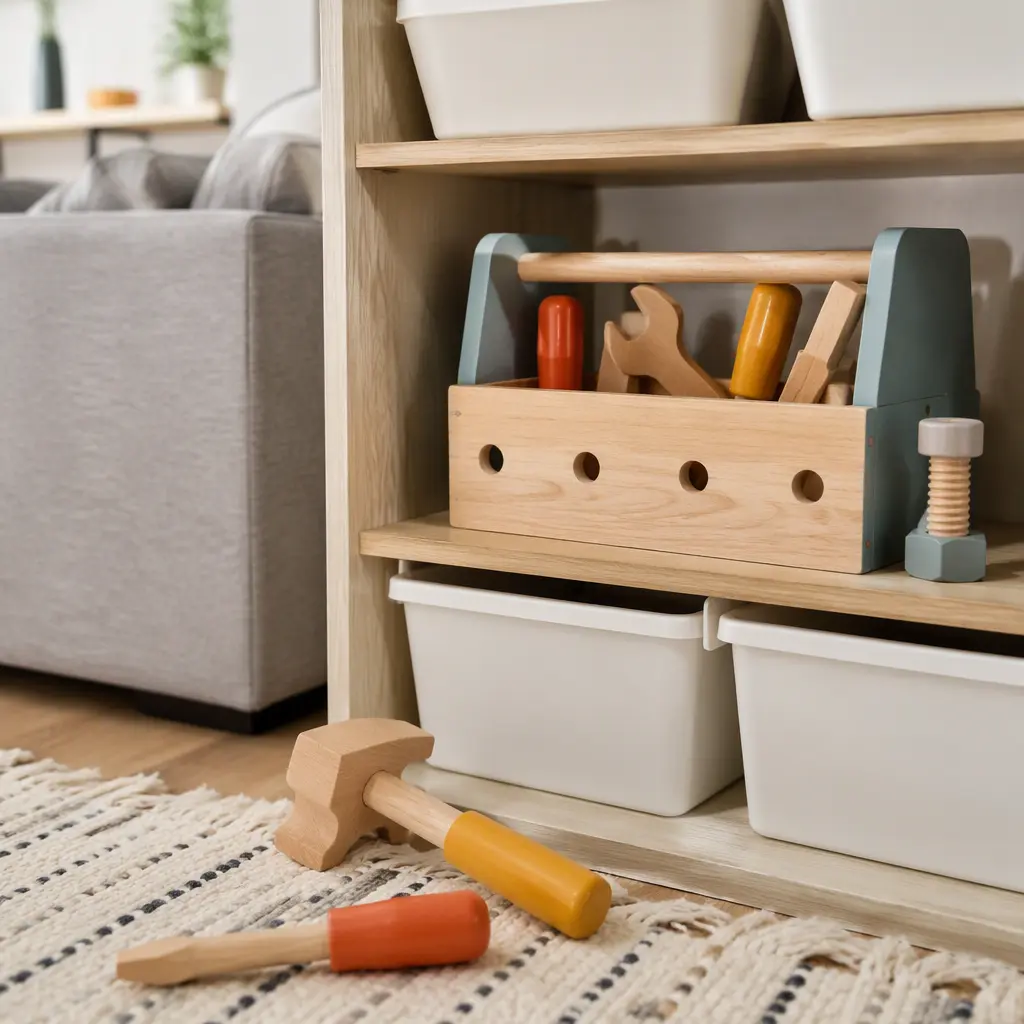
- Storage: Portable caddies usually fit inside closets or cube shelves more easily than standing benches.
- Noise level: Plastic hammers and hard accessories can become loud in apartments with thin floors or walls. Wood can sound quieter on rugs but heavier pieces may still create noise.
- Cleanup: Sets with many small nuts, bolts and connectors take longer to gather at the end of the day.
- Replay value: Workbenches often support longer pretend repair sessions, while caddies suit quick play bursts around the home.
- Durability: Chunky preschool-safe pieces tend to last longer than very small snap-together accessories.
- Shared spaces: Foldable or lightweight toys are easier to move when living rooms double as family areas.
- Supervision needs: Younger preschoolers may still mouth small accessories, especially mixed-material sets with tiny connectors.
Age suitability
For ages 3–5, simple pretend construction play is usually more engaging than highly realistic building systems. Three-year-olds often enjoy carrying tools, tapping surfaces and copying household routines, which makes lightweight tool caddies a good fit. Older preschoolers may spend longer periods tightening bolts, sorting accessories and creating pretend repair projects, which can make a workbench feel more rewarding over time. Children who move frequently between rooms may lose interest in a stationary bench if space is tight, while children who enjoy focused solo play may appreciate having a consistent setup that stays assembled. In mixed-age households, portable sets can also reduce frustration because they are easier to put away from younger siblings when needed.
Options compared
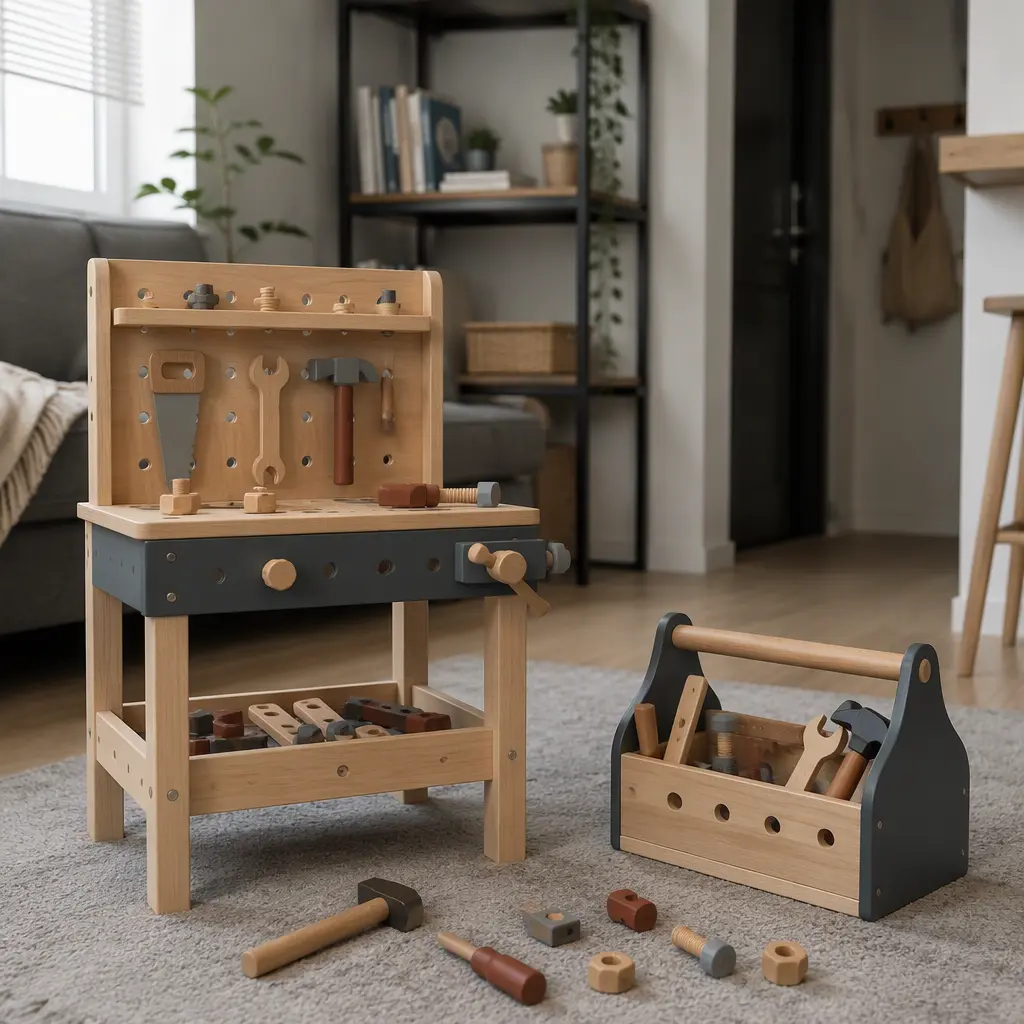
Toy workbenches are usually the better choice for children who enjoy immersive pretend play and return to the same activity repeatedly. A bench creates a defined play station that can support sorting, assembling and role-play without constant setup. Some preschoolers treat the bench almost like a mini workshop, revisiting unfinished pretend projects across several days. This can increase replay value, especially for children who prefer structured routines. The trade-off is space. Even compact benches can dominate a small living room or bedroom corner, and many are awkward to move once assembled.
Tool caddies work differently. Instead of creating a permanent play area, they support flexible play throughout the home. Preschoolers can carry tools from room to room, pretend to fix furniture, or pack everything away quickly after use. In apartments where toys must share space with dining areas or work-from-home setups, this flexibility can matter more than extra accessories. Cleanup is often faster because the container itself becomes the storage system. The downside is that some children lose interest sooner without a stable building surface or dedicated workstation.
- Choose a toy workbench if your child enjoys longer independent play sessions, you have a consistent play corner available, and you do not mind a larger permanent toy footprint.
- Choose a tool caddy if storage space is limited, toys need to move easily between rooms, or you prefer faster cleanup routines.
- Wooden sets often look calmer in shared living spaces and may include fewer electronic features, while large plastic sets sometimes offer more interactive accessories but can create more visual clutter.
- Battery-powered sounds and lights may seem exciting initially but can become repetitive in apartments where noise travels easily.
- Minimal accessory sets are easier to maintain and less likely to leave small parts under furniture.
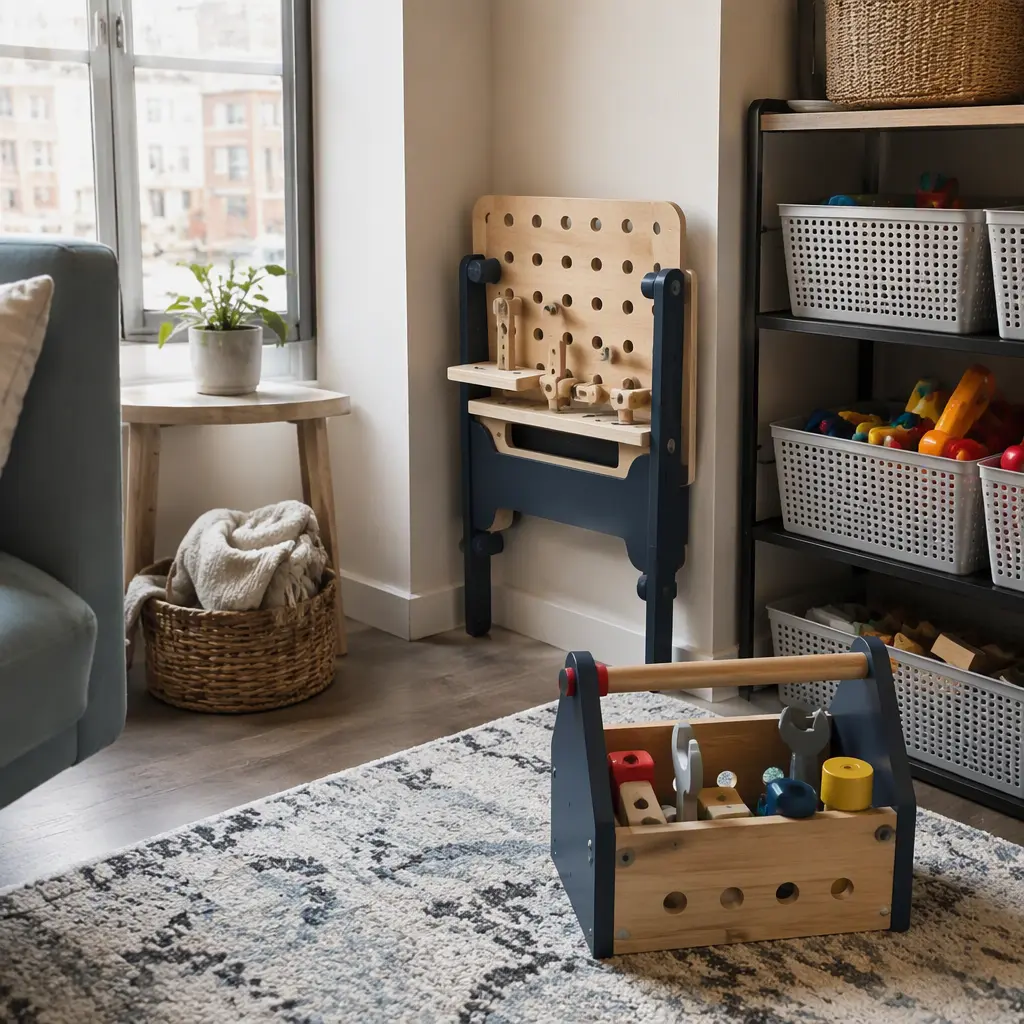
- Combination sets with foldable benches or carrying cases can work well for families who want some structure without dedicating permanent floor space.
Frequently asked questions
Are toy workbenches too large for apartments?
Not always, but size matters more than advertised age range. Compact benches can fit well in bedrooms or living room corners, especially if paired with vertical storage. Before buying, check whether the bench can slide under shelving or sit against a wall without blocking walkways.
Which option is easier to clean up?
Portable tool caddies are usually simpler for cleanup because the storage container is built into the toy. Workbenches may involve extra bins, attached accessories and loose pieces spread across a wider play area.
Do preschoolers get bored with tool caddies faster?
Some do, particularly children who like building routines or detailed pretend projects. Others enjoy the freedom to move around and imitate household repairs. Replay value often depends more on the child’s play style than the toy category itself.
Are electronic sounds worth it?
For many apartment households, quieter toys are easier to live with long term. Mechanical play such as twisting bolts, sorting tools and pretend fixing usually provides enough engagement for ages 3–5 without constant sound effects.
What flooring works best for toy tools?
Rugs or foam mats can help reduce noise from dropped tools and protect hard floors from repeated tapping. They also make small accessories easier to spot during cleanup.
For small apartments, the most practical toy tool set is usually the one that fits comfortably into everyday routines rather than the one with the largest accessory count. A workbench can offer deeper, more focused pretend play if you have a dedicated corner available, while a portable tool caddy often suits flexible shared spaces and quicker cleanup. Keeping storage, noise and replay habits in mind will make it easier to choose a toy that remains useful well beyond the first week.