Wooden Animal Figures vs Plastic Sets for Open Play
Comparing wooden animal figures and plastic play sets for ages 3–5, including durability, cleanup, realism, storage, sibling sharing, and everyday pretend-play trade-offs.
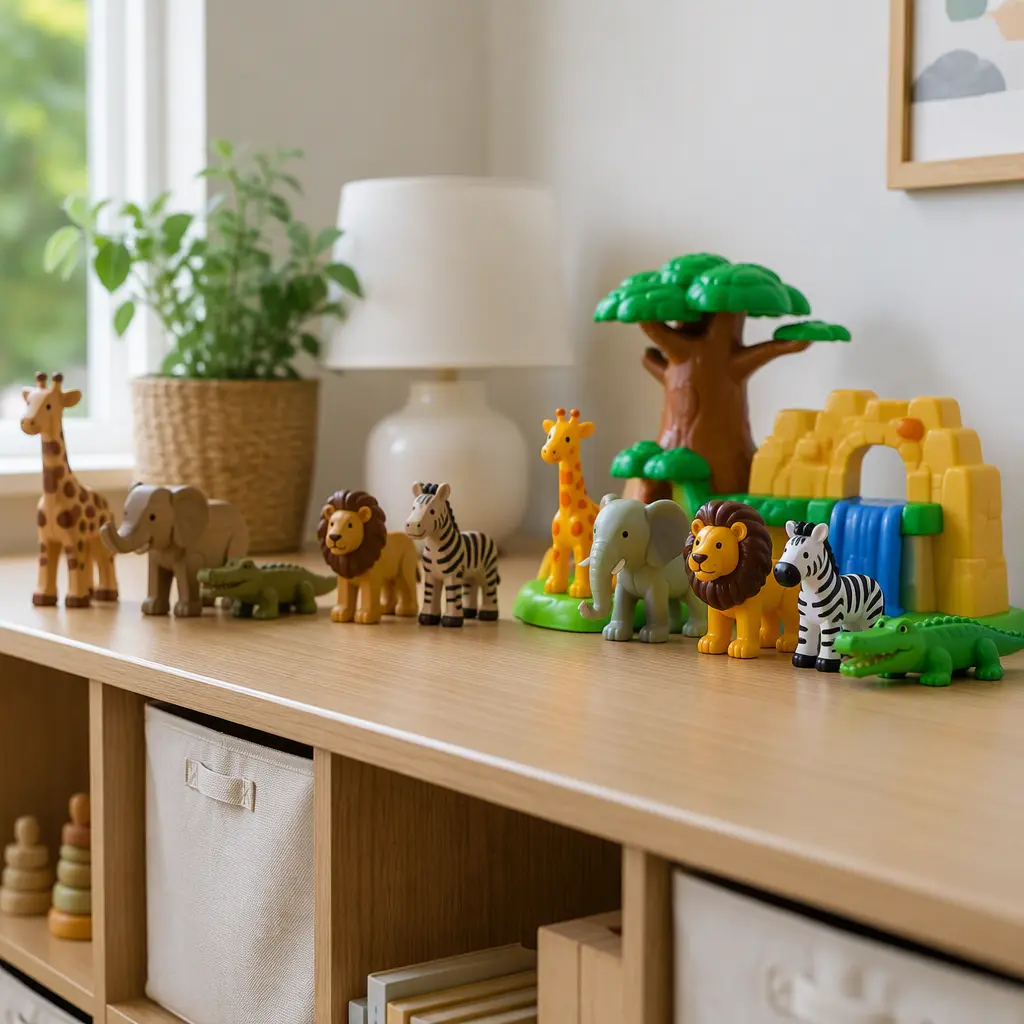
Compare prices and availability
Check current prices and availability for this guide on eBay.
As an eBay Partner, we may be compensated if you make a purchase.
Animal toys are a staple of preschool pretend play because they work across many stages of development. A child might sort animals by color one day, build habitats the next, and invent long storylines later on. For parents choosing between wooden animal figures and plastic animal sets, the decision usually comes down to daily practicality rather than appearance alone. Durability, cleanup, noise, storage space, and whether siblings can comfortably share the toys all matter as much as the animals themselves. Both materials can support imaginative, screen-free play for ages 3–5, but they suit different households and play styles.
What to look for
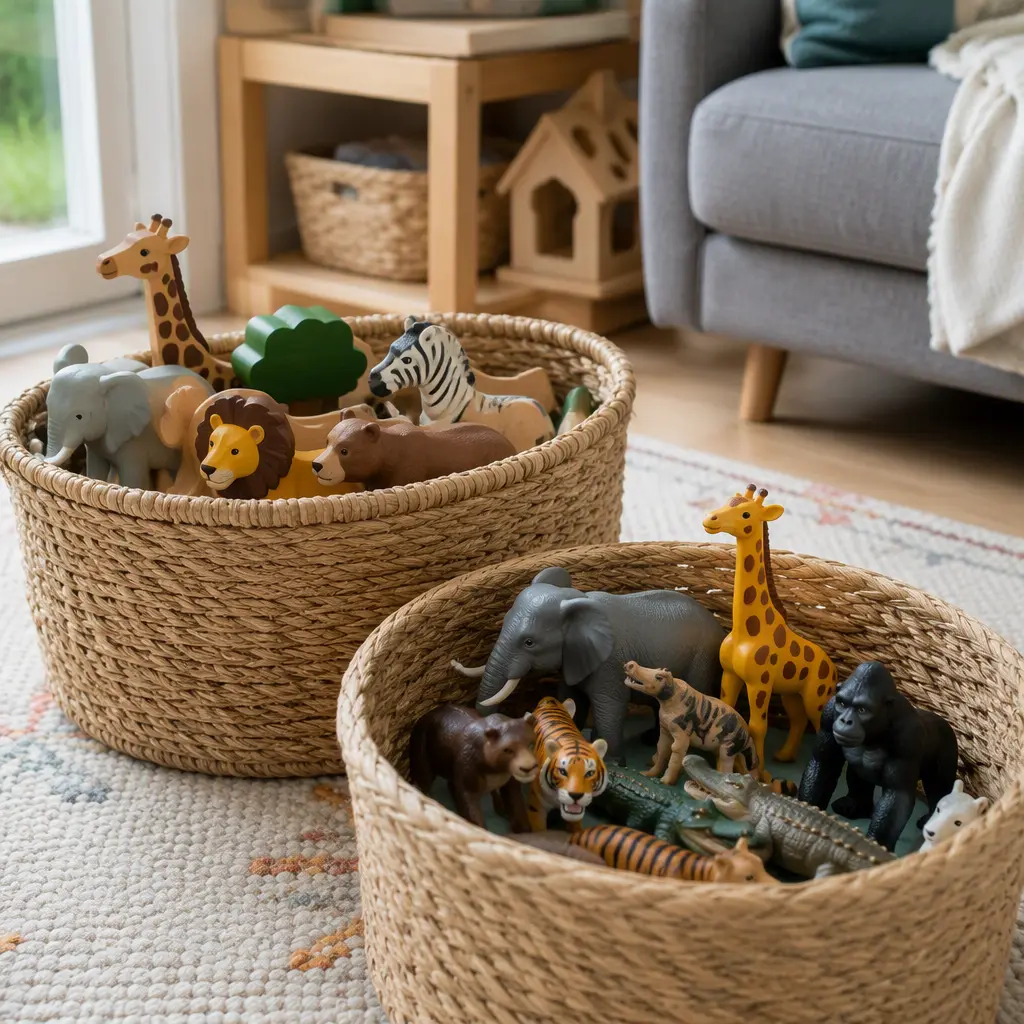
The best choice depends on how the toys will actually be used in your home. Some children prefer realistic animal collections with detailed textures and habitats, while others are happier with simple figures that can become part of broader pretend play. Parents often notice practical differences first: how loud the toys are on hard floors, how easy they are to wipe clean, and whether pieces stay together over time.
- Check size and weight carefully for ages 3–5. Smaller pieces can be frustrating to manage and harder to keep track of.
- Look for rounded edges and sturdy construction, especially if toys may be dropped or used by younger siblings later.
- Consider storage needs. Large plastic play sets with fences, trees, and accessories take more space than a small basket of wooden figures.
- Think about noise levels. Solid wooden toys can be loud when tipped onto tile or wood floors, while lightweight plastic pieces are usually quieter.
- Decide whether realism matters. Plastic animals often include more detailed painting and accurate body shapes.
- Choose toys that encourage flexible play instead of single-purpose gimmicks, lights, or sound features.
Age suitability
For ages 3–5, both wooden and plastic animal toys can work well, but the ideal format changes with the child's interests and coordination. Younger preschoolers often enjoy larger, simplified wooden animals because they are easier to grip and harder to break. These toys also transition well between free play, stacking, and simple sorting games. Older preschoolers may become more interested in realistic details, matching species, and building themed worlds such as farms, jungles, or oceans. Plastic sets often support this stage because they include more variety and accessories. Children who play cooperatively with siblings or friends may benefit from larger mixed collections, while children who become overwhelmed by clutter may engage more deeply with a smaller set of durable wooden figures.
Options compared
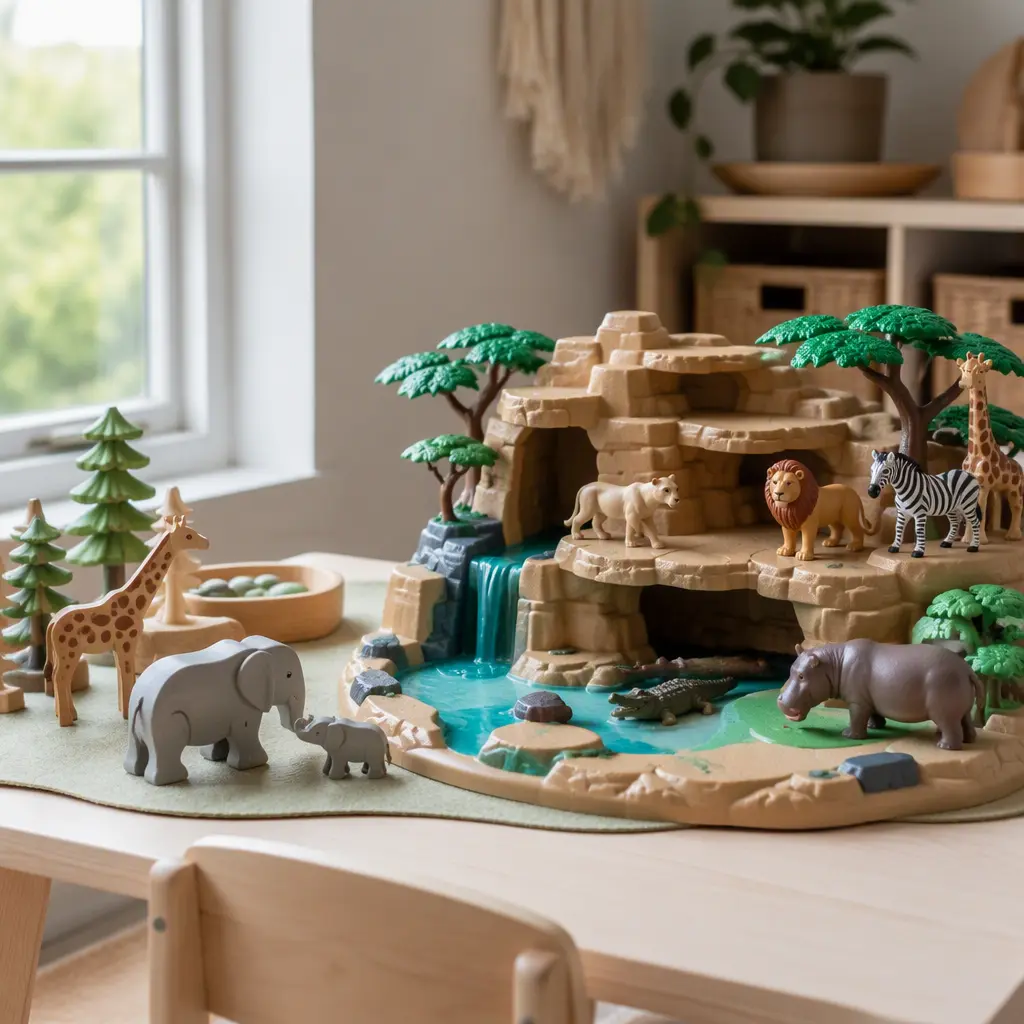
Wooden animal figures are usually chosen for simplicity and durability. They tend to survive rough handling well, especially chunky styles designed for preschool hands. Many parents also like that a smaller wooden collection creates less visual clutter in shared spaces. These toys often suit quieter, open-ended play where children invent their own environments using blocks, scarves, or household items. Cleanup is typically straightforward because there are fewer pieces to gather. However, wooden figures may chip over time if repeatedly dropped on hard floors, and simpler designs can feel less engaging to children who strongly prefer realistic details.
Plastic animal sets usually offer greater variety and realism. A single collection may include many species, habitats, trees, fences, vehicles, or caretaking accessories. This can support longer storytelling sessions and group play between siblings. Plastic pieces are generally easy to wipe clean after outdoor or sensory-bin use, making them popular for water play or kinetic sand activities. The trade-off is that larger sets can become messy quickly, with small accessories scattered across floors or mixed into toy bins. Some plastic sets are also less durable than expected if thin parts bend or snap during energetic play. Parents in smaller homes may find that compact figure collections work better than large themed environments.
- Wooden figures suit families wanting lower-clutter, screen-free open play with fewer distractions.
- Plastic sets suit children who enjoy realism, collecting, and detailed pretend worlds.
- For sibling sharing, larger plastic collections may reduce arguments about variety, while wooden sets are often easier to rotate and organize.
- Wooden toys are often easier to mix with block play and natural-material playrooms.
- Plastic animals are usually more practical for bath play, outdoor mud kitchens, or sensory bins.
Frequently asked questions
Are wooden animal figures better for imaginative play?
Not necessarily, but simpler toys can encourage children to create their own stories and environments instead of relying on prebuilt scenes. Some children thrive with minimal toys, while others become more imaginative when realistic details spark ideas.
Which type is easier to clean?
Plastic figures are usually easier to wash after messy play because they tolerate water and wiping more consistently. Wooden toys often need gentler cleaning and should not be soaked for long periods.
Do plastic sets always create more mess?
The material matters less than the number of accessories included. A small plastic animal collection may be easier to manage than a large wooden farm set with loose fences and scenery. Storage bins and toy rotation can help either option stay organized.
What works best for multiple children?
Shared play often goes more smoothly when there are enough animals for everyone to participate. Mixed collections with different sizes and species can support cooperative storytelling. Durable construction also matters more in busy households where toys are used heavily every day.
Is it worth combining both types?
Many families end up using both. Wooden figures can provide everyday open-ended play, while plastic animals and habitat pieces add realism for themed storytelling or sensory activities. Combining materials can also spread wear across different toy types.
For most families, the better choice comes down to lifestyle and play habits rather than one material being universally superior. Wooden animal figures generally suit simpler, lower-clutter play spaces and children who enjoy flexible pretend play. Plastic animal sets often fit children who love realistic details, large collections, and immersive storytelling. A carefully chosen set that matches your child's interests and your household routines is more useful than the largest or most elaborate option.