Puzzles for Kids Who Need Calm, Not Competition
A parent-friendly guide to soothing, solo puzzles for ages 6–8 that support focus, relaxation, and confidence—without timers, scorekeeping, or pressure.
Compare prices and availability
Check current prices and availability for this guide on eBay.
As an eBay Partner, we may be compensated if you make a purchase.
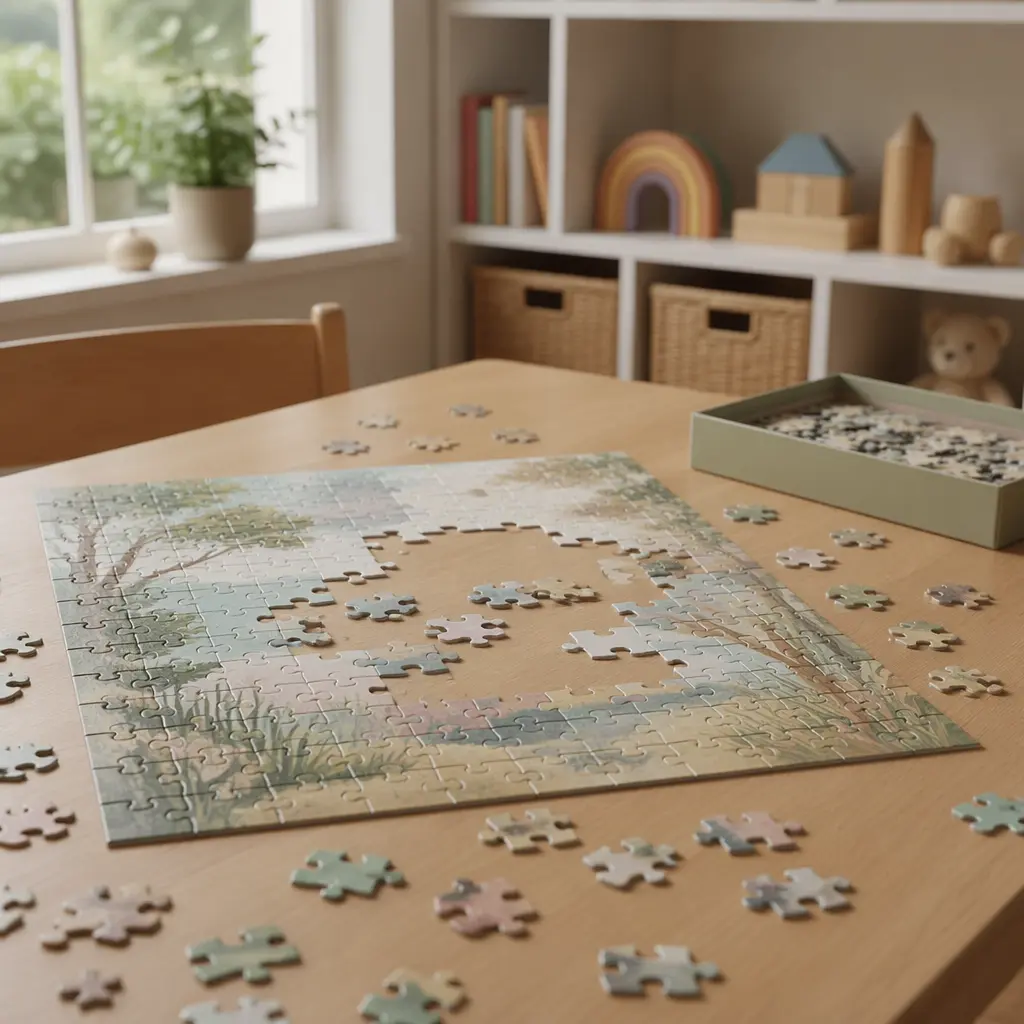
Some kids thrive on competition. Others do their best thinking when things are quiet and unhurried. For children ages 6–8 who need calm rather than comparison, the right puzzle can be a steadying activity—one that encourages focus, patience, and confidence without winners or losers. This guide looks at soothing, solo-friendly puzzles that help kids unwind while still offering satisfying challenge.
What to look for
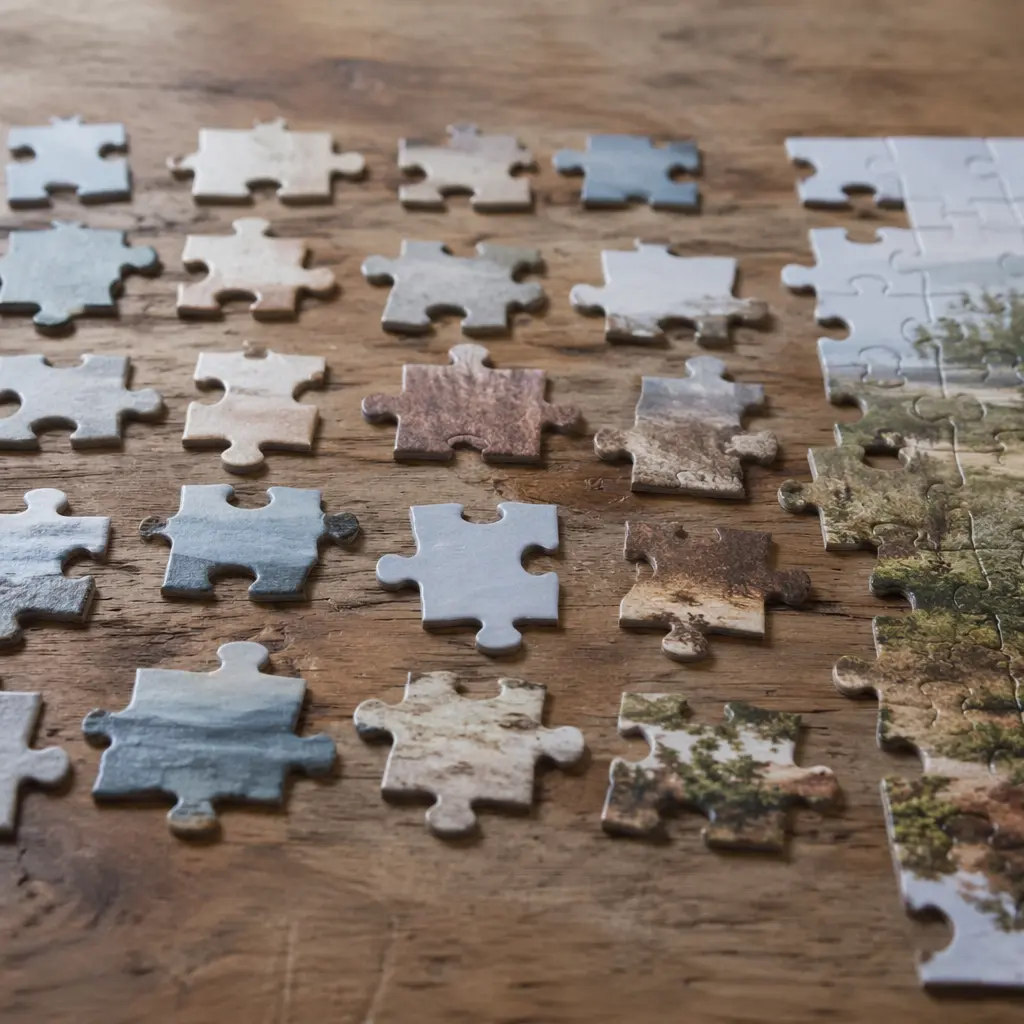
Calming puzzles share a few key traits. They invite children to slow down, work independently, and enjoy the process rather than rushing to finish. When comparing options, these features can make a noticeable difference in how relaxing the activity feels.
- Appropriate piece count: Enough pieces to be engaging, but not so many that the task feels overwhelming.
- Soothing visuals: Nature scenes, gentle patterns, or limited color palettes tend to feel calmer than busy or high-contrast images.
- Predictable structure: Clear edges, repeating patterns, or logical progressions help kids feel oriented and capable.
- Pleasant materials: Sturdy cardboard or smooth wood with a comfortable feel and minimal glare.
- Flexible stopping points: Puzzles that can be paused and returned to without losing progress reduce pressure.
Age suitability
For children ages 6–8, calming puzzles should balance independence with achievable challenge. At this stage, many kids can handle more complex problem-solving than younger children, but they still benefit from clear cues and manageable goals. Look for puzzles designed for early elementary ages that don’t rely on speed, competition, or advanced reading skills. The best options let kids work at their own pace and feel successful through steady progress.
Standout categories or types
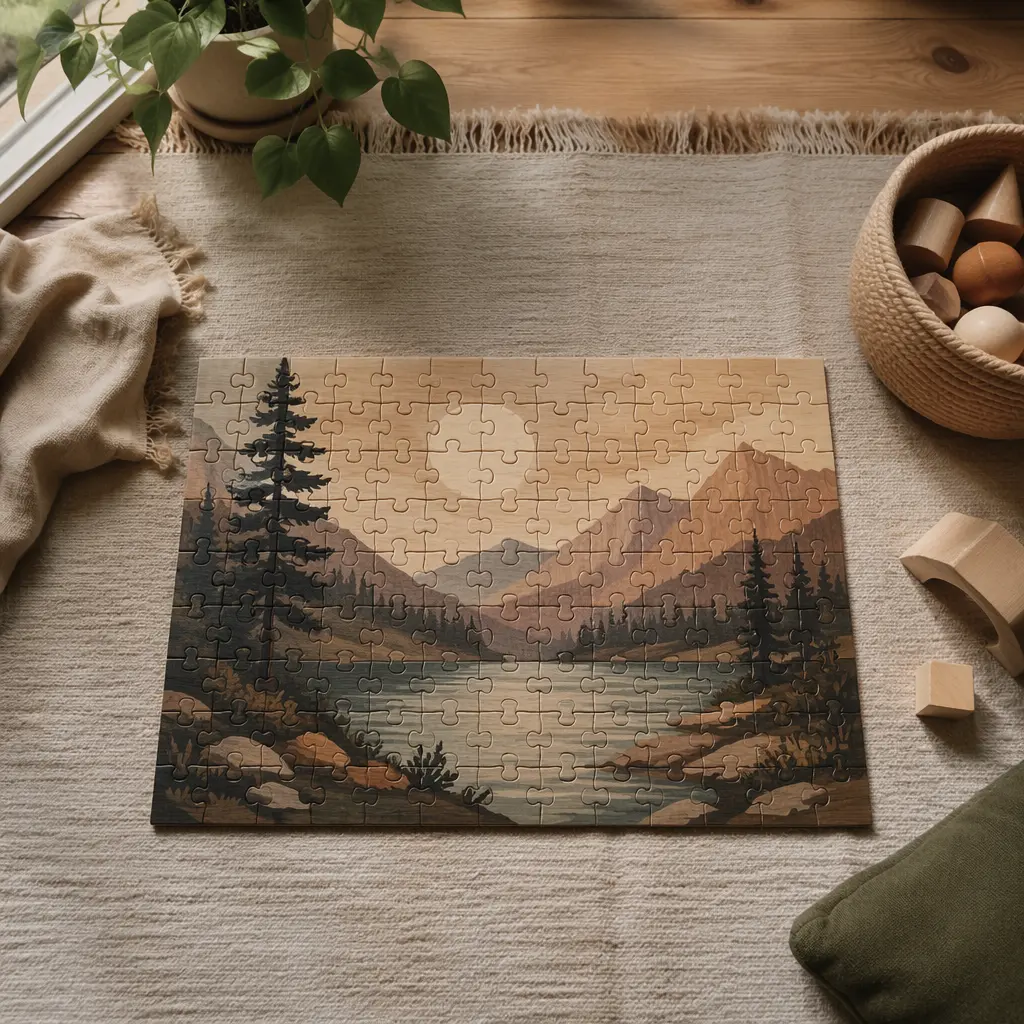
Not all puzzles create the same mood. Some are designed to energize and challenge quickly, while others naturally slow the pace. These categories tend to work well for kids who need calm, solo play.
- Low-to-mid piece jigsaw puzzles: Sets with a moderate number of pieces encourage focus without fatigue, especially when images are gentle and uncluttered.
- Wooden puzzles with frames: The defined border and solid feel can be grounding and help children organize their approach.
- Pattern and logic puzzles: Repeating shapes or visual sequences reward careful thinking rather than trial-and-error speed.
- Mindfulness-style puzzles: Activities that combine simple problem-solving with coloring or tracing can be especially soothing.
- Self-correcting puzzles: Designs where pieces only fit one way reduce frustration and support independent play.
Frequently asked questions
Are calm puzzles still educational?
Yes. Calm puzzles often support skills like spatial reasoning, concentration, and perseverance. Because kids aren’t rushed or compared to others, they may actually engage more deeply and retain more from the experience.
How long should a calming puzzle take to complete?
There’s no ideal time. Many calming puzzles are designed to be worked on over multiple short sessions. Being able to pause and return later is part of what keeps the activity low-pressure.
What if my child gets frustrated easily?
Look for puzzles with clear visual cues, sturdy pieces, and a difficulty level slightly below your child’s maximum ability. Early success builds confidence and makes it easier to try more complex options later.
Do solo puzzles discourage social play?
Not necessarily. Solo-friendly puzzles simply give kids a choice. Many children enjoy switching between independent activities and group play depending on their mood and energy level.
For kids who need calm, puzzles can be more than a pastime—they can be a reliable way to reset and recharge. By focusing on soothing visuals, manageable challenges, and independent play, parents can choose puzzles that support both relaxation and quiet confidence during the elementary years.