Classic Puzzle Toys That Calm Busy Hands
A parent-friendly guide to tactile, screen-free puzzle toys for ages 1–2. Learn what features support focus and regulation, age fit, and common questions about safety and play.
Compare prices and availability
Check current prices and availability for this guide on eBay.
As an eBay Partner, we may be compensated if you make a purchase.
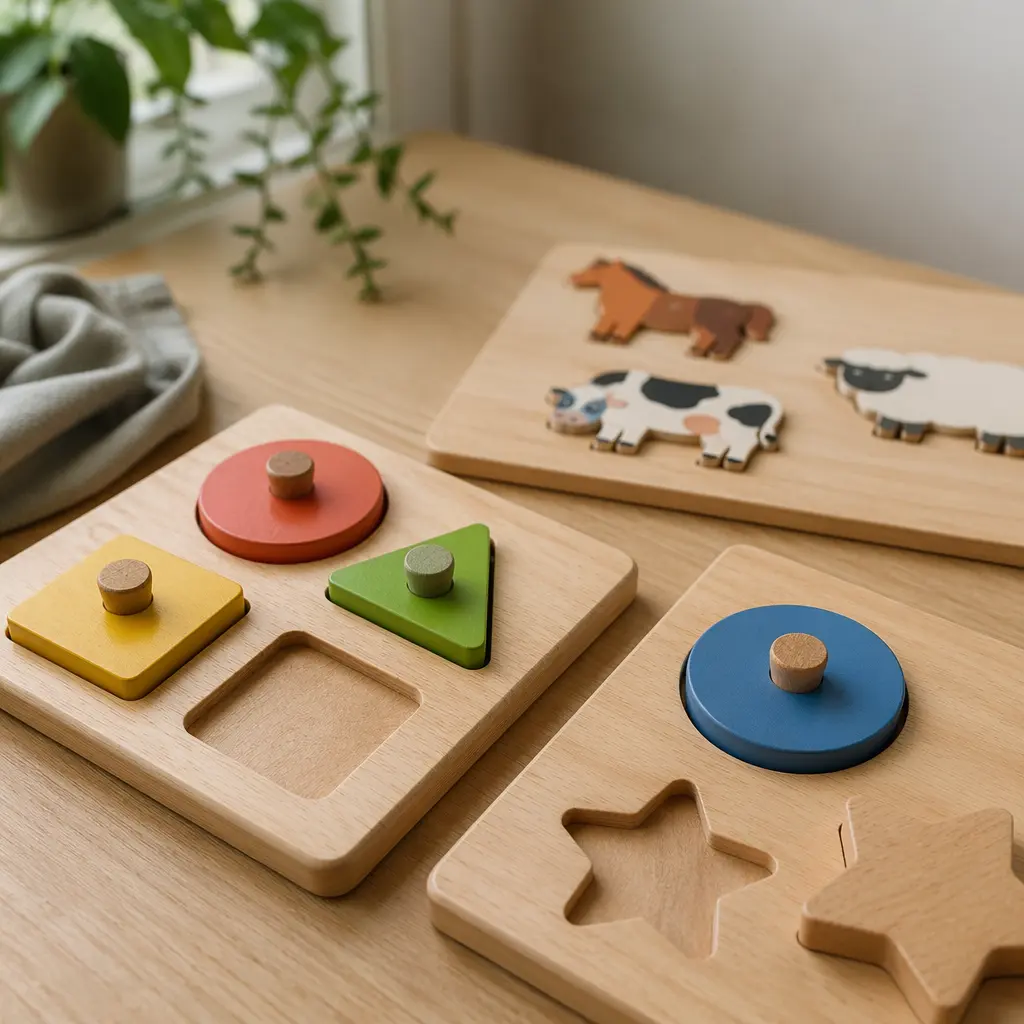
Puzzle toys have a quiet way of drawing toddlers in. For ages 1–2, the best options are simple, tactile, and screen-free, inviting little hands to explore without overwhelming them. These early puzzles can support focus, gentle problem-solving, and a sense of calm by offering clear goals and satisfying actions like lifting, matching, and placing.
What to look for
Toddlers learn best through their senses. When choosing a puzzle for this age, prioritize designs that are easy to grasp and hard to misuse. The goal is to encourage repeated, successful play rather than challenge for challenge’s sake.
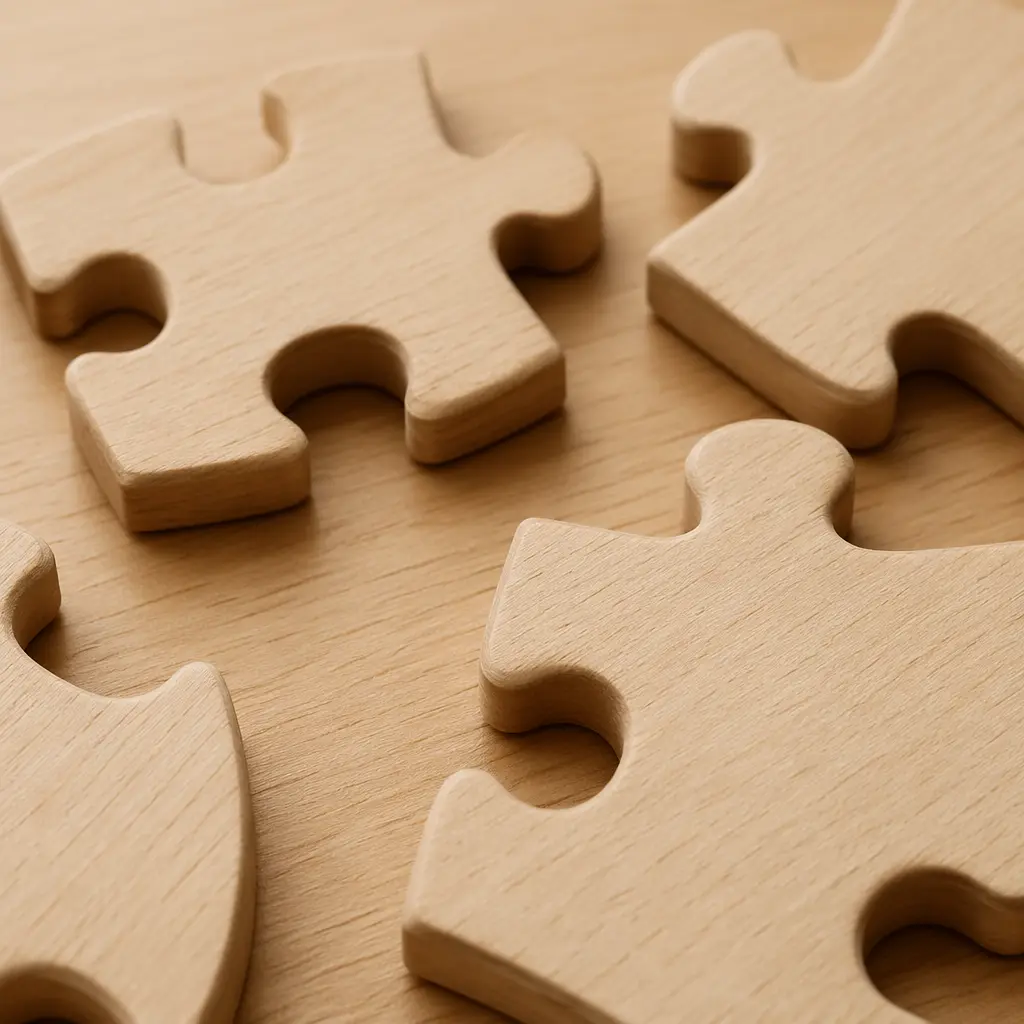
- Chunky pieces: Thick shapes are easier for small hands to hold and place.
- Simple matching: One shape per space or clear outlines help toddlers understand the task.
- Durable materials: Solid wood or thick board stands up to drops and mouthing.
- Smooth finishes: Rounded edges and non-toxic finishes reduce irritation.
- Limited piece count: Fewer pieces lower frustration and support longer focus.
Age suitability
Between 12 and 24 months, toddlers are refining fine-motor control and learning cause and effect. Puzzles at this stage should meet children where they are developmentally. Lift-and-place boards, knobbed shapes, and simple stacking or inset puzzles are often a good match. As skills grow, slightly more complex matching—like basic shapes or familiar objects—can be introduced while keeping the overall experience calm and predictable.
Standout categories or types
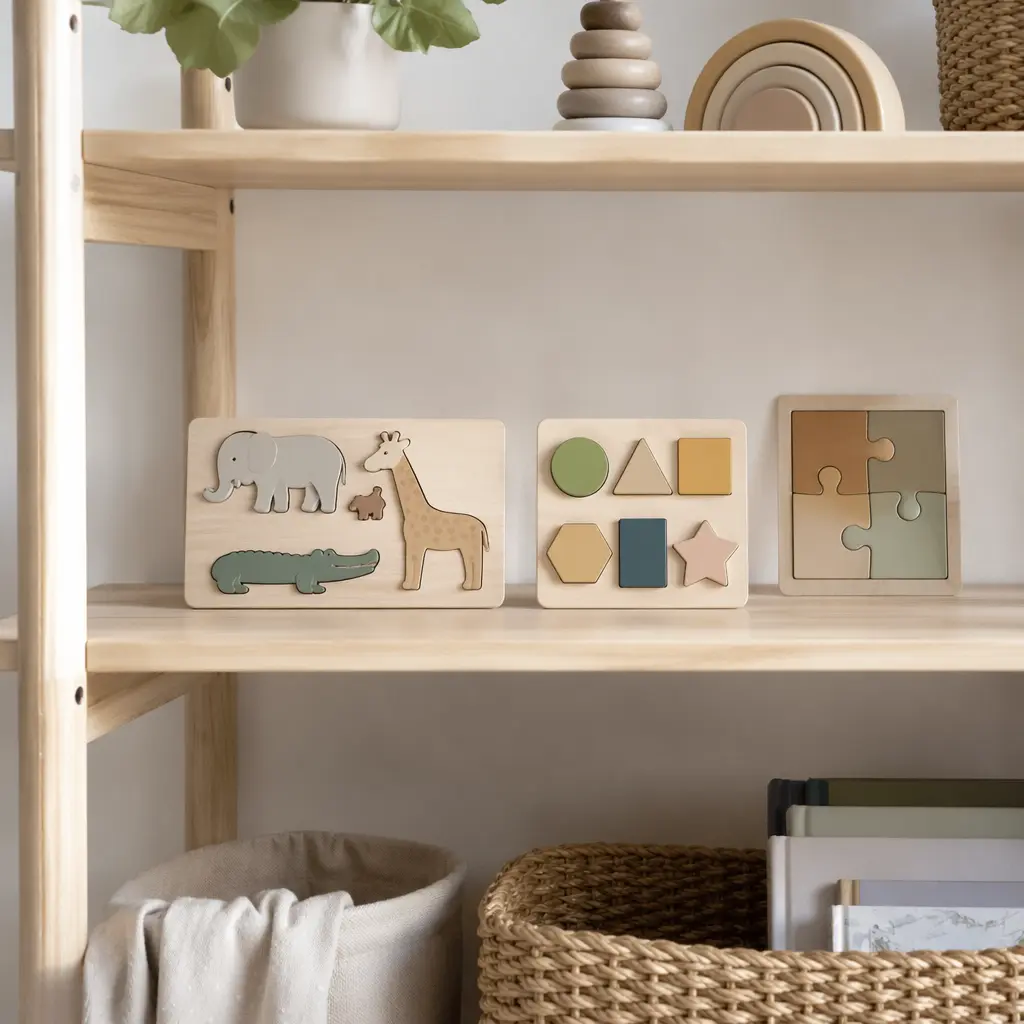
Not all puzzles are alike, even at the toddler level. Some types are especially helpful for calming busy hands because they combine repetition with sensory feedback. Lift-and-replace puzzles, for example, let toddlers practice the same motion again and again, which can be soothing. Shape sorters with flat boards offer a similar benefit without the added complexity of containers or lids.
Textured puzzles are another category to consider. Gentle differences in surface feel—such as smooth versus lightly grooved—add sensory interest without visual overload. Peg or knob puzzles can help toddlers who are just learning to use a pincer grasp, while inset picture puzzles with familiar images support early language when caregivers name shapes or objects during play.
Frequently asked questions
How do puzzles help with calming and focus?
Simple puzzles provide clear, repeatable actions with a predictable outcome. This structure can help toddlers settle into play, especially when they are overstimulated. The hands-on nature also channels energy into fine-motor work.
Are wooden puzzles better than plastic for toddlers?
Both materials can be safe and appropriate if well made. Wooden puzzles are often heavier and offer natural texture, which some families prefer. The most important factors are durability, smooth edges, and non-toxic finishes.
How many pieces should a puzzle have for ages 1–2?
Many toddlers do best with puzzles that have between 3 and 6 large pieces. This range supports success and repeat play without causing frustration.
Can puzzle play replace screen time?
Puzzle toys are a useful screen-free option for quiet play. They won’t replace every activity, but they can be part of a balanced day that includes movement, interaction, and rest.
What’s the best way to introduce a new puzzle?
Start by showing one or two pieces and modeling how they fit. Offering gentle guidance and then stepping back allows toddlers to explore at their own pace.
Classic puzzle toys don’t need bright lights or sounds to hold a toddler’s attention. When chosen thoughtfully, they can offer calm, purposeful play that supports developing hands and minds. For parents seeking simple, screen-free options, these puzzles remain a steady favorite.