Magnetic Mazes vs Busy Boards for Restaurant Travel
Comparing magnetic mazes and busy boards for preschool restaurant trips, with a focus on attention span, supervision, noise, portability, and fewer lost pieces.
Compare prices and availability
Check current prices and availability for this guide on eBay.
As an eBay Partner, we may be compensated if you make a purchase.
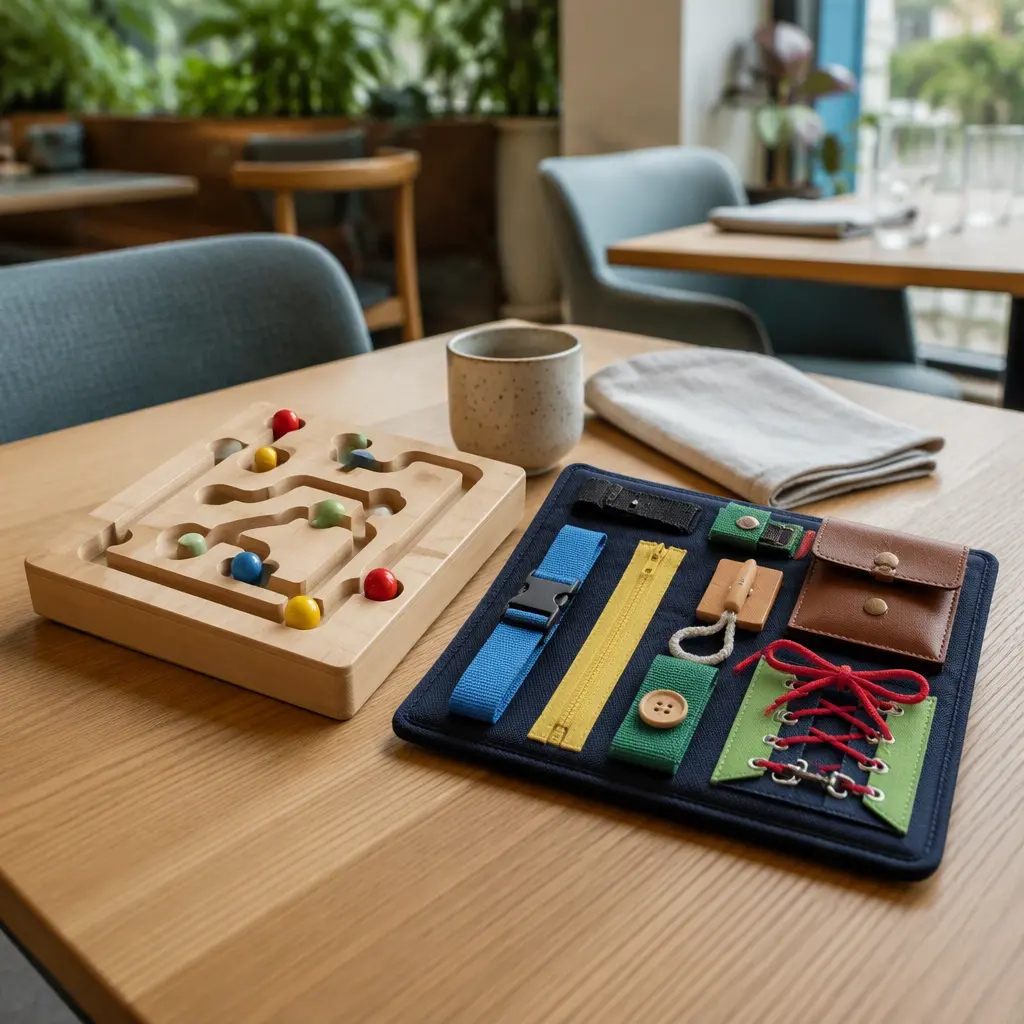
Restaurant outings with preschoolers often need one reliable distraction that works quietly, fits in a small bag, and does not create a cleanup problem when food arrives. Two common screen-free options are magnetic mazes and busy boards. Both are designed for hands-on play, but they solve different problems for parents. Magnetic mazes usually focus on moving small magnetic beads through tracks with a magnetic wand, while busy boards offer zippers, buckles, snaps, laces, switches, and other tactile activities. For children aged 3–5 years, the better choice often depends on how long the child can focus independently, how much table space is available, and how closely an adult wants to supervise during the meal.
What to look for
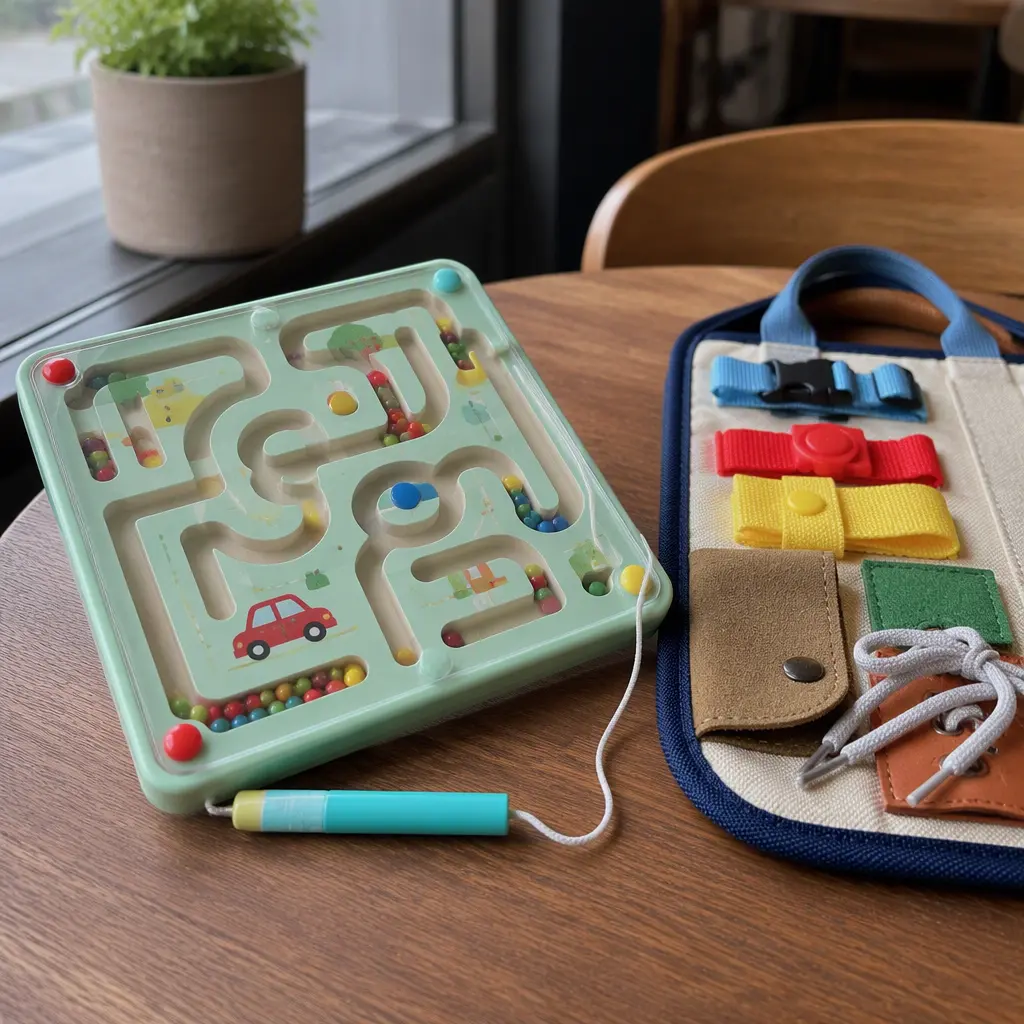
Travel toys for restaurants work best when they are compact, quiet, durable, and easy to reset. Preschool attention spans vary widely, so a toy that keeps one child occupied for twenty minutes may only last five minutes for another. The most useful restaurant toys also avoid creating clutter on crowded tables or under chairs. Since wait times can be unpredictable, many parents prefer activities that support both short bursts of play and repeated use during the same outing.
- Choose toys with attached or enclosed pieces to reduce cleanup and lost parts under restaurant tables.
- Look for quiet tactile play rather than toys with electronic sounds that may disturb nearby diners.
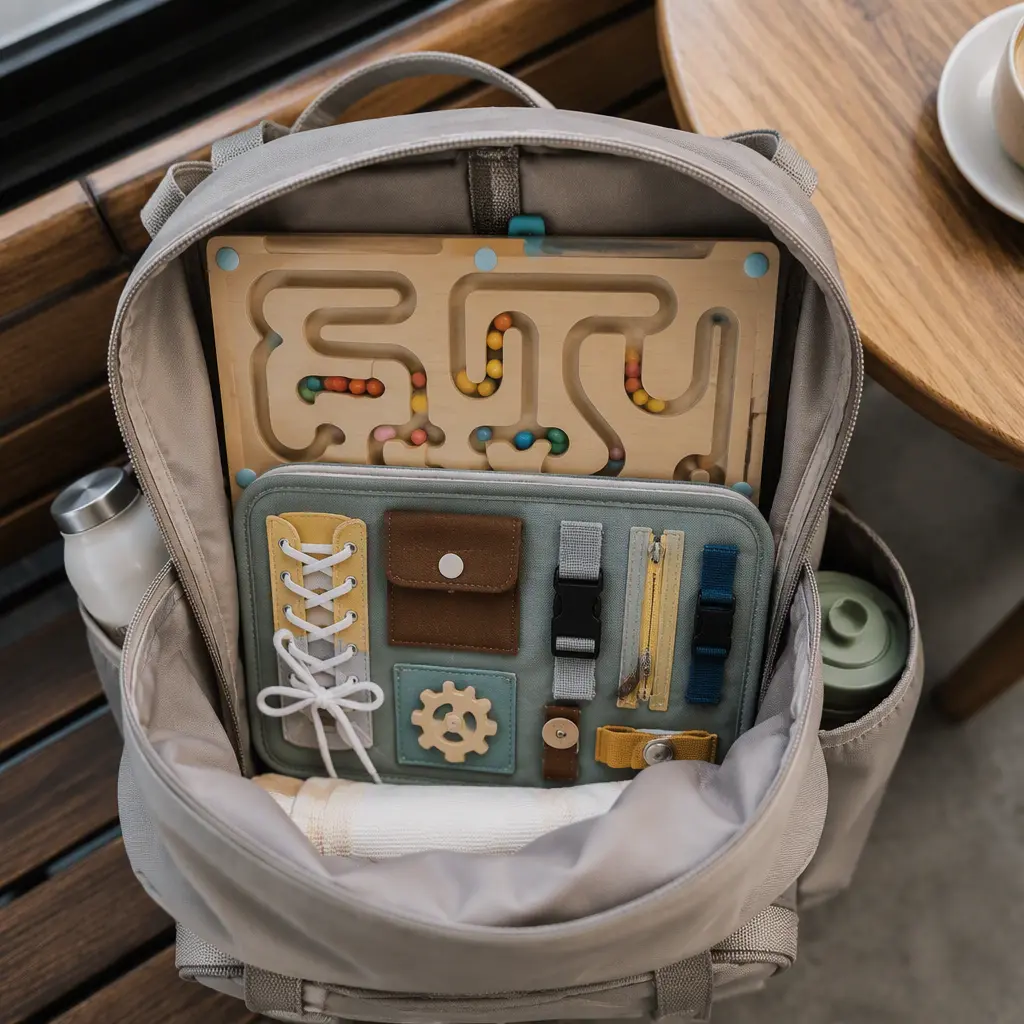
- Check whether the toy fits inside a small backpack or handbag without rigid bulky parts.
- Consider wipe-clean surfaces, especially for toys used around food and sticky hands.
- Think about supervision needs: some toys encourage independent play better than others.
- Simple designs often hold attention longer in restaurants because they are easier to restart after interruptions from food or conversation.
Age suitability
For ages 3–5, both magnetic mazes and busy boards can work well, but developmental stage matters. Younger preschoolers often enjoy the sensory repetition of zippers, buckles, and latches on busy boards, especially if they are still developing fine motor confidence. Older preschoolers may stay engaged longer with magnetic mazes because they introduce simple problem-solving and concentration challenges. Some children enjoy tracing paths or sorting beads by color repeatedly, while others prefer practical fastening tasks that imitate real-life dressing skills. A child who tends to move constantly in restaurants may respond better to a busy board with several different textures and actions. A child who enjoys puzzles or quieter seated play may prefer a magnetic maze.
Options compared
Magnetic mazes are often the stronger option for parents who want fewer loose parts and quieter table play. Most designs keep the beads enclosed beneath a clear surface, so there is little risk of cleanup during the meal itself. They also tend to encourage focused attention for children who enjoy patterns, routes, and repetition. Because the play style is contained, they work well in smaller restaurant spaces where toys can easily slide off the table. The main trade-off is variety. Once a child masters the challenge, some mazes become predictable unless the toy includes multiple pathways or sorting goals.
Busy boards usually offer more varied interaction and may hold the attention of highly active preschoolers longer because children can switch between different tasks. Zippers, clips, laces, buttons, and flaps can feel more open-ended than a single maze activity. They are also useful for practicing everyday dressing skills during travel. However, busy boards can require slightly more supervision in restaurants. Fabric versions may spread across the table, dangling straps can brush dishes, and some boards include detachable elements that are easier to misplace. Noise is another consideration. Wooden latch boards can create repeated tapping sounds against hard tabletops, while soft fabric boards are usually quieter.
- Best for fewer lost pieces: magnetic mazes with fully enclosed beads.
- Best for longer varied tactile play: fabric busy boards with multiple fasteners.
- Best for quiet restaurants: soft busy boards or silent magnetic mazes without clicking pieces.
- Best for very small tables: compact handheld magnetic mazes.
- Best for children who like puzzles: magnetic mazes.
- Best for children who enjoy practical hands-on tasks: busy boards.
- Less suitable for children who throw toys: rigid wooden boards and hard plastic mazes can disturb nearby diners if dropped repeatedly.
Frequently asked questions
Which toy usually keeps preschoolers occupied longer at restaurants?
Children who enjoy focused problem-solving may stay engaged with magnetic mazes for surprisingly long stretches because the activity has a clear goal. Busy boards often create shorter but more varied bursts of attention. For long waits before food arrives, variety sometimes matters more than challenge.
Are magnetic mazes messy?
Most travel magnetic mazes are designed with enclosed beads, which makes them one of the cleaner and lower-maintenance restaurant toys. The main thing to watch is whether the magnetic wand is securely attached to the board with a cord or storage slot.
Do busy boards need more supervision?
Usually yes, especially with younger preschoolers. Children may wave straps, drop attached pieces, or spread the board into shared dining space. Soft fabric boards tend to be easier to manage than larger wooden versions during meals.
Which option is quieter?
Fabric busy boards are often the quietest overall because they rely on soft materials. Magnetic mazes can also be quiet, although some create clicking sounds when beads move quickly through tracks. Wooden latch-style busy boards are generally louder on restaurant tables.
Is one easier to pack for travel?
Compact magnetic mazes are usually simpler to slide into a small bag because they are rigid and self-contained. Fabric busy boards fold more easily, but thicker boards with many attachments can take up more space than expected.
For many restaurant outings, magnetic mazes are the more practical low-supervision choice because they contain their pieces, stay relatively tidy, and fit well on crowded tables. Busy boards can still be a strong option for preschoolers who need more sensory variety or movement-based play to stay engaged. The best fit depends less on the toy category itself and more on the child’s play style, the restaurant environment, and how much cleanup or supervision parents are comfortable managing during the meal.