Puzzle Toys That Build Focus Without Feeling Like Homework
A parent-friendly guide to puzzle toys for ages 9–12 that stretch attention and problem-solving without frustration. Learn what to look for, age fit, and puzzle types that keep kids engaged.
Compare prices and availability
Check current prices and availability for this guide on eBay.
As an eBay Partner, we may be compensated if you make a purchase.
For kids ages 9–12, the right puzzle can quietly build focus, patience, and flexible thinking—without feeling like extra schoolwork. At this age, children want challenges that respect their growing skills while still leaving room for trial and error. The best puzzle toys strike a balance: they’re engaging enough to hold attention, clear enough to start without adult help, and satisfying when solved. This guide breaks down what helps puzzles feel motivating rather than overwhelming, so families can choose options that fit different learning styles and moods.
What to look for
Not all puzzles are created equal, especially for preteens who may be quick to disengage if something feels too easy or too hard. When comparing options, focus on design features that support persistence and independent play.
- Clear entry point: Puzzles should make the first move obvious, even if later steps become complex.
- Scalable challenge: Look for puzzles with multiple solutions, difficulty levels, or ways to add constraints over time.
- Quality materials: Sturdy pieces, smooth edges, and precise fits reduce frustration and support repeated use.
- Feedback built in: Visual or tactile cues help kids see progress without needing answers spelled out.
- Open-ended replay value: Puzzles that can be reset or reconfigured encourage repeated practice and deeper thinking.
Age suitability
Ages 9–12 is a wide band developmentally. Some kids are ready for abstract logic and multi-step planning, while others prefer hands-on manipulation and concrete goals. Puzzles aimed at this group should avoid feeling babyish but also avoid dense instructions or heavy reading. Visual-spatial challenges, pattern recognition, and cause-and-effect mechanics tend to land well. When possible, choose puzzles that allow kids to work at their own pace and return later without losing progress.
Standout categories or types
Different puzzle types build focus in different ways. Rotating a few styles can keep interest high while exercising a range of thinking skills.
- Logic and deduction puzzles: These reward careful reasoning and attention to rules, helping kids slow down and think ahead.
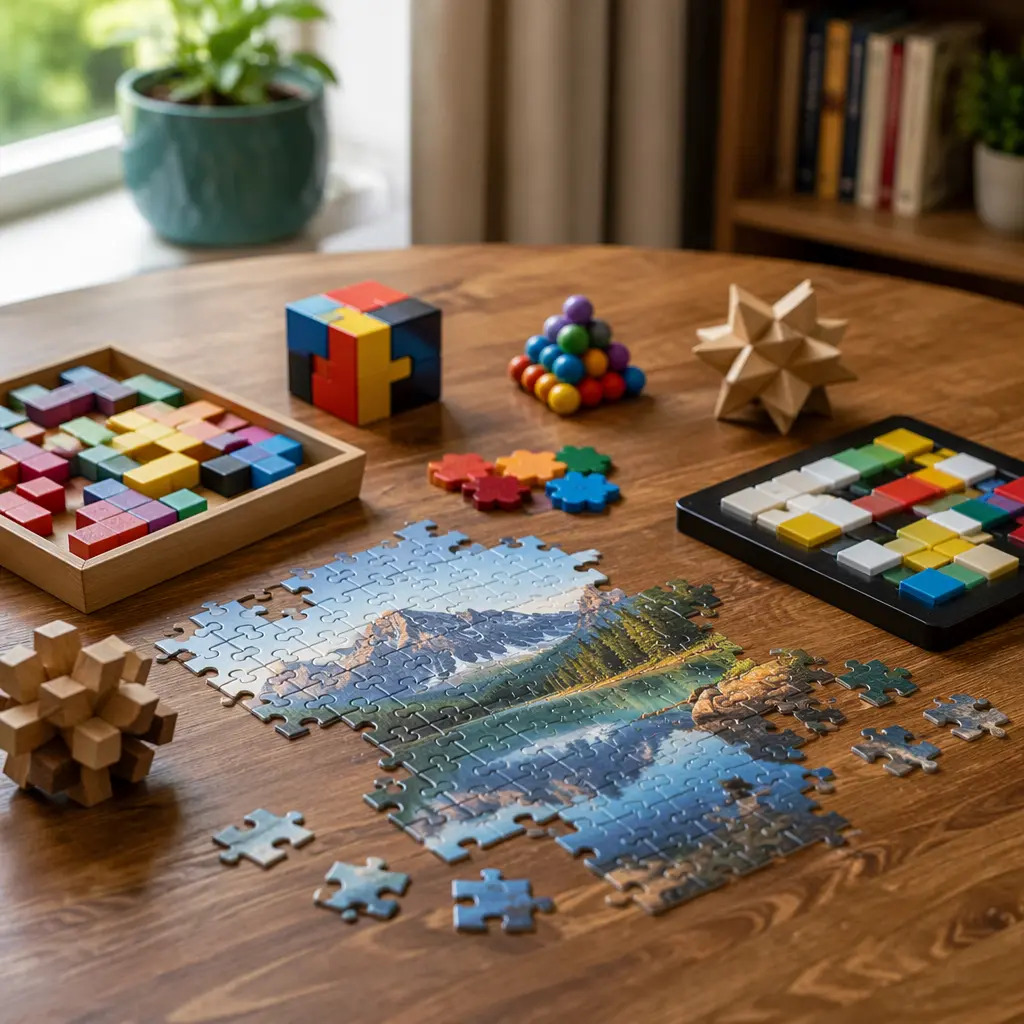
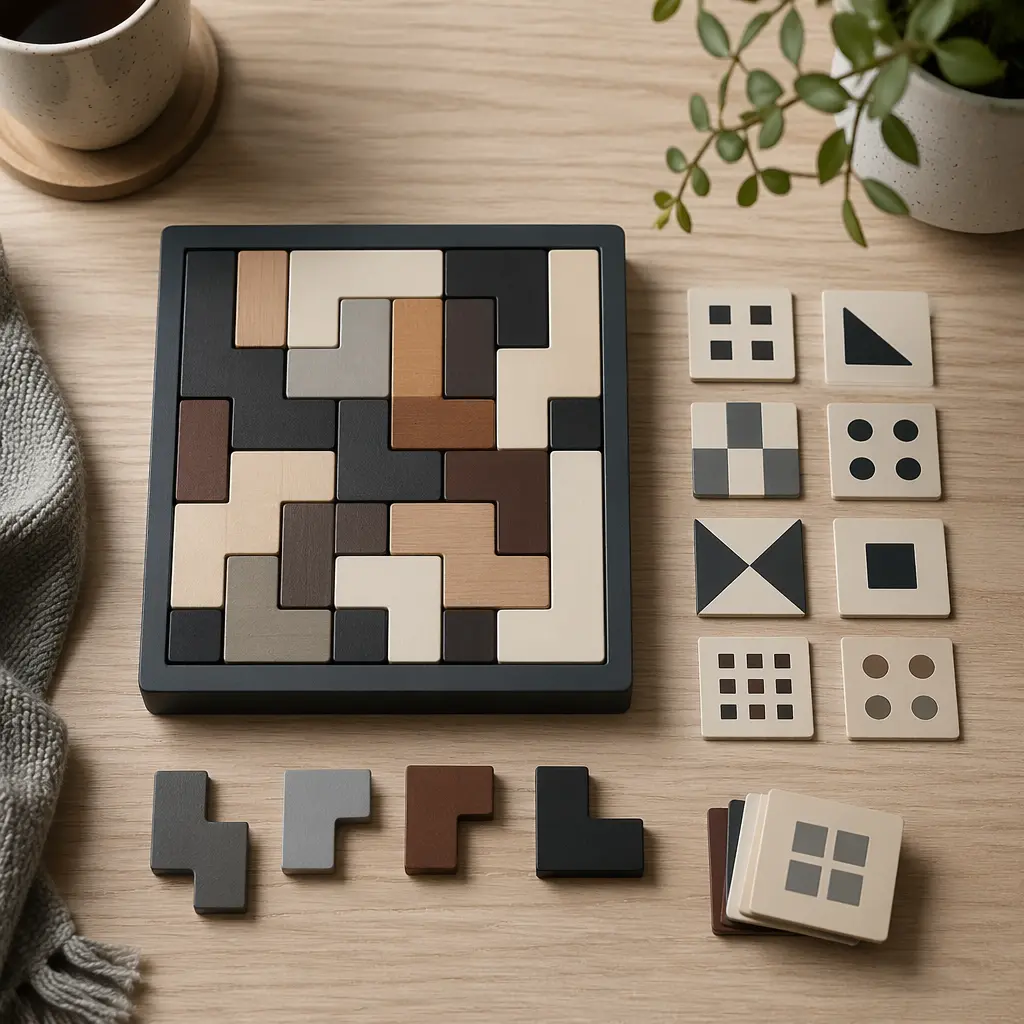
- Spatial and construction puzzles: Tangrams, 3D builds, and interlocking shapes support visual planning and hands-on problem solving.
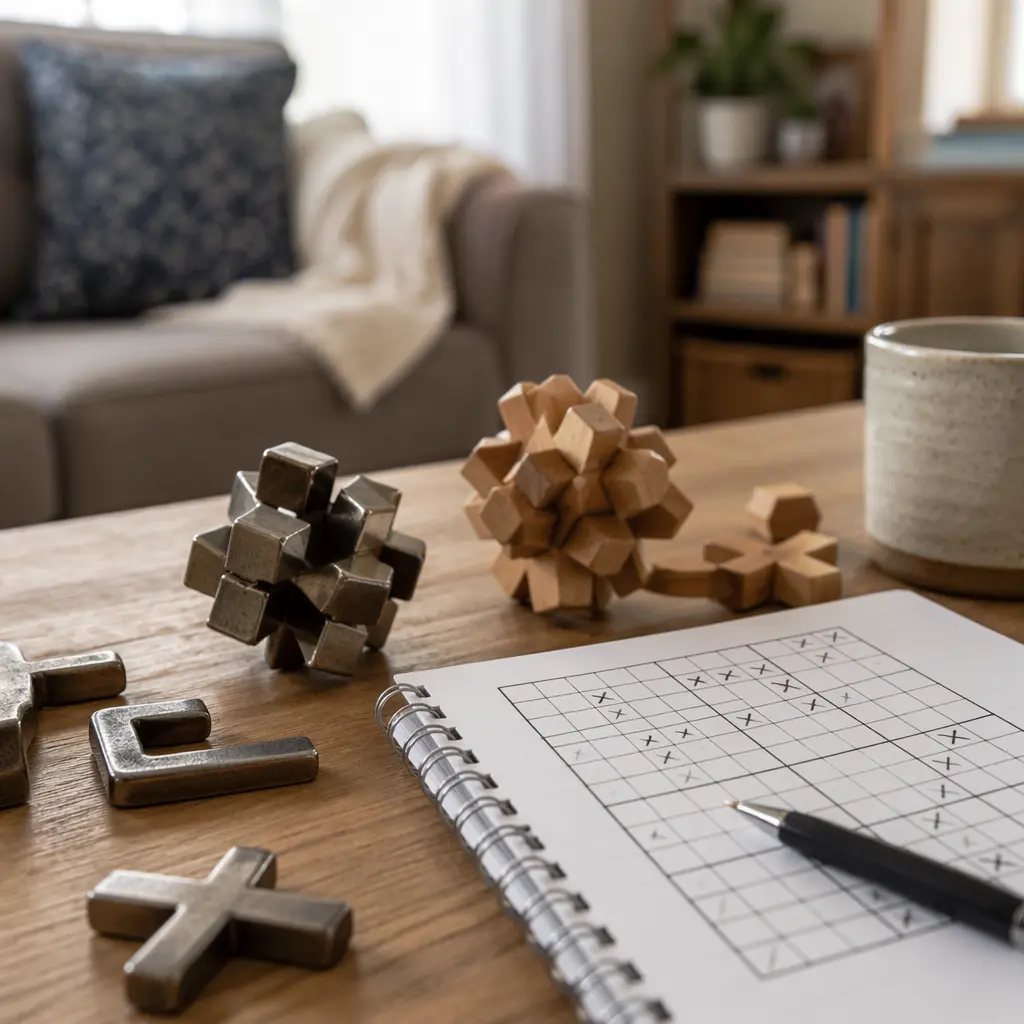
- Mechanical and dexterity puzzles: Sliding pieces, locks, or sequential moves encourage patience and fine motor control.
- Strategy-based tabletop puzzles: Turn-based challenges promote planning, adaptability, and learning from mistakes.
- Solo challenge cards or grids: Compact formats are easy to pick up, put down, and revisit without setup fatigue.
Frequently asked questions
How do puzzles help with focus?
Well-designed puzzles ask kids to hold information in mind, test ideas, and adjust strategies. Because the goal is clear and immediate, children often stay engaged longer than with open-ended tasks, practicing sustained attention in a low-pressure way.
What if my child gets frustrated easily?
Look for puzzles with incremental wins, hints, or multiple paths to a solution. It also helps to frame puzzles as experiments rather than tests. Taking breaks and returning later is part of the process, not a failure.
Are puzzles better than screen-based games?
Both can build skills, but physical puzzles offer tactile feedback and fewer distractions. Many families use puzzles as a screen-free option that still feels challenging and fun, especially during downtime or transitions.
Can puzzles support school skills?
Yes. While puzzles aren’t homework, they reinforce underlying skills like logical reasoning, spatial awareness, and perseverance. These habits can carry over to math, reading comprehension, and project-based learning.
Choosing puzzle toys for ages 9–12 is less about finding the “hardest” option and more about finding the right kind of challenge. When puzzles feel inviting and fair, kids are more likely to stick with them, building focus and confidence along the way. A small mix of puzzle styles can meet kids where they are today while leaving room to grow tomorrow.