Beginner Smart Toys That Work Without Wi‑Fi or Apps
A parent-friendly guide to smart toys for ages 6–8 that work fully offline—no Wi‑Fi, accounts, or apps required. Learn what features matter, age fit, safety tips, and common questions.
Compare prices and availability
Check current prices and availability for this guide on eBay.
As an eBay Partner, we may be compensated if you make a purchase.
Smart toys don’t have to mean screens, accounts, or constant updates. For children ages 6–8, many beginner-friendly tech toys offer lights, sounds, sensors, and simple programming while working entirely offline. These options can feel more predictable for parents and less distracting for kids, with play that starts as soon as the batteries are in. This guide explains what to look for, how age suitability works, and which types tend to deliver the most learning value without Wi‑Fi or apps.
What to look for
Offline smart toys vary widely, from basic circuit kits to voice-free interactive games. Focusing on a few core features can help narrow choices and avoid frustration.
- Self-contained play: The toy should work straight out of the box with buttons, cards, dials, or physical blocks—no phone or tablet required.
- Clear feedback: Lights, sounds, or movement should clearly show when a child’s input worked, helping them learn cause and effect.
- Durable construction: Look for sturdy plastics, reinforced connectors, and battery doors secured with screws.
- Progressive challenges: Multiple difficulty levels or open-ended builds help the toy grow with your child.
- Simple power needs: Standard batteries or a basic charging cable are easier to manage than proprietary systems.
Age suitability
For ages 6–8, the sweet spot is toys that introduce logic and problem-solving without overwhelming instructions. At this stage, kids can follow multi-step directions and experiment independently, but they still benefit from tactile controls and clear goals. Avoid options designed for much older kids that assume reading long manuals or troubleshooting complex errors. Likewise, toys meant for preschoolers may feel too simple and lose interest quickly.
Standout categories or types
Several categories consistently work well for offline play, especially for beginners who are curious about how technology works but aren’t ready for screens.
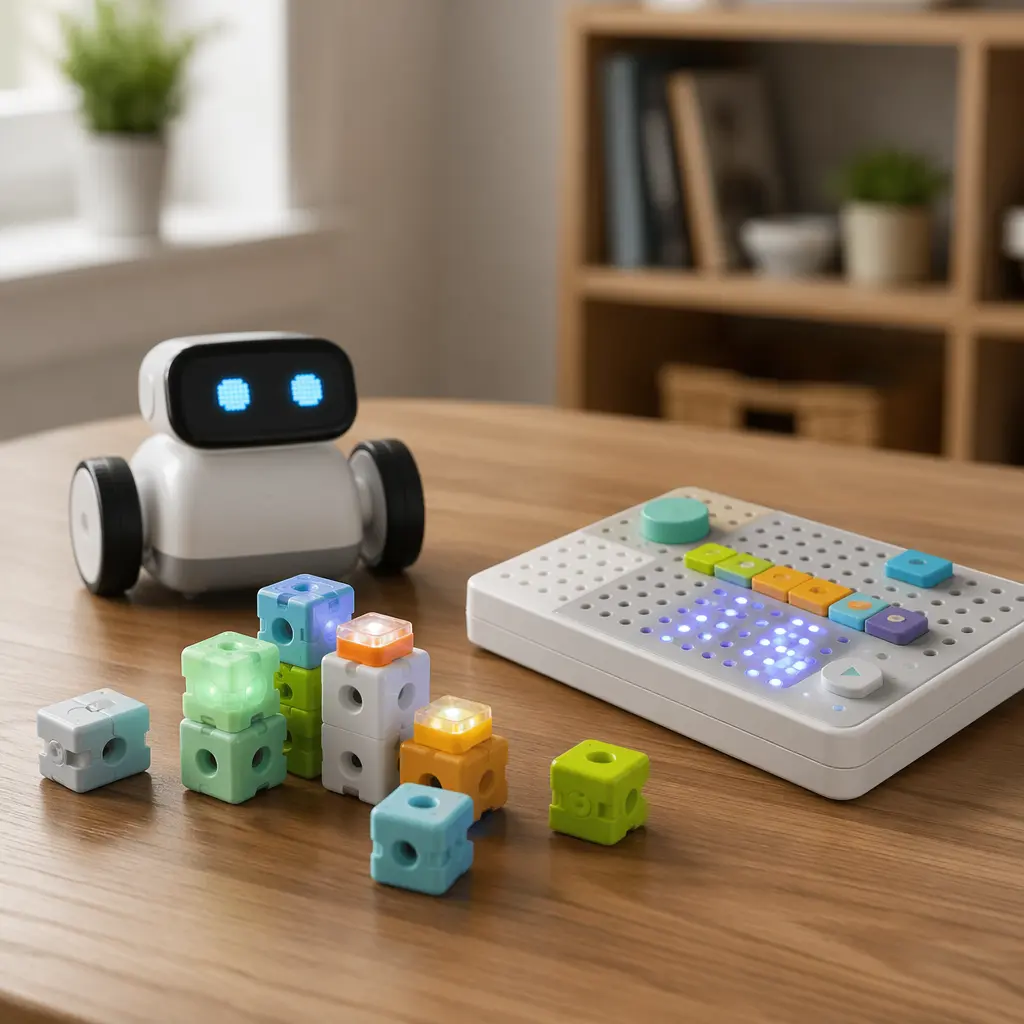
- Button-based coding toys: These use arrows, symbols, or physical cards to create simple programs that control movement or actions.
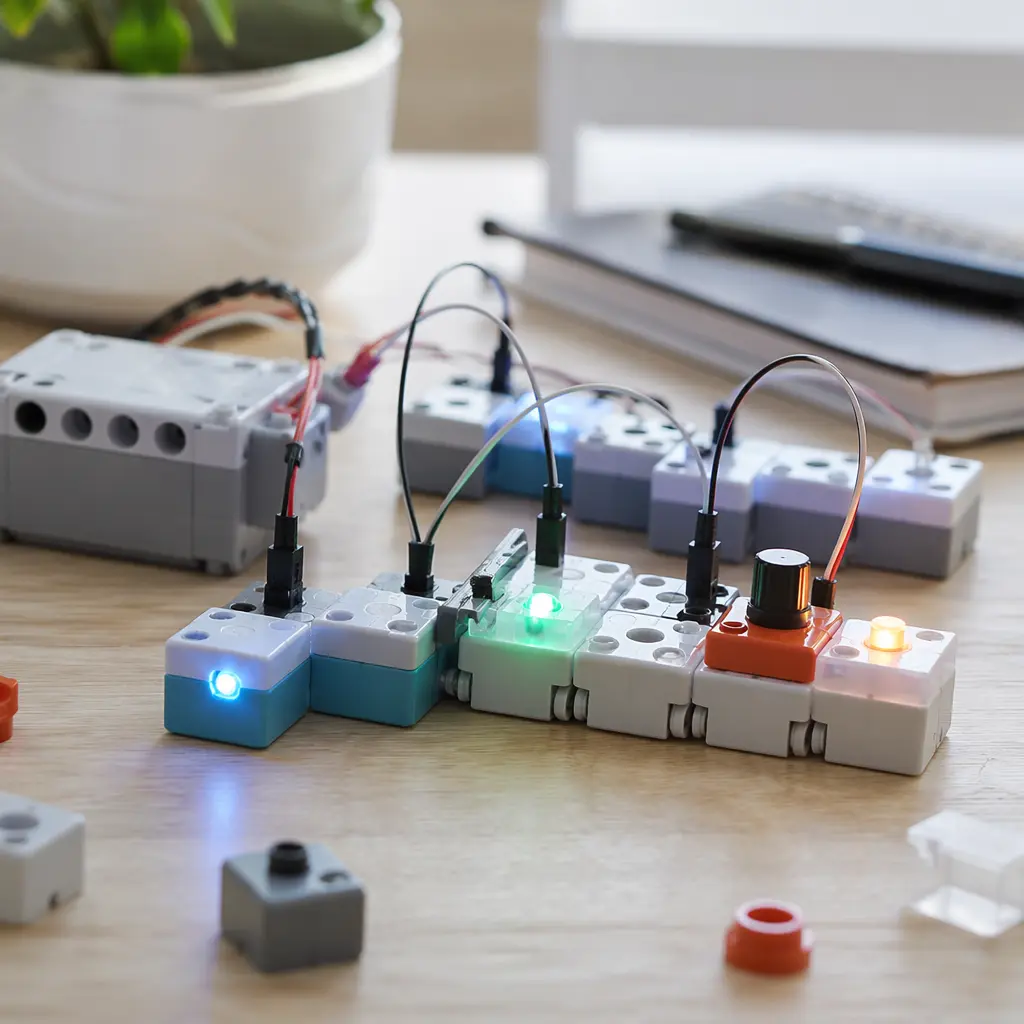
- Electronic building kits: Snap circuits or modular components teach basic electronics through hands-on assembly.
- Logic and puzzle devices: Standalone games with lights or sounds that respond to correct sequences or patterns.
- Interactive science toys: Self-powered microscopes, measurement tools, or experiment kits with electronic feedback.
- Music and sound makers: Instruments that introduce digital sound or looping without recording apps.
Frequently asked questions
Are offline smart toys still considered educational?
Yes. Many offline toys teach core skills like sequencing, spatial reasoning, and basic electronics. Because there’s no screen to guide every step, kids often engage more actively and experiment to see what happens.
Do these toys ever need updates?
Most offline smart toys don’t use software updates at all. What you see is what you get, which can be a benefit for families who prefer predictable play and minimal maintenance.
Will my child miss out without an app?
For beginners, apps aren’t essential. Physical controls and immediate feedback often make concepts easier to grasp. Apps can add features later, but they aren’t required for foundational learning.
How long do kids usually stay interested?
Interest tends to last longer with toys that allow open-ended play or increasing challenges. Fixed, single-goal toys may be mastered quickly, while build-and-experiment options invite repeated use.
Offline smart toys can be a practical middle ground: engaging and modern, yet simple to manage. By focusing on self-contained features, age-appropriate challenges, and durable design, parents can find options that encourage curiosity without adding screen time or connectivity concerns.