Walkie Talkies vs RC Cars for Outdoor Tech Play
Comparing walkie talkies and RC cars for kids ages 9–12, including durability, repair risk, battery demands, outdoor space needs and which type keeps play going longer.
Compare prices and availability
Check current prices and availability for this guide on eBay.
As an eBay Partner, we may be compensated if you make a purchase.
For kids ages 9 to 12 who want gadgets without sitting in front of a screen, walkie talkies and RC cars are two common choices with very different strengths. One encourages teamwork, outdoor games and long sessions with minimal setup. The other delivers fast-paced driving and mechanical excitement but usually needs more space, charging and occasional repairs. The better choice depends less on novelty and more on where your child plays, how careful they are with equipment and whether you want a toy that works reliably after months of regular outdoor use.
What to look for
For this age group, durability and ease of use matter more than flashy features. Many children around 9 to 12 can handle more advanced controls and rechargeable batteries, but frustration builds quickly if a toy spends more time charging or being repaired than actually used. Outdoor-only tech toys also need to survive dirt, bumps and changing weather conditions.
- Choose RC cars with replaceable parts and protected wheels if the toy will be used on pavement, dirt or grass regularly.
- Look for walkie talkies with simple buttons, clear sound and enough range for parks, backyards or neighborhood play.
- Consider battery type carefully. Rechargeable packs reduce waste but may limit play time if only one battery is included.
- Think about storage space. RC cars often need larger bins and separate chargers, while walkie talkies store easily in drawers or backpacks.
- Noise level matters in shared spaces. RC cars can be loud on pavement, while walkie talkies mainly create occasional voice chatter.
- Check whether your child usually plays alone or with friends. Walkie talkies depend on social play more than RC vehicles do.
- For families trying to avoid constant repairs, simpler electronics with fewer moving parts generally last longer.
Age suitability
Children ages 9 to 12 are usually ready for either option, but the play style differs. Walkie talkies suit kids who enjoy imaginative missions, biking with friends, backyard games or neighborhood adventures. They work especially well for siblings and groups. RC cars appeal more to children who like speed, steering skills, ramps and mechanical gadgets. Some older kids become deeply interested in tuning, battery care and terrain performance, while others lose interest once the novelty fades. For families with limited outdoor space, walkie talkies tend to adapt more easily because they can be used while hiking, camping, biking or playing games at the park.
Options compared
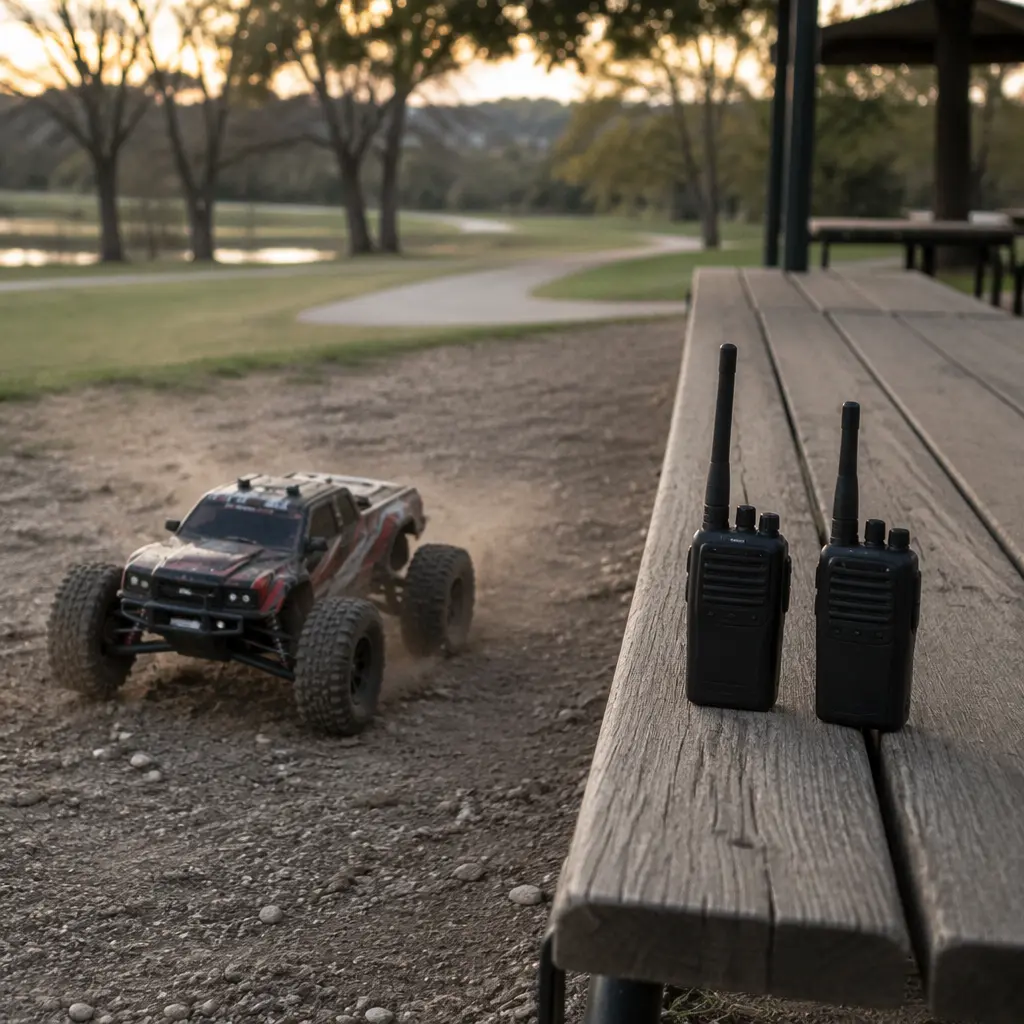
Walkie talkies usually win on reliability and long-term usability. They have fewer moving parts, survive drops more easily and encourage flexible outdoor play that changes from day to day. Kids can incorporate them into scavenger hunts, biking routes, hide-and-seek games or camping trips. They also scale well socially because adding more players often makes the experience better rather than more complicated.
RC cars create a more intense type of excitement, especially for children interested in racing or stunts. The trade-off is maintenance. Tires wear down, body shells crack and lower-cost models may struggle on grass or rough surfaces. Battery life can also interrupt play sessions. Some families solve this by keeping spare batteries charged, but that adds cost and organization. For children who enjoy caring for gear and improving driving skills, RC cars can become a long-lasting hobby. For children who are rough on toys or easily frustrated by repairs, simpler outdoor gadgets may hold attention longer overall.
- Walkie talkies suit group play, camping, backyard games and kids who enjoy social interaction.
- RC cars suit children interested in speed, steering challenges and hands-on gadget play.
- Walkie talkies are easier to pack for travel and usually take up less storage space.
- RC cars generally need more open space, especially for higher speeds or off-road driving.
- Walkie talkies tend to have lower repair demands because they contain fewer exposed moving parts.
- RC cars can provide more solo entertainment when friends or siblings are unavailable.
- For quieter neighborhoods or apartment living, walkie talkies are often less disruptive than motorized vehicles.
Frequently asked questions
Do walkie talkies get boring quickly?
They usually last longer when children already enjoy imaginative games or outdoor exploration. Kids who mainly want fast action or competition may lose interest sooner unless the walkie talkies become part of a larger activity like biking, hiking or team games.
Are RC cars too fragile for regular outdoor use?
It depends on the design and terrain. Cars meant for smooth pavement may struggle on grass, gravel or dirt. Models with larger tires and protected suspension components generally handle rougher play better, but even durable RC cars experience wear over time.
Which option is better for siblings?
Walkie talkies often work better for siblings because the play naturally involves communication and teamwork. RC cars can also work well if each child has a vehicle, but that increases charging needs, storage demands and the chance of collisions or repairs.
What about battery management?
RC cars usually require more planning because motors drain batteries quickly. Walkie talkies often last longer between charges or battery replacements, especially during casual use. Families who prefer low-maintenance toys may find this difference important after the first few weeks.
Which keeps kids engaged longer overall?
For many families, walkie talkies provide steadier long-term use because they adapt to different games and outings with minimal upkeep. RC cars can create stronger excitement at first, especially for mechanically minded kids, but continued engagement often depends on available space, spare parts and battery support.
If the goal is a screen-free outdoor gadget that stays useful with minimal repairs, walkie talkies are usually the lower-maintenance choice for ages 9 to 12. RC cars make more sense for children who genuinely enjoy driving, tinkering and caring for equipment. Matching the toy to the child’s play style matters more than choosing the more advanced-looking gadget.