Push Cars vs Wiggle Cars for Indoor Toddler Play
Comparing push cars and wiggle cars for toddlers aged 1–2, including floor compatibility, tipping risk, storage, noise and supervision needs for small indoor spaces.
Compare prices and availability
Check current prices and availability for this guide on eBay.
As an eBay Partner, we may be compensated if you make a purchase.
Indoor ride-on toys can help toddlers practise balance, coordination and independent movement without relying on screens or large outdoor spaces. For families choosing between a push car and a wiggle car, the decision usually comes down to how much room is available, what type of flooring the home has and how comfortable parents are with noise and supervision. Although both toys encourage active play, they work differently and suit different stages within the 1–2 year age range. Push cars are generally steadier and slower, while wiggle cars rely on side-to-side steering movements that can create faster motion once toddlers understand how to use them. In smaller homes or apartments, details like wheel material, turning radius and storage size often matter just as much as entertainment value.
What to look for
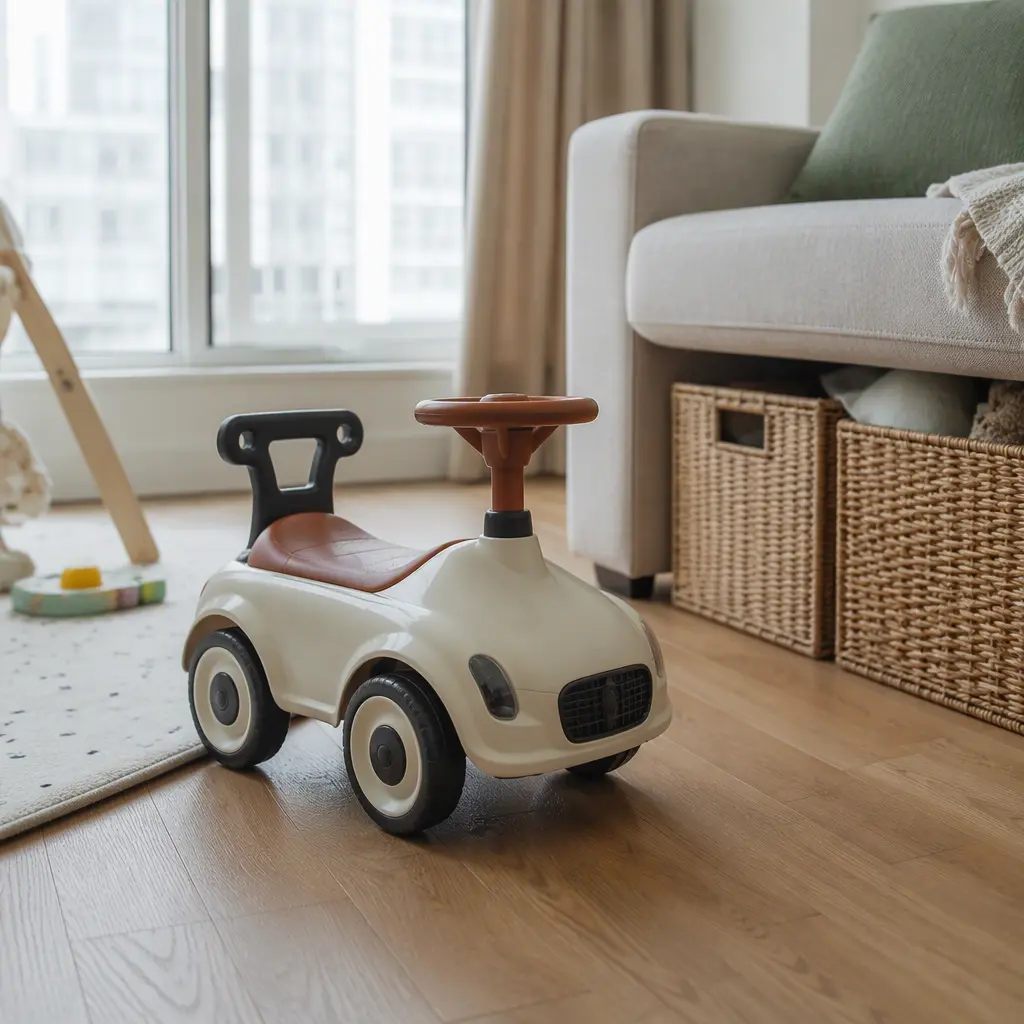
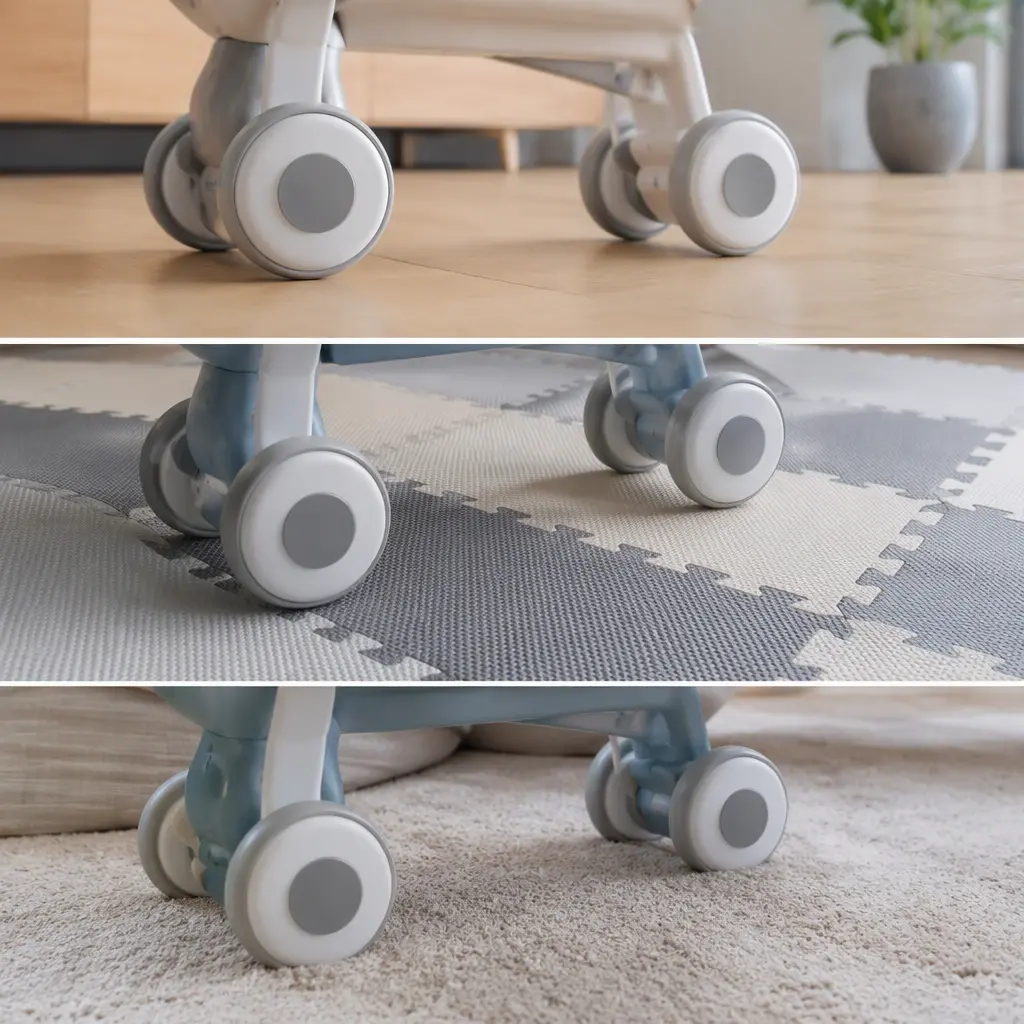
The safest and most practical indoor ride-on toys for toddlers tend to prioritise stability over speed. For children aged 1–2, a low seat height and broad wheel base usually make mounting and dismounting easier. Flooring also has a major effect on how these toys perform. Hard floors allow smoother movement but can increase noise and sliding, while thick carpet may make some ride-ons frustrating to use. Families in flats or shared buildings may also want to consider wheel material carefully, since hard plastic wheels can create repeated rattling sounds indoors.
- Choose a seat height that allows both feet to rest flat on the floor for better control.
- Check whether the toy is intended for early walkers or more confident toddlers.
- Look for wider wheel spacing to reduce tipping during turns.
- Rubberised or softer wheels are often quieter on wood or tile floors.
- Compact designs are easier to store in small apartments or shared living rooms.
- Push cars usually work better on mixed flooring, including low-pile carpet.
- Wiggle cars need a smooth, open surface to move effectively indoors.
- Consider handle placement and rounded edges if furniture space is tight.
Age suitability
Within the 1–2 year age band, there can be a large difference in coordination and confidence. Push cars are often the easier starting point for younger toddlers who are still learning balance and steering. They move using simple foot pushing, so children can stop naturally when they lose momentum. Wiggle cars usually suit older or more coordinated toddlers closer to age two because the steering motion takes practice. Some younger toddlers may simply sit on a wiggle car without understanding how to generate movement. Indoor space also affects suitability. In a narrow hallway or crowded living room, younger toddlers may become frustrated if they cannot turn easily or avoid furniture safely.
Options compared
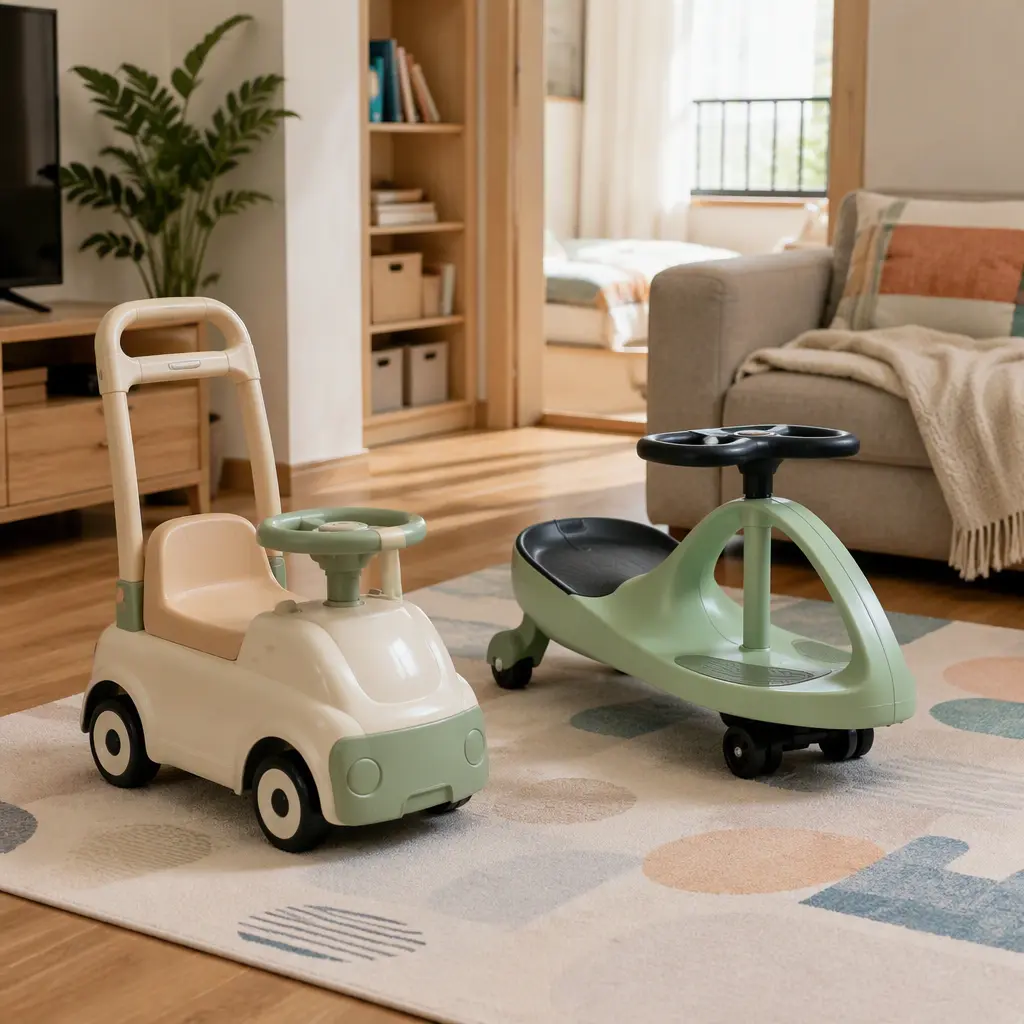
Push cars are usually the more practical choice for families with limited indoor space. Their movement is predictable, they tend to travel more slowly and many models are compact enough to tuck beside furniture or into a toy corner. For younger toddlers, this slower pace can reduce falls caused by sudden turns. Push cars also tend to cope better with uneven surfaces, rugs and transitions between flooring types. The trade-off is that they may lose appeal sooner for toddlers who quickly want faster movement or more independence.
Wiggle cars appeal to toddlers who enjoy active movement and have enough open floor space to steer side to side. They can provide longer-lasting play because children continue refining coordination as they grow. However, they are often louder indoors, especially on laminate or tile flooring, and they need more clearance for turning. Some families also find that wiggle cars encourage higher speeds than expected in small rooms. In tight apartments or homes with delicate furniture, that may become stressful rather than convenient. For quieter homes, softer wheel materials and foam play mats can help reduce sound and floor scuffing regardless of ride-on style.
- Push cars: better for younger toddlers, mixed flooring, quieter play and smaller rooms.
- Wiggle cars: better for open spaces, confident movers and longer active play sessions.
- Push cars: typically easier for toddlers to understand immediately.
- Wiggle cars: require smoother surfaces and more steering coordination.
- Push cars: lower indoor collision risk because movement is slower.
- Wiggle cars: may create more noise on hard flooring and in upstairs flats.
Frequently asked questions
Are wiggle cars safe for one-year-olds?
Some one-year-olds may enjoy sitting on a wiggle car, but many are still developing the coordination needed to steer and propel it safely. Push cars are often easier and steadier for this age group. Parents should check the manufacturer’s recommended age range and supervise closely indoors.
Which ride-on works best on carpet?
Push cars generally perform better on low-pile carpet because toddlers can move them using direct foot pushing. Wiggle cars usually need smoother flooring to generate momentum effectively. Thick carpet can make steering difficult and frustrating.
Are indoor ride-on toys too noisy for apartments?
Noise levels vary by wheel material and flooring type. Hard plastic wheels on wood or tile floors tend to create the most noise. Softer wheels, foam mats and slower-moving push cars are often more apartment-friendly than fast-moving wiggle cars.
How much indoor space do toddlers need?
A short clear path is usually enough for a push car, especially for younger toddlers. Wiggle cars need wider turning space because children move the steering wheel side to side to create motion. In crowded living rooms, frequent obstacles may interrupt play.
Do these toys help development?
Both styles can support gross motor development, coordination and spatial awareness through active movement. Push cars often focus more on balance and early mobility, while wiggle cars add steering coordination and directional control as toddlers grow more confident.
For most families with toddlers aged 1–2 and limited indoor space, a compact push car is usually the easier starting choice because it works across more flooring types and tends to create fewer noise and storage problems. Wiggle cars can become more rewarding later for active toddlers who have enough open space to move safely. The best fit depends less on novelty and more on how well the toy matches the child’s coordination level, the home layout and the family’s tolerance for indoor movement and noise.